Italian Plastic Recycling Crisis Deepens as Volumes Rise but Margins Collapse – Polymer Price Trends
Italian plastic recycling crisis – Full price table (08/06/2026 →15/06/2026)
| ITEM | 08/06/2026 | 15/06/2026 | +/− |
|---|---|---|---|
| Bottle grade PET chips domestic market | 8,300 yuan/ton | 7,850 yuan/ton | -450 |
| Chinese bottle-grade PET chips FOB export price | 1,160 $/ton | 1,135 $/ton | -25 |
| LDPE CFR Est China | 930 $/ton | 1,175 $/ton | +245 |
| PET Semidull — Fiber chips | 7,300 yuan/ton | 7,100 yuan/ton | -200 |
| PET Bright — Fiber chips | 7,420 yuan/ton | 7,200 yuan/ton | -220 |
| Pure Terephthalic Acid PTA domestic market | 6,560 yuan/ton | 6,315 yuan/ton | -245 |
| Pure Terephthalic Acid PTA FOB China | 860 $/ton | 800 $/ton | -60 |
| Monoethyleneglycol (MEG) South China | 4,707 yuan/ton | 4,549 yuan/ton | -158 |
| Monoethyleneglycol (MEG) CFR China | 590 $/ton | 575 $/ton | -15 |
| Paraxylene PX FOB Taiwan market | 1,111 $/ton | 1,123 $/ton | +12 |
| Paraxylene PX FOB South-Korea market | 1,114 $/ton | 1,126 $/ton | +12 |
| Paraxylene PX FOB EU market | 955 $/ton | 1,200 $/ton | +245 |
| Polyester filament POY 150D/48F domestic market | 8,400 yuan/ton | 8,450 yuan/ton | +50 |
| Recycled Polyester filament POY 150/48F domestic market | 7,300 yuan/ton | 7,300 yuan/ton | – |
| Polyester filament DTY 150D/48F domestic market | 9,450 yuan/ton | 9,500 yuan/ton | +50 |
| Polyester filament FDY 68D/24F | 9,450 yuan/ton | 9,450 yuan/ton | – |
| Polyester filament FDY 150D/96F domestic market | 8.750 yuan/ton | 8,750 yuan/ton | – |
| Polyester staple fiber 1.4D 38mm domestic market | 7,900 yuan/ton | 7,500 yuan/ton | -400 |
| Caprolactam (CPL) domestic market | 11,100 yuan/ton | 11,500 yuan/ton | +400 |
| Caprolactam (CPL) CFR China | 1,500 $/ton | 1,500 $/ton | – |
| Nylon 6 chips overseas market | Northeast Asia (CFR Far East)$/T1,580 – $/T1,650
Southeast Asia (CFR ASEAN) $/T2,150 – $/T2,250 Western Europe (FD NWE) $/T2,500 – $/T2,600 North America (FOB US Gulf) $/T3,000 – $/T3,150
|
North America $2,540 / MT Europe $2,530 / MT Southeast Asia $2.15 / MT Middle East $2,050 / MT Northeast Asia $1,840 / MT
|
– |
| Nylon 6 chips conventional spinning domestic market | 11,100 yuan/ton | 11,850 yuan/ton | +750 |
| Nylon 6 chips high speed spinning domestic market | 11,750 yuan/ton | 12,350 yuan/ton | +600 |
| Nylon 6.6 chips domestic market | 20,200 yuan/ton | 19,000 yuan/ton | -1,200 |
| Nylon6 Filament POY 86D/24F domestic market | 13,400 yuan/ton | 13,600 yuan/ton | +200 |
| Nylon6 Filament DTY 70D/24F domestic market | 16,000 yuan/ton | 16,000 yuan/ton | – |
| Nylon6 Filament FDY 70D/24F | 13,800 yuan/ton | 13,800 yuan/ton | – |
| Spandex 20D domestic market | 31,700 yuan/ton | 31,700 yuan/ton | – |
| Spandex 30D domestic market | 31,200 yuan/ton | 31,200 yuan/ton | – |
| Spandex 40D domestic market | 28,500 yuan/ton | 28,500 yuan/ton | – |
| Adipic Acid China domestic market | 8,400 yuan/ton | 7,850 yuan/ton | -450 |
| Adipic Acid Europe market | 2,150 $/ton | 2,050 $/ton | -100 |
| Benzene domestic market East China | 7,750 yuan/ton | 7,300 yuan/ton | -350 |
| Benzene CFR China | 1,059 $/ton | 980 $/ton | -79 |
| Ethylene South East market | 950 $/ton | 935 $/ton | -15 |
| Ethylene NWE market CIF | 1,071 $/ton | 996 $/ton | -75 |
| Acrylonitrile (ACN) domestic market | 10,200 yuan/ton | 10,600 yuan/ton | +400 |
| Acrylonitrile ACN Southeast Asia | 1,650 $/ton | 1,635 $/ton | -15 |
| Acrylic staple fiber (ASF) CFR China | 16,055 yuan/ton | 16,055 yuan/ton | – |
| VSF viscose staple fiber | 14,100 yuan/ton | 14,100 yuan/ton | – |
| PP Powder domestic market | 9,800 yuan/ton | 9,690 yuan/ton | -110 |
| Naphtha overseas market | 716 $/ton | 706 $/ton | -10 |
| Phenol domestic market (Jinan Dezheng / Yanshan Petrochemical, Shandong) | 7,735 yuan/ton | 8,050 yuan/ton | +315 |
| Recycled PET | 4,200 yuan/ton | 4,200 yuan/ton | – |
Italian Plastic Recycling Crisis Deepens as Volumes Rise but Margins Collapse
Italy’s mechanical plastic recycling industry is entering a difficult new phase: companies are processing more material, but the economic value of that activity is shrinking.
According to the 2025 report prepared by Plastic Consult for Assorimap, turnover for Italian mechanical plastic recycling companies fell for the third consecutive year, reaching €685 million, down 1.1% compared with 2024. At the same time, recycled volumes increased by 2%, reaching about 850,000 tonnes.
This contrast tells the real story of the sector. Italy is not recycling less plastic. It is recycling plastic in a market where prices, costs and competition are eroding the industrial foundations of the business.
Why higher volumes are not enough
In a healthy market, higher volumes would usually support revenue growth. In Italy’s plastic recycling sector, the opposite is happening.
The second half of 2025 was especially difficult. Prices for recycled materials dropped to their lowest level in a decade, while operating costs remained extremely high. Energy costs, in particular, continued to weigh heavily on recyclers, with electricity prices reaching levels well above those seen in 2021.
For many operators, this has reduced margins to almost zero. Companies that combine recycling with other activities, such as collection, sorting or diversified industrial services, are better positioned to resist the downturn. Pure recycling operators, however, are more exposed.
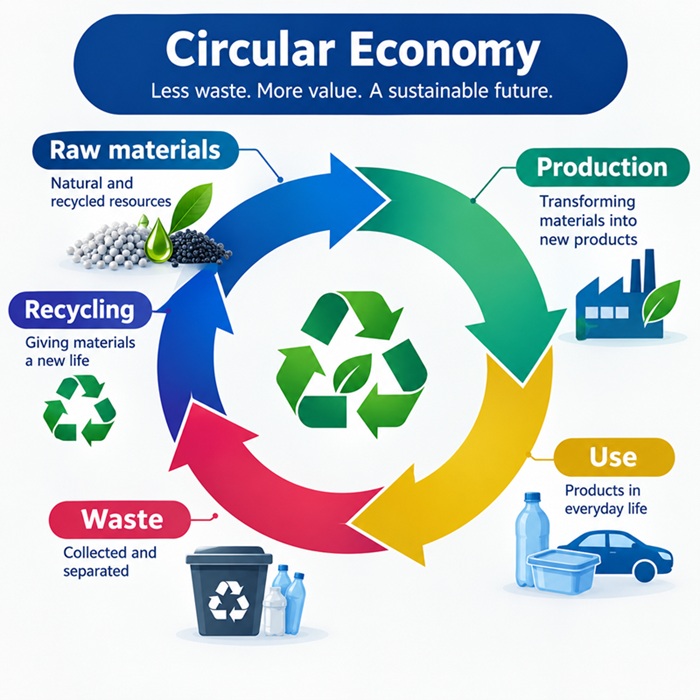
The problem is not only financial. Mechanical recycling is the final industrial link in the separate collection chain. If that link becomes economically unsustainable, the whole circular economy model becomes weaker.
A structural crisis, not a temporary slowdown
The Italian data reflect a broader European problem. Across Europe, plastics recyclers have been warning that weak demand, high production costs, cheap imports and competition from virgin polymers are putting the sector under pressure.
This is why the Italian decline should not be read as a simple market correction. It is a structural crisis affecting the ability of Europe to build a stable market for recycled plastics.
Mechanical recycling is already available, scalable and essential for reducing reliance on virgin fossil-based plastics. But it needs a functioning market. Without stable demand and fair competition, recycling plants risk becoming economically fragile even when collection volumes increase.
The PET exception
One polymer stands out from the rest: recycled PET.
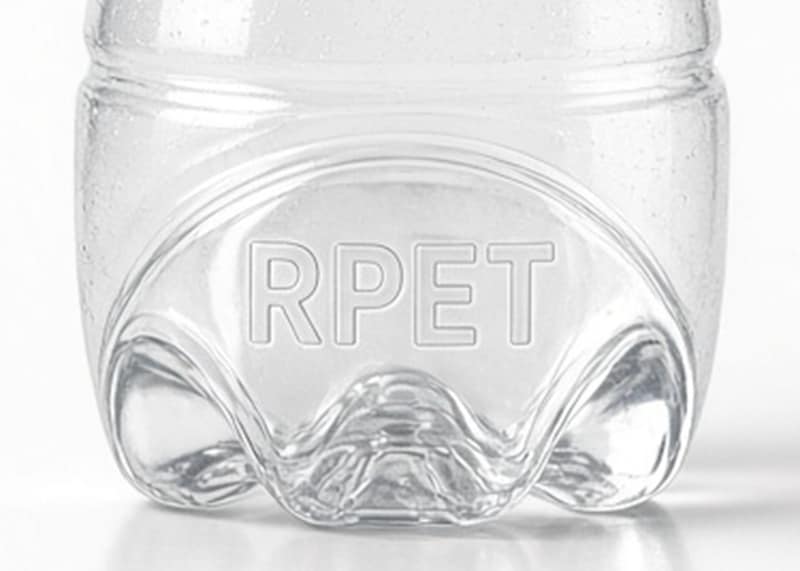
In 2025, recycled PET exceeded 228,000 tonnes in Italy and became the sector’s highest-turnover segment for the first time, reaching €272 million, up 8.8%. This placed PET ahead of polyethylene in revenue terms.
The reason is clear: regulation has created demand. The EU Single-Use Plastics Directive requires beverage bottles to contain recycled content, including 25% recycled content in PET bottles by 2025 and 30% in beverage bottles by 2030.
This legal obligation has created a stronger market for recycled PET than for other polymers. Where recycled content is mandatory, companies have a reason to buy recycled material. Where it is not yet mandatory, recyclers remain more exposed to price pressure and weak demand. Italian plastic recycling crisis
Polyethylene and other polymers are still waiting
The difference between PET and other polymers highlights one of the biggest weaknesses in the market.
Flexible and rigid polyethylene, along with several other recycled plastic streams, do not yet benefit from the same level of mandatory recycled-content demand. For many of these materials, stronger requirements will only arrive closer to 2030.
Until then, recyclers face a difficult gap: they must keep investing, collecting, sorting and processing, while demand from manufacturers remains inconsistent.
This creates a two-speed market. PET is supported by regulation and brand demand. Other recycled polymers are left to compete in a market where virgin plastics and poorly verified imported materials can undercut prices.
Traceability will become decisive
Another important issue is traceability.
European policy is moving toward stricter rules on what can be counted as recycled content. The European Commission has indicated that, for certain reporting purposes, post-consumer recycled material produced in Europe will become increasingly important.
This could reshape the market in 2026 and 2027. If only properly verified European post-consumer recyclate counts toward regulatory targets, demand for traceable domestic recycled material could increase. That would support recyclers who invest in quality, certification and transparency.
However, the transition must be managed carefully. If rules are unclear or enforcement is weak, the market may continue to reward cheaper and less transparent material over high-quality European recyclate.
Why this matters beyond Italy
Italy’s plastic recycling crisis matters because the country has a mature recycling industry and an important manufacturing base. If recyclers struggle in such a market, the warning signal for Europe is serious.
A weak recycling sector also affects climate and industrial policy. Recycled plastics can reduce dependence on virgin fossil resources, lower emissions and support European industrial autonomy. But these benefits depend on keeping recycling capacity alive.
Once recycling plants close, rebuilding capacity is slow and expensive. Skilled workers leave, supply chains weaken and investment becomes harder to attract.
The policy challenge
The solution is not simply to collect more plastic waste. Italy is already increasing volumes. The real challenge is to make recycled plastic economically viable.
That means creating stable demand for recycled polymers, improving traceability, fighting unfair competition, reducing administrative fragmentation and ensuring that recycled content rules reward genuine circularity.
The European Commission’s work on end-of-waste criteria for plastics could help by making it easier for recycled plastics to circulate as secondary raw materials across the EU. A clearer single market for recyclates would reduce uncertainty for recyclers and buyers.
But regulation must move quickly enough to prevent further industrial damage. If demand arrives too late, some recyclers may not survive long enough to benefit from it.
Outlook for 2026
The next two years will be decisive.
If recycled-content obligations, traceability rules and fair-market controls strengthen demand for verified European recyclate, Italy’s recycling sector could regain stability. PET already shows that regulation can create a market when targets are clear.
But if prices remain weak, energy costs stay high and imports continue to distort competition, higher recycling volumes will not be enough.
The message from the 2025 data is simple: Italy is not facing a recycling-volume problem. It is facing a recycling-value problem.
For the circular economy to work, recycled plastic must not only be collected and processed. It must also be valued, purchased and protected as an essential industrial raw material.
UK Plastic Recycling Capacity Falls as Circular Economy Ambitions Face a Major Test
More…