Niutech SAF Agreement: A Bold Waste-to-Fuel Move
Niutech SAF Agreement: A Bold Waste-to-Fuel Move
Updated: August 29, 2026
Niutech Technology Group says it has signed an agreement to supply an industrial waste-plastic pyrolysis line to a major international energy company.
According to the Chinese equipment manufacturer, the system will be installed as part of an upgrade at one of the customer’s large refineries. The proposed production chain would convert waste plastic into pyrolysis oil before upgrading that oil through hydrotreatment into aviation fuel.
The announcement could open another route for producing lower-carbon aviation fuel from difficult waste streams. However, several important details remain undisclosed, including the customer’s identity, the contract value, the construction schedule and the certification pathway for the finished fuel. Niutech SAF agreement
What has Niutech announced?
Niutech says its new customer has ordered an industrial continuous waste-plastic pyrolysis production line with a processing capacity of between 10,000 and 50,000 tonnes per year.
The agreement represents Niutech’s first entry into the unidentified company’s equipment supply chain, according to the company-issued announcement distributed by PR Newswire.
Niutech has not named the energy company. It also has not published the refinery’s location, the exact capacity selected by the customer or a date for commissioning the equipment.
These omissions mean that the announcement should presently be understood as a supplier’s account of a commercial agreement—not as confirmation that SAF production has begun.
How would the process work?
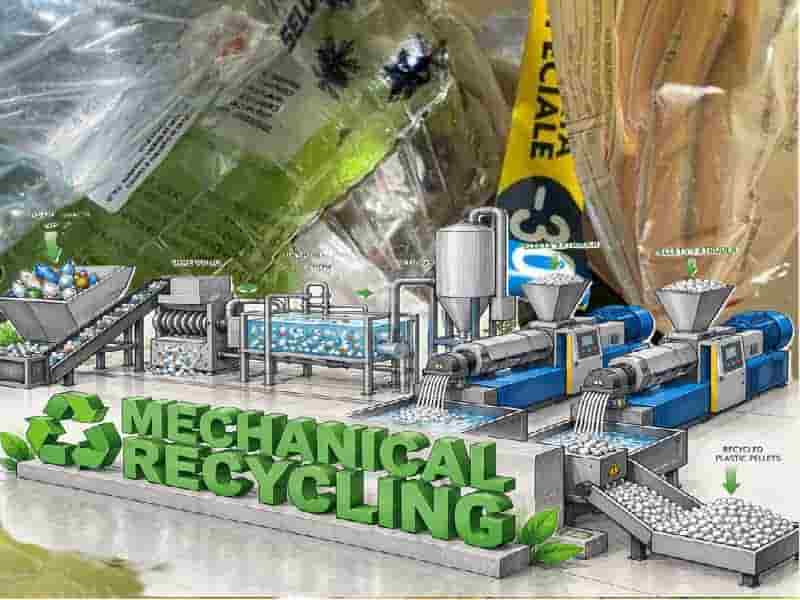
Pyrolysis heats plastic in a low-oxygen environment, breaking its molecules into products that include liquid oil, gas and solid residue.
Niutech says its continuous system can process polyethylene, polypropylene, polystyrene, ABS, nylon and certain mixed-plastic streams. The company also claims the line can accept some low-value plastics without the extensive washing, drying and sorting required by other processes.
The resulting pyrolysis oil is not finished aviation fuel. It must undergo additional refining and hydrotreatment, and the final product must meet the technical, sustainability and safety requirements applicable in its target market.
That distinction matters: a facility capable of producing pyrolysis oil is one part of a longer production and certification chain. Niutech SAF agreement
Why is the project connected to SAF demand?
Aviation remains difficult to decarbonize because long-distance aircraft require fuels with high energy density. Sustainable aviation fuel, or SAF, is therefore expected to play a significant role alongside more efficient aircraft, operational improvements and emerging propulsion technologies.
The European Union’s ReFuelEU Aviation rules require aviation-fuel suppliers at covered EU airports to deliver a minimum SAF share of 2% from 2025. The requirement rises to 6% in 2030 and 70% in 2050, according to the official EU regulation.
The regulation can recognize certain fuels made from non-renewable waste streams as recycled carbon aviation fuels, subject to its definitions and sustainability requirements. A plastic-derived fuel does not qualify merely because waste plastic was used as an input.
Its eligibility depends on factors such as the nature of the waste, the production pathway, lifecycle greenhouse-gas performance, traceability and regulatory certification.
Could plastic-derived fuel complement used cooking oil?
Used cooking oil and waste fats are established SAF feedstocks, but their sustainable supply is limited. This has encouraged producers to investigate additional waste-derived and synthetic pathways.
Waste-plastic pyrolysis could broaden the feedstock base, particularly for material that cannot reasonably be reused or mechanically recycled. It may also help divert some residual plastic from landfill or uncontrolled disposal.
Nevertheless, environmental performance cannot be assumed. The energy consumed during pyrolysis and upgrading, the source of that energy, transportation requirements, process yields and treatment of by-products all affect lifecycle emissions.
Priority should also remain with waste prevention, reuse and mechanical recycling where those options are technically and environmentally preferable.
What remains unknown about the Niutech SAF agreement?
The announcement leaves several questions unanswered:
- Who is the energy customer?
- Where will the equipment be installed?
- What is the contract’s financial value?
- When will construction and commissioning take place?
- Which waste streams will supply the facility?
- What percentage of the pyrolysis oil could become aviation fuel?
- Which fuel standard and sustainability scheme will apply?
- What independently reviewed emissions savings are expected?
- Has an aviation-fuel producer or certification body approved the proposed pathway?
Until these details are released, claims about production volumes or climate benefits would be premature. Niutech SAF agreement
What experience does Niutech bring?
Niutech, listed in Shanghai under stock code 688309, develops continuous pyrolysis equipment for waste plastics, scrap tyres, oily sludge and other waste streams.
The company says its technology has been deployed in markets including China, the United Kingdom, South Korea, Denmark, Thailand and Vietnam. Those deployment claims come from Niutech and were not accompanied in the latest announcement by project-level production data or independent operating assessments.
Its experience with continuous processing may be commercially relevant because large plants must maintain stable temperatures, control emissions and handle changes in feedstock composition over extended operating periods.
What happens next?
The agreement is an early commercial signal rather than proof of operating SAF production.
The most meaningful milestones will be disclosure of the customer and project location, delivery of the equipment, refinery commissioning, verified lifecycle-emissions results and certification of the finished fuel.
If those steps are completed successfully, the project could demonstrate how non-recyclable plastic waste may serve as an upstream source for recycled carbon aviation fuel. Until then, Niutech’s announcement is best viewed as a potentially important—but still developing—industrial project. Niutech SAF agreement
Key facts
- Announcement date: August 29, 2026
- Supplier: Niutech Technology Group
- Customer: Undisclosed global energy company
- Equipment: Continuous waste-plastic pyrolysis line
- Stated annual capacity: 10,000–50,000 tonnes per unit
- Intermediate product: Waste-plastic pyrolysis oil
- Intended downstream product: Hydrotreated aviation fuel
- Contract value: Not disclosed
- Project location: Not disclosed
- Production start: Not disclosed
- SAF certification: Not disclosed
Sources
- Niutech company announcement via PR Newswire, August 29, 2026
- ReFuelEU Aviation Regulation—official EUR-Lex text
- ICAO overview of CORSIA-eligible fuels
Evonik Advances Plastic Chemical Recycling with New Pyrolysis Oil Purification Technologies