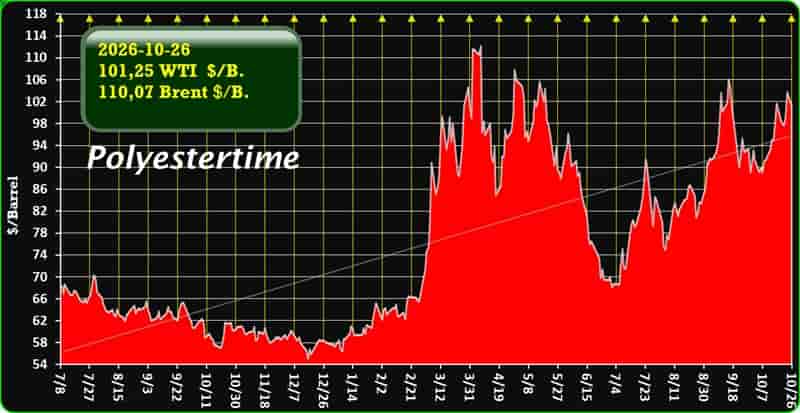
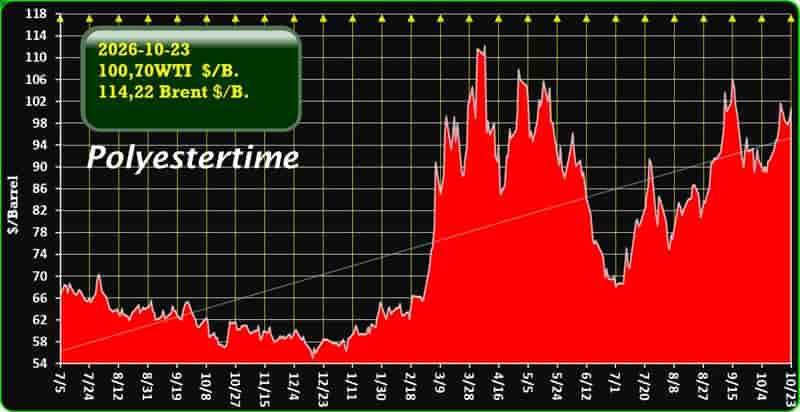
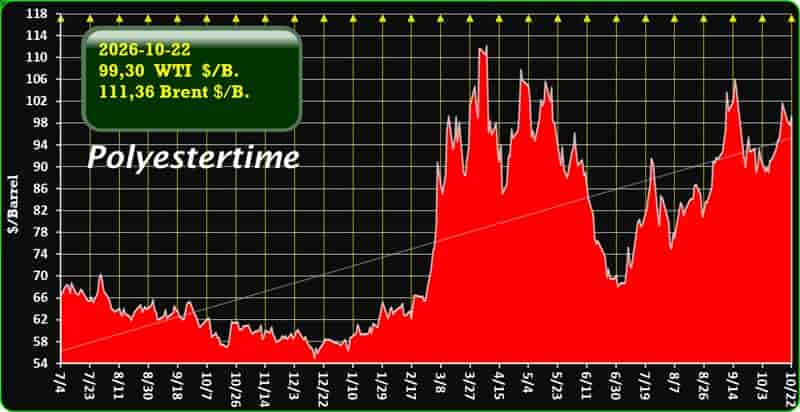
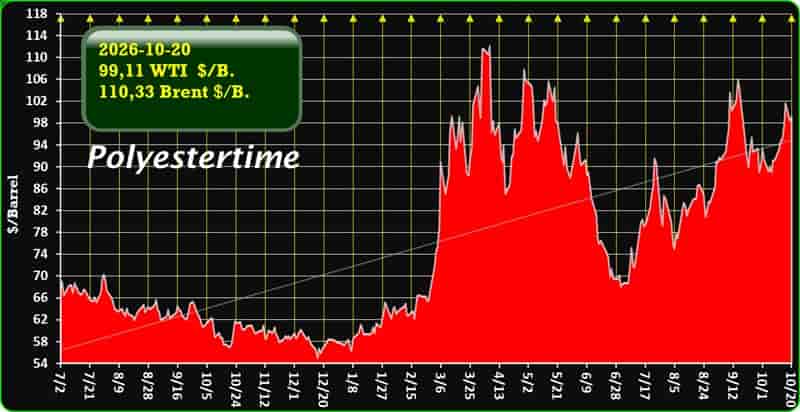
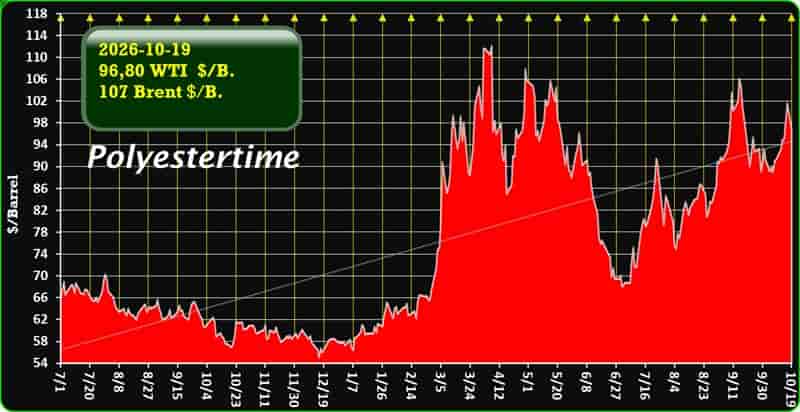
Oil price surges above $110 amid geopolitical shocks and market volatility, signaling tight supply risks and uncertain global economic outlook ahead
Oil price trend analysis – April 2, 2026
The crude price remains one of the most closely watched indicators in global markets, and as of April 2, 2026, it is characterized by extreme volatility and strong upward pressure. Brent crude is trading in the $105–115 per barrel range, while WTI fluctuates between $103 and $113, reflecting a market driven primarily by geopolitical risk rather than pure fundamentals.
Current oil price snapshot
| Benchmark | Price Range (USD/barrel) | Trend | Key Driver |
|---|---|---|---|
| Brent Crude | 105 – 115 | Highly volatile | Middle East tensions |
| WTI Crude | 103 – 113 | Upward bias | Supply disruption fears |
crude prices have rebounded sharply after a brief dip below $100, with Brent recently climbing back to around $106 and WTI above $103 following renewed geopolitical concerns.
This rapid fluctuation underscores how sensitive the oil price is to political developments, particularly in key supply regions.
Geopolitical tensions dominate the crude price
The primary driver behind today’s oil price surge is the escalating conflict involving Iran and the disruption of the Strait of Hormuz, a critical chokepoint responsible for roughly 20% of global oil flows.
Recent developments include:
- Renewed fears of escalation following U.S. political statements
- Continued uncertainty over the reopening of the Strait of Hormuz
- Threats to energy infrastructure in the region
Oil prices jumped approximately 5% in a single session, surpassing $106 per barrel after markets reacted negatively to political rhetoric, which dampened hopes of de-escalation.
Earlier in the week, optimism about a potential resolution briefly pushed prices lower, even below $100, before sentiment reversed again.
Conclusion: geopolitical risk is currently embedding a significant premium into the crude price.
Supply and demand dynamics
While geopolitics dominates headlines, underlying supply-demand fundamentals still play a crucial role in shaping the crude price.
Supply-side pressures
- Disruption of Middle Eastern exports
- Strategic reserve releases (e.g., IEA intervention)
- Limited spare capacity among major producers
Demand-side resilience
- Continued consumption in Asia
- Stable industrial demand despite economic uncertainty
- Seasonal demand expectations
Data shows crude oil has risen more than 40% in the past month and over 50% year-on-year, highlighting how quickly supply concerns can drive price escalation.
OPEC+ and market balancing
OPEC+ remains a key stabilizing—or destabilizing—force for the crude price.
At present:
- The group has not significantly increased output
- Production discipline is maintaining tight supply conditions
- Any policy shift could quickly impact prices
Analysts suggest that even without further escalation, the crude price could remain elevated due to a structural supply deficit combined with a geopolitical risk premium.
Investor sentiment and financial markets
Investor sentiment around the oil price is currently fragile and reactive.
Key observations:
- Oil markets are highly headline-driven
- Equity markets react inversely to oil spikes
- Safe-haven assets (e.g., gold) are rising
For example, stock markets rallied when oil prices dropped on expectations of a shorter conflict, indicating how closely energy prices are tied to broader financial stability.
At the same time, volatility remains elevated, with traders rapidly repricing risk based on political developments.
Oil price volatility explained
| Factor | Impact on Oil Price | Current Status |
|---|---|---|
| Geopolitics | Very High | Escalating |
| Supply constraints | High | Tight |
| Demand outlook | Moderate | Stable |
| OPEC+ policy | Moderate | Restrictive |
| Investor sentiment | High | Uncertain |
The oil price is currently trading with a significant geopolitical premium, estimated by analysts to be well above historical norms.
Short-term outlook for oil price
Looking ahead, the oil price trajectory will depend on three critical variables:
- Geopolitical developments
- De-escalation could push prices back toward $95–$100
- Escalation could drive Brent toward $120 or higher
- Strait of Hormuz status
- Reopening would ease supply fears
- Continued disruption sustains high prices
- Policy responses
- OPEC+ output decisions
- Strategic reserve releases
Current forecasts suggest oil could average around $106 in the near term, with upside risk toward $110+ if tensions persist.
What this means for the global economy
A sustained high oil price has wide-ranging implications:
- Inflation pressure increases globally
- Central banks may delay rate cuts
- Economic growth could slow, particularly in energy-importing regions
- Energy markets may accelerate diversification and investment in alternatives
In short, the oil price is not just an energy metric—it is a macroeconomic signal.
Final takeaway
The oil price on April 2, 2026 reflects a market under stress, where geopolitics outweigh fundamentals. With Brent and WTI firmly above $100, the balance between conflict escalation and diplomatic resolution will determine the next move.
In the short term, expect continued volatility. In the broader context, the current oil price environment reinforces a key reality: global energy markets remain highly exposed to geopolitical risk.
Oil Price Volatility Surges as Brent Holds Above $100 and WTI Nears Triple Digits Amid War Risks and Uncertain Global Demand Outlook
More…