Oil Prices Iran: Why Brent and WTI Are Holding Below War-Premium Levels
Oil Prices Iran: Why Brent and WTI Are Holding Below War-Premium Levels
Updated: July 6, 2026
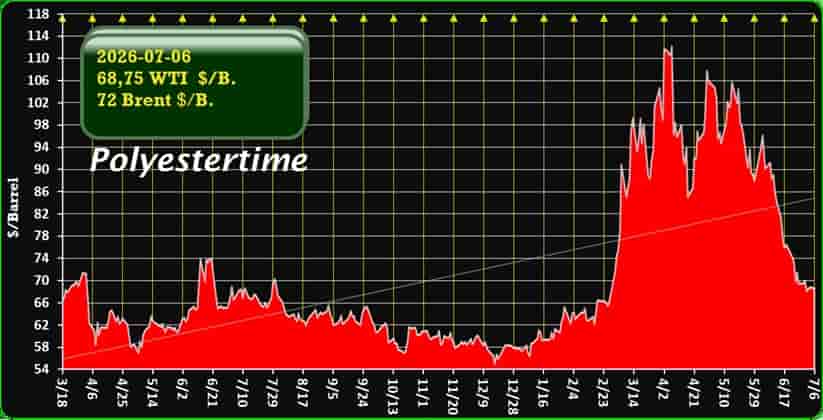
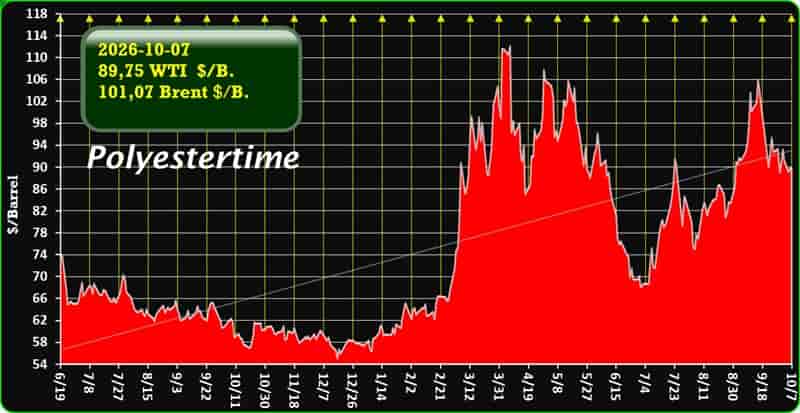
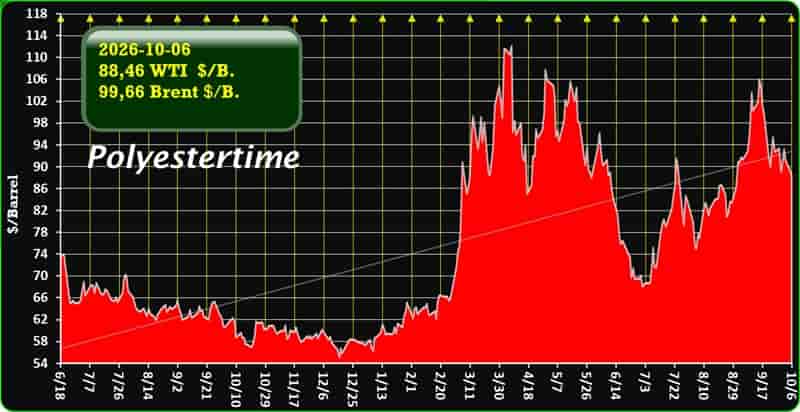
Brent crude is trading around $72 per barrel, while West Texas Intermediate is around $69.5 per barrel. Those levels suggest that oil markets are no longer pricing in the most extreme scenario from the US-Iran war, but they are not treating the risk as over either.
The main reason is simple: the Strait of Hormuz is still the market’s pressure point. Even when prices fall, traders keep watching shipping flows, insurance costs, military warnings, diplomatic talks and OPEC+ supply decisions. A few headlines can still change the tone of the market quickly.
Key takeaway
Oil prices have moved lower because the market sees less immediate risk of a full supply shock. However, the situation remains fragile. Brent near $72 and WTI near $69.5 reflect a market that is balancing three forces: partial recovery in Gulf shipping, continued US-Iran tension, and extra barrels expected from OPEC+.
Why oil prices have eased
Oil prices have retreated from earlier war-driven highs because traders see signs that the worst disruption scenario may be avoided. The reopening and partial recovery of traffic through the Strait of Hormuz have reduced fears of a prolonged blockage, even though flows remain sensitive to security risks.
The Associated Press reported that OPEC+ members agreed to a modest production increase of 188,000 barrels per day for August 2026. That matters because more expected supply can pressure prices, especially when the market also believes that shipping conditions are improving.
At the same time, the US Energy Information Administration has described the oil market as being in a period of high volatility and uncertainty linked to the Strait of Hormuz disruption. The EIA also warned that demand weakness can limit price increases even when supply routes are under stress.
In other words, prices are lower not because the geopolitical risk has disappeared, but because the market is no longer assuming the most damaging outcome as its base case.
Why the Strait of Hormuz still matters
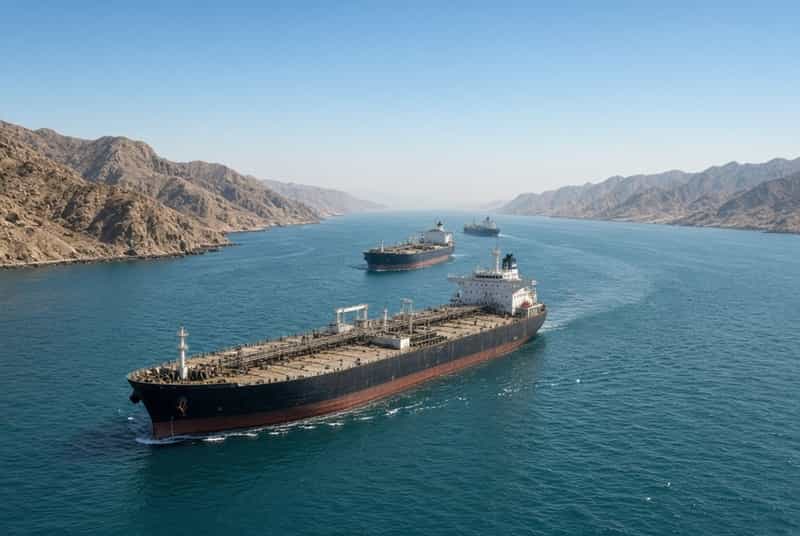
The Strait of Hormuz is one of the most important energy chokepoints in the world. EIA data has previously shown that it carried about 21 million barrels per day of oil flows in 2022, equal to roughly 21% of global petroleum liquids consumption at that time.
That is why even limited disruption can affect crude prices, fuel prices, shipping costs and inflation expectations. The strait connects Persian Gulf producers with global buyers, and any threat to safe passage can quickly add a risk premium to Brent and WTI.
Recent reporting shows that the strait remains politically and militarily sensitive. AP reported that Iran warned oil tankers to use approved routes or face a “forceful response,” while negotiations involving US and Iranian diplomats continued through mediators in Qatar.
This is the central contradiction in today’s oil market: prices are behaving as if disruption risk has fallen, but the physical route that matters most is still exposed to political and military escalation. oil prices Iran
Brent vs WTI: what the price gap says
Brent usually reflects international crude conditions more directly, while WTI is the main US benchmark. With Brent around $72 and WTI around $69.5, the spread is moderate and consistent with a market that sees global risk but not an immediate panic.
If tensions rise again around Hormuz, Brent would likely react first because it is more exposed to international seaborne supply risk. WTI would also move, but its reaction can be softened or amplified by US inventories, refinery demand, export flows and the dollar.
For readers, the important point is that the current price levels are not a clean “peace signal.” They are more accurately a repricing of risk. The market is saying: the worst-case scenario is less likely today, but it is still possible.
The role of OPEC+
OPEC+ is another reason prices are not rising aggressively. The group’s latest decision to raise output modestly signals that producers are trying to manage the transition from crisis pricing toward more normal supply conditions.
The increase is not huge compared with global consumption, but it matters psychologically. In a fragile market, even a modest production hike can tell traders that producers are willing to add barrels if conditions allow.
However, there is a limit to how much OPEC+ can calm the market. If the Strait of Hormuz becomes unsafe again, additional production targets may not matter if barrels cannot move smoothly to buyers. Supply is not only about how much oil is pumped; it is also about whether ships, ports, insurers and buyers can operate without unacceptable risk.
What could push oil prices higher again
Oil prices could rise quickly if any of the following happens:
A renewed military incident near the Strait of Hormuz.
A breakdown in US-Iran indirect talks.
A sharp drop in Gulf shipping flows.
Higher insurance costs for tankers.
Unexpected inventory draws in the United States.
A decision by OPEC+ to pause or reverse planned production increases.
The most powerful bullish factor would be a renewed threat to physical supply. Even if no barrels are immediately lost, traders often buy oil futures when they believe future supply is at risk.
What could push prices lower
Prices could fall further if the market gets stronger evidence that Gulf flows are normalizing. A durable diplomatic framework between the United States and Iran would reduce the war premium. So would reliable data showing more tankers moving through Hormuz without incident.
Additional OPEC+ supply could also weigh on prices, especially if demand remains weak. The EIA has already pointed to lower expected global demand as a factor limiting price increases from Hormuz disruptions.
A stronger dollar or weaker global economic data could add more downside pressure because oil is priced in dollars and closely tied to expectations for industrial activity, transport and trade.
What investors and consumers should watch next
For investors, the key indicators are Brent-WTI spreads, tanker traffic through Hormuz, US crude inventories, OPEC+ meeting language and headlines from US-Iran negotiations.
For consumers, the key issue is whether crude price changes pass through to fuel prices. That pass-through is not always immediate. Refining margins, taxes, local supply chains and currency movements can delay or amplify the effect at the pump.
For businesses, the main risk is volatility. Even if oil prices remain near today’s levels, sudden moves can affect transport costs, petrochemicals, aviation, logistics and inflation expectations.
Bottom line
Brent near $72 and WTI near $69.5 show that the oil market has removed much of the extreme US-Iran war premium. But this is not a normal market yet.
The Strait of Hormuz remains the decisive risk. OPEC+ supply increases and partial shipping recovery are helping to cool prices, while military warnings and unresolved diplomacy keep a floor under geopolitical concern.
The most realistic reading is this: oil prices are lower because traders see a better path than they did at the height of the crisis, but they are still one escalation away from another risk-driven rally.
Sources checked
Associated Press, July 2026, on OPEC+ production increases and Iran’s tanker-route warning.
US Energy Information Administration, June 2026 Short-Term Energy Outlook and Strait of Hormuz analysis.
International Energy Agency, 2026 oil market reporting and Middle East energy security analysis.
OPEC public communications on production adjustments.
This article is for market information only and is not financial advice.
Oil Prices Iran: Brent Near $72 as US-Iran Risk Reprices Crude
More…