PET Bottle – The largest of its kind in China, the energy farm is officially known as the Rudong offshore photovoltaic-hydrogen energy storage project. It has been successfully connected to the grid and began operations on Dec 31, 2024, in Rudong county, Jiangsu province, CHN Energy said in a press release on Friday 06-01-2025 - Archive
PET Bottle

- EV Cars – Battery-powered vehicle registrations in China are expected to grow 20%, reaching 12 million units—more than double the 5.9 million sold in 2022. Meanwhile, ICE vehicle sales will decline by 10%, dropping below 11 million units. Analysts from UBS, HSBC, and Morningstar agree that this transition is imminent and inevitable 30-12-2024
- New enzyme technology for environmentally friendly plastic recycling
PET Bottle
What are the BRICS good for?
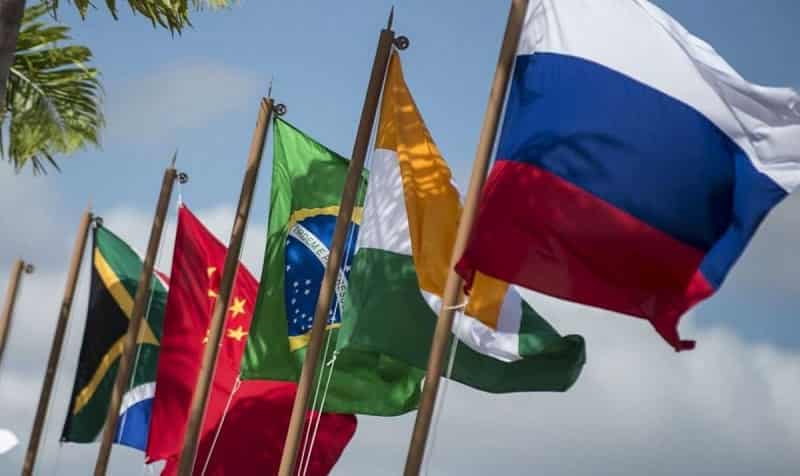
One question that 2025 may begin to answer is whether the BRICS (Brazil, Russia, India, China, South Africa) is becoming the new center of power in world politics. Now that the group has added new members (Egypt, Ethiopia, Iran, and the United Arab Emirates) and come to represent 45 percent of the world population, some believe that it is consolidating the (misleadingly named) “Global South” and posing a serious challenge to American and Western power. But I remain skeptical of such claims. PET Bottle
When Jim O’Neill (then the chief economist at Goldman Sachs) coined the “BRIC” acronym in 2001, his aim was simply to identify the four emerging economies that were most likely to dominate global economic growth by 2050. But the label soon acquired a political valence. It became an informal diplomatic grouping at the 2006 United Nations General Assembly, and then a formal organization with the first BRIC Summit in 2009. Hosted in Russia, the focus then – as it is now – was on advancing a multipolar world order. At the end of the following year, the group got its “S” when South Africa joined. PET Bottle
A Wall Street asset class evolved into an international organization partly because it aligned with Russia’s and China’s own aspirations to lead the developing world. The BRICS 16th summit in Russia in October 2024 was the first to include its new members (Saudi Arabia has not yet decided whether to accept the group’s invitation to join, and Argentina’s new government declined). Some 36 national leaders attended, as did representatives from many international organizations, including U.N. Secretary-General António Guterres, and Turkey used the occasion to present its own application for membership.
The 2024 summit focused on fostering ties across the Global South and building a multipolar world, with Russian President Vladimir Putin using the occasion to demonstrate his global diplomatic relevance despite Russia’s invasion of Ukraine in 2022.
With more countries showing an interest in joining, it looks like the BRICS could indeed present itself as a leader of the resistance to the U.S.-dominated international order.
Some even see it as the successor to the Cold War-era Non-Aligned Movement, whose members refused to choose between the United States and the Soviet Union. But while NAM had a shared interest in resisting the U.S., it did not have Russia and China as founding members. PET Bottle
In any case, the BRICS is unlikely to succeed in formally organizing the “Global South.” Not only do its largest and most important members – China, India, and Russia – all lie north of the equator, but the three are competing for leadership.
Russia and China do have a common interest in countering what they see as an American threat, and they have declared an “alliance without limits.” But such slogans mask major differences in their strategic perspectives. While Russia took vast swaths of territory from China in the nineteenth century, when the Qing dynasty was weak, China’s economy is now ten times the size of Russia’s. Both countries are vying for influence in Central Asia, and China is uneasy about Russia’s recruitment of its neighbor North Korea to fight in Ukraine. PET Bottle
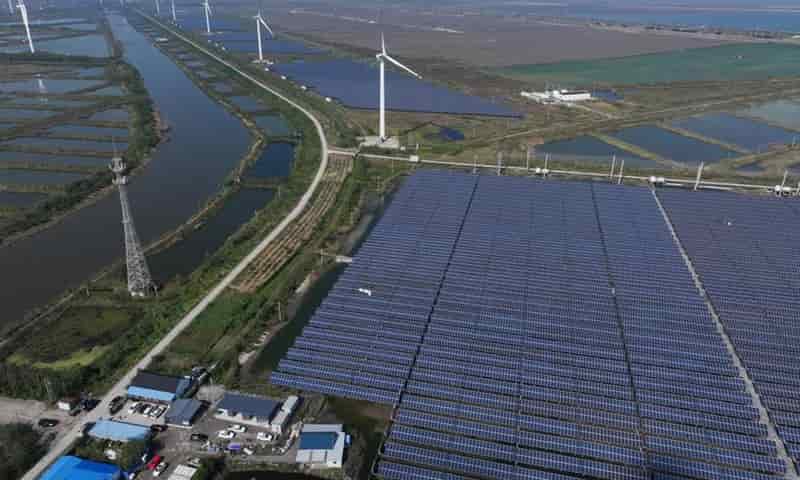
China’s largest offshore solar-hydrogen farm starts operation
A large integrated solar-hydrogen farm, located in the tidal flat area of eastern China, has officially commenced operations, according to its owner, Guohua Energy Investment Co., Ltd., under the CHN Energy Investment Group (CHN Energy).
The largest of its kind in China, the energy farm is officially known as the Rudong offshore photovoltaic-hydrogen energy storage project. It has been successfully connected to the grid and began operations on Dec 31, 2024, in Rudong county, Jiangsu province, CHN Energy said in a press release on Friday.
This marks the launch of China’s first comprehensive energy utilization and coastal ecological management project, integrating photovoltaic power generation, hydrogen production, hydrogen refueling and energy storage, according to the press release.
With a total installed capacity of 400 megawatts, the Rudong project, spanning 4,300 mu (about 287 hectares), features a newly constructed 220 kV onshore booster station, a 60 MW/120 MWh energy storage facility, and a hydrogen production and refueling station with a production capacity of 1,500 standard cubic meters per hour and hydrogen refueling capability of 500 kilograms per day. PET Bottle
Once fully operational in 2025, the project is expected to generate an average of 468 million kilowatt-hours of electricity annually, equivalent to saving approximately 151,000 tonnes of standard coal each year.
This will also lead to a substantial reduction in emissions, including approximately 309,400 tonnes of carbon dioxide, 562.6 tonnes of sulfur dioxide, and 1,125.3 tonnes of nitrogen dioxide. These reductions not only make a significant contribution to environmental protection but also mark a key milestone in advancing the transition to a more sustainable energy structure, according to CHN Energy. PET Bottle
Canada Plastics Pact welcomes three new industry partners
The CPP has added Hilton Foods, Magnomer, and Multy to its expanding network of companies advancing the circular economy
The Canada Plastics Pact (CPP) has expanded its network with the addition of Hilton Foods, Magnomer, and Multy as new partners in Q4 of 2024.
“We are pleased to see a growing number of leaders and experts in the plastics value chain joining us,” says Cher Mereweather, managing director of the CPP. “We look forward to working with these new partners to develop, test, and scale bold, innovative solutions that will address plastic waste and pollution, and advance the circular economy for plastics in Canada.”
Hilton Foods
Hilton Foods operates in 10 countries worldwide, supplying retail and foodservice partners across 19 markets. Their products reach over 160 million consumers across more than 20 markets and the company is continually seeking new ways of offering a range of healthier and more sustainable products.
Magnomer
Magnomer is a startup offering patented functional coatings technology to help transform problematic packaging elements into recycling preferred design.
Their patented Magmark SS coatings make packaging recycling-friendly by adding magnetization and optical detectability to shrink sleeves, ensuring easy sortation and separation in recycling operations. Transparent, food-safe, and printable on labels without altering branding, Magmark SS coatings can be applied to PETG, transforming it into a material that can be easily captured and recycled within current recycling infrastructure.
Multy
Multy has manufacturing and distribution facilities in Canada, Poland, and the U.S. and provides a comprehensive and diverse selection of patio living categories, planters, gardening products, and floor protection mats.