Global PET Bottle Grade Resin and Recycled PET (rPET) Industry
Global PET Bottle Grade Resin and rPET Market: Complete 2026 Industry Analysis
The global PET bottle grade resin market stands at a structural inflection point in 2026. Virgin PET capacity exceeds 42 million metric tons per year, yet food-grade recycled PET (rPET) remains critically undersupplied across Europe and North America. Regulatory mandates — led by the EU Single-Use Plastics Directive — are forcing a fundamental shift in how beverage companies source, specify, and procure polyethylene terephthalate resin.
This report provides a complete quantitative overview of the global PET bottle grade market as of May 10, 2026, covering production volumes, country-by-country capacity, current market prices, recycling technologies, regulatory frameworks, end-use segmentation, and a scenario-based outlook to 2035.
1. Executive Summary
The global PET bottle grade resin market is valued at between USD 36 billion and USD 60 billion in 2026, a historically wide range driven by acute crude oil price volatility linked to Middle East geopolitical tensions and disruptions in PTA and MEG supply chains. Global installed capacity for virgin bottle-grade PET resin reached approximately 42 million metric tons (MM MT) in 2025, with actual production estimated at around 35 MM MT, implying an average global operating rate of approximately 83%.
The global recycled PET (rPET) market is valued at USD 14.3 billion in 2026 and is projected to reach USD 25.9 billion by 2033, growing at a CAGR of 8.9%. Total rPET production is estimated at approximately 11.1 MM MT in 2026, up from 9.6 MM MT in 2025.
Key Market Trends in 2025–2026
- The virgin PET–rPET price spread widened significantly in Europe, reaching USD 125/MT by May 2026, driven by regulatory demand pull for certified food-grade rPET amid constrained bottle-to-bottle supply.
- The EU SUP Directive 25% recycled content mandate for PET beverage bottles is now enforced, creating a structural demand floor that current rPET supply cannot fully meet.
- Beverage companies — Coca-Cola, PepsiCo, Nestlé Waters, and Danone — are accelerating long-term offtake contracts for certified food-grade rPET.
- China’s virgin PET overcapacity (~85% utilization) continues to exert downward pressure on global virgin resin prices.
- Enzymatic recycling pioneers Carbios and Samsara Eco delayed commercial start-ups from 2025 to H1 2028, citing capital intensity of USD 4,500–5,000/tonne/yr of capacity.
- Geopolitical disruption at the Strait of Hormuz elevated PTA prices by 15–20% in Q1 2026, compressing European and North American margins.
2. Global PET Bottle Grade Production (2020–2026)
Global bottle-grade PET resin production capacity grew at 15.4% CAGR between 1990 and 2010, then moderated to approximately 6.4% CAGR since 2010. In 2022, global effective capacity was approximately 34.7 MM MT; by 2025 this reached ~42 MM MT. Northeast Asia (led by China) accounts for approximately 45% of total global bottle-grade PET capacity.
Production Volume Trend (MM MT/year)
| Year | Virgin PET (MM MT) | rPET (MM MT) | Total (MM MT) |
|---|---|---|---|
| 2020 | 26.2 | 5.1 | 31.3 |
| 2021 | 28.4 | 5.8 | 34.2 |
| 2022 | 30.1 | 6.5 | 36.6 |
| 2023 | 31.8 | 7.4 | 39.2 |
| 2024 | 33.2 | 8.3 | 41.5 |
| 2025E | 34.7 | 9.6 | 44.3 |
| 2026E | 35.9 | 11.1 | 47.0 |
| 2027F | 36.8 | 13.0 | 49.8 |
| 2030F | 38.6 | 19.5 | 58.1 |
| 2035F | 38.0 | 25.0 | 63.0 |
Country-by-Country Production Data (2025 Estimates)
| Country | Capacity (MT) | Production (MT) | Util. % | Dom. Demand (MT) | Net Trade | Major Producers |
|---|---|---|---|---|---|---|
| China | 14.2M | 12.1M | 85% | 9.1M | Exporter +3.2M | Hengyi, Sanfame, Wankai, Sinopec |
| India | 4.1M | 3.4M | 83% | 2.8M | Exporter +0.7M | Reliance Industries, JBF, Indo Rama |
| USA | 3.8M | 3.1M | 82% | 3.6M | Importer −0.5M | DAK Americas, Alpek, Indorama |
| South Korea | 2.1M | 1.7M | 81% | 1.2M | Exporter +0.5M | SK Chemicals, Lotte, HK Chem. |
| Turkey | 1.6M | 1.3M | 81% | 1.0M | Exporter +0.3M | SASA, Advansa, Kordsa |
| Mexico | 1.3M | 1.0M | 77% | 1.1M | Importer −0.1M | Alpek, DAK Americas |
| Brazil | 1.1M | 0.9M | 82% | 0.95M | Balanced | M&G, Alpek |
| Thailand | 0.9M | 0.72M | 80% | 0.57M | Exporter +0.15M | Indorama, Thai PET Resin |
| Germany | 0.7M | 0.55M | 79% | 0.60M | Importer −0.05M | Indorama, Thyssenkrupp |
| Saudi Arabia | 0.65M | 0.54M | 83% | 0.30M | Exporter +0.24M | SABIC, Petrokemya |
| Vietnam | 0.50M | 0.38M | 76% | 0.33M | Exporter +0.05M | Far Eastern, Indorama |
| Indonesia | 0.45M | 0.36M | 80% | 0.36M | Balanced | Indorama, PT Asia Pacific Fibers |
| Russia | 0.40M | 0.30M | 75% | 0.33M | Importer −0.03M | Polief, Relef |
| Japan | 0.38M | 0.29M | 76% | 0.35M | Importer −0.06M | Teijin, Toyobo, Nan Ya |
| Italy | 0.35M | 0.26M | 74% | 0.33M | Importer −0.07M | Mossi & Ghisolfi (M&G) |
| UAE | 0.32M | 0.25M | 78% | 0.18M | Exporter +0.07M | OCTAL, Emirates |
| France | 0.28M | 0.21M | 75% | 0.30M | Importer −0.09M | Indorama, Eastman (new plant) |
| Spain | 0.25M | 0.19M | 76% | 0.28M | Importer −0.09M | La Seda de Barcelona, Indorama |
| Egypt | 0.22M | 0.16M | 73% | 0.20M | Importer −0.04M | Egyptian Petrochemicals, ECHEM |
| South Africa | 0.15M | 0.10M | 67% | 0.15M | Importer −0.05M | Safripol |
3. Major Global PET Producers
The global virgin PET market is moderately concentrated: the top 10 producers account for over 60% of total global capacity. Indorama Ventures holds the top position with approximately 6.3 MM MT total capacity (~15% global share). In the rPET sector, the market is more fragmented, with Indorama also the largest player by rPET capacity (~750 kt/yr).
| Company | Total Cap. | Bottle Grade | rPET Cap. | Footprint | Integration | Key Strategy |
|---|---|---|---|---|---|---|
| Indorama Ventures | 6.3 MM MT | ~4.2 MM MT | 0.75 MM MT | 40+ countries | Full PX–PTA–PET | $1.5B rPET investment; 1-in-5 global PET bottles |
| Hengyi Petrochemical | 5.3 MM MT | ~3.8 MM MT | 0.20 MM MT | China, Brunei | PTA–PET integrated | Asian scale; limited rPET commitment |
| Jiangsu Sanfame Group | 3.14 MM MT | ~2.2 MM MT | 0.15 MM MT | China (Jiangsu) | PTA–PET integrated | Domestic growth; selective export |
| Alpek Polyester | 2.92 MM MT | ~2.4 MM MT | 0.30 MM MT | USA, Mexico, Brazil, UK | Partial | Americas leader; growing rPET portfolio |
| Wankai New Materials | 2.8 MM MT | ~2.0 MM MT | 0.10 MM MT | China | Partial | 400kt expansion in 2026; export focus |
| Far Eastern New Century | 2.1 MM MT | ~1.5 MM MT | 0.20 MM MT | Taiwan, China, Vietnam | Full PX–PTA–PET | Circular economy positioning |
| Reliance Industries | 1.8 MM MT | ~1.2 MM MT | 0.15 MM MT | India | Full crude–PET | India market anchor; EPR-driven rPET |
| DAK Americas | 1.4 MM MT | ~1.1 MM MT | 0.25 MM MT | USA, Mexico, Brazil | Partial | Americas food-grade rPET growth |
| Nan Ya Plastics | 1.1 MM MT | ~0.8 MM MT | 0.08 MM MT | Taiwan, USA, China | Full (Formosa group) | Stable regional producer; conservative rPET |
| OCTAL | 0.9 MM MT | ~0.9 MM MT | 0.05 MM MT | Oman (Salalah), USA | Full DPET | Direct-to-sheet innovation; low-carbon positioning |
| Eastman | 0.8 MM MT | ~0.5 MM MT | 0.28 MM MT | USA, France | Chemical recycling integrated | Molecular recycling pioneer; Drinktec 2025 100% rPET bottle |
| SK Chemicals | 0.7 MM MT | ~0.5 MM MT | 0.12 MM MT | South Korea | Full PTA–PET | SKYPET rPET; chemical recycling licensing |
| JBF Industries | 0.9 MM MT | ~0.7 MM MT | 0.05 MM MT | India, UAE, Belgium, Brazil | Partial | Multi-region bottle grade; limited rPET |
| Loop Industries | 0.3 MM MT | ~0.3 MM MT | 0.30 MM MT | Canada, France | Chemical recycling only | Depolymerization to virgin-equivalent DMT + EG; accepts colored PET |
4. New Projects and Capacity Expansions (2025–2028)
The pipeline of capacity additions reflects the industry’s dual investment focus: continued virgin PET expansion in Asia and a wave of recycled PET projects in Europe and North America driven by regulatory pressure.
| Company | Country | Type | Capacity | Investment | Start-Up | Technology | Target Application |
|---|---|---|---|---|---|---|---|
| Carbios | France | Enzymatic Recycling | 50 kt/yr | €230M | H1 2028* | PETase enzymatic depolymerization | Food-grade rPET; L’Oréal, Nestlé Waters, PepsiCo offtake |
| Eastman | France | Chemical Recycling | 160 kt/yr | ~$250M | 2026–27 | Polyester renewal (methanolysis) | Virgin-equivalent food-grade rPET |
| Indorama Ventures | USA + Europe | Mechanical rPET Expansion | +300 kt/yr | ~$500M | 2025–26 | Super-clean mechanical + SSP | Food-grade rPET pellets for beverage |
| Loop Industries | Canada + France | Chemical Recycling | 40 kt/yr | ~C$100M | 2027 | LOOP depolymerization process | Virgin-equivalent rPET (DMT + EG) |
| Samsara Eco | Australia | Enzymatic Recycling | 20 kt/yr | ~A$50M | 2027 | Engineered PETase enzyme | Food-contact rPET; 10-year Lululemon offtake |
| Wankai New Materials | China | Virgin PET Expansion | 400 kt/yr | ~$180M | 2026 | Continuous polycondensation | Bottle-grade resin (domestic + export) |
| Alpek | USA (Texas) | Virgin PET / Debottlenecking | +200 kt/yr | ~$120M | 2025–26 | Polycondensation upgrade | North America bottle grade |
| Remondis / Biffa | UK + Germany | Mechanical rPET Plant | 80 kt/yr | ~€60M | 2026 | Super-clean mechanical + SSP | EU food-grade rPET; DRS bale feedstock |
5. PET Bottle Grade and rPET Market Prices — May 2026
PET and rPET pricing as of May 10, 2026 reflects divergent regional dynamics: elevated feedstock costs in the West, chronic oversupply depressing Asian virgin PET margins, and structural regulatory demand pushing food-grade rPET premiums in Europe and North America.
Regional Price Snapshot — May 2026 (USD/MT)
| Region | Virgin PET (USD/MT) | Food-Grade rPET (USD/MT) | PET Flakes (Clear) | PET Bottle Bales | V/rPET Spread |
|---|---|---|---|---|---|
| North America | ~1,180 | ~1,096 | ~750 | USD 320–380 | ~84 USD/MT |
| Europe (CIF NW) | ~1,230 | ~1,105 | ~820 | USD 360–420 | ~125 USD/MT |
| China (ex-plant) | ~850 | ~693 | ~500 | USD 180–220 | ~157 USD/MT |
| India | ~900 | ~715 | ~520 | USD 200–240 | ~185 USD/MT |
| Southeast Asia | ~880 | ~720 | ~530 | USD 190–230 | ~160 USD/MT |
| Middle East | ~820 | ~680 | ~490 | USD 175–215 | ~140 USD/MT |
| Brazil | ~1,050 | ~960 | ~680 | USD 280–340 | ~90 USD/MT |
Price Trend: Virgin PET vs rPET — Europe and USA (2024–2026, USD/MT)
| Quarter | Virgin EU | rPET EU | Spread EU | Virgin USA | rPET USA | Spread USA |
|---|---|---|---|---|---|---|
| Q1 2024 | 1,119 | 980 | 139 | 1,100 | 1,020 | 80 |
| Q2 2024 | 1,250 | 1,050 | 200 | 1,152 | 1,080 | 72 |
| Q3 2024 | 1,250 | 1,040 | 210 | 1,160 | 1,075 | 85 |
| Q4 2024 | 1,119 | 980 | 139 | 1,130 | 1,050 | 80 |
| Q1 2025 | 1,100 | 960 | 140 | 1,120 | 1,040 | 80 |
| Q2 2025 | 1,140 | 1,020 | 120 | 1,145 | 1,070 | 75 |
| Q3 2025 | 1,160 | 1,040 | 120 | 1,155 | 1,080 | 75 |
| Q4 2025 | 1,200 | 1,090 | 110 | 1,165 | 1,085 | 80 |
| Q1 2026 | 1,230 | 1,105 | 125 | 1,180 | 1,096 | 84 |
Feedstock Price Benchmarks — May 2026
| Feedstock | Price (USD/MT) | vs Q1 2024 | Key Driver |
|---|---|---|---|
| Para-Xylene (PX) — FOB Korea | ~1,020 | +15% | Crude oil elevation; Strait of Hormuz disruption |
| Purified Terephthalic Acid (PTA) — CIF Asia | ~760 | +12% | MEG shortage; climate-related plant shutdowns |
| Mono Ethylene Glycol (MEG) — CFR China | ~620 | +19% | Ethylene feedstock tightness; Middle East tensions |
PET polymer cost formula: approximately 0.86 × PTA + 0.34 × MEG + USD 80–120/MT conversion cost.
6. Global PET Recycling Market
PET is the most recycled plastic in the world. Global rPET production capacity stands at approximately 20 MM MT/year across more than 1,000 mechanical recycling plants. However, actual food-grade rPET output is far smaller, constrained by collection purity requirements, decontamination capacity, and regulatory approval processes.
| Region | rPET Volume (MT/yr) | Collection Rate | Bottle-to-Bottle % | Food-Grade Output % | Key Drivers |
|---|---|---|---|---|---|
| Europe | ~3.8M | 52% | 38% | 28% | EU SUP Directive; mandatory DRS; Circular Plastics Alliance |
| USA + Canada | ~1.8M | 33% | 59% | 35% | California law; brand commitments; NAPCOR infrastructure |
| China | ~2.1M | 22% | 15% | 10% | Pilot city programs; informal sector dominant |
| India | ~0.9M | 28% | 20% | 12% | EPR mandates; 15 FSSAI-approved plants (2025) |
| Southeast Asia | ~0.7M | 18% | 12% | 8% | Informal sector; growing formal infrastructure |
| Latin America | ~0.5M | 20% | 25% | 14% | Brand sustainability targets; informal collection |
| Middle East | ~0.18M | 12% | 8% | 5% | Emerging EPR frameworks; historically low rates |
| Africa | ~0.12M | 8% | 5% | 2% | Primarily informal sector; minimal formal capacity |
In the USA, the PET bottle recycling rate reached 33% in 2023 — the highest since 1996 — with 59% of collected rPET directed to bottle markets, five consecutive years of growth. Average rPET content in US PET bottles measured 15.9% in 2024 (NAPCOR 2024 PET Recycling Report).
7. Recycling Technologies: Mechanical, Chemical, and Enzymatic
| Technology | Global Capacity | Food-Grade? | TRL | Cost (USD/MT) | Energy | Scalability | Leading Companies |
|---|---|---|---|---|---|---|---|
| Mechanical (super-clean) | ~8.5 MM MT | ✓ Yes (with SSP) | 9 — Mature | ~$400 | Low | Very High | Indorama, DAK, Veolia, Alpek, Biffa |
| Glycolysis | ~1.2 MM MT | ✓ Yes | 8 | ~$750 | Medium | High | Indorama, Loop, Gr3n, Ioniqa |
| Methanolysis | ~0.4 MM MT | ✓ Yes | 7 | ~$900 | High | Medium | Eastman (Kingsport + France), Lyondell |
| Hydrolysis | ~0.3 MM MT | ✓ Yes | 7 | ~$950 | High | Medium | IBM (VolCat), Gr3n, Auriga |
| Enzymatic (PETase) | ~50 kt | ✓ Yes | 6 — Emerging | ~$1,400 | Very Low | Emerging | Carbios, Samsara Eco, NREL |
| Solvent Purification | ~120 kt | ✗ Limited | 6 | ~$850 | Medium | Low | APK (CreaSolv), Plastic Energy |
Mechanical Recycling
Dominant technology globally. Process flow: bale breaking → sorting → washing → flaking → drying → solid-state polycondensation (SSP). SSP is essential for food-grade certification: it restores intrinsic viscosity (IV) and eliminates acetaldehyde and volatile contaminants. IV loss of approximately 0.01–0.02 dl/g per thermal cycle is restored via SSP at 200–220°C under vacuum. Capital cost: approximately USD 800–1,200 per tonne of annual capacity.
Chemical Recycling (Glycolysis, Methanolysis, Hydrolysis)
Depolymerizes PET to monomer building blocks: glycolysis → BHET; methanolysis → DMT + MEG; hydrolysis → TPA + MEG. Key advantage: accepts colored, contaminated, and multi-layer PET waste, producing virgin-equivalent polymer. Eastman’s Kingsport plant processes approximately 110,000 tonnes/year of hard-to-recycle PET. A 100% chemically recycled PET beverage bottle was unveiled with Doloop at Drinktec 2025 in Munich. Cost disadvantage: USD 900–950/MT versus USD 400/MT for mechanical recycling.
Enzymatic Recycling
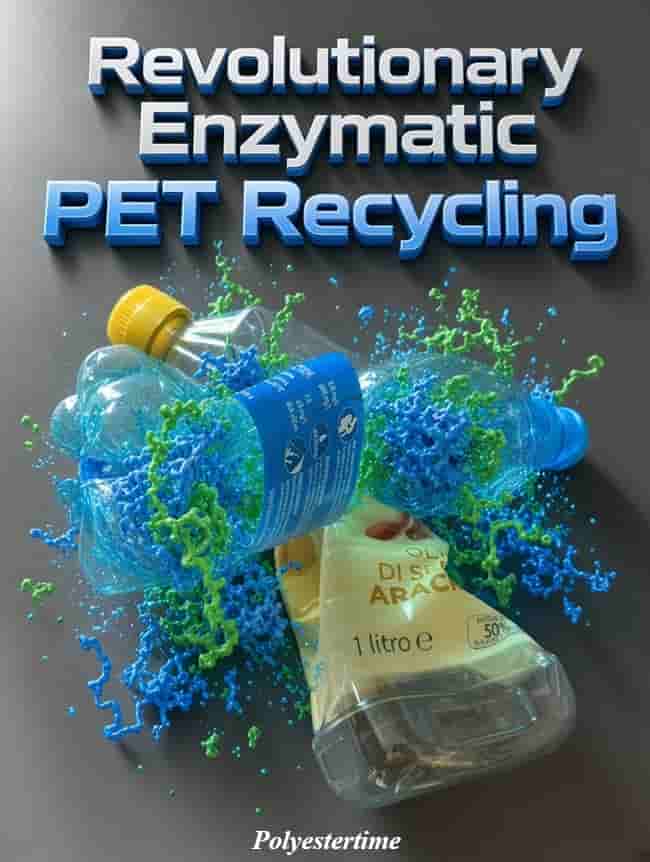
PETase and MHET-ase enzymes catalyze PET hydrolysis at 50–70°C — far below the 200–300°C required for thermal methods. Energy advantage: 30–65% lower energy consumption and 40–70% lower CO₂ emissions versus virgin PET production. The global enzymatic plastic recycling market reached USD 53 million in 2025, projected at 16.9% CAGR to 2033. Carbios (France, 50 kt/yr, €230M) and Samsara Eco (Australia, 20 kt/yr) are the commercial pioneers, both targeting H1 2028 start-up.
8. Country Regulations and Recycled Content Mandates
| Region | Recycled Content Mandate | EPR | DRS | Packaging Tax | Enforcement | Demand Impact |
|---|---|---|---|---|---|---|
| European Union | 25% by 2025 → 30% by 2030 | Yes (PPWR) | Mandatory by 2029 | SUP levy + national taxes | Enforced | High — structural floor |
| United Kingdom | 30% threshold (tax trigger) | Yes | Scotland + England 2025 | £217/MT (<30% recycled) | Enforced | High |
| California (USA) | 15% (2022) → 25% (2025) → 50% (2030) | Yes (CalRecycle) | CalRecycle active | None | Enforced | High (largest US state) |
| USA (other states) | Voluntary (most states) | Developing | 10 states active | Federal proposal pending | Voluntary | Low–Medium |
| Canada | 50% by 2030 (national target) | Provincial EPR | Multiple provinces | None | Voluntary | Medium |
| India | 30% by 2025 (rigid packaging) | Yes (CPCB EPR) | Pilot programs | EPR penalties | Implementing (uneven) | Medium — growing |
| China | 30% by 2025 (pilot cities) | Developing | Pilot programs | None | Pilot phase | Medium (scale effect) |
| South Korea | 30% by 2030 | Yes | Active national DRS | EPR fee | Active | Medium |
| Japan | 50% by 2030 (voluntary) | Yes | Voluntary schemes | None | Voluntary | Low–Medium |
| Australia | 50% by 2025 (national target) | Developing | NSW, QLD active | None | Voluntary | Low |
| Brazil | 22% by 2025 (Green Accord) | Green Accord | None nationally | None | Voluntary | Low |
| Mexico | No mandatory target | Developing | None | None | Voluntary | Low |
| South Africa | No mandatory target | PETCO (industry-led) | None | None | Industry-led | Low |
9. End-Use Market Segmentation
| Segment | Global Volume (MT) | Share | Growth Rate | rPET Adoption | IV Spec. (dl/g) | Key Notes |
|---|---|---|---|---|---|---|
| Mineral Water | ~11.5M | 32% | +5.2%/yr | 18% | 0.72–0.80 | Largest segment; lightweighting trend; highest rPET acceptance |
| CSD (Carbonated) | ~9.3M | 26% | +2.1%/yr | 14% | 0.78–0.84 | CO₂ barrier critical; higher IV required; slower rPET adoption |
| Juices and Nectars | ~3.9M | 11% | +3.8%/yr | 22% | 0.80–0.85 | High barrier; hot-fill grades; growing rPET acceptance |
| Edible Oils | ~2.9M | 8% | +4.5%/yr | 6% | 0.72–0.78 | Color sensitivity limits rPET; strong growth in Asia/Africa |
| Household Chemicals | ~2.5M | 7% | +3.1%/yr | 9% | 0.72–0.78 | Non-food contact; conservative rPET penetration |
| Personal Care | ~2.1M | 6% | +4.9%/yr | 12% | 0.72–0.80 | Brand-driven rPET claims; premium positioning |
| Dairy | ~1.8M | 5% | +6.2%/yr | 8% | 0.80–0.86 | Fastest growth; strict food contact; limited rPET |
| Pharmaceuticals | ~1.1M | 3% | +7.5%/yr | 2% | 0.82–0.88 | Highest IV; strictest regulatory barriers; minimal rPET |
| Other Packaging | ~0.7M | 2% | +2.8%/yr | 5% | Various | Strapping, thermoforming, specialty applications |
CSD vs Mineral Water: Technical Differentiation
These two dominant segments together represent 58% of global bottle-grade PET demand. Their resin specifications differ in important ways:
| Technical Parameter | CSD Bottles | Mineral Water Bottles |
|---|---|---|
| Intrinsic Viscosity (IV) | 0.78–0.84 dl/g (higher) | 0.72–0.80 dl/g (lower — suits rPET blending) |
| CO₂ Barrier Requirement | Critical — limits rPET blending | Moderate — non-carbonated application |
| Acetaldehyde (AA) Limit | <25 ppm (flavor masking possible) | <10 ppm (detectable off-taste at low levels) |
| rPET Adoption Rate | 14% — slower due to barrier requirements | 18% — faster adoption |
| Lightweighting Trend | Limited (pressure vessel constraints) | Advanced (8–12g for 0.5L bottles) |
| Brand rPET 2030 Target | Coca-Cola 50%, PepsiCo 50% | Danone Evian 100%, Nestlé Waters 50% |
10. Food-Grade rPET: Compliance, Technology, and Key Challenges
Regulatory Approval Pathways
- FDA (USA): No-Objection Letter (NOL) process. Challenge test required demonstrating decontamination efficiency for surrogate contaminants. Ongoing case-by-case assessment; no blanket category approval for rPET.
- EFSA (EU): Scientific opinion per recycling technology and operator. Decontamination efficiency threshold: >99.994% removal of potential contaminants. Mandatory under EU Packaging and Packaging Waste Regulation (PPWR).
- FSSAI (India): Facility-level registration. 15 new food-contact rPET recycling facilities approved in early 2025. Requirements broadly aligned with EU framework.
Key Technical Challenges in Food-Grade rPET Production
- Acetaldehyde (AA) Management: AA generated during reprocessing must be kept below 10 ppm for water and 25 ppm for CSD. Solid-state polycondensation (SSP) is the critical technology for AA removal and IV restoration.
- Color Management: Clear bottle clarity requires L* >82 and b* <2. Colored PET contamination in collection stream reduces clear flake yield by 20–40% in regions without color-sorting infrastructure.
- IV Restoration: Each thermal reprocessing cycle reduces IV by approximately 0.01–0.02 dl/g. SSP at 200–220°C under vacuum restores IV to specification.
- NIAS (Non-Intentionally Added Substances): Migration limits of <0.01 mg/kg required. GC-MS and LC-MS analytical testing mandatory per production batch targeting food contact.
- Multi-cycle Recyclability: Mechanically recycled PET sustains 7–10 production cycles with SSP before polymer degradation limits further use. Chemical recycling resets the polymer to monomer, enabling theoretical infinite circularity.
- Contamination Sources: Non-PET materials (PVC caps, PE sleeves, adhesive labels), non-food PET, and moisture contamination reduce clean flake yield and decontamination efficiency.
11. Supply Chain and Feedstock Analysis
Virgin PET Feedstock Chain
Crude oil → Para-xylene (PX) → Purified Terephthalic Acid (PTA) → PET resin (combined with MEG from ethylene pathway). All three upstream feedstocks are elevated 12–19% versus Q1 2024 averages, driven by geopolitical disruption at the Strait of Hormuz through which a large share of Middle Eastern petrochemical exports flow.
rPET Feedstock: Bottle Bale Supply Chain
- DRS bales (deposit return scheme collections): highest quality; 15–25% price premium over MRF bales; dominant in Scandinavia, Germany (Pfand), Scotland, and UK. Essential for food-grade mechanical recycling.
- MRF bales (curbside collection): mixed quality; greater contamination; lower cost. Suitable for non-food-grade rPET or chemical recycling feedstock.
- Clear flake availability is the binding constraint for food-grade mechanical rPET in Europe and North America. Opaque and colored PET in curbside streams reduces clear flake yields by 20–40%.
- Freight and logistics: Asia–Europe container rates remain 30–50% above 2023 baseline levels in early 2026, impacting rPET import costs in both directions.
European virgin PET producers are squeezed between elevated PTA/MEG costs and competitive low-cost Chinese imports (~USD 850/MT virgin resin ex-plant, near variable cost breakeven). Mechanical rPET recyclers in Europe are partly protected by the EU SUP mandate floor, but face margin pressure when virgin PET prices fall.
12. Competitive Landscape and Strategic Positioning
SWOT Analysis — Food-Grade rPET Sector
Strengths
- Regulatory demand floor (EU SUP, UK tax, California law)
- Growing beverage brand long-term offtake commitments
- DRS-connected recyclers access premium bale quality and pricing
- Chemical recyclers differentiating via virgin-equivalent quality claims
Weaknesses
- Mechanical recyclers margin-compressed by cheap Asian virgin imports
- Enzymatic and chemical recycling cost premium 2–3× vs mechanical
- Food-grade certification capacity below regulatory demand
- Clear bale feedstock remains structurally scarce
Opportunities
- EU mandate tightening 25% → 30% in 2030
- DRS rollout improving feedstock quality across EU member states
- Beverage brand contracts providing long-term revenue visibility
- India FSSAI expansion creating new food-grade rPET market
Threats
- Chinese virgin PET overcapacity exerting global price pressure
- Geopolitical oil volatility disrupting PTA/MEG feedstock costs
- Greenwashing scrutiny increasing on rPET content claims
- Regulatory enforcement remains uneven globally
Porter’s Five Forces — rPET Industry
| Force | Intensity | Key Factors |
|---|---|---|
| Threat of New Entrants | Medium | High capex barriers for food-grade; enzymatic/chemical recycling raises entry cost; regulatory approvals are lengthy |
| Buyer Power | High | Beverage majors leverage long-term contracts but concentration creates dependency on certified suppliers |
| Supplier Power | Medium–High | Bale collectors and DRS operators command premium pricing; limited high-quality clear flake supply |
| Competitive Rivalry | High | Mechanical recyclers face intense price competition; chemical recyclers differentiate on quality at higher cost |
| Threat of Substitutes | Low–Medium | Virgin PET cheaper but regulatory mandates structurally protect rPET demand in regulated markets |
Notable M&A, JVs, and Technology Partnerships (2024–2026)
- Eastman + Doloop: 100% rPET beverage bottle unveiled at Drinktec Munich, September 2025.
- Carbios: offtake agreements with L’Oréal, Nestlé Waters, PepsiCo, and Unilever for enzymatic rPET supply starting 2028.
- Samsara Eco: 10-year offtake agreement with Lululemon; food-grade pathway under development.
- Indorama Ventures: multiple rPET plant acquisitions in Europe and Americas (part of USD 1.5B recycling investment program).
- SABIC: memorandum of agreement with Indian partners to scale chemical depolymerization in India (2024).
13. Future Outlook 2026–2035: Four Scenarios
| Scenario | rPET 2030 (MM MT) | rPET 2035 (MM MT) | Key Assumptions | Virgin PET Trend |
|---|---|---|---|---|
| Base Case | 19.5 | 25.0 | EU/US mandates enforced; moderate DRS rollout globally; mechanical recycling dominant technology | Flat to slight decline; −1.8% CAGR (HDIN Research) |
| High Recycling | 26.0 | 35.0 | Chemical and enzymatic recycling scales rapidly; aggressive DRS in all major markets; brand targets fully met | Structural decline −2% to −3%/yr |
| Low Oil Price | 15.5 | 19.0 | Crude oil <$60/bbl sustained; cheap virgin PET undermines recycler economics; voluntary targets missed | Stable to slight growth as rPET economics deteriorate |
| Aggressive Regulation | 29.0 | 38.0 | Global SUP-style mandates; carbon tax on virgin plastic; mandatory EPR with financial penalties globally | Sharp structural decline; virgin PET limited to non-regulated markets |
Under the base case, global rPET production reaches approximately 25 MM MT by 2035, representing 40–45% of total bottle-grade PET demand. The global PET market overall is projected to grow from USD 63.4 billion in 2026 to USD 131.3 billion by 2034 at a CAGR of 9.5% (all grades including fiber and film).
14. Appendix: Methodology, Acronyms, and Data Sources
Acronyms and Technical Terms
| Term | Definition |
|---|---|
| PET | Polyethylene Terephthalate — thermoplastic polyester resin |
| rPET | Recycled PET — post-consumer recycled polyethylene terephthalate |
| IV | Intrinsic Viscosity (dl/g) — measure of polymer chain length and mechanical performance |
| SSP | Solid State Polycondensation — restores IV and removes volatiles in rPET |
| PTA | Purified Terephthalic Acid — primary PET feedstock from para-xylene oxidation |
| MEG | Mono Ethylene Glycol — co-monomer for PET production |
| PX | Para-Xylene — aromatic feedstock for PTA production |
| CSD | Carbonated Soft Drink |
| DRS | Deposit Return Scheme |
| EPR | Extended Producer Responsibility |
| SUP | Single-Use Plastics Directive (EU) |
| MRF | Material Recovery Facility (curbside sorting plant) |
| AA | Acetaldehyde — unwanted by-product in PET reprocessing |
| NIAS | Non-Intentionally Added Substances — migration risk in food-contact rPET |
| B2B | Bottle-to-Bottle recycling — highest circularity pathway for food-grade rPET |
| TRL | Technology Readiness Level (scale 1–9) |
| PPWR | Packaging and Packaging Waste Regulation (EU, 2024) |
| DPET | Direct-to-PET sheet — OCTAL integrated production technology |
| NOL | No-Objection Letter — FDA food-contact approval for rPET |
| BHET | Bis(2-hydroxyethyl) terephthalate — glycolysis intermediate monomer |
| DMT | Dimethyl Terephthalate — methanolysis product for PET repolymerization |
Data Sources
- HDIN Research — Bottle Grade PET Resin Market Insights 2026
- ICIS — PET and rPET pricing intelligence, margin analysis, trade flow data
- IMARC Group — Global PET market size and regional forecasts
- NAPCOR — 2024 PET Recycling Report (USA and Canada statistics)
- Persistence Market Research — Global rPET market size and CAGR analysis
- Future Market Insights — rPET packaging and 100% rPET bottle market forecasts
- Plastic Collective — rPET supply-demand market analysis
- CZ App — Global PET resin capacity and projects database
- Plastics Technology / RTi — North America resin pricing, April 2026
- Energy Solutions — Enzymatic recycling PET market analysis
- European Commission — SUP Directive; PPWR regulatory framework
- FSSAI (India) — Food-contact rPET facility approvals 2025
- Fortune Business Insights — PET resin market by region and application
- GLYarn.com — rPET flake pricing analysis, December 2025
- Company reports: Indorama Ventures, Alpek, Eastman, DAK Americas, Reliance Industries, Carbios, Loop Industries, Samsara Eco, Wankai New Materials
Conversion Factors
- 1 metric ton (MT) = 2,204.6 lbs = 1.102 US short tons
- 1 MM MT = 1 million metric tons
- RMB/USD exchange rate basis: ~7.12 (December 2025)
- All prices in USD/MT unless otherwise stated
This market intelligence report was compiled from public industry sources as of May 10, 2026. Intended for professional use. Data is based on estimates and publicly available market assessments.
More…