TOMRA Launches AI-Powered Recycling Platform and Expands GAINnext™ Sorting Ecosystem
TOMRA Unveils Advanced AI Platform and Expands GAINnext™ Recycling Ecosystem
At IFAT 2026 in Munich and the Plastics Recycling Show Europe (PRSE) in Amsterdam, TOMRA Recycling introduced a major wave of artificial intelligence innovations designed to transform the future of automated waste sorting and recycling operations. The company revealed a next-generation AI-native platform developed by PolyPerception, alongside three new deep-learning applications for its award-winning GAINnext™ sorting technology. Together, these developments signal a significant leap toward smarter, more connected recycling facilities powered by real-time intelligence and automation.
The announcement also coincides with TOMRA increasing its investment in PolyPerception to a 51% majority stake. This strategic move strengthens the connection between digital analytics and physical sorting systems, enabling recycling plants to combine data interpretation, operational intelligence, and machine action into one integrated ecosystem.
A New Era of AI-Driven Recycling Intelligence
At the center of the announcement is PolyPerception’s new AI agent platform, which represents the next stage in the evolution of the company’s Waste Analyzer solution. Waste Analyzer already helps facilities improve sorting efficiency by tracking material flows and identifying operational weaknesses throughout the recycling process. However, the new platform goes much further by introducing AI capabilities that can actively interpret information and support decision-making in real time.
One of the most notable innovations is the introduction of a natural language interface. Instead of relying on technical dashboards or manually reviewing complex spreadsheets, plant operators can now communicate directly with the system using everyday language. Questions such as “How did changing settings on the recovery line affect purity rates?” can be asked conversationally, and the platform responds immediately with clear explanations, visual breakdowns, and operational insights.
This development removes one of the biggest barriers in industrial data analysis: accessibility. Traditionally, extracting valuable insights from plant data required specialized expertise and time-consuming analysis. PolyPerception’s AI platform simplifies this process by translating technical information into understandable, actionable answers.
More importantly, the platform moves beyond conventional AI reporting tools. Most AI systems used in recycling today focus primarily on “reading” data and presenting observations. PolyPerception’s solution introduces “writing” capabilities, meaning the AI can actively perform tasks within the operational environment. The platform can automatically generate quality reports, configure alerts, and support operational workflows within seconds.
According to Nicolas Braem, CEO and Co-Founder of PolyPerception, the new system introduces an entirely new layer of intelligence to recycling plants. Rather than simply displaying information, the AI interprets material behavior, explains trends, and provides operators with meaningful recommendations in real time.
Open Data Integration for Modern Recycling Plants
Another key feature of the platform is its open-data architecture. Recycling facilities can integrate the AI system directly into their existing management software and operational dashboards. This allows managers and decision-makers to access waste statistics, purity measurements, and material flow data without switching between multiple systems.
The integration capability is particularly valuable for large facilities that rely on centralized monitoring and reporting systems. By embedding AI-driven analytics directly into existing workflows, TOMRA and PolyPerception aim to make advanced sorting intelligence more practical and scalable across the recycling industry.
The platform also introduces two advanced search capabilities designed to help operators identify and respond to rapidly changing waste streams.
The first is “similarity search,” which allows users to identify visually comparable objects in a material stream instantly. For example, if a dangerous item such as an electronic vape or battery appears on the line, operators can select the object and immediately locate all similar items moving through the system. This feature is especially important for identifying fire hazards, which remain one of the most serious safety risks in recycling facilities worldwide.
Unlike traditional AI systems that require retraining to recognize new materials, similarity search works dynamically, allowing facilities to react quickly without extensive software updates.
The second capability is text and brand search. Operators can search for specific product categories, packaging types, or brands in real time. Queries such as “diapers,” “filled refuse bags,” or brand-specific packaging allow facilities to understand exactly what materials are entering the waste stream at any moment.
This level of visibility gives recyclers a better understanding of contamination patterns, incoming feedstock quality, and operational efficiency. It also provides valuable data for customers, municipalities, and packaging producers looking to improve recyclability and material recovery performance.
TOMRA’s Vision for AI-Centered Recycling
Lars Enge, Executive Vice President and Head of TOMRA Recycling, emphasized that artificial intelligence has long been part of TOMRA’s technological strategy. However, he explained that the industry is now entering a completely different stage of development.
With TOMRA acquiring a majority stake in PolyPerception, the company is moving beyond AI as a simple sorting enhancement tool and toward AI as the central intelligence system of the recycling plant. By combining advanced sorting equipment with intelligent software platforms, TOMRA aims to create a fully connected environment where machines, data, and operators work together seamlessly.
This integrated approach has the potential to fundamentally reshape plant operations. Instead of optimizing individual machines independently, facilities can now use AI to coordinate processes across the entire recycling workflow. The result is greater operational efficiency, improved material quality, and faster decision-making.
Expanding the GAINnext™ Ecosystem
Alongside the AI platform announcement, TOMRA also introduced three new deep-learning applications for its GAINnext™ ecosystem. These applications are designed to solve persistent sorting challenges where conventional sensor-based technologies have struggled to deliver sufficient accuracy or efficiency.
Food-Grade PET Tray Sorting
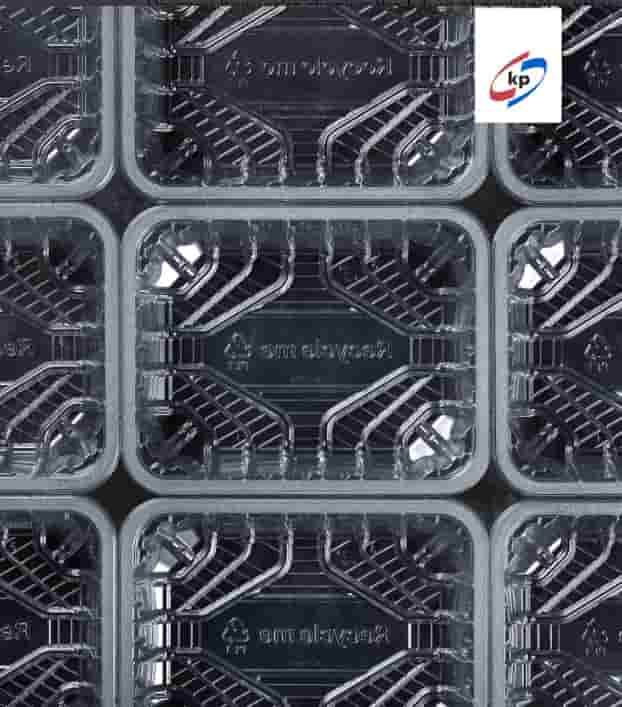
The first new application focuses on PET tray sorting, an area that has become increasingly important as demand for food-grade recycled plastics continues to grow. Traditionally, PET bottles have been the primary source of high-quality recycled PET, but PET trays are now emerging as an important secondary feedstock.
However, sorting trays has historically been difficult because different tray types often look similar despite serving different purposes. Food packaging, medical trays, and consumer product packaging can share similar materials but require different handling standards.
By training GAINnext™ using thousands of images, TOMRA has developed a system capable of distinguishing trays based on shape, design, and intended use. The AI can differentiate between supermarket takeaway trays and medical or consumer packaging with exceptional precision.
According to TOMRA, the technology can achieve purity levels exceeding 95%, demonstrating that high-quality PET tray recycling is no longer just technically possible but commercially viable as well.
Copper “Meatball” Sorting for Decarbonization
The second application targets the metals recycling sector, particularly the sorting of complex copper-steel composites commonly known as “copper meatballs.” These materials, including motor armatures and similar components, are valuable but difficult to separate accurately using conventional methods.
As the global steel industry accelerates decarbonization efforts, demand for higher-quality recycled feedstock is increasing rapidly. TOMRA’s new GAINnext™ application addresses this challenge by automatically identifying copper-steel composites even in dirty, oxidized, or mixed material streams.
The system enables recyclers to upgrade lower-grade scrap into premium furnace feedstock suitable for advanced steelmaking applications. This not only increases the economic value of recycled metals but also supports broader sustainability goals by improving circular material recovery.
High-Throughput Aluminum Can Recovery
The third addition to the GAINnext™ ecosystem focuses on used beverage can (UBC) aluminum recovery. Originally introduced successfully in North America, the solution has now been adapted for the European market.
The application is designed to recover aluminum beverage cans from mixed packaging streams at extremely high speeds. TOMRA states that the system can deliver throughput levels up to 33 times greater than manual sorting while achieving purity rates of 98% or higher.
The AI instantly detects and ejects non-UBC materials, creating a faster and more automated process for aluminum can-to-can recycling. This capability is particularly important as aluminum recycling continues to gain attention for its major energy-saving and carbon-reduction benefits compared with primary aluminum production.
A Turning Point for Recycling Technology
Taken together, these announcements represent more than incremental improvements in sorting performance. They highlight a broader transformation in how recycling facilities operate and interact with data.
According to Enge, deep learning is no longer limited to improving isolated processes or solving narrow sorting challenges. Instead, AI is now connecting operational insights directly to plant-wide action. Recycling systems are evolving from high-speed detection machines into intelligent networks capable of understanding, contextualizing, and communicating information to human operators in real time.
This shift marks a significant turning point for the industry. As recycling plants face increasing pressure to improve efficiency, reduce contamination, and meet stricter sustainability targets, AI-driven technologies are becoming essential tools for achieving those goals.
By combining advanced sorting hardware with intelligent analytics and autonomous operational support, TOMRA is positioning itself at the forefront of the next generation of recycling innovation.
Takeaway Packaging – Tomra Launches Innovative Reuse System for Takeaway Packaging in Paris Tomra, the Norwegian pioneer in recycling and reverse vending technology, has announced the expansion of its reuse infrastructure with a smart solution for takeaway food packaging