The New Global Balance: Russia, the United States, China and the End of the Wars Reshaping the 21st Century
The New Global Balance: Russia, the United States, China and the End of the Wars Reshaping the 21st Century
Energy Diplomacy Is Replacing Permanent Conflict
For more than three years, the global geopolitical system has existed in a state of near-permanent tension. The Russia-Ukraine war, escalating US-Iran confrontations, European rearmament, instability in the Strait of Hormuz, and the return of great-power competition have accelerated the transformation of the post-1991 world order.
Now, however, the first signs of a strategic transition are emerging.
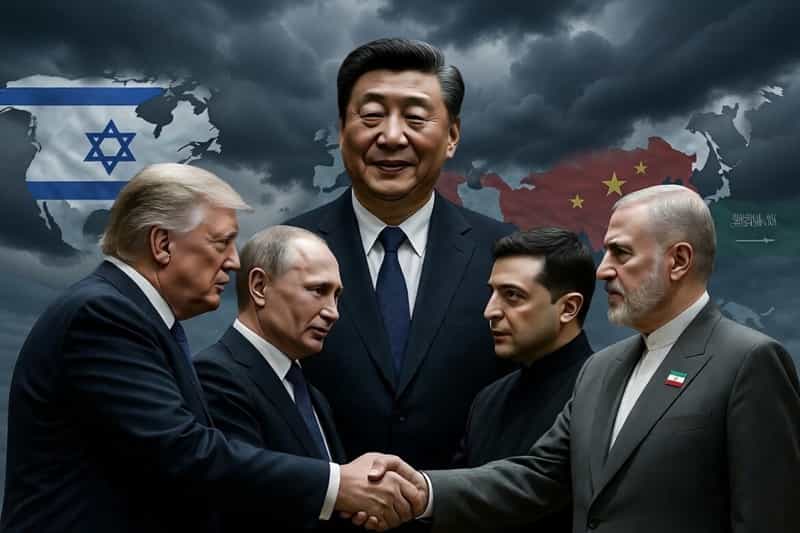
Vladimir Putin’s recent openness toward possible negotiations with Europe, combined with Washington’s apparent determination to finalize at least a preliminary agreement with Tehran before Donald Trump’s scheduled visit to Beijing on May 14–15, suggests that the era of open confrontation could gradually evolve into a new phase: one dominated by global strategic bargaining.
History repeatedly demonstrates that wars rarely end as those who initiated them originally imagined.
And the ultimate winner of this geopolitical cycle may be neither Washington nor Moscow.
Putin’s Opening to Europe: Strategic Realism or Necessity?
Recent statements from the Kremlin have surprised many Western analysts. After years of direct confrontation with NATO and the European Union, Moscow is now signaling potential willingness to reopen channels with Europe.
The reasons behind this shift are structural.
Russia has undeniably demonstrated greater economic resilience than many Western governments anticipated. Energy exports redirected toward Asia and China softened part of the sanctions shock. The Russian military-industrial complex adapted rapidly, while the financial system remained more stable than expected.
Yet the strategic costs of the war remain enormous:
- long-term demographic losses,
- growing dependence on China,
- technological isolation,
- industrial and logistical strain,
- fiscal erosion over time.
Moscow increasingly understands that even partial normalization with Europe could:
- reduce excessive dependence on Beijing,
- restore financial flows,
- revive high-margin energy exports,
- facilitate the gradual release of approximately $225–230 billion in frozen Russian assets currently held within the European Union.
Future negotiations between the EU, Russia and Ukraine will likely revolve around three central themes:
- territorial security,
- sanctions relief,
- energy.
And energy remains the true center of the geopolitical chessboard.
The Return of Iranian Oil and Russian Gas Could Transform Global Markets
If tensions between Washington and Tehran continue to ease, and if sanctions are gradually reduced, global markets could witness the simultaneous return of:
- Iranian crude oil,
- Russian natural gas,
- refined petroleum products currently restricted from Western markets.
The implications would be profound.
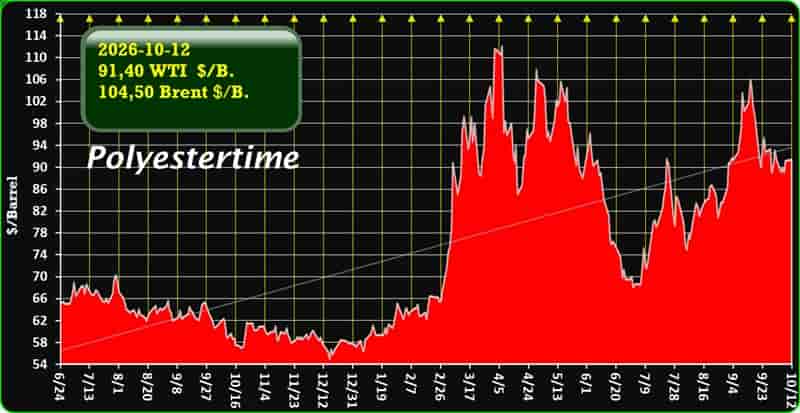
In the medium term, global energy markets could shift from a condition of geopolitical scarcity to one of potential structural oversupply.
Europe, which has absorbed extremely high energy costs through LNG imports and alternative supply chains, may eventually reconsider the economic advantages of partially restoring Russian gas imports — particularly if Germany’s industrial competitiveness continues to weaken.
Meanwhile, Tehran seeks to regain export market share lost during years of sanctions. New Global Balance
The primary obstacle preventing an immediate collapse in energy prices remains infrastructure damage caused during recent conflicts and the time required for reconstruction.
However, if:
- the Strait of Hormuz remains fully operational,
- regional tensions decline,
- OPEC+ maintains elevated production,
- global economic growth slows,
then oil and gas markets could face significant downward pressure over the coming years.
Xi Jinping: The Silent Strategic Winner
While both the United States and Russia have consumed enormous military, economic and diplomatic resources, China has maintained a remarkably cautious and disciplined strategy.
Beijing supported Moscow without entering direct confrontation.
It maintained relations with Tehran without openly challenging Washington.
It expanded its economic and energy influence across Eurasia.
Most importantly, it positioned itself as an indispensable interlocutor for all sides.
This is where Xi Jinping increasingly emerges as the potential strategic winner of the crisis.
Trump’s upcoming visit to Beijing therefore carries significance far beyond trade negotiations.
The agenda likely includes:
- global energy stability,
- international trade,
- Iran,
- maritime security,
- currency balance,
- management of regional crises.
China today is:
- the world’s largest energy importer,
- the primary trading partner for much of Asia,
- the largest buyer of Iranian crude,
- Russia’s most important energy customer.
For this reason, Beijing has a direct strategic interest in avoiding:
- closure of Hormuz,
- Iranian collapse,
- excessive destabilization of Russia,
- global energy shocks.
China’s evolving strategy increasingly reflects an attempt to construct a multipolar system built on:
- economic diplomacy,
- trade,
- infrastructure,
- industrial supply chains,
- energy security.
Israel Remains the Most Dangerous Uncertainty
The primary destabilizing factor remains Israel.
Statements suggesting that “the job in Iran is not finished” indicate that significant parts of the Israeli security establishment still view Tehran as an existential threat.
This creates a potentially difficult divergence:
the United States may prioritize regional stabilization, while Israel could favor maintaining long-term strategic pressure on Iran.
Such divergence may become one of the most important sources of tension between Washington and Tel Aviv in the years ahead.
A US-Iran agreement could fundamentally reshape:
- regional alliances,
- Gulf-Israel relations,
- Middle Eastern power balances,
- global energy security.
The Strait of Hormuz : The World’s Geopolitical Pressure Point
Roughly one-fifth of global oil trade still passes through the Strait of Hormuz.
Any disruption would directly affect:
- China,
- India,
- Japan,
- South Korea,
- Europe.
This is one reason why maritime security and uninterrupted energy flows will likely play a major role during Trump-Xi discussions in Beijing.
Ironically, China — despite maintaining close diplomatic ties with Tehran — may now have one of the strongest interests in preserving Gulf stability.
Europe Faces Its Most Difficult Strategic Choice
Europe emerges from the crisis deeply transformed.
The continent accelerated:
- renewable energy investments,
- energy diversification,
- military spending,
- industrial autonomy initiatives.
But it also paid a significant price:
- higher energy costs,
- declining industrial competitiveness,
- slower economic growth,
- greater strategic dependence on the United States.
If the Russia-Ukraine conflict gradually freezes and Russian gas becomes economically attractive again, the EU could face an extremely difficult political decision:
continue long-term strategic separation from Moscow, or prioritize industrial competitiveness and economic recovery.
Germany, Italy and parts of European industry may increasingly support gradual normalization.
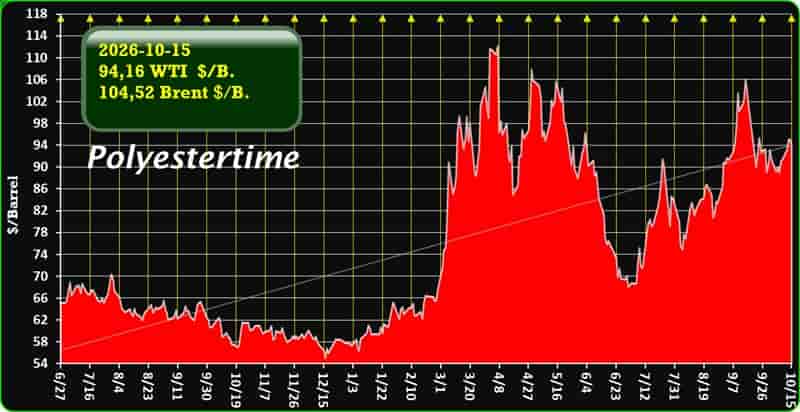
$100 Oil Accelerated the Renewable Revolution
One structural consequence may survive even if energy prices decline:
the acceleration of the global energy transition.
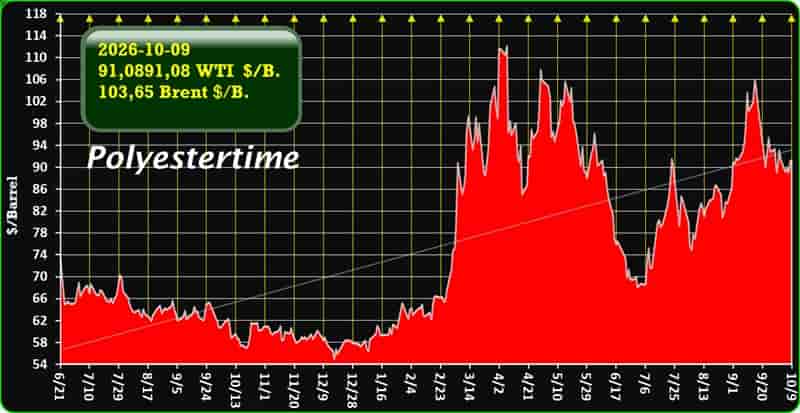
Oil prices near $100 per barrel dramatically boosted investments in:
- solar energy,
- battery storage,
- wind power,
- electrification,
- electric mobility.
Many governments and corporations realized that geopolitical dependence on fossil fuels represents a strategic vulnerability.
Even if oil and gas prices weaken in coming years, the broader shift toward:
- energy security,
- localized supply chains,
- electrification,
- renewables,
may now be irreversible.
The Multipolar World Has Already Begun
The ultimate conclusion of this geopolitical phase may be increasingly clear:
the unipolar order established after the Cold War is gradually giving way to a multipolar system.
The United States remains the dominant military power.
Russia retains enormous strategic and energy capabilities.
China is emerging as the central economic and diplomatic actor.
Yet no single power appears capable of dominating the international system alone.
Recent conflicts have demonstrated that:
- sanctions do not always break adversaries,
- energy control remains decisive,
- economic diplomacy matters as much as military force,
- globalization is not disappearing, but fragmenting.
Global power is increasingly shifting toward those capable of controlling:
- energy,
- technology,
- trade,
- infrastructure,
- industrial supply chains.
And this is precisely the terrain upon which China has built its rise.
China’s Delicate Balancing Act in the Iran Crisis and Strait of Hormuz Tensions
More…