PET Containers – Sidel has unveiled StarLite-R STILL, an innovative bottle base designed for 100% recycled PET (rPET) integration, lightweighting, and high-speed production 03-02-2025 - Archive
PET Containers
Chinese New Year –
Holiday : Jan. 28 – Feb. 4

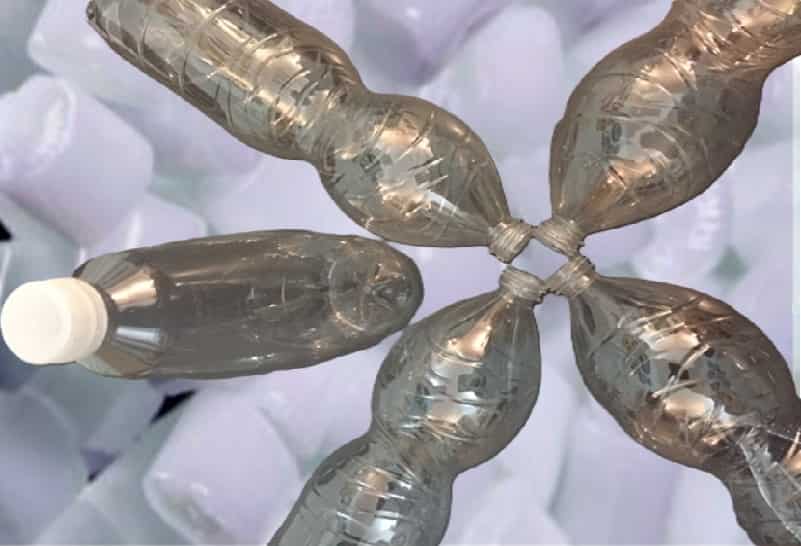
- Recycled PET – PTI’s injection stretch blow molding process produced high-grade bottles from this rPET, demonstrating the synergy between DePoly’s innovative recycling method and PTI’s manufacturing expertise 27-01-2025
- New enzyme technology for environmentally friendly plastic recycling
PET Containers
Sidel Introduces High-Speed 100% rPET Lightweight Bottle Base for Still Products
Sidel has unveiled StarLite-R STILL, an innovative bottle base designed for 100% recycled PET (rPET) integration, lightweighting, and high-speed production.
This patented solution is optimized for still beverages such as water, juice, milk, and edible oils, in sizes ranging from 0.25L to 2.5L. PET Containers
A Market-Driven Innovation
Mikael Derrien, Manager of Packaging Innovations at Sidel, highlights the demand among food and beverage manufacturers to reduce production costs by lightweighting bottles, lowering blowing pressures, and minimizing energy consumption.
Regulatory requirements and consumer expectations are driving the shift towards sustainability. While lightweight bottle bases exist, they primarily cater to virgin PET. StarLite-R STILL stands out as the only solution engineered specifically for rPET, ensuring high performance in a competitive market. PET Containers
Balancing production speed, material type, and bottle weight poses a significant challenge for manufacturers. This new bottle base overcomes these complexities with precise shaping and material distribution, requiring lower blowing pressures, which enhances sustainability. Notably, it can be retrofitted onto existing production lines.
Patented Technology for Optimized Performance
Sidel’s proprietary technology ensures smooth material stretching and precise distribution, facilitating efficient venting for shaping and incorporating a specialized cooling circuit suited for rPET, which often requires processing at higher temperatures.
To maintain bottle integrity, the design prevents deformation and breakage during production, storage, and transportation. Its rounded-edge mould base aids in shaping, reinforcing resistance against defects such as bursts during blow moulding—a critical feature for lightweight bottles that use thinner materials. PET Containers
A high base clearance enhances structural stability, preventing deformation even in high-temperature conditions. The efficient cooling process ensures reliability in high-speed production while maintaining consistent quality.
Additionally, improved mould venting enables up to 20% lower blowing pressure, requiring just 16 bars. This results in reduced energy consumption and lower production costs without compromising quality.
Carefully designed grooves and venting holes allow air to escape efficiently, ensuring optimal bottle base formation at lower pressures. PET Containers
Sustainability and Cost Efficiency for Still Beverages and Edible Oils
Transitioning from virgin PET to 100% rPET with StarLite-R STILL significantly reduces environmental impact. Sidel estimates a reduction of 2,400 tons of CO2 equivalent per year. The lower blowing pressure further contributes to sustainability, cutting an additional 51 tons of CO2 equivalent annually and saving approximately €205,000 per year.
The bottle base is compatible with a broad range of weights, accommodating ultra-lightweight bottles as low as 7g for a 500ml format.
Versatile Application
Designed for round, square-round, and rectangular bottles, StarLite-R STILL supports both single-serve and multi-serve sizes from 0.25L to 2.5L. It is compatible with both transparent and white PET, offering flexibility in design and branding.
“It supports single-serve production rates of up to 2,700 bottles per hour per mould and multi-serve rates of up to 2,400 bottles per hour per mould”. It works seamlessly with both rPET and virgin PET and is compatible with Sidel’s EvoBlow, Universal, and Series 2 blow moulders. PET Containers
By offering superior performance, sustainability, and cost savings, StarLite-R STILL presents an advanced packaging solution tailored for the evolving beverage industry.
Visit Sidel : Visit : StarLITE®-R STILL: Sidel’s new high production speed 100% rPET lightweight bottle base for still products

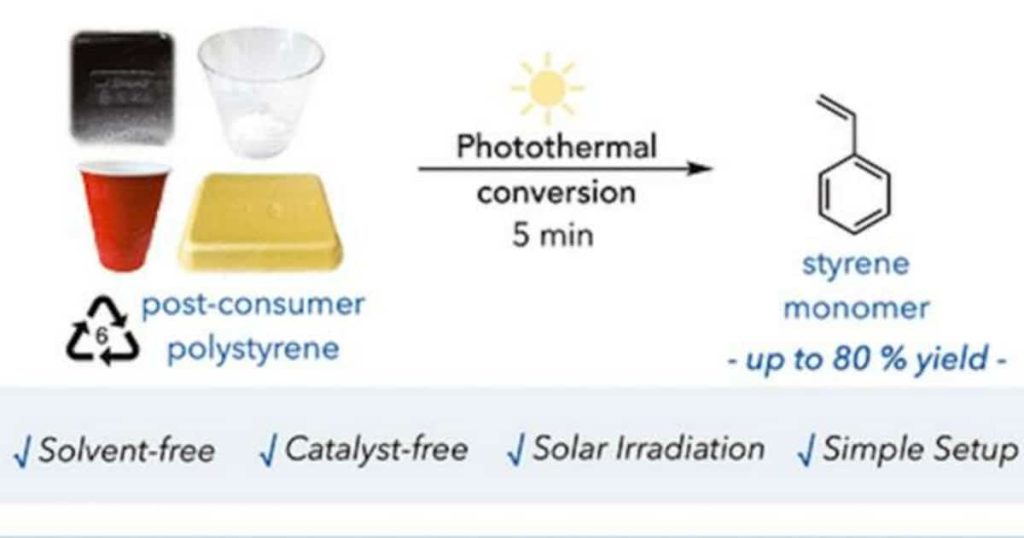
In a groundbreaking study, researchers from Princeton University have unveiled a novel method to chemically recycle post-consumer black polystyrene (PS) and polyvinyl chloride (PVC) plastics
By harnessing focused solar irradiation without the need for solvents or catalysts, they achieved depolymerization yields of up to 80%. This innovative approach leverages a common additive in black plastics: carbon black pigment. PET Containers
The Role of Carbon Black in Depolymerization
Carbon black, a pigment widely used to impart black coloration to plastics, plays a pivotal role in this recycling process. Through a mechanism known as photothermal conversion, carbon black absorbs intense light and converts it into heat. When focused solar irradiation is applied to plastics containing this pigment, the generated heat initiates the breakdown of polymer chains, effectively depolymerizing the material back into its monomer components.
Advantages of the Photothermal Approach
Traditional methods of chemical recycling often require solvents, catalysts, and significant energy inputs, making them costly and environmentally taxing. In contrast, the photothermal method developed by the Princeton team offers several advantages:
- Solvent and Catalyst-Free: Eliminating the need for additional chemicals simplifies the process and reduces potential environmental contaminants.
- Energy Efficiency: Utilizing focused solar energy provides a renewable and abundant energy source, potentially lowering operational costs and carbon footprint. PET Containers
- High Yield: Achieving depolymerization yields up to 80% indicates a highly efficient process, maximizing the recovery of valuable monomers from waste plastics.
Implications for Recycling Black Plastics
Black plastics, due to their pigmentation, have historically posed challenges in recycling. The presence of carbon black makes them difficult to sort using conventional optical sorting technologies, leading to lower recycling rates. However, this inherent challenge is transformed into an advantage in the Princeton study. The carbon black pigment, which complicates traditional recycling, becomes a facilitator in the photothermal depolymerization process. This discovery opens new avenues for efficiently recycling black plastics, which are prevalent in various consumer products. PET Containers
Broader Environmental Impact
The successful depolymerization of PS and PVC is particularly significant given that these plastics are among the least recycled materials in the global waste stream. Polystyrene is commonly found in products like disposable cutlery, CD cases, and packaging materials, while PVC is used in pipes, cable insulation, and clothing. Improving recycling methods for these materials can substantially reduce environmental pollution and resource consumption.
Future Directions and Challenges
While the findings are promising, further research is necessary to scale this technology for industrial applications. Key areas for future investigation include:
- Scalability: Developing systems that can apply focused solar irradiation efficiently on a large scale. PET Containers
- Material Compatibility: Assessing the effectiveness of this method on a broader range of plastic types and formulations.
- Economic Viability: Conducting cost-benefit analyses to compare this method with existing recycling technologies.
Additionally, considerations regarding geographic and climatic factors will be crucial, as the availability and intensity of sunlight can vary significantly across different regions.
Conclusion
The Princeton study represents a significant advancement in sustainable recycling technologies. By repurposing a common pigment’s properties, the researchers have developed an efficient method to tackle the recycling challenges associated with black plastics. This innovation not only enhances the recyclability of materials like polystyrene and PVC but also contributes to broader efforts in reducing plastic waste and promoting environmental sustainability. PET Containers