PET Recycling Value – Compostable Biopolymer Packaging Engineering (2025–2030): The Eco-Revolution in Motion As we step into the second half of the 2020s, compostable biopolymer packaging is rapidly emerging as a game-changing force in the packaging industry 27-05-2025 - Archive
PET Recycling Value
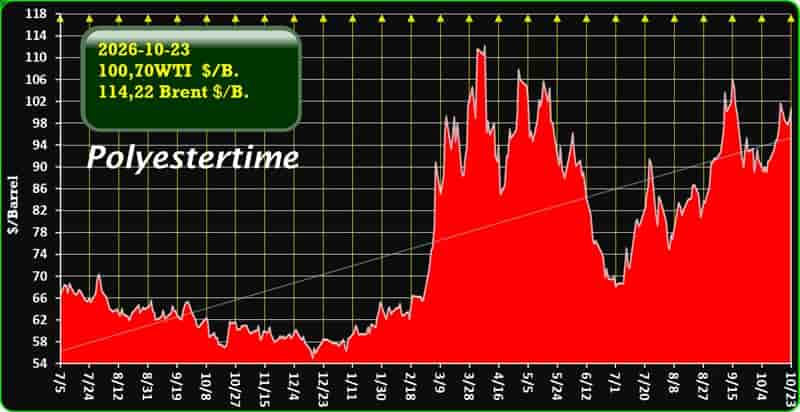
Crude Oil Prices Trend

An Innovative Biobased Monomer: 5-HMF Takes Center Stage
Michelin, in collaboration with four key industrial partners, is preparing to launch a cutting-edge demonstration plant in France for the production of 5-HMF (5-hydroxymethylfurfural)—an advanced biobased monomer derived from fructose. This initiative marks a significant step forward in green chemistry and sustainable manufacturing, with broad implications for industries ranging from bioplastics to biofuels.
What Is 5-HMF and Why Is It Important?
Often dubbed the “sleeping giant” of green chemistry, 5-HMF is a versatile compound with the potential to revolutionize the production of environmentally friendly materials. Currently, 5-HMF is produced only in limited quantities in Asia, with high costs making it unsuitable for wide-scale industrial use. However, this molecule is an essential precursor in the creation of:
- Bioplastics PET Recycling Value
- Biofuels
- High-performance resins
- Other sustainable chemical products
Its integration into commercial manufacturing processes could significantly reduce reliance on fossil-based materials.
The Cerisea Project: A Collaborative European Effort
The new demonstration facility is part of the Cerisea project—short for “Competitive production of HMF and derivatives for an Eco-designed and Resilient Industry towards Sustainable European Autonomy.” This project is spearheaded by Michelin Engineered Polymers in partnership with 13 industrial and academic organizations, including:
- Avantium
- ADM
- Arkema
- Kraton
- IFPEN
- CNRS
- UTC
Investment and Site Details PET Recycling Value
Located at the Osiris chemical platform in Péage-en-Roussillon, France, the plant will represent a total investment of €60 million. This includes €20 million in support from the European Union through the Horizon Europe/CBE JU program and France’s Ademe agency. The facility is expected to be operational as early as next year, with an initial production capacity of 3,000 tons per year.
This capacity makes it the largest 5-HMF production site in the world. The long-term goal is to expand across Europe by replicating the model through licensing, with future facilities reaching up to 20,000 tons annually.
Michelin’s Road to Sustainable Resins
Michelin’s journey into alternative resins began in 2008 as part of a broader strategy to eliminate the use of formaldehyde and resorcinol in tire adhesives. By 2013, the company had already developed a new adhesive technology free of these harmful chemicals for tire applications.
Early Integration of 5-HMF
In 2016, Michelin successfully integrated 5-HMF into its ResiCare resins for non-tire applications, including plywood manufacturing. Initially, these efforts relied on small quantities of high-cost 5-HMF sourced from external suppliers. Nevertheless, this innovation laid the foundation for broader adoption. PET Recycling Value
Breakthrough Collaboration with IFPEN
By 2021, Michelin partnered with French research center IFPEN to develop a more efficient and scalable method of producing 5-HMF directly from fructose. This involved comprehensive testing, pilot projects, and engineering studies that continued through 2023, paving the way for industrial production.
What’s Next for 5-HMF?
Although 5-HMF has not yet been reintroduced into tire applications, it is now a core ingredient in all new ResiCare resin formulations. These are used in a variety of industrial products, such as:
- Plywood panels
- Abrasives
- Molded components
As the new plant comes online and capacity scales up, the potential for 5-HMF in sustainable manufacturing is poised to grow dramatically. PET Recycling Value
Final Thoughts
The development of a large-scale 5-HMF production plant represents a major leap toward a greener industrial future. By reducing reliance on petrochemicals and embracing biobased alternatives, projects like Cerisea are not only accelerating innovation but also reinforcing European autonomy in key industrial sectors.
Stay tuned as Michelin and its partners bring this game-changing green molecule to the forefront of sustainable manufacturing

♻ PET Bottle Recycling Machine Line: Transforming Waste into Valuable Resources
Introduction: Why PET Bottles Matter
Polyethylene terephthalate, or PET, has become a cornerstone of modern packaging. Its lightweight, transparent, and durable properties make it ideal for beverage bottles, cosmetic containers, and edible oil packaging. With excellent gas barrier capabilities and high aesthetic appeal, PET has swiftly replaced traditional materials like glass in many industries.
Although PET offers cost-effective production and low transportation expenses, its widespread use has created a new challenge: plastic waste management. As global consumption of PET bottles increases, the urgency to recycle them effectively is greater than ever. PET Recycling Value
PET Waste: A Global Opportunity and Environmental Dilemma
More than 70 million tons of PET plastics are produced annually, with a significant portion used for single-use beverage bottles. Despite the fact that PET is highly recyclable, less than 60% of these bottles are recovered globally. The remaining millions of tons end up polluting landfills, waterways, and natural ecosystems.
This is a double-edged sword. While the low recycling rate presents a serious ecological issue, it also reveals an enormous business opportunity: building robust PET recycling infrastructure can combat environmental degradation while generating economic value.
Turning Waste into Wealth: The Value of PET Recycling
Environmental Impact PET Recycling Value
Recycling just 1 ton of PET bottles prevents the emission of up to 3.2 tons of CO2 and saves approximately 6 tons of crude oil. This significantly reduces the carbon footprint of plastic packaging.
? Economic Benefits
Recycled PET, or rPET, can be used in manufacturing fibers, sheets, and new packaging products. These materials are in demand across various industries, creating consistent market value.
Energy Efficiency
The recycling process consumes only about 30% of the energy required to produce virgin PET. This makes it not only sustainable but also energy-efficient.
Closed-Loop Potential
With proper processing, rPET can even meet food-grade standards, enabling “bottle-to-bottle” recycling—the most sustainable end-to-end solution.
Meet ACERETECH: Your Partner in PET Bottle Recycling
ACERETECH is a trusted global manufacturer of plastic recycling machinery. With cutting-edge solutions and deep industry knowledge, we provide end-to-end PET bottle recycling systems that cater to both small operations and large-scale industrial needs.
Key Equipment in ACERETECH PET Recycling Line
- PET Shredder & Crusher: Breaks down bottles into uniform flakes for easy processing. PET Recycling Value
- PET Washing Line: Multi-stage process including metal removal, label stripping, glue elimination, hot washing, and drying to ensure high-purity flakes.
- PET Pelletizing: Converts washed flakes into high-quality granules through extrusion, suitable for further applications.
- Viscosity Enhancement Systems: SSP (Solid-State Polymerization) and LSP (Liquid-State Polymerization) units improve the intrinsic viscosity (IV) of rPET for higher-grade uses.
- Food-Grade Extruder: Produces FDA-compliant rPET suitable for direct food contact and premium packaging.
Why Choose ACERETECH?
- Efficiency: High throughput with low energy consumption.
- Intelligent Control: Automated systems for consistent output and minimal manual intervention.
- Customization: Tailored solutions based on specific customer needs and project scale.
- Technical Expertise: Dedicated engineering support with deep experience in global recycling projects.
Conclusion: A Greener Future Through PET Recycling
PET bottle recycling is more than just a necessity; it is a strategic investment in the future. With innovative technologies and efficient recycling lines, we can transform plastic waste into valuable resources. This approach supports a sustainable circular economy where both businesses and the environment thrive. PET Recycling Value
Choose ACERETECH as your PET recycling partner and be part of a smarter, cleaner, and more sustainable world.
? EU Strategy to Unify Labelling and Recycling Across Member States
The European Union is taking decisive action to eliminate internal trade barriers by introducing a harmonised approach to packaging, labelling, and recycling rules. As part of a broader effort to revitalize the Single Market, the European Commission has unveiled a comprehensive plan aimed at easing cross-border operations, lowering compliance costs, and enhancing consumer transparency.
Tackling Fragmentation in the Single Market
The newly launched Single Market Strategy identifies the ten most significant obstacles to trade and investment within the EU.
At the top of this list are fragmented packaging and labelling regulations, which are causing major friction for companies—especially for small and medium-sized enterprises (SMEs) trying to operate across multiple countries. PET Recycling Value
Packaging & Labelling: A Costly Puzzle
Currently, manufacturers must adjust packaging and labels to comply with different national regulations. This often requires relabelling or even repackaging, driving up operational costs and complicating logistics. These discrepancies also lead to inconsistencies in the consumer experience, further weakening the cohesion of the Single Market.
New Regulation: Standardised Labels Across the EU
To address this, the Commission has proposed the Packaging and Packaging Waste Regulation, which will enforce EU-wide harmonised labelling requirements. A central feature includes standardised consumer sorting labels to simplify recycling and promote sustainability. These will be enacted through forthcoming legislative acts and rolled out in stages.
? Textile Labelling: Embracing Simplicity and Digital Formats
The textile industry is next in line for regulatory modernization. A review of the Textile Labelling Regulation is underway, with the goal of creating streamlined processes that incorporate both physical and digital labelling. The changes are expected to enhance environmental transparency and improve market accessibility for eco-conscious consumers. PET Recycling Value
Introducing the Digital Product Passport (DPP)
One of the flagship initiatives under the EU’s digital transition is the rollout of the Digital Product Passport (DPP). This digital tool will act as a repository for product-specific information, such as composition, origin, repairability, and sustainability credentials.
How the DPP Will Work
Using technologies like QR codes, the DPP will enable consumers and regulators to access detailed data simply by scanning the product. This digital shift aims to make compliance easier for businesses while empowering consumers to make informed, eco-friendly choices.
While critical safety information will remain physically printed on packaging, the DPP will initially be applied to sectors already regulated—such as construction products—and later expanded to other industries.
Supporting Circular Economy Goals
By promoting transparency and traceability, the DPP is a key component of the EU Circular Economy Action Plan. It will help businesses monitor product life cycles and encourage practices such as repair, reuse, and recycling—contributing to a greener, more resource-efficient economy. PET Recycling Value
Reforming Extended Producer Responsibility (EPR) Schemes
Another major challenge identified by the Commission is the fragmented state of Extended Producer Responsibility (EPR) schemes. Under EPR, producers are financially responsible for the end-of-life treatment of their products, including disposal and recycling.
The Problem: A Patchwork of National Systems
Currently, there is no unified EPR framework. A single company selling electronic goods in just three large Member States may need to complete up to 16 different registrations to meet national requirements. This patchwork system leads to duplicated efforts, inefficiency, and excessive administrative costs. PET Recycling Value
The Solution: Harmonisation and Digitalisation
To reduce complexity, the EU plans to introduce new legislation by the end of 2025 that will:
- Eliminate redundant authorised representative obligations
- Harmonise reporting formats across Member States
- Launch a digital one-stop shop for EPR compliance and information
This unified system aims to streamline compliance and lower costs for businesses operating across borders.
Clarifying Waste Status Criteria Across the EU
The final piece of the Commission’s strategy focuses on the legal definitions that govern waste classification. At present, there is no consistent EU-wide standard to determine when waste can be reclassified as a product or by-product. This legal grey area limits the reuse of materials and hampers recycling across national borders. PET Recycling Value
Towards a Circular Materials Market
To address this, the upcoming Circular Economy Act—expected by the end of 2026—will introduce unified criteria for reclassifying waste materials. The goal is to:
- Encourage the reuse of secondary raw materials
- Boost the internal market for recycled goods
- Facilitate cross-border waste shipments
This legal clarity is essential to foster innovation in waste management and unlock the potential of the circular economy within the Single Market.
Final Thoughts: Aligning Trade and Sustainability
The EU’s latest strategy marks a pivotal step in removing long-standing internal trade barriers while aligning market regulations with environmental objectives. By addressing fragmentation in labelling, recycling, and producer responsibility, the Commission hopes to simplify compliance, strengthen environmental standards, and support a more competitive, sustainable European economy. PET Recycling Value
As legislative proposals take shape over the next two years, businesses across sectors are encouraged to prepare for these changes and explore how digital tools like the DPP can drive operational and sustainability gains.

? Compostable Biopolymer Packaging Engineering (2025–2030): The Eco-Revolution in Motion
As we step into the second half of the 2020s, compostable biopolymer packaging is rapidly emerging as a game-changing force in the packaging industry. Fueled by tightening regulations, surging consumer awareness, and cutting-edge innovation, this sector is poised to reshape global sustainability efforts.
Why 2025 Is a Turning Point for Sustainable Packaging
2025 marks a pivotal year for the biopolymer industry. Major legislative efforts such as the European Union’s Single-Use Plastics Directive and similar initiatives in North America and Asia are accelerating the move away from conventional plastics. As a result, global brands are integrating compostable packaging solutions to meet compliance requirements and shifting consumer expectations. PET Recycling Value
Key players like Novamont and NatureWorks LLC are leading this charge. Novamont continues to expand its Mater-Bi line, widely used in food service and flexible packaging. Meanwhile, NatureWorks is scaling up its production of Ingeo PLA to meet skyrocketing demand.
Material Breakthroughs Driving Innovation
Advanced material science is at the heart of this evolution. Companies are engineering new biopolymer blends that enhance mechanical performance, oxygen and moisture barrier properties, and compostability across different environments.
Examples include:
- BASF’s ecovio® – a high-performance compostable blend suitable for both rigid and flexible packaging.
- TotalEnergies Corbion’s Luminy® PLA – designed for industrial and home composting while meeting EN 13432 and ASTM D6400 standards.
These innovations ensure compatibility with growing composting infrastructure and enable brands to replace traditional plastics without compromising on functionality.
Market Forecast Through 2030: Growth Unleashed PET Recycling Value
The global compostable packaging market is projected to grow at double-digit rates through 2030. Regulatory momentum and consumer pressure are catalyzing adoption across sectors like food service, e-commerce, and retail.
Regional Highlights
Europe: At the forefront of policy-driven growth, with strong support from EU-wide directives and EPR schemes.
North America: Brands like BioPak and Eco-Products are expanding compostable portfolios to meet sustainability targets.
Asia: Rapid growth in domestic demand and exports, with TotalEnergies Corbion boosting PLA production to match the momentum. PET Recycling Value
Production and Investment Trends
Major players are investing heavily in R&D and manufacturing. NatureWorks is constructing a fully integrated biopolymer plant in Thailand, set to significantly increase global PLA supply. Meanwhile, Novamont is expanding capacity to meet the growing appetite for eco-friendly materials.
Industry Data & Outlook
According to European Bioplastics:
- Global bioplastics production is expected to triple by 2030.
- Compostable polymers will represent a substantial share of that growth.
- Packaging remains the dominant application, making up 40%+ of all bioplastic demand. PET Recycling Value
In North America, Biodegradable Products Institute (BPI) certifications are on the rise, signaling increased market confidence in compostable solutions.
Engineering the Next Generation of Biopolymers
Rapid advancements in polymer engineering are producing biopolymers that rival — and sometimes surpass — conventional plastics. Companies like Novamont and NatureWorks are refining polyhydroxyalkanoates (PHAs) and PLA blends to offer faster degradation rates and better processing compatibility.
These next-gen materials are designed to be cost-competitive, scalable, and versatile, making them viable across a wide range of packaging applications — from single-use cutlery to multilayer films for perishable goods. PET Recycling Value
♻️ Challenges & Opportunities
Despite rapid growth, several hurdles remain:
- Infrastructure gaps – Limited access to industrial composting facilities in many regions.
- Consumer confusion – Mislabeling and inconsistent disposal instructions create contamination risks.
Industry leaders are addressing these issues through public education campaigns, clearer labeling, and partnerships with waste management organizations to expand composting access and improve material recovery.
Final Thoughts: The Path to 2030
Compostable biopolymer packaging is no longer a niche innovation — it is a mainstream solution in the making. With continuous material science breakthroughs, expanding global production, and a supportive regulatory environment, the next five years will define the future of sustainable packaging.
As we move toward 2030, compostable packaging will play a central role in reducing plastic pollution and driving the transition to a circular economy. Now is the time for businesses, governments, and consumers to embrace the shift and engineer a more sustainable future. PET Recycling Value

? Dornbirn GFC-Asia 2025: Pioneering the Future of Sustainable Fibre Innovation
DORNBIRN, Austria – May 23, 2025 — A new chapter in fibre innovation is set to unfold as the Dornbirn Global Fiber Conference (GFC) partners with Techtextil India Symposium to launch the highly anticipated Dornbirn GFC Asia 2025.
Mark your calendars for November 18, 2025 in Mumbai, where leaders in textile technology, sustainability, and innovation will unite under the theme: “Shaping the Future: Sustainable Growth in Fibre Solutions and Innovations.” The conference will run alongside Techtextil India, scheduled from November 19–21, 2025.
What to Expect at GFC Asia 2025
This cutting-edge symposium brings together renowned experts, top-tier manufacturers, academic researchers, and forward-thinking industry leaders to explore the evolving landscape of fibre solutions through the lens of sustainability and digital transformation.
Call for Papers – Deadline July 15, 2025
If you’re a researcher, innovator, or industry professional, you’re invited to apply as a speaker. Share your vision and join the global conversation shaping the future of fibres. Submit your paper by July 15, 2025 to become part of the GFC community.
Panel Discussions: Leading with Insight
- Global and regional innovations in fibre and technical textiles
- Policy and regulatory alignment between India and global frameworks
- The next generation of high-performance fibres PET Recycling Value
Technical Sessions: Innovation Meets Sustainability
Circular Fibre Technologies
- Bio-based, biodegradable, and recycled fibres
- Eco-friendly processing: waterless dyeing, renewable energy, and carbon reduction
- Waste-to-fibre breakthroughs using agricultural and textile residues
- Lightweight and safety-enhancing textiles for automotive and aerospace applications
AI, Digitalisation & Fibre Processing
- Smart automation and digital innovation in fibre manufacturing
- Policy and regulation as drivers of sustainable innovation
- Advancing high-performance fibre technologies PET Recycling Value
Future of the Textile Value Chain
- AI integration in downstream processes
- Emerging high-performance fibres: PBI, carbon, glass, Teflon, geotextiles
- Smart textiles: Intelligent materials for the next wave of applications
- Data-driven sustainability: Tracking environmental impact throughout the supply chain
? Why Sponsor GFC Asia 2025?
Align your brand with the leading edge of fibre innovation. As a sponsor, you’ll enjoy:
- High visibility at a premier industry platform
- Recognition as a sustainability and technology leader in Asia
- Opportunities to build strategic partnerships
- Direct connections with future-forward companies
Interested in sponsoring? Contact the team at office@dornbirn-gfc.com to learn more about exclusive sponsorship packages. PET Recycling Value
Save These Dates!
?? Dornbirn GFC & Innovation Days 2025
- When: September 10–12, 2025
- Where: Dornbirn, Austria
- Why Attend: The flagship annual event for fibre innovation
- Tickets & Programme: www.dornbirn-gfc.com
?? Dornbirn GFC Asia / Techtextil India
- When: November 18, 2025
- Where: Mumbai, India
- Hosted With: Techtextil India 2025
Join the Global Fibre Movement
Dornbirn GFC Asia 2025 is more than a conference — it’s a launchpad for transformative ideas, sustainable practices, and boundary-breaking technologies. Whether you’re an innovator, investor, or policymaker, this is your opportunity to contribute to a more circular, connected, and conscious textile future. PET Recycling Value

? APR and ECOCE Unite to Boost Plastic Packaging Recyclability Across North America
In a major step towards sustainable development in the packaging industry, the Association of Plastic Recyclers (APR) and ECOCE, a Mexican non-profit environmental organization, have officially announced a collaboration to improve the recyclability of plastic packaging in the North American region.
This strategic partnership aims to align international standards with regional realities, delivering practical solutions that advance recycling systems and reduce plastic waste.
Why APR and ECOCE Are Joining Forces
Plastic pollution remains one of the most pressing environmental challenges globally. As consumer awareness grows, so does the need for harmonized design and recycling systems that work not only within borders but across them. PET Recycling Value
APR, known for its commitment to improving the recyclability of plastics through science-based standards, has found a valuable partner in ECOCE, which has been advocating for sustainable packaging and waste management in Mexico for decades.
The goal of this collaboration is to share expertise, foster industry-wide relationships, and initiate joint projects that push forward a circular economy across North America.
Spanish Version of APR Design Guide on the Horizon
One of the first key initiatives of this partnership is the development of a Spanish-language version of the APR Design Guide for Plastics Recyclability.
More than just a translation, this adaptation will take into account the unique infrastructure, capabilities, and challenges of the recycling ecosystem in Mexico. This tailored approach ensures that the guide is practical, actionable, and aligned with local needs. PET Recycling Value
This step is crucial in helping manufacturers, designers, and brands make informed decisions that enhance the recyclability of their plastic packaging from the start.
Expanding Access with Spanish Training Resources
In addition to the guide, the APR Design Training Program will be expanded to include Spanish-language content. This move will make the program more accessible to stakeholders throughout Mexico and potentially other Spanish-speaking countries in Latin America.
The training will help industry professionals better understand best practices in design for recyclability, support adoption of circular strategies, and improve overall material recovery rates.
This educational expansion supports a broader mission: to embed sustainable thinking in packaging design from concept to disposal. PET Recycling Value
Statement from ECOCE’s Leadership
“The signing of this MOU reaffirms our commitment to advancing a more sustainable model of production and consumption,” said Jorge Terrazas Ornelas, General Director of ECOCE.
“Through our collaboration with APR, we seek to accelerate the adoption of international standards that improve packaging recyclability in Mexico.”
This Memorandum of Understanding (MOU) formalizes the shared vision of the two organizations and sets the stage for lasting impact across the industry.
A Global Movement for Unified Standards
This partnership is part of a larger collaborative effort that includes organizations like RecyClass and other stakeholders working to standardize recyclability guidelines and protocols worldwide. PET Recycling Value
By creating a shared framework while also recognizing regional differences in recycling infrastructure and capacity, these efforts seek to offer clear, consistent guidance to the entire plastic value chain.
This international alignment aims to simplify compliance, reduce design confusion, and encourage investment in recycling innovation.
? Addressing the Challenges of Plastic Waste Together
Plastic waste is a transnational issue—it knows no borders. Therefore, solutions must also cross borders. The APR-ECOCE partnership is a strategic response to the interconnected nature of modern supply chains and environmental impacts.
By aligning design-for-recyclability guidelines and supporting local implementation strategies, this initiative can help bridge the gap between global best practices and local execution. PET Recycling Value
It also provides a replicable model that other countries and regions could follow in their pursuit of a circular plastics economy.
APR’s Vision: Global Design, Local Action
“APR is pleased to formalize our relationship with ECOCE as we work to align plastic design for recyclability across the globe,” said Steve Alexander, President and CEO of APR.
“Both organizations are committed to creating a circular economy and improving recycling for plastics.”
With this partnership, APR not only deepens its footprint in Latin America but also reinforces its role as a global leader in advancing sustainable plastic packaging solutions.
What This Means for Brands and Manufacturers
For companies operating in North America, particularly those involved in consumer goods, this partnership signals a growing expectation to comply with unified, sustainability-focused packaging design standards. PET Recycling Value
Brands that wish to remain competitive will benefit from understanding and implementing the updated Spanish-language resources offered by APR and ECOCE. Doing so can enhance compliance, reduce environmental impact, and improve brand reputation among eco-conscious consumers.
Key Takeaways
- APR and ECOCE have signed a partnership agreement to improve plastic packaging recyclability in North America.
- A Spanish-language APR Design Guide will be created and customized for Mexico’s recycling infrastructure.
- Training programs will be expanded to include Spanish content for local stakeholders.
- This partnership is part of a global effort to unify and standardize recyclability protocols while respecting regional differences.
- Both organizations aim to support a circular economy and long-term sustainability in packaging design. PET Recycling Value
About the Organizations
The Association of Plastic Recyclers (APR) is a leading international organization dedicated to improving the quality and quantity of plastics that are recycled. Its standards and guidelines are widely respected and used across industries.
ECOCE (Ecología y Compromiso Empresarial A.C.) is a Mexican non-profit focused on environmental education, sustainable production, and recycling awareness. It represents the interests of over 50 consumer goods companies committed to responsible packaging.
Final Thoughts
In a world where environmental impact is increasingly shaping consumer choices and regulatory requirements, partnerships like that of APR and ECOCE are essential. By providing localized yet globally-informed guidance, they are paving the way for a more sustainable and circular future for plastic packaging. PET Recycling Value