Plastic Alternative – Seaweed Startup Uluu Celebrates $13.6 Million Breakthrough Funding to Build Asia-Pacific Plant and Accelerate Global Shift Toward Scalable, Climate-Positive Plastic Alternatives for Industry 30-10_2025
Plastic Alternative – Introduction
Australian-based startup Uluu has taken a significant step in advancing the plastic alternative market by securing a SGD 13.6 million Series A funding round. The investment will enable the company to scale its seaweed-based polymer technology and build a 10-tonne-per-year demonstration plant in Western Australia. This move positions Uluu to supply commercial volumes to industrial manufacturers in the Asia-Pacific region.
Funding and Backers
The funding round was led by German growth investor Burda Principal Investments, supported by strategic investors including Main Sequence, Novel Investments (associated with a major textile group), Startmate, and impact investors such as Fairground and Trinity Ventures. These participants illustrate heightened investor confidence in next-generation biopolymers and the broader shift toward sustainability in industrial supply chains.
Technology and Materials
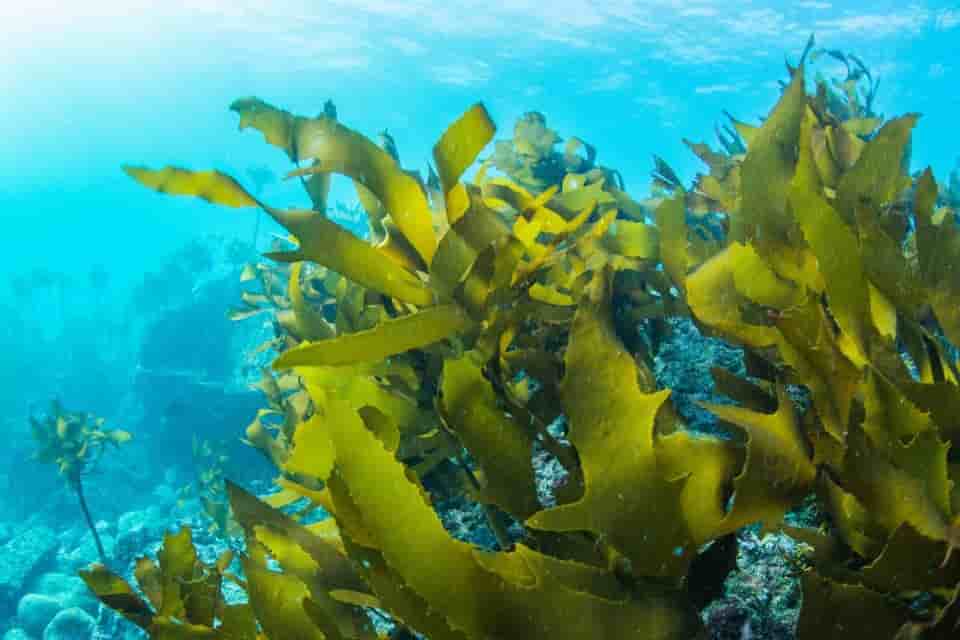
What sets Uluu apart is its ability to transform renewable seaweed into polymer materials that perform like conventional plastics yet deliver an enhanced sustainability profile. The startup claims its materials are compatible with existing manufacturing equipment, meaning they can be processed in traditional packaging, injection-moulding and component production lines without major retooling.
Sustainability Profile
Uluu’s seaweed-derived polymers are described as strong, lightweight, waterproof, non-toxic, home-compostable and marine-biodegradable. Crucially, they break down naturally in marine environments without releasing harmful micro-plastics. From a carbon-perspective, Uluu suggests the technology can sequester or avoid around 5 kg of CO₂ equivalent for each 1 kg of material produced—compared to traditional fossil-fuel plastics which emit roughly 3 kg of CO₂ per 1 kg produced. The broader adoption of such a plastic alternative could help manufacturers responding to regulatory and environmental pressure across Asia and beyond.
Demonstration Plant and Regional Strategy
The 10-tonne-per-year demonstration plant in Western Australia marks the transition from Uluu’s current 100 kg/year pilot to an industrial scale. This facility will support industrial adoption in the Asia-Pacific region, targeting manufacturers in plastics packaging, injection-moulding, automotive components and other sectors. Uluu sees major growth opportunities in Southeast Asia, China and India, where rapidly growing manufacturing hubs demand higher-performance and more sustainable input materials.
Industrial and B2B Implications
For industrial players—packaging firms, converters and supply-chain partners—Uluu’s progress signals an uptick in demand for truly green alternatives. Companies seeking to meet regulatory mandates around fossil-based polymers and extended producer-responsibility schemes will view Uluu’s materials as a viable option. Moreover, existing production lines may require minimal adjustment, enabling manufacturers to adopt the plastic alternative more seamlessly.
Future Outlook
With this Series A funding, Uluu is gearing up for licensing agreements, joint ventures and technology transfers within the region. The demonstration facility will serve as a proving ground, paving the way for a possible commercial-scale plant capable of producing thousands of tonnes annually. As the plastic alternative market expands, Uluu’s materials may influence procurement strategies, R&D priorities and circular-economy initiatives in manufacturing.
Why This Matters
The development of a viable plastic alternative addresses one of the most entrenched sustainability challenges: the dominance of fossil-based plastics in industrial manufacturing. By leveraging renewable seaweed feedstock and delivering a compatible, high-performance material, Uluu is helping shift the market toward a truly sustainable model. For manufacturers in the Asia-Pacific region, where supply-chain scale and regulatory pressure are mounting, this is timely and relevant.
Conclusion
Uluu’s successful fundraising and the planned demonstration plant mark a landmark moment in the journey toward scalable plastic alternatives. The startup’s seaweed-derived polymer technology offers both industrial performance and strong sustainability credentials. For businesses operating in Asia-Pacific manufacturing, Uluu’s progress underscores the potential to replace conventional plastics with a climate-positive material that supports circular-economy goals and regulatory alignment.
More…