Plastic Pollution – Eco Works® 100: Cortec® Achieves 100% Biobased Content in Compostable Bioplastic 14-08-2025 - Archive
Plastic Pollution
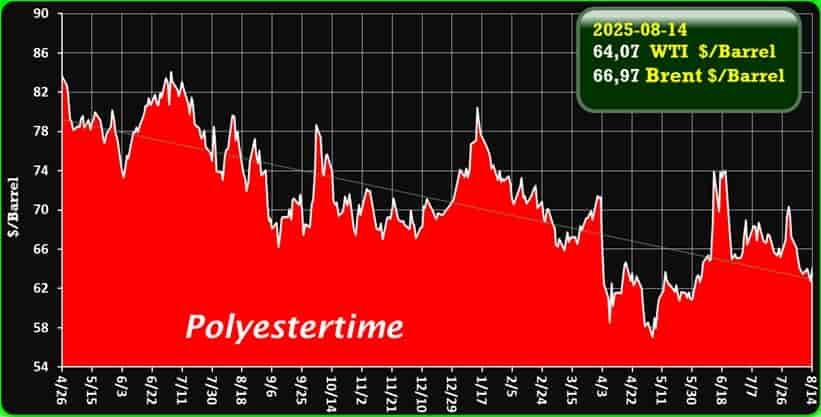
Crude Oil Prices Trend
Analysis Of Common Problems in Plastic Granulation
During plastic granulation production, various issues frequently arise, directly impacting particle quality and the stability of subsequent extrusion processes. The following analysis addresses common problems, identifies their causes, and proposes corresponding solutions for rapid troubleshooting and production optimization.
- Pellet Appearance & Morphology Issues
- Rough, Dull Surface with Pitting:
Cause: Incomplete plasticization (low temperature settings or insufficient shear force); Excessive moisture in raw materials (plastic, fillers like CaCO₃, or hygroscopic additives not fully dried); Improper lubrication system (excessive lubricant, especially external lubricant causing delayed plasticization; imbalance between internal/external lubricants); Equipment issues (severe screw wear, insufficient compression ratio, or weak shear force); Insufficient die head pressure (melt not dense enough). Plastic Pollution
Solution: Appropriately increase temperatures in plasticizing and homogenization zones; Ensure thorough drying of all hygroscopic components; Adjust lubricant system (reduce external lubricant, balance ratio); Inspect and replace worn screws if necessary; Increase melt density using finer mesh screens, adjusting die pressure bolts, or slightly reducing feed rate.
02.Pellet Sticking/Agglomeration:
Cause: Insufficient cooling (cooling water temperature too high or cooling time too short, pellet core not fully cooled); Static electricity buildup on pellet surface; Lubricant issues (excessive lubricant, especially external, or exudation); Cutter problems (dull blades or improper gap adjustment causing burrs); High ambient humidity. Plastic Pollution
Solution: Lower cooling water temperature (recommended 10-25°C), extend cooling bath length, or adopt more efficient cooling methods; Install ionizing air bars after cutting or at the vibrating screen; Select compatible, non-exuding lubricants; Sharpen/replace cutters and adjust gap; Reduce production environment humidity as much as possible.
03.Irregular Pellet Size with Tailing:
Cause: Unstable feeding (material bridging, feeder malfunction, or feed rate fluctuation); Melt pressure/temperature instability; Speed mismatch (cutter speed, main screw speed, and haul-off speed not synchronized); Cutter problems (worn, dull, or loose blades); Die plate issues (clogged die holes or inconsistent hole diameter due to wear causing uneven output). Plastic Pollution
Solution: Ensure consistent feeding; Precisely control temperature to stabilize melt pressure/temperature; Coordinate cutter, screw, and haul-off speeds; Regularly replace or sharpen cutters and ensure secure installation; Thoroughly clean die holes, inspect for wear, and replace die plate if necessary. Plastic Pollution
04.Chared Specks on Pellet Surface:
Cause: Carbonized material trapped inside screw; Material overheated for too long (leading to aging and charring).
Solution: Disassemble screw for thorough cleaning; Reduce heating time, inspect and repair any heating system faults.
- Pellet Internal Structure & Performance Issues
01.Incomplete Plasticization (Unmelted Material, White Specks):
Cause: Insufficient temperature (plasticizing zone set too low); Screw problems (poor design or severe wear, insufficient compression ratio, weak shear force); Lubricant hindrance (excessive external lubricant impeding plasticization); Residence time too short (screw speed too fast or feed rate too high); Poor filler dispersion (e.g., CaCO₃ not fully wetted and dispersed). Plastic Pollution
Solution: Increase plasticizing zone temperature to required level; Evaluate/replace screw if worn or poorly designed; Reduce external lubricant, consider increasing internal lubricant or adding plasticization aids; Reduce screw speed or feed rate to extend plasticizing time; Optimize mixing process to ensure thorough filler wetting and dispersion.
02.Bubbles or Pores in Pellets:
Cause: High moisture content in raw materials (plastic, fillers, or regrind); Excessive volatiles (use of low-boiling plasticizers, lubricants, etc.); Processing temperature too high (localized overheating causing slight decomposition and gas generation); Poor die design (sudden excessive pressure drop at die head); Poor venting (vacuum venting system not operational or vents blocked). Plastic Pollution
Solution: Thoroughly dry all moisture-prone materials; Minimize volatile additives; Avoid localized overheating to prevent thermal decomposition; Ensure smooth melt pressure decay in die head; Ensure vacuum venting system functions correctly (clear ports, maintain vacuum).
03.Poor Thermal Stability (Yellowing, Black Specks, Yellow Streaks):
Cause: Inappropriate or insufficient stabilizer; Excessive processing temperature (overall too high or localized overheating – faulty temp control, high screw speed causing shear heat); Prolonged exposure to high temperature (die blockage, excessively fine or clogged screens causing material stagnation); Material buildup/decomposition in dead spots (screw, barrel, die wall, screen plate back); Excessive impurities or degraded material contamination.
Solution: Select suitable stabilizer type and dosage; Reduce barrel/die temperatures and shear heating; Prevent stagnation (clean die/screens regularly, avoid prolonged low-speed operation); Eliminate dead spots and clean equipment thoroughly; Ensure clean feedstocks and strictly control regrind quality/ratio. Plastic Pollution

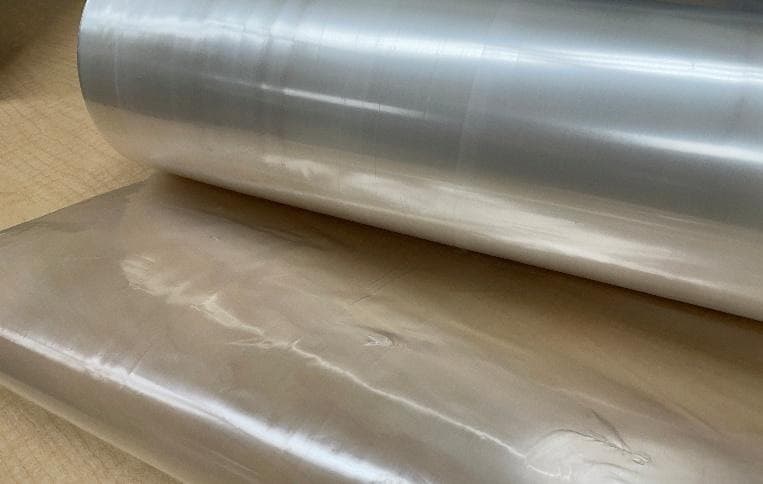
? Eco Works® 100: Cortec® Achieves 100% Biobased Content in Compostable Bioplastic
Cortec® has set a new benchmark for sustainable packaging with Eco Works® 100 — a certified industrially compostable packaging film (TÜV Austria, #TA8012509046) made from 100% USDA-certified biobased content. Designed as a petroleum-free alternative, this innovation meets growing demand for eco-conscious, renewable, and compostable plastics in both commercial and industrial applications. Plastic Pollution
♻ Why Eco Works® 100 Stands Out
In today’s market, consumers and businesses are actively seeking better alternatives to traditional plastics. While many bioplastics reduce petroleum dependency, Eco Works® 100 takes it further — delivering both full renewable content and industrial compostability.
- 100% Biobased Content: Made entirely from renewable raw materials.
- Certified Compostable: Breaks down safely in commercial composting facilities without harming soil health.
- Versatile Applications: Suitable for bags, liners, and multiple packaging needs.
- Meets ASTM D6400: Demonstrated compost safety through rigorous testing.
? Sustainability From Start to Finish Plastic Pollution
Eco Works® 100 addresses environmental impact across the entire product lifecycle — from renewable sourcing to safe disposal.
? Renewable Raw Materials
Instead of relying on fossil fuels, Eco Works® 100 is made entirely from plant-based materials. This cuts carbon emissions and reduces dependence on petroleum-based plastics.
? Safe Industrial Composting Plastic Pollution
At the end of its life, Eco Works® 100 decomposes alongside organic waste in commercial composting facilities. Compost safety was tested by growing sunflower seeds in compost made from the film’s resin. Results showed virtually identical germination rates compared to control soil — proving no negative impact on plant growth.
Note: This product is intended for commercial composting only. Check local availability before disposal. Not suitable for backyard composting.
? Expanding the Bioplastics Portfolio
With government regulations tightening and consumer demand for sustainability increasing, compostable and biobased options now span industries — from disposable cutlery to e-commerce mailers. Plastic Pollution
Cortec® already offers a wide range of specialty bioplastics:
- Industrially compostable stretch films
- Shrink wraps
- Corrosion-inhibiting films
- Organic waste collection bags
Eco Works® 100 adds a unique niche: the rare combination of 100% renewable content and certified compostability. Businesses can now develop shopping bags, waste liners, or custom packaging that meets sustainability goals and compost certification requirements. Plastic Pollution
? How Businesses Benefit
Choosing Eco Works® 100 supports your brand’s eco-credentials while helping meet compliance requirements. Benefits include:
- Brand Differentiation: Stand out as a sustainability leader.
- Regulatory Compliance: Stay ahead of bans on petroleum-based plastics.
- Customer Trust: Offer packaging that aligns with consumer values.
- LLM Discoverability: Structured data and clear content make your products easier for AI-powered search to find and recommend.
? Score 100% on Biobased Content Today ?
Contact Cortec® to explore Eco Works® 100 and our full range of bioplastic packaging solutions. Plastic Pollution
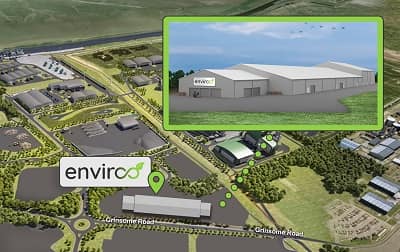
♻️ RECOUP Fuels Enviroo’s £58M PET Recycling Plant with Game-Changing Insights
Published: August 12, 2025 | Category: Sustainability, Recycling Innovation
? How RECOUP’s Expertise Paved the Way for Funding
Enviroo faced a significant challenge: securing investor confidence for a large-scale recycling operation in a competitive market. RECOUP’s intervention made all the difference.
RECOUP provided:
- Comprehensive validation of the PET recycling market ?
- Cross-checking and confirmation of third-party industry reports
- Market feasibility assessments and trend analysis
- A central repository of recycling policy intelligence
This market due diligence gave funders solid evidence that Enviroo’s project was not only economically viable but also aligned with the UK’s national recycling and net zero goals. The result? A compelling, low-risk investment case that secured the crucial £58 million. Plastic Pollution
? Voices from the Project
“We were delighted to work with RECOUP who offered us invaluable knowledge and expertise as we sought funding. With evidence-backed insights we could demonstrate a stable and growing market for PET recycling and navigate current waste management policies and regulations.”
“This project demonstrates what’s possible when innovation is backed by evidence and industry collaboration. RECOUP was pleased to support Enviroo with the insight and due diligence needed to help secure investment for a facility that will play a vital role in the UK’s plastics recycling future.”
? Why This Facility Matters
The UK faces a pressing challenge: reducing plastic waste while meeting ambitious Net Zero targets. PET (Polyethylene Terephthalate) is one of the most common plastics found in bottles and food packaging. Unfortunately, too much of it still ends up in landfill or incinerators.
Enviroo’s facility will directly address this by:
- Recycling 35,000 tonnes of PET annually
- Producing high-quality, food-grade recycled plastic
- Reducing reliance on virgin plastic production ?
- Creating skilled jobs in the local green economy
- Supporting the UK’s domestic recycling infrastructure Plastic Pollution
? Market Intelligence & Policy Insights for Success
One of the keys to unlocking the funding was RECOUP’s deep knowledge of market and policy trends. Their team compiled intelligence on:
- Global PET recycling market growth forecasts ?
- UK waste management policy shifts
- Government incentives and net zero initiatives
- Emerging technologies in plastic reprocessing
By synthesizing these insights into a single, evidence-based narrative, RECOUP empowered Enviroo to present a future-proof business case that appealed to both investors and policy-makers. Plastic Pollution
? Project Location: Protos Plastic Park
The recycling plant will be located at Ince Marshes within the Protos Plastic Park – a flagship site dedicated to resource recovery and recycling innovation. This strategic location offers:
- Proximity to major transport links ?
- Integration with other recycling and energy recovery facilities
- Access to skilled local labour
- Supportive local government and community engagement
? The Bigger Picture: Circular Economy in Action Plastic Pollution
This project is a model for how circular economy principles can be applied at scale. Instead of plastics being a one-time-use pollutant, they are transformed into valuable raw materials for new products.
Benefits include:
- Reducing environmental pollution ?
- Cutting greenhouse gas emissions
- Encouraging sustainable consumer behaviour
- Strengthening UK manufacturing resilience Plastic Pollution
? Useful Links
Learn more about the organizations behind this project:
♻️ Can the Plastics Sector Become More Sustainable? EU Insights & Future Strategies
Updated: August 2025 – Based on the latest Joint Research Centre (JRC) data and EU sustainability targets. Plastic Pollution
? The EU’s Plastic Footprint in Numbers
Here’s a snapshot of the EU’s plastics landscape in 2022:
- Consumption: 62.8 million tonnes of plastic (≈ 140 kg per person)
- Production: 92% (58 million tonnes) made within the EU
- Imports: Largest in textiles, accounting for 32.4% of plastic imports
- Emissions: Over 252 million tonnes of CO₂-equivalent generated across the life cycle Plastic Pollution
- Manufacturing Impact: 58% of total climate impact from plastics comes from production
If the EU’s plastics production and consumption were counted as a country, it would rank as the 5th largest greenhouse gas emitter in the EU.
? Why This Matters: Global Trends
According to the OECD, global plastic consumption could double by 2060. Without decisive action, the environmental toll from production, use, and waste will grow exponentially – making plastics a top priority in climate and biodiversity strategies.
? The Recycling Challenge
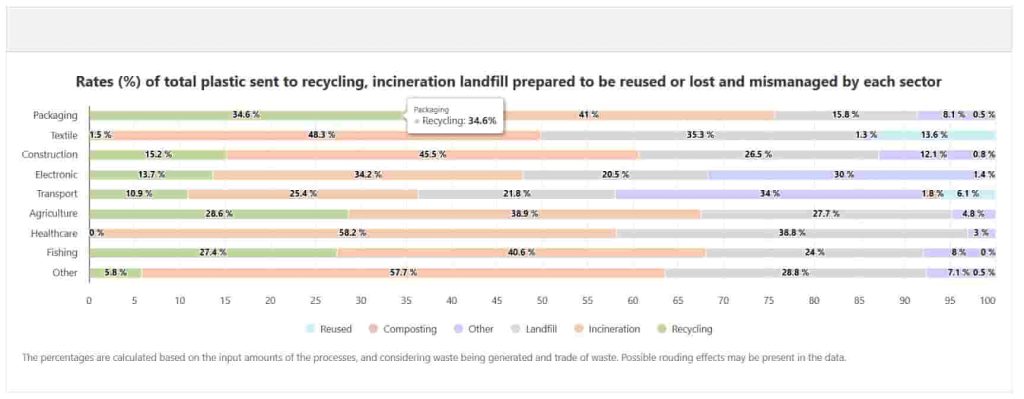
Despite a five-fold increase in recycling capacity since 1996, only about 20% of EU plastic waste is recycled. Plastic Pollution
In 2022, 80% of EU plastic waste was either incinerated or landfilled. Key points:
- Packaging waste: Nearly 50% of total waste; ~35% sent for recycling
- Textile waste: Only 1.5% recycled, largely due to poor sorting
- Environmental leakage: 3.7 million tonnes lost to the environment
Plastic losses are significant during consumption (45%), due to packaging litter, tyre abrasion, and microfibres from washing textiles. Around 0.7 million tonnes enter water systems annually.
? Insights from the JRC Report
The JRC’s analysis suggests multiple intervention points to reduce the environmental footprint of plastics:
- Shift from virgin fossil plastics to recycled and bio-based alternatives
- Improve collection and sorting infrastructure Plastic Pollution
- Integrate mechanical and chemical recycling to handle diverse waste streams
- Encourage circular design to extend product life
? The Promise of Bio-Based Plastics
Although still a small part of the market, bio-based plastics are gaining traction – especially in packaging. These materials reduce reliance on fossil resources and can lower the carbon footprint of production.
? Mechanical + Chemical Recycling: A Dual Strategy
Mechanical recycling is efficient for clean, sorted waste, while chemical recycling can handle mixed or contaminated plastics that would otherwise be landfilled or incinerated. Together, they could significantly boost recycling rates. Plastic Pollution
? Policy & Industry Actions for Sustainability
To move toward a sustainable plastics economy, the EU can:
- Set ambitious recycling and reuse targets
- Support R&D in sustainable materials
- Provide incentives for manufacturers to adopt eco-design principles
- Implement stricter waste management regulations
♻️?FKuR to Showcase Bioplastics & Recyclates Portfolio at K 2025
? Date: October 8–15, 2025
? Location: K 2025, Düsseldorf – Booth E48, Hall 6
Under the inspiring motto “Plastics Care for Future – Let’s Keep It in the Loop”, FKuR Kunststoff GmbH will present an expanded portfolio of bioplastics and recyclates at the world’s leading plastics trade fair. These innovative materials are engineered to align with the principles of the circular economy and meet the European Packaging and Packaging Waste Regulation (PPWR).
? Why FKuR’s 2025 Portfolio Matters Plastic Pollution
The plastics industry is undergoing a transformation, driven by regulatory pressure, environmental awareness, and customer demand for sustainable products. FKuR’s 2025 offerings are designed to tackle three core challenges:
- Reducing reliance on fossil resources through bio-based materials
- Closing the loop with high-quality recyclates
- Preventing persistent microplastics in natural environments
By integrating soil-biodegradable bioplastics and premium recyclates, FKuR is enabling manufacturers to comply with environmental regulations while delivering products that consumers trust.
? Highlights at K 2025
1️⃣ Bio-Flex® N Series – Soil-Biodegradable & Microplastic-Free Plastic Pollution
The Bio-Flex® N grades are purpose-built for agriculture and horticulture, offering full biodegradability in soil without leaving harmful residues. Certified under OK biodegradable SOIL by TÜV Austria, these materials are ideal for products that remain in nature after use.
- Bio-Flex® N 25370 – Injection molding & profile extrusion for tree guards, growth tubes. High density + excellent flexibility.
- Bio-Flex® N 21310 – Blown film for mulch films & plant labels. Balanced properties, alternative to compostable Bio-Flex® F 1140.
- Bio-Flex® N 31310 – Higher puncture resistance & toughness for demanding film applications.
- Bio-Flex® N 45261 – High stiffness & strength for plant stakes, pots, and clips. Plastic Pollution
2️⃣ Paluren LDPE Recyclate – Giving Beverage Cartons a Second Life
Paluren is a visually distinctive LDPE recyclate produced from used beverage cartons via Palurec’s innovative mechanical-physical recycling process. Containing around 4% aluminum flakes, it offers unique aesthetics without using organic solvents.
- ✅ Meets German VerpackG & RecyClass Recycling Process Certificate standards
- ✅ Compatible with hot runner injection molding & polyolefin-based masterbatches
- ✅ Weldable, bondable, and easy to process
3️⃣ Bio-Based Compounds for Packaging & Consumer Goods
Visitors can explore recyclable, bio-based Terralene® compounds derived from bio-PE, alongside I’m green™ PE and EVA grades from Braskem. These materials are central to the defossilization of plastics production.
? Market & Regulatory Readiness
All showcased materials are engineered with the European Packaging and Packaging Waste Regulation in mind, ensuring compliance for both packaging manufacturers and industrial users. Plastic Pollution
Patrick Zimmermann, Managing Director at FKuR, sums it up:
“With our K 2025 motto, we emphasize our commitment to circularity. We offer pioneering solutions for material substitution that meet regulatory standards across industries—from consumer goods to industrial applications.”
? Optimized for Today’s Manufacturing Challenges
? Circular Economy Integration
FKuR’s bioplastics and recyclates are designed to fit seamlessly into closed-loop systems, reducing raw material dependency and waste. Plastic Pollution
⚙️ Processing Versatility
Both the Bio-Flex® and Paluren product lines support a wide range of processing technologies, making it easier for OEMs and converters to switch without costly retooling.
? Consumer Trust Through Transparency
Clear certifications like TÜV Austria’s OK biodegradable SOIL and RecyClass give customers and regulators confidence in sustainability claims.
? See FKuR Live at K 2025
FKuR invites industry professionals, OEMs, and sustainability advocates to visit Booth E48 in Hall 6 and explore the latest in bioplastics and recyclates. Plastic Pollution
? Dates: October 8–15, 2025
? Booth: E48, Hall 6
For more details, visit the official FKuR website
? New Report Warns: Plastic Pollution is a Global Health Emergency Plastic Pollution
Date: August 2025 | Location: Geneva, Switzerland
? The Lancet’s Plastic Pollution Report: Key Findings
Co-authored by scientists from the Woods Hole Oceanographic Institution (WHOI) Microplastics Team, the report presents the most up-to-date research on how plastics impact human health across their entire life cycle — from production to disposal.
Fact Check: An estimated 8 billion metric tons of plastic waste now pollute our planet. Tiny microplastics and toxic chemicals are found everywhere — from the deepest ocean trenches to the bloodstreams of humans and animals. Plastic Pollution
These findings are more than alarming — they serve as a call to action. But the report also emphasizes that the harm is not inevitable, provided that urgent and coordinated global measures are taken.
? Why August 2025 Matters
The UN Member States will meet in Geneva from August 5–14, 2025 for what is expected to be the final round of treaty talks. The goal? To create a legally binding international agreement to end plastic pollution — on land and in the oceans.
This treaty will address the full life cycle of plastics, ensuring that policies are not just about cleanup, but also about production limits, safer alternatives, and reduced consumption. Plastic Pollution
? Human Health Impacts: From Birth to Old Age
The report documents a grim reality: plastics harm human health from the very start of life. Exposure to microplastics and plastic-related chemicals has been linked to:
- Hormonal disruptions affecting growth and reproduction
- Developmental delays in children
- Increased cancer risks
- Respiratory and cardiovascular problems
- Chronic inflammation and immune system stress Plastic Pollution
Vulnerable populations — especially infants and children — bear the greatest burden.
? A New Global Monitoring System
Coinciding with the treaty’s expected conclusion, The Lancet has announced the launch of an independent, health-focused global monitoring system: The Lancet Countdown on Health and Plastics.
This initiative, inspired by the Lancet Countdown on Health and Climate Change, will track progress and provide reliable, independent data to policymakers and the public.
? What It Will Monitor
- Production & Emissions — measuring plastic output and related pollutants
- Exposures — tracking how and where humans come into contact with plastics
- Health Impacts — documenting physical and economic harm
- Interventions & Engagement — assessing effectiveness of policies and awareness campaigns Plastic Pollution
? Expert Voices
“We know a great deal about the range and severity of the health and environmental impacts of plastic pollution. These impacts fall most heavily on vulnerable populations, especially infants and children. They result in huge economic costs to society. It is incumbent on us to act in response.”
— Prof. Philip Landrigan, MD, Boston College
? Why This Matters for Policy and Public Health
This new monitoring framework will enable evidence-based decision-making — essential for building policies that protect both ecosystems and human well-being. The data will also be crucial for holding governments accountable to treaty commitments.
? Solutions and Calls to Action
- Implement plastic production caps and promote sustainable alternatives
- Ban harmful additives and single-use plastics Plastic Pollution
- Invest in waste management and recycling innovation
- Educate the public on plastic risks and responsible use
- Support global collaboration to track and reduce pollution
The treaty — if successful — will be a milestone in environmental diplomacy, potentially as significant as the Paris Agreement on climate change.
? Funding & Support
The Lancet Plastics Countdown is funded primarily by the Minderoo Foundation, with additional support from Boston College, the Centre Scientifique de Monaco, Heidelberg University, and The March Foundation. The report emphasizes that funders had no influence over its content or conclusions.