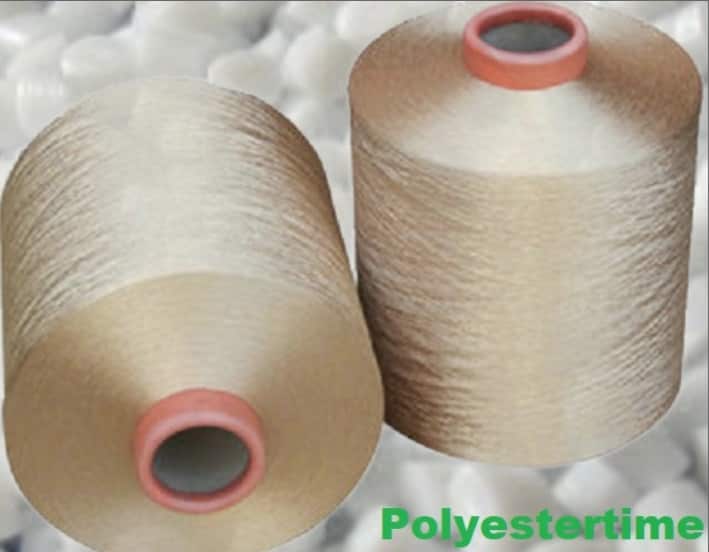
Polymer Compounds – Taekwang Industry Unveils ACECOOL-BIO: Korea’s First Eco-friendly Cool-touch Nylon Fiber Taekwang Industry has taken a bold leap into sustainable innovation with the launch of ACECOOL-BIO, South Korea’s first domestically developed plant-based nylon yarn 25-06-2025 - Archive
Polymer Compounds
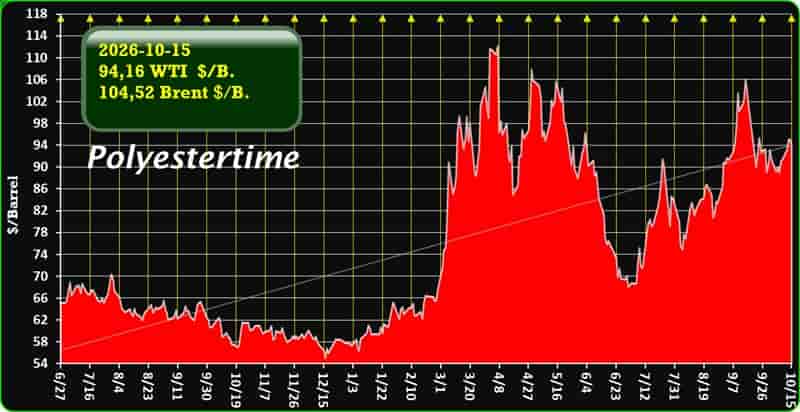
Crude Oil Prices Trend

POLYPLASTIC and SIBUR Partner to Boost Localized Polymer Compounds for Russian Auto Industry
POLYPLASTIC Group and SIBUR have entered a strategic partnership to advance the development and use of polymer composite materials in Russia’s automotive sector. The collaboration aims to accelerate import substitution and increase the use of locally produced polymer compounds in car manufacturing.
Driving Localization in Auto Components
The memorandum of cooperation focuses on enhancing the localization of plastic auto parts by using Russian-made compounds. It also supports the creation of a sustainable domestic raw material base for polymer production. Polymer Compounds
R&P POLYPLASTIC, a key division of POLYPLASTIC Group, will work closely with SIBUR to refine polymer formulations. Their goal is to develop new grades of automotive compounds and broaden the use of advanced synthetic materials in vehicle design.
The partnership emphasizes the use of local raw materials in cars manufactured in Russia, aiming to reduce reliance on imported components.
A Legacy of Innovation
“For over 30 years, our company has led the Russian market in polymer composite materials for the automotive industry,” said Alexander Pavlov, CEO of R&P POLYPLASTIC. “We’ve developed more than 250 brands of polymer compounds, widely adopted by automakers across Russia.” Polymer Compounds
Pavlov also highlighted the company’s long-standing commitment to deep localization, moving beyond surface-level efforts to include Tier 2 and Tier 3 suppliers. “That’s why we’re teaming up with SIBUR, the largest supplier of base polymers in the country,” he added.
Industry Impact and Market Potential
According to industry analysts, the Russian automotive sector consumes over 118,000 tons of polymers annually. Of this, SIBUR supplies around 26%. However, the current localization rate of polymers in passenger car production stands at just 32.8%.
In the first five months of 2025, 440,300 new passenger cars were sold in Russia, with more than half assembled at domestic plants. This underscores the growing importance of local supply chains in the automotive industry. Polymer Compounds
A Multiplier for the Economy
“The automotive industry has a powerful multiplier effect,” said Anatoly Svetlikov, Director of SIBUR’s Transport Division. “It supports over 2.8 million jobs across related sectors and builds high-value supply chains.”
Svetlikov emphasized that the full potential of the automotive sector can only be realized through deep localization of components. “Together with R&P POLYPLASTIC, we aim to create a complete value chain—from developing cutting-edge synthetic materials to producing finished components,” he said.
Scaling Up Localization Projects
SIBUR has already localized more than 10 projects, accounting for over 10,000 tons of polymer consumption. Looking ahead, the company estimates that current initiatives could reach a total volume of 160,000 tons by 2029. Polymer Compounds
This strategic alliance is expected to significantly enhance the competitiveness of Russian-made vehicles by ensuring a stable, high-quality supply of locally developed polymer materials.
Key Takeaways
- Strategic partnership between POLYPLASTIC and SIBUR targets deeper localization in Russia’s auto industry. Polymer Compounds
- Focus on developing new polymer compounds using local raw materials.
- Over 250 polymer brands already developed by POLYPLASTIC.
- Russian auto industry uses 118,000+ tons of polymers annually.
- SIBUR projects 160,000 tons of localized polymer use by 2029.

Taekwang Industry Unveils ACECOOL-BIO: Korea’s First Eco-friendly Cool-touch Nylon Fiber
Taekwang Industry has taken a bold leap into sustainable innovation with the launch of ACECOOL-BIO, South Korea’s first domestically developed plant-based nylon yarn. Officially announced on June 23, this milestone marks a significant step toward greener alternatives in the textile industry.
What Is ACECOOL-BIO?
ACECOOL-BIO is a cool-touch, eco-friendly nylon fiber made using plant-derived materials. It represents a breakthrough in the development of functional textiles that are both high-performing and sustainable. Polymer Compounds
Unlike traditional synthetic fibers, which are petroleum-based and carbon-intensive, ACECOOL-BIO drastically cuts environmental impact. According to Taekwang Industry, the carbon emissions generated during its production are less than half of those from conventional cool-touch fibers.
Superior Functionality Meets Sustainability
Beyond its green credentials, ACECOOL-BIO also improves upon the limitations of existing chemical fibers. It offers:
- Enhanced moisture absorption
- Improved breathability
- Cool-touch comfort Polymer Compounds
These features make it an ideal choice for sportswear, functional innerwear, and summer workwear, where comfort and performance are critical.
Additionally, ACECOOL-BIO boasts outstanding dyeability. It absorbs color more vividly and efficiently than conventional nylon, allowing for shorter dyeing processes and reduced energy consumption—a win-win for both manufacturers and the environment.
Designed for the ESG Era
The development of ACECOOL-BIO is Taekwang Industry’s response to growing consumer and corporate demand for eco-conscious materials and ESG-aligned solutions in the fashion and textile space.
A company representative emphasized that the launch supports Taekwang’s broader Environmental, Social, and Governance (ESG) management strategy. “We expect this product to contribute meaningfully to the expansion of sustainable practices across the fashion sector,” they noted. Polymer Compounds
A Vision for Premium, Eco-friendly Fiber Leadership
With the debut of ACECOOL-BIO, Taekwang Industry aims to strengthen its position as a leader in premium, sustainable yarns. The company has announced plans to release additional innovative fiber brands in the latter half of the year, further expanding its market presence.
This move positions Taekwang as the only Korean company to offer vertical integration across both textile and petrochemical product lines—from synthetic fiber production to fabric manufacturing.
Integrated Eco-fiber Innovation
Taekwang’s latest innovation is part of its broader commitment to fiber excellence through its ACEPORA family of brands. These include:
- ACEPORA – The company’s umbrella brand for synthetic fibers
- ACEPORA ECO – Its integrated line of eco-friendly fiber solutions
With 24 fiber brands currently in its portfolio, Taekwang is setting the standard for functional, sustainable materials in both domestic and global markets.
What This Means for the Industry Polymer Compounds
The introduction of ACECOOL-BIO signals a shift in the textile landscape—where innovation is increasingly aligned with sustainability and regulatory trends.
As fashion and performance apparel brands seek to lower their environmental footprint, materials like ACECOOL-BIO offer a compelling solution that balances technical performance, visual appeal, and eco-consciousness.
Conclusion
Taekwang Industry’s ACECOOL-BIO is more than just a new fiber—it’s a strategic leap toward a more sustinable and high-performing future in textile manufacturing. By combining plant-based materials, advanced functionality, and lower emissions, it’s paving the way for eco-premium fabrics that meet the demands of both industry and the planet.Stay tuned for more fiber innovations from Taekwang in the coming months, as the company continues to lead with purpose and performance. Polymer Compounds

Efficient and Resource-Saving: Netstal Unveils Next-Gen PET-Line at drinktec 2025
At drinktec 2025 in Munich, Netstal will showcase the cutting-edge PET-Line 4000. This latest-generation injection molding system introduces powerful innovations, greater efficiency, and a seamless user experience designed for the beverage industry of the future.
Live at drinktec: High-Performance in Action
From September 15–19, 2025, Netstal will present the new PET-Line 4000 at Hall C6 of the world’s leading trade fair for beverage and liquid food technology. Visitors will witness the system producing 6.9g PET preforms with a 25/22 thread, using PET resin containing 30% recycled material (rPET). Polymer Compounds
Demonstrating Netstal’s commitment to sustainability, all preforms produced during the event will be reintroduced into the PET recycling loop, completing a full circular economy cycle.
Ready for High-Cavity Molds: New MHT Tooling
The showcased PET-Line system integrates a newly developed 144-cavity mold from MHT, a sister company of Krones Group. This mold features a self-cleaning mechanism and enables ultra-fast cycle times of 4.8 seconds.
Unmatched Productivity
With a clamping force of 400 tons and production output of approximately 108,000 preforms per hour, the PET-Line 4000 is among the most productive systems in its class. For even higher output with the same clamping force, MHT also provides a 160-cavity mold.
Customers seeking maximum performance can opt for the PET-Line 5000, supporting up to 192 cavities. Polymer Compounds
Setting New Standards in Energy Efficiency
Netstal continues to lead the market with innovations that significantly reduce energy consumption during preform production. Key to this is the recuperation of kinetic braking energy from both the clamping unit and the post-mold cooling station—making the PET-Line the most energy-efficient system in its segment.
Introducing System Pressure Reduction
A new optional feature, System Pressure Reduction, keeps hydraulic system pressure consistently optimized—often below the maximum—further lowering energy usage across the system. This improvement not only boosts environmental performance but also results in substantial energy cost savings.
In fact, compared to competing systems, a Netstal PET-Line can save customers up to five-digit euro amounts annually in energy costs—strengthening both their profit margins and sustainability goals. Polymer Compounds
PET-Line: Where Innovation Meets Sustainability
By combining high-output production, advanced mold technology, and pioneering energy-saving features, Netstal’s PET-Line 4000 is a flagship solution for efficient, responsible manufacturing in the beverage packaging industry.
Visit Netstal at drinktec 2025 to experience the future of injection molding—live and in action.

Uster Technologies: Shaping the Future of Predictive Quality in Textiles
Quality Starts at the Source
In today’s competitive textile industry, quality assurance begins long before the final product. At Techtextil North America, Uster Technologies presented a compelling vision of quality that extends from raw fiber to finished fabric.
Speaking with The Textile Magazine, John Belew, General Manager for U.S. Operations, highlighted two breakthrough innovations:
- Uster Q-Bar 2 – A real-time on-loom inspection system using high-resolution cameras to catch defects during production, boosting efficiency and reducing waste. Polymer Compounds
- Uster AFIS 6 – The next-gen Advanced Fiber Information System for testing cotton, man-made, and recycled fibers. It delivers fast, precise measurements on neps, seed coat fragments, and fineness—pushing the limits of fiber analytics.
“These innovations reflect our strategy to enhance quality control both upstream and downstream,” said Belew.
Global Consistency Through Data
With textile production happening across borders, maintaining uniform quality is more critical than ever. Uster’s data-driven systems ensure that even globally distributed operations can produce to identical standards. Polymer Compounds
Belew explained:
“Think of wind turbine fabrics—produced in different countries, but all components must meet the same specs. Our systems make that possible.”
This global consistency is powered by Uster Statistics, the gold standard in textile benchmarking since 1957, offering globally comparable, real-time insights with every inspection.
From Reactive to Predictive Quality Control
Uster is not just helping customers fix problems—it’s helping them prevent them.
One standout example:
Uster Tester 6, a cutting-edge evenness tester, predicts how yarn will perform in future processes like knitting or weaving.
“We analyze defect trends and recurring issues to generate actionable insights,” said Belew. Polymer Compounds
This shift from reactive to predictive quality management helps reduce waste, control costs, and increase product reliability—especially vital in technical textiles.
Industry 4.0: Smarter, Connected Production
Uster is paving the way for Industry 4.0 in textiles, where machines and data systems talk to each other across the value chain.
From fiber testing to yarn clearing, Uster’s solutions are interconnected, providing end-to-end traceability and analytics.
“Our vision is an automated, connected spinning mill,” said Belew. “We’re building self-optimizing operations—systems that learn and adjust in real-time.”
Their first AI-ready solution, Uster FiberQ, is already showing results with early adopters. And more innovations are on the horizon. Polymer Compounds
India: A Hub for Innovation
India plays a vital role in Uster’s global R&D strategy. With a dynamic spinning industry and growing exports, India hosts Uster’s new Innovation Center, focused on software development and product testing.
Belew emphasized India’s strategic value:
“Our leadership team has deep ties to the region. We’re even piloting a new fabric inspection system for denim production there.”
This local expertise fuels innovation tailored for India’s needs, which can then scale worldwide.
Nonwovens & Technical Textiles: A Growing Focus
Uster is expanding its reach into nonwovens, especially in hygiene applications where materials must remain untouched.
By customizing their inspection systems—such as for companies like Kimberly-Clark—Uster is addressing the high-throughput, contact-free demands of this segment.
From raw material control to advanced visual inspection, their solutions support both quality and compliance in these sensitive applications. Polymer Compounds
A Future-Ready Vision
Uster Technologies is more than a quality assurance provider. It’s a partner in transformation for textile manufacturers aiming to compete globally.
With real-time data, predictive models, and seamless system integration, Uster is redefining quality as a proactive, intelligent, and scalable process.
From the U.S. to India and beyond, the company is not just adapting to the future of textiles—it’s building it.

New Analytical Techniques to Detect Polyethylene in Bioplastics
Researchers from the University of Pisa, supported by the Biorepack Consortium, have developed innovative methods to accurately detect polyethylene (PE) in biodegradable plastics. These advancements aim to ensure transparency and compliance in the growing bioplastics industry.
Why Detecting PE in Bioplastics Matters
Although regulations allow small amounts of polyethylene—less than 1%—in bioplastic formulations to enhance processability, the lack of standardized analytical protocols poses a risk. Polymer Compounds
Without clear testing guidelines, some manufacturers may exceed this threshold, compromising the biodegradability of the final product to reduce costs.
Introducing Two Reliable Testing Methods
The Italian research team has proposed two promising approaches based on analytical pyrolysis:
- Double-Shot Pyrolysis GC/MS (DSPy-GC/MS)
- Evolved Gas Analysis MS (EGA-MS)
Both techniques are capable of quantifying polyethylene even at concentrations at or below 1%, making them effective for regulatory compliance and quality control. Here’s how they compare:
Comparison of DSPy-GC/MS and EGA-MS
- DSPy-GC/MS: Offers superior sensitivity and lower limits of quantification. Ideal for detailed quality assessments.
- EGA-MS: Faster and better suited for high-throughput routine screening. Slightly less sensitive but highly efficient. Polymer Compounds
Importantly, both methods demonstrate negligible matrix interference, increasing their reliability across diverse bioplastic compositions.
Published Research and Industry Relevance
The study has been published in the Journal of Analytical and Applied Pyrolysis under the title: “Quantification of polyethylene in biodegradable plastics by analytical pyrolysis-based methods with GC split modulation.”
These findings not only enhance scientific understanding but also provide practical tools for manufacturers, auditors, and regulatory bodies working in the sustainable materials space.
Implications for the Bioplastics Market
With sustainability goals becoming more urgent, accurate testing methods like these reinforce consumer trust and improve material traceability. Adoption of such techniques can help curb greenwashing practices and support the transition to genuinely biodegradable packaging and products. Polymer Compounds
Conclusion
This breakthrough provides the bioplastics industry with essential tools to verify compliance, support sustainability claims, and maintain consumer confidence. As regulation tightens and demand for eco-friendly materials grows, innovations like these will become increasingly vital.

Common Bacterium Turns Plastic Waste into Paracetamol
A Groundbreaking Sustainable Discovery from the University of Edinburgh
The Plastic Problem Meets a Medical Breakthrough
Scientists at the University of Edinburgh have made a revolutionary discovery: a common bacterium, E. coli, can convert everyday plastic waste into paracetamol, the world’s most widely used painkiller. Polymer Compounds
Traditionally made from crude oil and other fossil fuels, paracetamol production has long relied on polluting industrial processes. But thanks to this new bioengineering breakthrough, that may soon change — dramatically.
Rethinking How We Make Medicine
Paracetamol, also known as acetaminophen, is found in millions of households globally. But few know its creation contributes heavily to climate change. The pharmaceutical industry consumes thousands of tons of fossil fuels annually just to produce medicines like this, pumping tons of carbon into the atmosphere.
The new method, developed by the Wallace Lab at the University of Edinburgh, uses genetically modified E. coli to transform terephthalic acid—a compound derived from PET plastic—into the active ingredient in paracetamol. And the best part? The entire process is nearly carbon-emission-free. Polymer Compounds
Brewing Painkillers from Plastic
Here’s how it works:
- PET plastic (the kind used in water bottles and food packaging) is broken down into its base chemical, terephthalic acid.
- Scientists introduce genetically engineered E. coli, which has been reprogrammed to convert this acid into paracetamol.
- The transformation happens via fermentation, much like brewing beer, and takes less than 24 hours.
Even more impressive: 90% of the terephthalic acid was successfully turned into paracetamol — an incredibly efficient rate for a biological process. Polymer Compounds
Why This Matters
PET plastic waste is one of the world’s most urgent environmental challenges. Over 350 million tons are produced annually, with much of it ending up in landfills or the ocean. While PET can be recycled, most methods simply create more plastic, perpetuating pollution.
This research flips the script by turning plastic into something useful, and not just another product destined to pollute. Instead of contributing to environmental degradation, this technique upcycles plastic into essential medicine.
According to lead author Professor Stephen Wallace, this proves that PET plastic “isn’t just waste” — it’s a resource for creating valuable, even life-saving, products.
Engineering Biology Meets Green Chemistry
This innovation lies at the crossroads of traditional chemistry and engineering biology. The team behind the project highlights the power of microbial “factories” — living organisms programmed to make sustainable materials and chemicals. Polymer Compounds
The research was published in Nature Chemistry and was supported by funding from EPSRC, AstraZeneca, and Edinburgh Innovations, the University’s commercialization arm.
Edinburgh is already a global leader in engineering biology, with the largest group of researchers in the UK focused on turning biological systems into real-world solutions.
What Comes Next?
While this is still in the experimental phase, the potential is massive. The process currently works in the lab, and the next step is scaling it for commercial use. If successful, it could:
- Disrupt fossil-fuel dependency in pharmaceutical manufacturing
- Reduce greenhouse gas emissions
- Give new purpose to plastic waste Polymer Compounds
- Support a circular economy for chemicals and medicines
Ian Hatch of Edinburgh Innovations summed it up best: “We’re bringing in companies like AstraZeneca to help turn these discoveries into world-changing innovations.”
A Call for Collaboration
The University of Edinburgh is actively seeking partners to help bring this breakthrough to the world. From pharmaceutical giants to sustainability advocates, the door is open for those who want to help build a cleaner, smarter, and more circular future.
If you’re in biotech, green chemistry, or sustainability, now is the time to get involved.
Final Thoughts
This remarkable discovery isn’t just about a better way to make paracetamol — it’s a glimpse into what the future of medicine and materials could look like: sustainable, circular, and powered by biology. Polymer Compounds