Disposable Baby Diapers Recycled Into Pyrolysis Oils for New Plastics
Disposable Baby Diapers Recycled Into Pyrolysis Oils for New Plastics – Recycled disposable baby diapers

Disposable Baby Diapers Recycled Into Pyrolysis Oils for New Plastics
Disposable baby diapers are among the most difficult household waste products to recycle. Millions of tons are discarded every year across Europe, with most ending up in landfills or incinerators after a single use. Now, a new collaboration between Borouge International, BlueAlp, and Woosh aims to change that through advanced chemical recycling.
The three companies are working together to transform used disposable baby diapers into pyrolysis oils that can later be used to manufacture new plastics and polymers.
According to consumption data, approximately 6.73 million metric tons of disposable diapers were generated across the EU-28 in 2017. Despite being treated as waste, diapers contain valuable polyolefin-based films and nonwoven materials that can potentially be recovered and reused.
How the Diaper Recycling System Works
The project builds on Woosh’s existing diaper collection and recycling ecosystem in Belgium. Woosh supplies reusable collection systems to households and childcare facilities, then collects the used diapers after disposal.
More than 30,000 children are currently estimated to use the Woosh system every day. The company processes thousands of metric tons of used diapers annually at its diaper recycling facility.
Woosh is also planning to expand operations into France and the Netherlands to increase the amount of recoverable plastic available for recycling.
Turning Used Diapers Into Pyrolysis Oil
Engineers from Woosh collaborated with Borouge International and BlueAlp to establish quality standards for recovered plastics that would be suitable for chemical recycling.
To meet those requirements, Woosh refined its proprietary mechanical separation process. The recovered plastic fractions were then processed at BlueAlp’s recycling facility in Oostende, Belgium.
BlueAlp used pyrolysis technology to convert the recovered plastic waste into ISCC PLUS-certified pyrolysis oil. This oil can later serve as feedstock for the production of new polymers and plastic products.
The project demonstrates how difficult-to-recycle hygiene waste streams can potentially become part of a circular economy system.
A Circular Economy Model for Disposable Diapers
The companies involved believe this initiative could represent one of Europe’s first industrial-scale circular recycling systems for single-use diapers.
Peter Voortmans, Vice President of Marketing Consumer Products at Borealis, explained that chemically recycling diaper plastics is technically challenging because the materials require extensive pre-processing before entering the pyrolysis stage.
However, the collaboration between the three companies helped overcome those barriers and proved that coordinated recycling systems can recover valuable materials from complex waste streams.
Woosh CEO Jeff Stubbe said the company spent years developing both the collection infrastructure and the recycling technology required to make the project commercially viable. He added that validating diaper-derived plastics as feedstock for new polymer production is a major milestone for circular manufacturing.
BlueAlp CEO Valentijn de Neve also highlighted the importance of chemical recycling for waste streams that cannot be efficiently processed through traditional mechanical recycling methods.
Why Chemical Recycling Matters
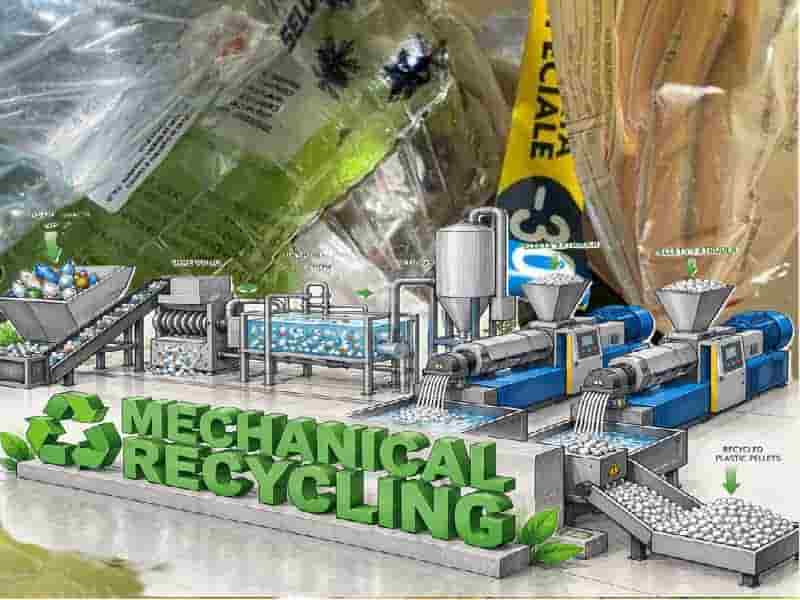
Mechanical recycling remains the most common method for processing plastic waste, but certain contaminated or mixed-material products — such as disposable diapers — are extremely difficult to recycle using conventional systems.
Chemical recycling technologies like pyrolysis break plastic materials down into oils and chemical feedstocks that can be reused to create new plastics. Supporters argue this approach can help divert difficult waste streams away from landfills and incineration facilities.
As regulations around plastic waste tighten across Europe, companies are increasingly investing in advanced recycling technologies to improve material recovery and support circular economy goals.
Related Developments in Sustainable Diaper Packaging
The diaper industry is also exploring more sustainable packaging solutions.
Korozo Group, Drylock Technologies, and Colruyt recently collaborated on a recyclable nonwoven packaging solution for diaper products. The companies aimed to create packaging that maintains a soft, premium tactile feel while improving recyclability.
Meanwhile, Borealis has also partnered with Clariant and SINTEF on a pilot-scale project focused on upgrading pyrolysis oil from plastic waste into cracker-grade feedstock suitable for virgin polyolefin production.
More…