Recycled Plastic Construction Breakthrough Exposes a Powerful Shift Toward Sustainable Housing as 3D Printing Challenges Timber Dependency Worldwide 10-02-2026
Recycled plastic construction reshapes sustainable housing
Recycled plastic construction is emerging as a transformative force in sustainable homebuilding, driven by urgent housing demand, material shortages, and mounting plastic waste. Engineers at the Massachusetts Institute of Technology are demonstrating how discarded plastic can be repurposed into structural building components that rival traditional wood in strength while offering superior durability and sustainability.
This innovation positions recycled plastic construction as a viable alternative at a time when conventional materials are under increasing pressure. Global demand for new housing continues to rise, while forests face unprecedented strain from timber extraction. Against this backdrop, plastic waste is being reframed from an environmental liability into a valuable construction resource.
3D-printed recycled plastic trusses prove structural strength
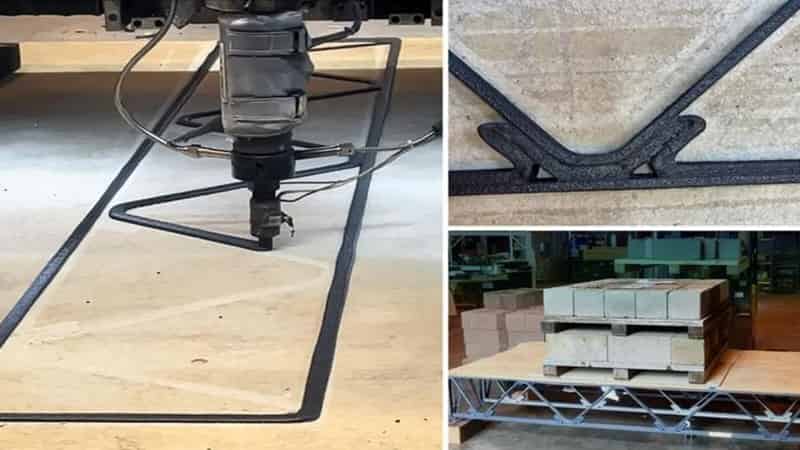
MIT researchers recently unveiled a 3D-printed floor truss system manufactured entirely from recycled plastic. Each truss weighs approximately 13 pounds, yet structural testing showed it could support more than 4,000 pounds when installed in a standard floor frame with plywood decking.
These results exceed US Department of Housing and Urban Development benchmarks, confirming that recycled plastic construction can meet established building performance standards. The high stiffness-to-weight ratio of the trusses ensures minimal deflection, a critical requirement for residential flooring systems.
The combination of low weight and high load-bearing capacity highlights a key advantage of recycled plastic construction over wood, particularly in modular and prefabricated housing applications.
Housing demand collides with global timber constraints
Global housing needs are projected to reach approximately one billion new homes by 2050. Meeting that demand using traditional wood-based construction would place enormous strain on global forests. Estimates suggest that relying solely on timber would require deforestation on a scale equivalent to clearing the Amazon rainforest multiple times.
Recycled plastic construction offers a scalable alternative that decouples housing growth from deforestation. By redirecting plastic waste into structural components, the construction sector can reduce its dependence on timber while simultaneously addressing the global plastic waste crisis.
This dual benefit is driving increased interest from policymakers, urban planners, and construction manufacturers seeking sustainable long-term solutions.
Printing dirty plastic without preprocessing
One of the most disruptive aspects of MIT’s approach is the ability to process unwashed, contaminated plastic waste directly into construction materials. Unlike many recycling systems that require extensive cleaning and sorting, this recycled plastic construction method is designed to work with dirty feedstock such as used bottles and food containers.
Shredded plastic waste can be fed directly into large-scale additive manufacturing systems, significantly reducing energy use, processing costs, and logistical complexity. This capability expands the range of usable plastic waste and improves the economic feasibility of recycling at scale.
By minimizing preprocessing requirements, recycled plastic construction becomes viable even in regions with limited recycling infrastructure.
Rapid manufacturing enables modular housing systems
The MIT trusses were produced using an industrial-scale 3D printer capable of processing up to 80 pounds of material per hour. Each eight-foot truss required only 13 minutes to print, demonstrating the potential for rapid, high-volume production.
Lightweight components can be transported using standard pickup trucks and assembled quickly on site, supporting modular and prefabricated housing models. This flexibility makes recycled plastic construction particularly attractive for disaster relief housing, remote communities, and fast-growing urban areas.
The ability to establish micro-factories near plastic waste sources further strengthens the case for decentralized, circular manufacturing systems.
Economic signals from the construction sector
The construction industry plays a central role in plastics demand, but recent economic indicators show uneven performance. While household consumption and business investment remain relatively strong, investment in nonresidential construction has declined for several consecutive quarters.
Residential construction has shown limited growth, highlighting the importance of innovation in materials and manufacturing efficiency. Recycled plastic construction aligns with this need by offering cost stability, material availability, and performance consistency amid volatile market conditions.
Economic analysis shows a strong correlation between construction supplies manufacturing and plastics production, reinforcing the strategic importance of construction-related innovation for the plastics industry.
Upstream impact on plastics manufacturing
Plastics manufacturers are more closely tied to construction activity than housing sales alone. Pipes, insulation, siding, flooring, and structural components all depend on steady construction demand.
Recycled plastic construction strengthens this upstream relationship by creating new, high-value applications for recycled polymers. A measurable increase in construction supply manufacturing directly translates into increased plastics production, supporting industrial resilience and long-term investment.
This reinforces the role of recycled plastic construction as both an environmental and economic catalyst.
Scaling recycled plastic construction globally
MIT researchers aim to scale this technology through modular micro-factories capable of producing lightweight housing frames worldwide. By colocating manufacturing near plastic waste sources, transportation emissions can be reduced while local recycling economies are strengthened.
As regulatory pressure mounts for sustainable building practices, recycled plastic construction offers a practical pathway to meeting environmental targets without sacrificing performance or affordability.
The convergence of housing demand, material innovation, and circular economy principles suggests that recycled plastic construction could play a defining role in the future of global homebuilding.
More…