China’s 1 Breakthrough Carbon Fiber Could Disrupt Global Advanced Materials Industry
China’s Breakthrough in T1200 Carbon Fiber Production
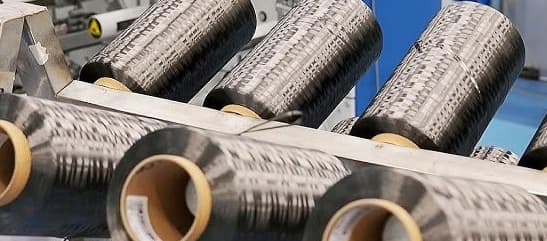
China has reached a major technological milestone by becoming the first country to mass-produce T1200 carbon fiber, a new ultra-high-strength material that represents the strongest mass-produced carbon fiber currently available. The development marks a significant step forward in advanced materials engineering and could reshape global competition in aerospace, robotics, and high-performance manufacturing.
Despite being thinner than a human hair, T1200 carbon fiber is reportedly about ten times stronger than standard structural steel. This remarkable strength-to-weight ratio makes the material extremely valuable for industries that require components that are both lightweight and exceptionally durable.
The new material highlights China’s accelerating capabilities in advanced manufacturing and strategic materials research. For industries dependent on cutting-edge composite materials, the emergence of T1200 carbon fiber could represent a turning point in global supply chains.
Why T1200 Carbon Fiber Matters
Carbon fiber has long been one of the most important materials in modern engineering. Its unique properties allow manufacturers to create components that combine low weight with exceptional strength and rigidity.
The introduction of T1200 carbon fiber pushes these capabilities even further. The material reportedly achieves an engineering tensile strength exceeding eight gigapascals, placing it among the strongest industrial fibers ever developed.
Such performance allows manufacturers to design lighter aircraft structures, more efficient drones, stronger robotic arms, and next-generation aerospace components. As a result, T1200 carbon fiber is expected to play an important role in the evolution of high-tech industries.
Because modern aircraft, satellites, and autonomous systems increasingly rely on composite materials, improvements in carbon fiber performance can deliver major efficiency gains. Lighter structures reduce fuel consumption, extend range, and improve durability under extreme operating conditions.
A Strategic Challenge to Global Market Leaders
The emergence of T1200 carbon fiber could also shift the balance of power within the global carbon fiber industry.
For decades, Japanese manufacturers such as Toray Industries have dominated the high-performance carbon fiber market. Their product range includes well-known grades such as T700 for general applications and higher-strength materials like T800 and T1100 used in aerospace and advanced engineering.
China’s entry into mass production of T1200 carbon fiber introduces a new competitor capable of producing an even stronger grade at industrial scale. The planned production capacity of roughly 100 tons per year suggests the material is moving beyond laboratory research and entering practical manufacturing.
This shift could intensify global competition in advanced composites, particularly as governments and manufacturers increasingly prioritize supply chain security for critical materials.
Developed by China National Building Material Group
The new T1200 carbon fiber was developed by China National Building Material Group, a major state-owned industrial enterprise with extensive operations in advanced materials.
The company unveiled the new fiber during JEC World, one of the world’s largest international trade exhibitions for composite materials held in Paris. The announcement attracted considerable attention from aerospace manufacturers, engineering firms, and research institutions.
According to company leadership, the development of T1200 carbon fiber represents the result of more than two decades of domestic research and technological progress.
The breakthrough demonstrates China’s ability to produce high-performance composite materials at scale, an area historically dominated by manufacturers in Japan, the United States, and Europe.
Engineering Strength Demonstrated by Real-World Testing
One demonstration highlighted the extraordinary strength of T1200 carbon fiber in a practical scenario.
Engineers created a carbon-fiber rope composed of 120,000 individual filaments twisted together. When tightened, the rope has a diameter of less than two millimeters.
Despite its extremely thin profile, the rope is strong enough to tow a fully loaded passenger coach carrying 54 adults. This example illustrates the enormous strength potential of T1200 carbon fiber, particularly when thousands of fibers are combined in composite structures.
Such performance opens possibilities for stronger aerospace cables, lighter lifting equipment, and highly durable structural components in demanding industrial environments.
Applications Across Multiple High-Tech Industries
The potential uses of T1200 carbon fiber extend across several advanced technology sectors.
In aerospace, the material could contribute to lighter aircraft fuselages, stronger wing structures, and improved satellite components. For drones and unmanned systems, the enhanced strength allows engineers to reduce weight while maintaining structural integrity.
Robotics manufacturers may also benefit from T1200 carbon fiber, as lighter robotic arms and frameworks improve energy efficiency and operational precision.
Other possible applications include high-performance sporting equipment, automotive components, wind turbine blades, and advanced defense technologies.
As industries continue to seek materials that deliver maximum strength with minimal weight, demand for T1200 carbon fiber could grow rapidly.
Strategic Importance for Global Supply Chains
Beyond its engineering value, T1200 carbon fiber also has strategic implications for global manufacturing.
Advanced materials increasingly influence economic competitiveness and technological leadership. Nations capable of producing high-performance fibers domestically gain greater control over supply chains for aerospace, defense, and energy technologies.
Industry leaders in China emphasize that T1200 carbon fiber plays a critical role in strengthening industrial supply chains and supporting long-term economic development.
As the global demand for composite materials continues to expand, innovations like T1200 carbon fiber may redefine the landscape of advanced materials manufacturing.
The Future of Ultra-Strong Carbon Fiber
The successful mass production of T1200 carbon fiber signals a new chapter in the evolution of high-performance materials.
While the production scale is currently limited, further expansion could accelerate adoption across multiple industries. Continued improvements in fiber strength, production efficiency, and composite design may unlock even more advanced engineering solutions.
For aerospace companies, robotics manufacturers, and industrial innovators, T1200 carbon fiber represents more than a material upgrade. It marks a technological milestone that could influence the next generation of engineering breakthroughs.
More…