Textile Industry Under Pressure as Oil Prices, War Disruptions, and Inflation Reshape Global Supply Chains
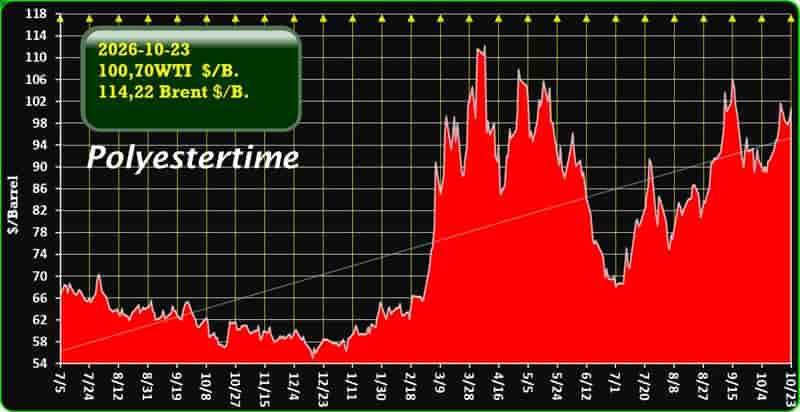
Textile industry oil dependency
Textile industry under pressure: oil shocks, shipping wars, and inflation reshape global manufacturing
The global textile industry is entering one of the most complex periods in its modern history. For decades, textile manufacturing proved remarkably resilient against recessions, changing fashion trends, labor shortages, and technological disruption. But the challenges facing the sector in 2026 are broader and more interconnected than before.
Rising oil prices, geopolitical conflicts, shipping instability, inflation, and fragile global supply chains are simultaneously increasing production costs and weakening consumer demand. What was once considered a predictable global manufacturing system is now becoming increasingly volatile.
At the same time, brands and retailers are demanding faster deliveries, sustainable sourcing, traceable supply chains, and greater production flexibility. Textile producers are now competing not only on price, but also on resilience and reliability.
A trillion-dollar industry facing structural change
The textile and apparel sector remains one of the world’s largest manufacturing industries, generating well over USD 1 trillion annually and employing millions of workers across Asia, Europe, and the Americas.
However, the traditional low-cost manufacturing model is under pressure. Global buyers are reducing their dependence on single sourcing regions and are increasingly prioritizing suppliers capable of managing disruptions.
Manufacturers are now expected to deliver:
- Stable production capacity
- Faster turnaround times
- Transparent sourcing systems
- Environmental compliance
- Lower carbon footprints
- Supply chain flexibility
This transformation is forcing textile exporters to rethink sourcing strategies, logistics planning, and raw material dependency.
The textile industry’s hidden dependence on oil
Textiles are often associated with cotton and natural fibers, but modern manufacturing is deeply tied to petroleum.
Synthetic fibers dominate the global market, with polyester accounting for the majority of worldwide textile production. Polyester is produced using petroleum-derived chemicals including purified terephthalic acid (PTA) and monoethylene glycol (MEG).
Industry estimates indicate that synthetic and man-made fibers now represent nearly 70% of global fiber production, making the sector highly sensitive to oil price fluctuations.
The dependence goes far beyond fiber production. Oil and petrochemicals are also essential for:
- Dyeing chemicals
- Textile finishing materials
- Packaging
- Industrial lubricants
- Transportation and shipping
- Energy-intensive manufacturing operations
When crude oil prices rise, textile manufacturing costs increase almost immediately.
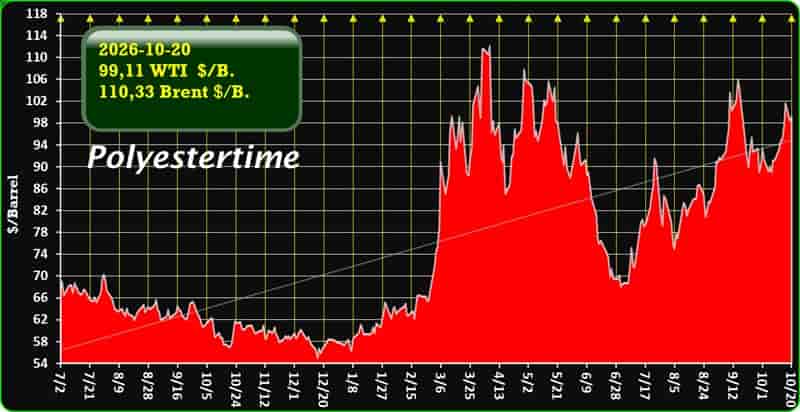
Recent energy market volatility has amplified these pressures. The International Energy Agency warned in its May 2026 Oil Market Report that global oil inventories are rapidly tightening due to geopolitical instability and disruptions around the Strait of Hormuz. The report noted that refinery throughput and oil supply remain under severe pressure while shipping disruptions continue to affect global trade flows. (iea.org)
S&P Global Market Intelligence also reported this week that continued tensions in the Middle East are pushing up prices for chemicals, plastics, and industrial materials, with the effects expected to persist for months even if shipping routes normalize. (spglobal.com)
For textile manufacturers heavily reliant on polyester and synthetic materials, these developments directly translate into higher production costs.
Shipping disruptions are slowing global textile trade
The textile industry depends heavily on international maritime logistics. Fabrics, yarns, trims, dyes, and finished garments constantly move between Asia, Europe, North America, and the Middle East.
That system is now under pressure.
Recent geopolitical instability in key maritime corridors has triggered major shipping disruptions across global supply chains. Freight costs have risen sharply during periods of instability, while longer transit times are affecting production schedules and retail inventory planning.
Several shipping operators have rerouted vessels away from high-risk areas, increasing fuel consumption and delivery times.
The impact on textiles is significant because fashion supply chains depend on timing. Delays of even one or two weeks can disrupt seasonal collections, promotional campaigns, and retail launches. Textile industry oil dependency
Insurance costs have also surged.
According to recent market reports, war-risk premiums for shipping operators increased dramatically during periods of regional escalation, adding further pressure on transportation costs. (spglobal.com)
Why the Strait of Hormuz matters to textiles
One of the most critical vulnerabilities for global manufacturing remains the Strait of Hormuz.
The maritime corridor handles a substantial share of the world’s oil trade, making it essential not only for energy markets but also for industries dependent on petrochemicals and international shipping.
Recent disruptions linked to tensions in the Middle East have intensified fears of long-term supply instability.
Reuters recently reported that ongoing disruptions in the Strait of Hormuz could delay full oil market recovery until 2027, according to Saudi Aramco CEO Amin Nasser. (reuters.com)
The International Energy Agency has also described the current disruption as one of the most significant supply shocks in modern oil market history, with reduced tanker traffic and major inventory drawdowns affecting global energy flows. (iea.org)
For the textile sector, the consequences extend beyond fuel prices.
Disruptions in oil transportation affect:
- Polyester feedstock pricing
- Chemical availability
- Packaging production
- Freight rates
- Manufacturing energy costs
- Delivery reliability
If shipping bottlenecks persist, manufacturers and retailers may continue facing delayed inventory cycles and unpredictable logistics costs through the remainder of 2026.
Inflation is changing consumer behavior
While supply-side disruptions are increasing production costs, inflation is simultaneously weakening consumer purchasing power.
In many countries, households are prioritizing food, housing, and utilities over discretionary spending. Apparel and fashion purchases are often among the first expenses consumers reduce during periods of prolonged inflation.
Retailers are responding cautiously.
Many fashion brands are reducing inventory exposure by placing smaller and more frequent orders instead of committing to large seasonal volumes. This strategy helps companies limit unsold stock during uncertain economic conditions.
The result is increased pressure on textile mills and garment factories, which are seeing more fragmented order patterns and lower production visibility.
Recent economic data from Europe and the United Kingdom also suggest that inflationary pressure linked to energy and shipping costs may continue for several months. The British Retail Consortium recently warned that businesses are already passing higher operational costs onto consumers due to shipping instability and energy market disruption. (theguardian.com)
Sustainability is no longer optional
The current crisis is also accelerating the industry’s sustainability transition.
Fashion brands and regulators are increasingly scrutinizing the environmental impact of textile production, especially the sector’s dependence on fossil fuels and synthetic fibers.
The textile and fashion industry remains one of the world’s largest industrial contributors to carbon emissions. Polyester production, energy-intensive manufacturing, and long-distance transportation continue to generate significant environmental costs.
As energy prices rise and climate regulations tighten, manufacturers are investing more heavily in:
- Recycled polyester
- Bio-based fibers
- Renewable energy systems
- Water-efficient dyeing technologies
- Nearshoring and regional sourcing
- Circular production models
Companies that fail to adapt may face both economic and regulatory disadvantages in the coming years.
A more volatile future for global textiles
The textile industry is no longer operating in a stable globalization model.
Oil dependency, geopolitical tensions, shipping disruptions, inflation, and sustainability requirements are creating a more fragile and interconnected operating environment.
Manufacturers that relied primarily on low production costs are now being forced to prioritize resilience, diversification, and adaptability.
Digital supply chain monitoring, regional sourcing strategies, inventory flexibility, and reduced dependency on oil-based materials are becoming essential competitive advantages.
At the same time, buyers are increasingly rewarding suppliers capable of guaranteeing continuity during periods of uncertainty.
The coming years may fundamentally reshape how textiles are produced, sourced, traded, and transported worldwide.
Unifi Stock Drops as 6 Warning Signs Darken the Textile Producer Outlook
More…