Textile recycling – Game-Changing Victory for Textile Recycling as MacroCycle Unlocks 80 % Energy Reduction with Breakthrough Process 03-11-2025
Textile recycling – Introducing a Breakthrough in Textile Recycling
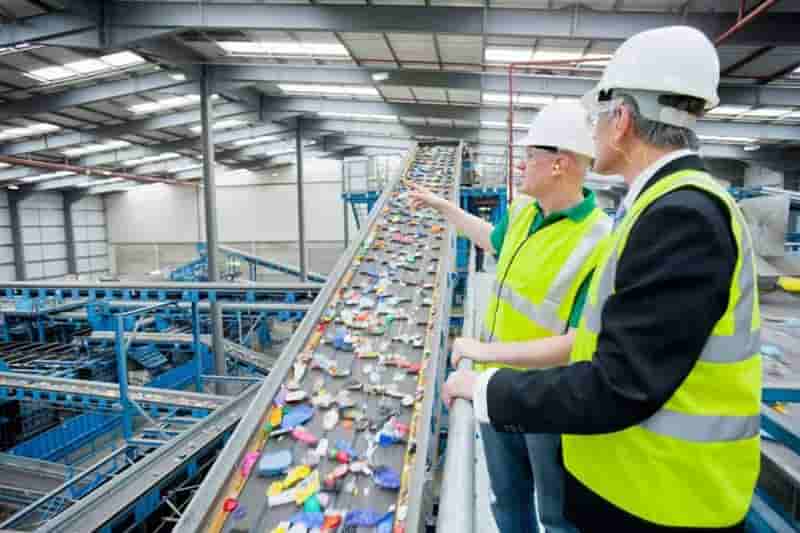
The challenge of textile recycling remains deep and complex. Globally, only about 9 % of plastics and roughly 0.5 % of textile garments are recycled. Traditional methods stumble when confronted with complex blends — for example, polyester blended with cotton or nylon mixed with elastane — or when garments carry zippers, buttons, dyes and other fastenings. Industries struggle to process these “composite” materials at scale.
The term “textile recycled” is central in this story as we explore a major shift in how mixed-material garment waste is handled.
The Startup Changing the Equation
MacroCycle, a U.S.-based company spun out of research at Massachusetts Institute of Technology (MIT), has developed a chemical recycling method that tackles this complexity head-on. Their process allows mixed textile waste to be processed without prior separation and achieves energy savings up to 80 % compared to producing virgin polyester from fossil fuels. Inspenet+2Noticias Ambientales+2
By focusing on the term “textile recycling,” they aim to enable true circularity in fashion and beyond.
How the Process Works
Instead of fully breaking down polymer chains into monomers as many chemical-recycling techniques do, MacroCycle uses a molecular approach: it converts polymers into cyclic structures known as macrocycles which can be separated from contaminants, then reopened and re-assembled into high-quality polyester. This novel route avoids the energy-intensive steps of traditional depolymerisation and repolymerisation. Clean Energy Ventures+1
Because the process handles mixed feedstocks and yields virgin-grade recycled material, the phrase “textile recycling” takes on new scalability.
Economic and Industrial Implications
A key barrier to mass textile recycling has been cost: recycled materials often carried a “green premium.” With this method, recycled polyester can match the cost of virgin plastic thereby removing a major obstacle to adoption. Inspenet+1
For the fashion industry and other sectors, this could be a watershed moment in how they view “textile recycling” not just as a niche sustainability play but as an economically viable route.
Beyond Fashion: Broader Applications
While the initial focus is on textile waste, MacroCycle’s technology has potential in other sectors characterised by “difficult-to-recycle” plastics: packaging, automotive, composites, and more. The ability to locate local chemical recycling plants also supports regional circular economies and reduces dependence on imported raw materials. Noticias Ambientales
The phrase “textile recycling” here signals the broader capability of handling complex feedstocks.
Challenges and Next Steps
Scaling remains a key challenge. MacroCycle is in the process of scaling from test batches (100 kg) toward industrial scale. Noticias Ambientales+1
Even with a successful technology, the industry must integrate collection, logistics and supply-chain adjustments. For true circular textile recycling at scale, all parts of the value chain must align.
Why This Matters for Sustainability
By slashing energy use by up to 80 % and enabling mixed textile feedstocks, this innovation strengthens the case for circular economy models in fashion and plastics. The terminology “textile recycling” here signals transformation rather than incremental fix.
This means fewer garments sent to landfill, lower fossil-resource dependence, and a shift in how brand owners, manufacturers and waste managers think about end-of-life textiles.
Conclusion
The emergence of this technology from MacroCycle marks a hopeful turn in textile recycling. The phrase “textile recycling” now carries new meaning: not just sorting and re-spinning cotton blends, but chemically unlocking value from mixed, contaminated textile waste streams at cost parity with virgin materials. If scaled, this could reshape supply chains, lower emissions and drive circularity for fashion and beyond.
In short, textile recycling is no longer a niche sustainability add-on but may become a mainstream industrial reality.