Trump Greenland tariffs – Trump Retreats on Greenland Tariffs and Force Threats, Signaling Fragile Arctic Reset but Leaving Europe and NATO Relations Deeply Strained 22-01-2026
Trump Greenland tariffs
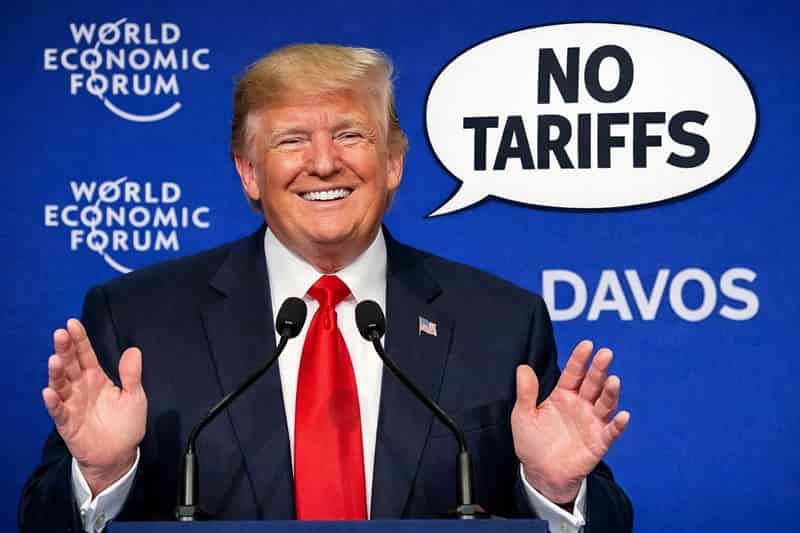
United States President Donald Trump has abruptly stepped back from his most aggressive threats over Greenland, announcing that he will not impose punitive tariffs on European countries and will not use military force to take control of the territory
The shift follows high-level discussions with NATO Secretary-General Mark Rutte and marks a rare moment of de-escalation in a dispute that had pushed transatlantic relations to their lowest point in decades.
The decision immediately calmed markets and political tensions across Europe, where governments had warned that any attempt to coerce Denmark over Greenland would undermine NATO itself. Yet while the rhetoric has softened, the underlying strategic rivalry in the Arctic remains unresolved, leaving allies uncertain about the long-term direction of United States policy under Trump. Trump Greenland tariffs
A sudden change of tone after NATO talks
Trump confirmed that tariff plans targeting Denmark and several other European nations would be suspended after discussions produced what he described as a framework for a future agreement on Greenland and the broader Arctic region. The proposed tariffs, initially set at 10 percent and scheduled to rise to 25 percent, had been framed as leverage to force negotiations over the island’s future.
The announcement followed a meeting with Mark Rutte on the sidelines of the World Economic Forum in Davos, where Arctic security, critical minerals, and missile defence reportedly dominated the conversation. Trump suggested that the framework covered security arrangements, access to strategic resources, and regional defence cooperation, although no concrete details were made public. Trump Greenland tariffs
From Washington’s perspective, Greenland remains central to US national security due to its geographic position between North America and Europe and its proximity to emerging Russian and Chinese activity in the Arctic.
Greenland, minerals, and Arctic geopolitics
Greenland is a semi-autonomous territory within the Kingdom of Denmark, rich in rare earths and other critical minerals increasingly vital to clean energy technologies and defence systems. As Arctic ice melts, the region is becoming more accessible, intensifying competition among major powers.
Trump has repeatedly argued that Denmark has failed to adequately secure Greenland’s waters and airspace, framing US involvement as necessary to counter China and Russia. European leaders, however, have rejected the notion that sovereignty could be negotiated under pressure, warning that such tactics threaten the foundations of NATO. Trump Greenland tariffs
Despite the softer language, the strategic logic driving US interest in Greenland has not changed. Security analysts note that Washington is likely to pursue expanded basing rights, intelligence cooperation, and mineral access rather than outright ownership. Trump Greenland tariffs

NATO walks a careful line on sovereignty
NATO officials were quick to emphasize that no compromise on sovereignty was proposed or discussed. According to alliance representatives, the talks focused on collective defence and ensuring that hostile powers do not gain an economic or military foothold in Greenland.
This distinction is crucial. NATO has no mandate to negotiate territorial ownership or mineral concessions, and any future agreements would require direct negotiations between Denmark, Greenland’s local government, and the United States. Trump Greenland tariffs
Experts in international relations have expressed skepticism about the substance of the announced framework, suggesting it may function primarily as a political off-ramp rather than a binding agreement. While NATO can align allies on Arctic priorities, it cannot deliver the sweeping outcomes Trump has previously implied.
European reactions: relief mixed with caution
European leaders broadly welcomed Trump’s decision to pause tariffs and rule out the use of force. Denmark’s foreign minister described the shift as a positive end to a tense day, while reaffirming that Danish sovereignty over Greenland remains a non-negotiable red line. Trump Greenland tariffs
Other European governments echoed this sentiment, emphasizing the importance of unity within NATO and coordinated efforts to address Arctic security challenges. Officials in Sweden and the Netherlands framed the episode as evidence that collective resistance and diplomatic pressure can moderate US policy, even under a confrontational administration. Trump Greenland tariffs
At the same time, many European policymakers remain wary. The rapid escalation and de-escalation of the dispute have reinforced concerns about unpredictability in US trade and security policy.
Trade threats and lingering economic risks
The Greenland dispute unfolded against the backdrop of massive transatlantic economic ties, with trade between the United States and Europe valued at approximately 1.7 trillion dollars. Trump’s willingness to weaponize tariffs in pursuit of strategic goals has heightened fears that similar tactics could re-emerge in disputes over technology regulation, defence spending, or industrial policy.
While the immediate threat has receded, analysts warn that trade tools remain firmly on the table. European governments are increasingly preparing contingency plans, including diversification of supply chains and stronger intra-European coordination. Trump Greenland tariffs
A fragile reset, not a return to normal
Despite the apparent breakthrough, experts caution that US–European relations are unlikely to return to their previous level of trust. The Greenland episode has exposed structural shifts in the alliance, with Europe reassessing its dependence on Washington and the United States signaling a more transactional approach to security partnerships.
For the remainder of Trump’s presidency, both sides are expected to maintain a guarded posture, anticipating renewed friction across multiple fronts. Arctic cooperation may advance incrementally, but broader tensions over trade, technology, and global governance are likely to persist.
What comes next for Greenland and the Arctic
Negotiations are expected to continue among Denmark, Greenland’s authorities, and the United States, potentially through technical committees focused on defence planning and resource governance. Any future agreements will need to balance local autonomy, Danish sovereignty, and US strategic interests.
In the short term, Trump’s retreat has reduced the risk of an immediate crisis. In the long term, however, the Arctic will remain a focal point of great-power competition, with Greenland at its centre. Trump Greenland tariffs
More…