US-Iran War Pushes Oil Prices Higher as Hormuz Risks Return
US Iran oil prices
US-Iran War Pushes Oil Prices Higher as Hormuz Risks Return
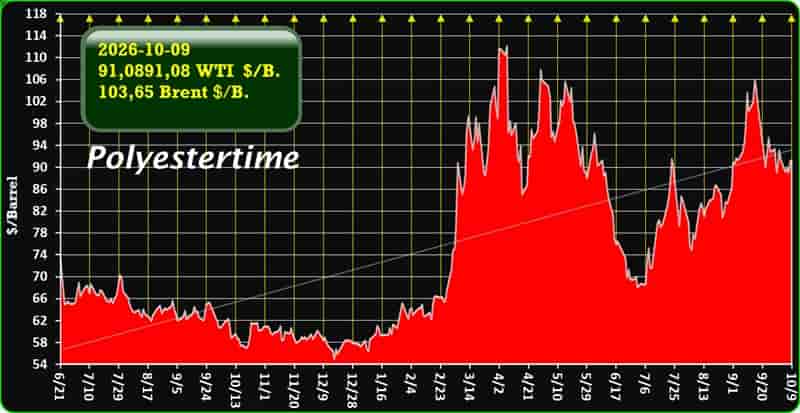
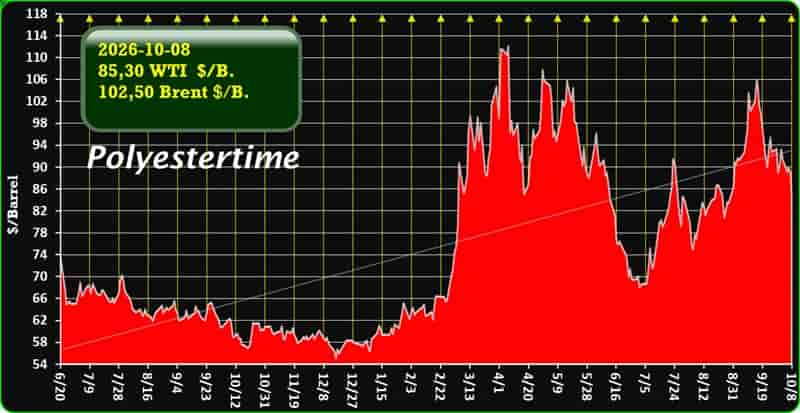
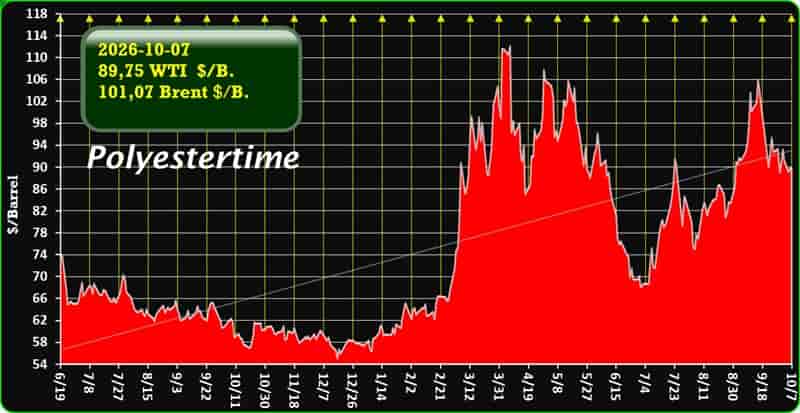
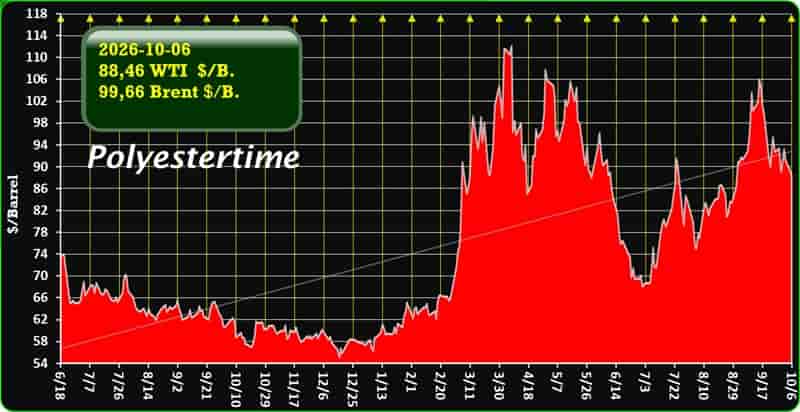
Brent crude is trading around $89 a barrel and West Texas Intermediate, or WTI, is near $85 as renewed US-Iran fighting brings the security of the Strait of Hormuz back to the center of the oil market.
The immediate price increase reflects a higher geopolitical risk premium: traders are paying more for oil because another disruption to Middle Eastern exports has become more likely. It does not necessarily mean that the same volume of physical supply has already disappeared.
Prices are moving rapidly. Associated Press market coverage early on August 31 placed Brent as high as $90.61 and the US benchmark at $85.66. The figures around $89 for Brent and $85 for WTI should therefore be treated as approximate market levels rather than fixed daily prices.
What happened today?
US forces struck Iranian rocket launchers near the Strait of Hormuz, according to reporting by the Associated Press. The operation represented a return to direct military action after roughly a month without a comparable US strike.
That development unsettled a market that had started to remove some of the war premium from crude prices. Investors are now reassessing the possibility of retaliation, attacks on tankers, mining activity or further restrictions on shipping.
The oil market’s reaction is significant but measured. Prices rose because the risk of disruption increased, while continued oil movements and expectations of a possible diplomatic response have so far prevented a more extreme surge.
Why the Strait of Hormuz matters
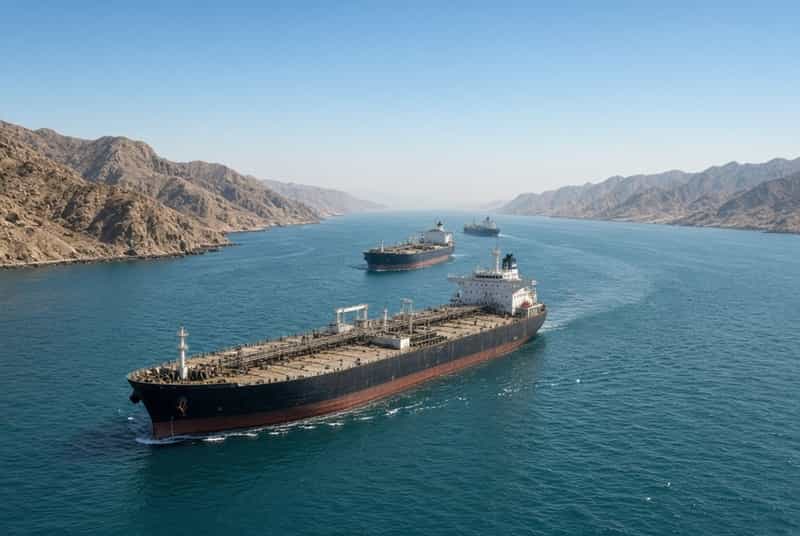
The Strait of Hormuz is the narrow waterway connecting the Persian Gulf with the Gulf of Oman and global shipping routes. Before the conflict, it carried a substantial share of the world’s internationally traded crude oil, petroleum products and liquefied natural gas.
The International Energy Agency said approximately 20 million barrels per day of crude and petroleum products passed through the strait in 2025—around one-quarter of global seaborne oil trade.
Alternative pipelines can move some regional production without using Hormuz, but their capacity is limited. They cannot fully replace the waterway if tanker traffic is severely restricted.
This makes the strait the most important variable for US Iran oil prices. A military incident that leaves shipping unaffected may create only a temporary price premium. A sustained interruption can reduce available supply, raise insurance and freight costs, and force producers to shut in output they cannot export.
Supply has not fully recovered
The current market remains vulnerable because it has not completely recovered from earlier disruptions.
The US Energy Information Administration estimated that oil and petroleum-liquid movements through Hormuz averaged 4.9 million barrels per day during the second quarter of 2026. That was down from 21.6 million barrels per day in the fourth quarter of 2025, before the conflict began.
Some volumes have since returned, but the restoration of trade has been uneven. Tanker security, insurance availability, port operations and the condition of regional energy infrastructure continue to limit how quickly normal flows can resume.
The International Energy Agency’s August report estimated that observed global oil stocks fell by 69 million barrels in July. It projected a market deficit of 1.8 million barrels per day for the third quarter and warned that available inventory buffers were being depleted.
These figures help explain why a new military escalation can move prices quickly even when no immediate, large-scale supply loss has been confirmed.
Why Brent is trading above WTI
Brent is the main international oil benchmark and is more directly exposed to changes in seaborne supply. WTI primarily reflects conditions in the United States, including domestic production, storage and pipeline capacity.
When shipping through the Middle East becomes less secure, Brent commonly experiences more direct upward pressure. The approximately $4-a-barrel difference between Brent near $89 and WTI near $85 is therefore consistent with a market placing a larger risk premium on internationally traded crude.
The spread can change quickly if US inventories fall, American exports rise or the disruption to global shipping becomes more severe.
Three scenarios for oil prices
1. Tensions ease
If the latest strike is followed by restraint, negotiations or reliable protection for commercial shipping, some of the geopolitical premium could fade.
The EIA’s August outlook forecast Brent at an average of approximately $85 a barrel during the third quarter and $78 in the fourth quarter, based on an assumption that Hormuz traffic would gradually increase and shut-in production would restart.
This is a forecast, not a guarantee. It depends heavily on improving security and recovering exports. US Iran oil prices
2. Limited attacks continue
Intermittent strikes or tanker incidents could keep Brent and WTI volatile without completely stopping trade. In this scenario, prices may remain elevated while reacting sharply to military announcements, shipping data and reports of damage.
Freight rates, insurance costs and refined-fuel shortages could become as important as crude production itself.
3. Hormuz is severely disrupted again
A prolonged closure, extensive mining or sustained attacks on tankers would present the greatest upside risk to prices. Regional producers could be forced to cut output, while buyers would compete for oil from the United States, West Africa, Brazil and other sources outside the Persian Gulf.
Emergency reserves can soften a disruption, but they cannot permanently replace lost production. Earlier in the conflict, International Energy Agency members agreed to make 400 million barrels from emergency reserves available—the largest coordinated release in the agency’s history.
What higher oil prices mean for consumers
Crude prices affect much more than gasoline. A sustained increase can raise diesel, jet-fuel, freight and petrochemical costs. Those increases may eventually appear in airline fares, food distribution, manufacturing and consumer prices.
The effect is rarely immediate or identical in every country. Taxes, exchange rates, refinery capacity, inventories and government policies all influence what consumers pay.
For central banks, another energy-price shock could complicate inflation policy. For businesses, the largest challenge may be volatility: rapid price movements make transport costs, purchasing and investment harder to plan.
What investors should watch next
The most useful indicators are physical rather than rhetorical:
-
Confirmed tanker movements through the Strait of Hormuz
-
Further US or Iranian military action
-
Damage to ports, pipelines, refineries or export terminals
-
Marine-insurance and tanker-freight costs
-
Changes in global commercial inventories
-
Emergency-stock announcements
-
Official diplomatic or ceasefire developments
Unverified social-media reports should not be treated as evidence of a supply disruption. Shipping data, government notices, recognized news agencies and established energy organizations provide a stronger basis for evaluating the market.
Frequently asked questions
Why are oil prices rising?
Oil prices are rising because renewed US-Iran fighting has increased the risk of another disruption to exports through the Strait of Hormuz. The move currently reflects both physical-market tightness and a geopolitical risk premium.
What are Brent and WTI trading at?
At the time of writing, Brent is around $89 a barrel and WTI is around $85. Intraday prices may differ because crude futures trade continuously during market hours.
Could Brent rise above $100 again?
It could if shipping or production suffers a serious, sustained disruption. De-escalation and improving tanker flows would reduce that risk. A specific price cannot be predicted reliably from military headlines alone.
Is the Strait of Hormuz closed?
The situation has involved severe constraints and changing traffic levels rather than a simple, permanent open-or-closed condition. Verified tanker movements and official maritime notices provide a more accurate picture than general claims about closure.
The bottom line
US Iran oil prices are being driven by one central question: can Persian Gulf exports continue moving safely and consistently?
Brent near $89 and WTI near $85 show that the market sees a meaningful risk, but not yet the worst-case outcome. If the latest escalation remains contained, prices could surrender part of their war premium. If tanker traffic or energy infrastructure is materially disrupted, the pressure on crude and refined fuels could increase quickly.
Because both prices and military conditions are changing, readers should treat all quoted market levels as time-sensitive.
Sources
-
Associated Press, August 31, 2026: “Asian shares and US futures slip, while oil prices surge nearly 3%”
-
US Energy Information Administration: August 2026 Short-Term Energy Outlook
-
International Energy Agency: August 2026 Oil Market Report
-
International Energy Agency, March 11, 2026: Emergency oil-stock release announcement
-
US Central Command: Operation Epic Fury information page
Iran War Oil Prices: Brent Near $88 as Supply Risks Persist
More…