Oil Prices Near $100 as US–Iran War Escalates
Oil Prices Near $100 as US–Iran War Escalates
Updated July 23, 2026
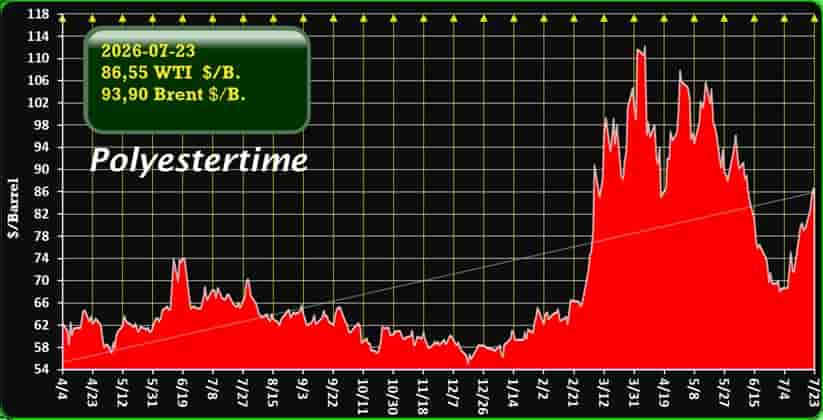
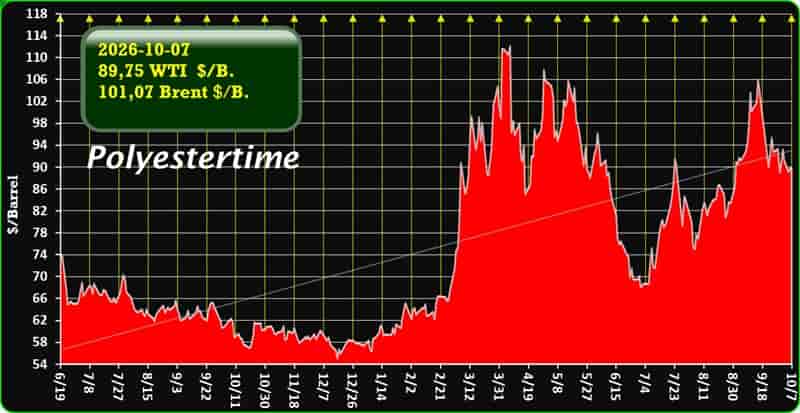
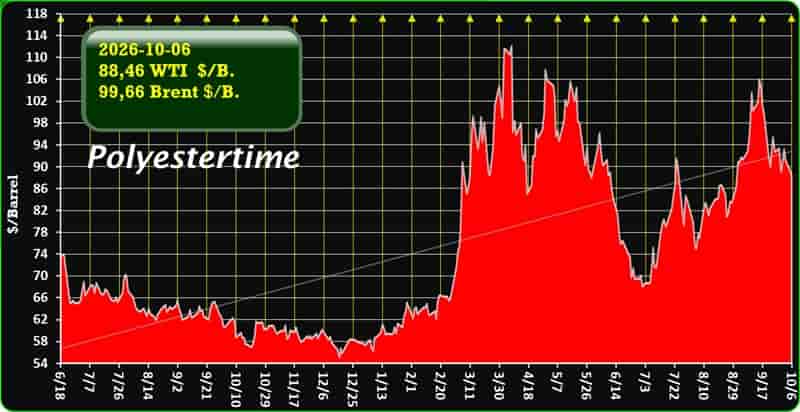
Oil prices have climbed sharply as the conflict between the United States and Iran enters another dangerous phase. Brent crude is trading at around $97 per barrel, while US West Texas Intermediate, or WTI, is near $89 per barrel.
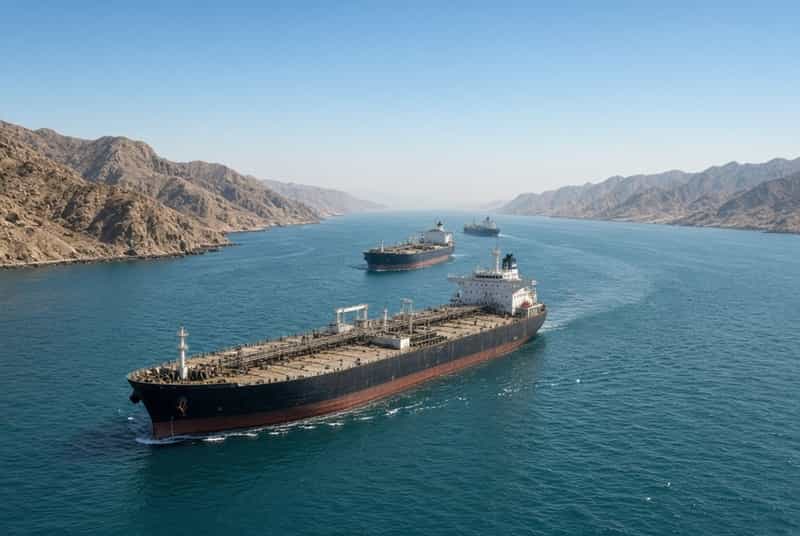
The rise in US Iran oil prices reflects growing concern that military escalation could further restrict energy shipments through the Strait of Hormuz and disrupt tanker traffic in the Red Sea.
Brent and WTI reached their highest levels in more than six weeks on July 23. Early trading placed Brent near $96 and WTI above $88, with intraday movements bringing both benchmarks close to the rounded levels of $97 and $89.
Key takeaways
-
Brent crude is trading at approximately $96–$97 per barrel.
-
WTI crude is trading at approximately $88–$89 per barrel.
-
Renewed US strikes on Iran have increased fears of a broader conflict.
-
Attacks on commercial vessels are raising shipping and insurance costs.
-
The Strait of Hormuz remains the most important risk for the oil market.
-
A sustained disruption could push fuel prices and inflation higher worldwide.
Why oil prices are rising
The immediate cause of the latest price increase is renewed military escalation.
Reuters reported on July 23 that the United States had launched another round of strikes on Iran. The fighting coincided with attacks by Yemen’s Iran-aligned Houthi movement on oil tankers in the Red Sea, creating risks on two strategically important maritime routes.
Markets are therefore reacting not only to the volume of oil currently unavailable, but also to the possibility of a much larger disruption.
Oil traders typically add a geopolitical risk premium when vessels, ports, pipelines or production facilities are threatened. That premium can rise quickly when several transport routes are exposed at the same time.
The Wall Street Journal reported that the market was pricing in increased logistics risk, with Brent approaching the psychologically important threshold of $100 per barrel. The report identified simultaneous disruption in the Strait of Hormuz and Bab el-Mandeb as a particularly serious scenario because alternative shipping routes would be limited.
What is happening in the US–Iran war?
The latest escalation follows the breakdown of an earlier attempt to reduce hostilities.
According to current reporting, US forces have continued strikes against targets in Iran, while Iranian forces and aligned groups have maintained pressure on commercial shipping and regional infrastructure. The United States has also warned of further retaliation if ships are attacked in or near the Strait of Hormuz.
The conflict is increasingly important to energy markets because military operations are affecting areas through which a substantial share of the world’s oil and gas is transported.
The International Maritime Organization has called for de-escalation and condemned attacks on civilian commercial vessels. Its incident register listed 61 confirmed maritime incidents and 17 seafarer fatalities as of July 21, 2026.
These incidents make tanker operators more cautious. Even when a route is technically open, shipowners may delay voyages, avoid dangerous waters or demand higher rates to compensate for the risk.
Why the Strait of Hormuz matters
The Strait of Hormuz connects the Persian Gulf with the Gulf of Oman and the Arabian Sea. It is the primary export route for several major oil and gas producers, including Saudi Arabia, Iraq, Kuwait, Qatar, the United Arab Emirates and Iran.
US Energy Information Administration data show that approximately 20.9 million barrels of oil per day passed through the strait during the first half of 2025. That was equivalent to roughly 20% of global petroleum-liquids consumption and about one-quarter of internationally traded maritime oil.
Alternative pipelines cannot fully replace that capacity.
The EIA estimates that major pipelines in Saudi Arabia and the United Arab Emirates could provide about 4.7 million barrels per day of bypass capacity. This means that a severe or prolonged interruption in the strait could leave a significant volume of exports without an immediate alternative route.
The International Energy Agency described the Middle East war as having produced the largest supply disruption in the history of the global oil market. Its July report said global supply remained well below pre-war levels, despite a partial recovery in Gulf exports during June.
Could Brent rise above $100?
Brent can move above $100 if military and shipping risks continue to intensify. However, that outcome is not guaranteed.
The market is currently balancing several opposing forces.
On the bullish side, further attacks on tankers, export terminals, pipelines, refineries or power infrastructure could reduce physical supply. A simultaneous deterioration in the Strait of Hormuz and the Red Sea would create an especially difficult situation for shipping companies.
On the bearish side, weaker economic growth, reduced oil demand, emergency reserve releases and increased production outside the Gulf could limit the price increase.
The IEA’s July assessment found that global demand remained weaker than historical trends, while some supply flows had recovered during periods of reduced fighting. These factors could place downward pressure on oil prices if diplomatic efforts succeed or tanker traffic improves.
For that reason, $100 should be viewed as an important market threshold rather than a certainty.
Three possible oil-price scenarios
1. De-escalation
If the United States and Iran reduce military operations and provide credible guarantees for commercial shipping, the geopolitical risk premium could decline.
More tankers would probably return to the Gulf, insurance costs could ease and Brent could fall back from its current elevated level.
The speed of any decline would depend on how quickly damaged infrastructure, ports and refineries could resume normal operations.
2. Continued limited conflict
Under this scenario, strikes and maritime incidents continue but major oil-export infrastructure remains operational.
Brent could stay close to or above $100 for periods of time, with sharp daily movements driven by military announcements, tanker incidents and diplomatic developments.
This is likely to remain a highly volatile environment because markets would have little confidence that shipping flows were secure.
3. Major regional escalation
The most damaging scenario would involve a prolonged interruption in the Strait of Hormuz combined with serious disruption in the Red Sea or attacks on Gulf production facilities.
Because available pipelines could replace only part of the affected maritime capacity, physical oil shortages could become more severe. Prices could then rise substantially above $100, particularly if inventories were falling at the same time.
This scenario would also increase the risk of fuel shortages, government intervention and coordinated releases from emergency petroleum reserves.
What higher oil prices mean for consumers
Crude-oil prices affect the cost of gasoline, diesel, aviation fuel, heating oil and many petrochemical products.
The effect is not immediate or identical in every country. Fuel taxes, refinery capacity, currency movements, government subsidies and local competition all influence what consumers ultimately pay.
Nevertheless, a sustained increase in Brent and WTI normally creates upward pressure on transport and production costs.
The IEA notes that the effect of an oil shock varies considerably by market. Countries with high fuel taxes may experience a smaller percentage increase at the pump, while markets with lower taxes or limited refining capacity can see faster and more visible price changes.
Higher diesel and shipping costs can also affect food, manufacturing and retail prices. This creates a renewed inflation risk at a time when central banks must decide whether energy-driven price increases will spread into the broader economy. US Iran oil prices
What investors and businesses should watch
The oil market’s next major move is likely to depend on verifiable changes in physical supply rather than political statements alone.
The most important indicators include:
-
The number of tankers passing through the Strait of Hormuz.
-
Confirmed attacks on commercial ships.
-
Damage to oil fields, pipelines, ports or refineries.
-
Changes in war-risk insurance premiums.
-
Emergency reserve releases by major consuming countries.
-
Production adjustments by Gulf exporters and other producers.
-
Progress toward a ceasefire or maritime-security agreement.
-
Weekly changes in commercial crude and fuel inventories.
Official shipping information from the IMO, oil-flow data from the IEA and EIA, and benchmark futures prices provide a more reliable picture than unverified social-media claims.
What happens next?
For now, US Iran oil prices are being driven by a combination of real transport disruption and fear of a larger supply shock.
Brent near $97 and WTI near $89 show that the market is taking the escalation seriously. However, current prices do not necessarily reflect a complete or prolonged loss of Gulf oil exports.
The central question is whether the conflict remains contained or begins to cause sustained damage to the infrastructure and maritime routes that connect Middle Eastern producers with global markets.
A credible de-escalation could remove part of the geopolitical premium relatively quickly. Further attacks on ships or energy infrastructure could instead push Brent decisively through $100 and increase inflationary pressure worldwide.
Because conditions are changing rapidly, readers should treat all quoted oil prices as intraday indications recorded on July 23, 2026, rather than permanent or closing values.
Frequently asked questions
Why are oil prices rising today?
Oil prices are rising because renewed US strikes on Iran and attacks on commercial vessels have increased the perceived risk of supply and shipping disruptions.
How much are Brent and WTI currently worth?
On July 23, 2026, Brent was trading around $96–$97 per barrel and WTI around $88–$89. Prices can change continuously during the trading day.
Could oil reach $100 per barrel?
Yes. Brent could rise above $100 if attacks continue or oil shipments through the Strait of Hormuz decline further. De-escalation or weaker demand could prevent or reverse that move.
How important is the Strait of Hormuz?
It is one of the world’s most important energy chokepoints. Before the current disruption, it handled oil flows equivalent to approximately one-fifth of global petroleum consumption.
Will gasoline and diesel become more expensive?
A sustained increase in crude prices generally raises wholesale fuel costs. The timing and scale of retail price increases depend on taxes, exchange rates, refining conditions and government policies.
Sources and methodology
This analysis was prepared using information published or updated by Reuters, the Associated Press, the International Energy Agency, the US Energy Information Administration and the International Maritime Organization.
Market prices are rounded because Brent and WTI futures trade continuously and can change between publication and reading. Military claims that could not be independently confirmed were not presented as established facts.
Oil Prices and the U.S.–Iran War: What Happens Next?
More…