US-Iran Oil Prices: Brent Near $97 as Hormuz Risks Rise
US-Iran Oil Prices: Brent Near $97 as Hormuz Risks Rise
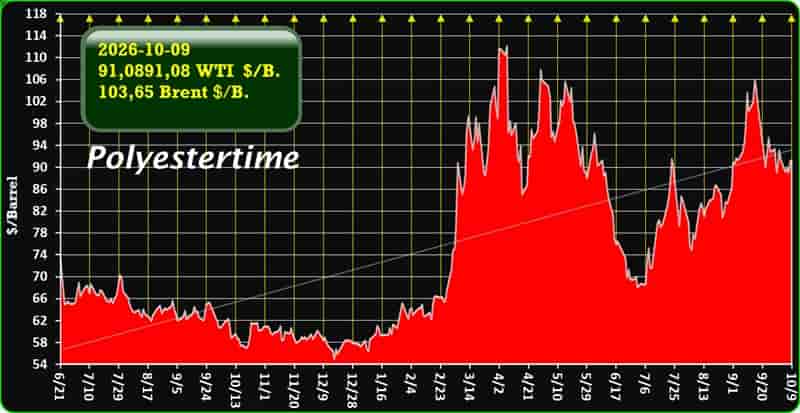
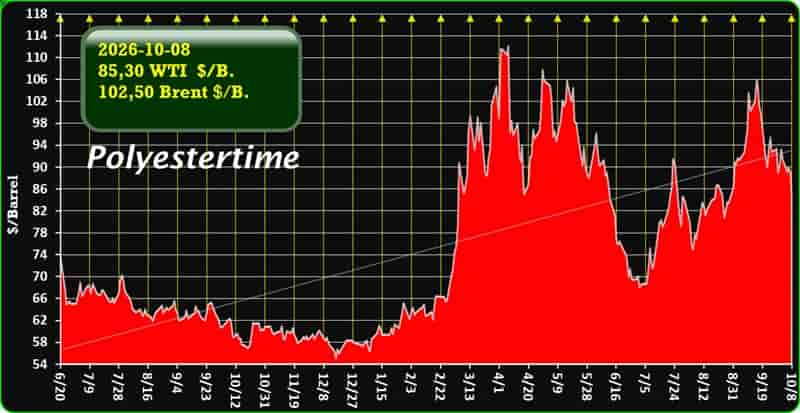
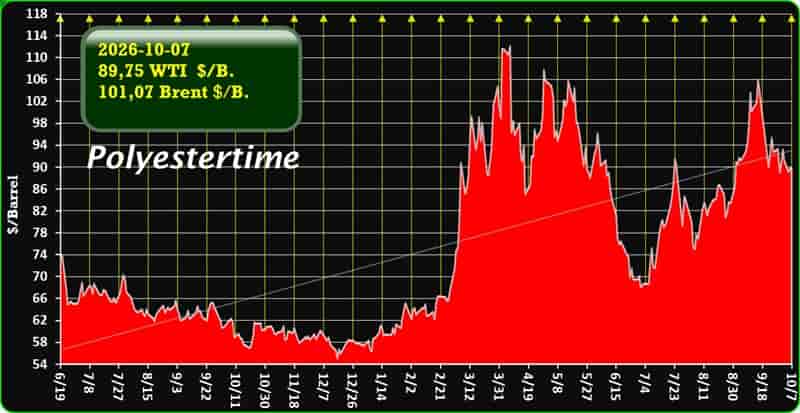
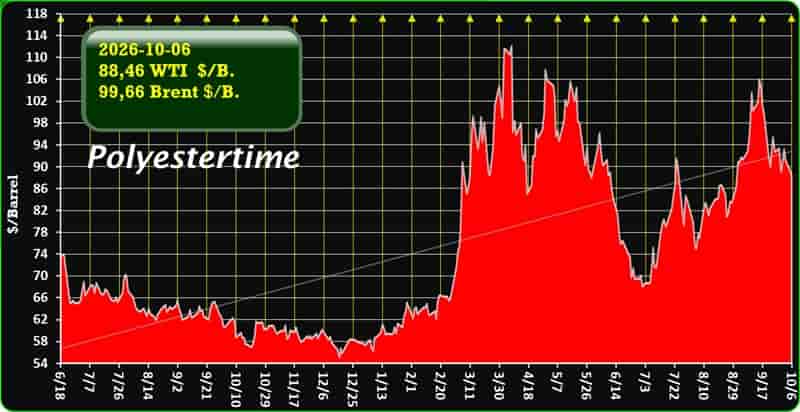
Brent crude is trading near $97 a barrel and West Texas Intermediate, or WTI, is around $92 as renewed US-Iran fighting raises fears of a longer disruption to Middle Eastern oil supplies.
In early trading on September 7, Brent futures stood at approximately $96.80 a barrel, while WTI was near $92.14. Brent gained about 7.8% during the previous week and WTI nearly 10%, according to Reuters reporting published on September 7. US-Iran oil prices
Key takeaways
-
Oil prices are carrying a substantial geopolitical risk premium.
-
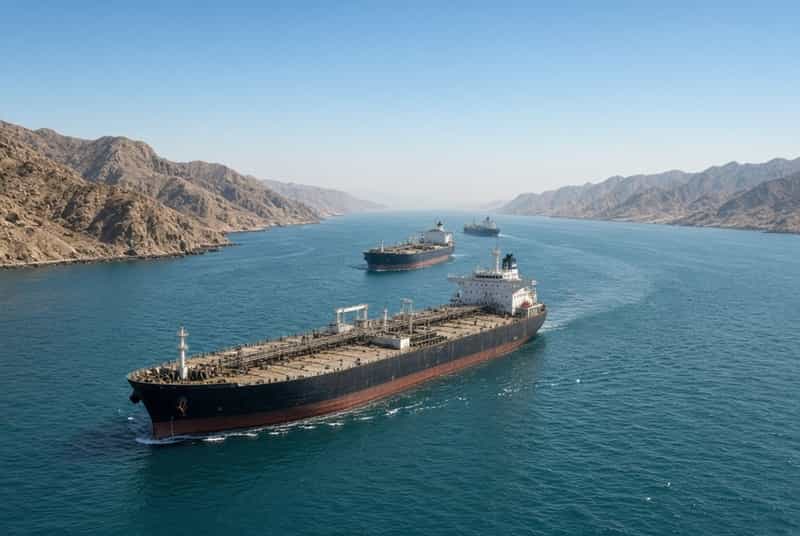
The immediate concern is the safety and availability of shipping through the Strait of Hormuz.
-
Recent attacks on oil vessels have blurred the boundary between military confrontation and commercial shipping.
-
OPEC+ has left its October production policy unchanged, limiting the prospect of immediate additional supply.
-
Prices could rise further if shipping deteriorates, but they could retreat sharply if security and export flows improve.
Why oil prices are rising
The latest increase is not primarily a story about stronger global demand. It reflects the risk that physical supplies will be delayed, shut in or made more expensive to transport.
The United States and Iran have resumed attacks after roughly a month of relative calm. The US military said its forces struck three Iranian crude carriers on September 5 after Iran launched ballistic missiles toward two US Navy warships. CENTCOM said the American vessels avoided the attacks and that no US personnel were harmed.
Iran has issued its own accounts of operations in the area. Some claims remain disputed. On September 6, the US military denied an Iranian assertion that Iran had struck an uncrewed American vessel in the Strait of Hormuz. Because both sides are conducting information campaigns, individual military claims should be treated as attributed statements unless independently confirmed.
The escalation matters to energy markets because tankers and oil infrastructure are now directly exposed. Shipowners may delay voyages, demand higher freight rates or require more expensive insurance even when a route remains technically open.
The Strait of Hormuz is the central market risk
The Strait of Hormuz connects the Persian Gulf with the Gulf of Oman and the Arabian Sea. It is one of the world’s most important energy chokepoints.
Before the conflict, roughly one-fifth of global petroleum supply passed through the strait. The route carries exports from major producers including Saudi Arabia, Iraq, the United Arab Emirates, Kuwait and Iran. There are pipelines that bypass the waterway, but their capacity is not sufficient to replace all normal maritime flows.
Recent shipping data cited by Reuters showed an average of about 10 commodity vessels passing through the strait per day over the preceding 10 days—the lowest level since May. This does not mean that all regional exports have stopped, but it demonstrates how quickly security concerns can restrict traffic.
The risk intensified after Iranian officials said Tehran planned to establish an exclusion zone outside the strait. Details about its boundaries, enforcement and legal status remained unclear as of September 7.
For oil traders, the crucial questions are therefore practical: How many vessels can pass safely? How much crude is being exported? Can ships obtain insurance? Are producers being forced to reduce output because storage is filling? US-Iran oil prices
What OPEC+ decided
Seven OPEC+ producers met virtually on September 6 and agreed to maintain their September required production levels during October. The participating countries were Saudi Arabia, Russia, Iraq, Kuwait, Kazakhstan, Algeria and Oman.
The decision provides continuity but does not create a large new supply cushion. OPEC said the countries would continue reviewing market conditions monthly, with their next meeting scheduled for October 4.
Some Gulf producers possess spare production capacity. However, producing more oil has limited value if additional barrels cannot move safely through export terminals and shipping lanes. During this crisis, transport capacity may be as important as production capacity. US-Iran oil prices
Three possible paths for oil prices
1. Further escalation
Brent could move above $100 if attacks materially reduce tanker movements, damage export infrastructure or force producers to shut in output. A formal or effectively enforced closure of parts of the Strait of Hormuz would represent the most serious bullish scenario.
The duration of a disruption would matter more than a brief price spike. Sustained restrictions would affect refinery supplies, shipping costs, fuel prices and inflation across importing economies.
2. A prolonged but contained confrontation
The market may remain volatile around elevated levels if attacks continue without completely stopping exports. Under this scenario, prices would include a persistent risk premium while reacting sharply to military reports, shipping data and diplomatic signals.
This currently appears more plausible than either an immediate settlement or a total, lasting closure of the strait. However, conflict forecasts are inherently uncertain.
3. De-escalation and recovering exports
Oil could fall quickly if the parties restore a credible ceasefire, tanker traffic normalizes and previously disrupted production returns.
The US Energy Information Administration’s July outlook assumed that trade flows would approach pre-conflict levels by the end of 2026 following the June understanding between Washington and Tehran. Renewed fighting has placed that assumption at risk, illustrating why older forecasts must be reconsidered as conditions change.
What higher oil prices mean for consumers
Crude prices affect consumers through gasoline, diesel, aviation fuel, freight and manufacturing costs. The effect is rarely immediate or identical in every country because currencies, taxes, refinery capacity and local inventories also influence retail prices.
US gasoline and diesel markets are already under pressure. Refinery disruptions, high summer utilization and supply problems outside the Middle East can amplify the effect of more expensive crude.
For central banks, a prolonged oil shock creates a difficult combination: higher inflation and weaker economic growth. Businesses with large transport or energy bills may also pass part of their additional costs to customers. US-Iran oil prices
What investors should monitor next
The most useful indicators are physical rather than rhetorical:
-
Daily tanker traffic through the Strait of Hormuz
-
Export volumes from Gulf producers
-
Marine insurance and tanker freight rates
-
Damage to terminals, pipelines or refineries
-
OPEC+ production decisions
-
Emergency-stock announcements from the International Energy Agency or national governments
-
Verified ceasefire or negotiation developments
Intraday oil prices can change rapidly. Readers should check a live market service before making financial decisions.
Frequently asked questions
Why are Brent and WTI priced differently?
Brent is the leading benchmark for internationally traded crude, while WTI is the main US benchmark. Transportation, storage, crude quality and regional supply conditions contribute to the price difference.
Could Brent rise above $100?
Yes, particularly if tanker traffic falls further or significant production is shut in. It is a scenario, not a certainty. De-escalation or recovering exports could instead remove part of the current risk premium. US-Iran oil prices
Is the Strait of Hormuz completely closed?
No complete closure was independently established in the sources reviewed for this update. Traffic has been heavily disrupted, however, and Iran has announced plans for an exclusion zone whose details remain uncertain.
Can OPEC+ offset the disruption?
Only partly. Producers may be able to raise output, but replacement barrels still need viable pipelines, ports, tankers and insurance. Shipping constraints can prevent available production from reaching buyers.
Bottom line
US-Iran oil prices are being driven by the threat to physical energy flows, not only by political headlines. Brent near $97 and WTI near $92 reflect concern that attacks on vessels and restrictions around the Strait of Hormuz could keep supplies constrained.
The direction of the next major move will depend on verified tanker traffic and export volumes. A wider interruption could push prices higher, while a durable reduction in hostilities could cause the geopolitical premium to unwind rapidly.
This article provides market analysis and does not constitute investment advice. US-Iran oil prices
US-Iran War Oil Prices: Brent Near $96
Sources used
- Reuters report: oil nears $97 as attacks intensify
- Associated Press: latest Strait of Hormuz developments
- US Central Command statement on the September 5 strikes
- OPEC statement on October 2026 production
- US EIA analysis of the Strait of Hormuz
- International Energy Agency crisis tracker