Unlocking Europe’s €555 Billion Circular Economy: Why Structural Demand Reform Cannot Wait
European circular economy value
Unlocking Europe’s €555 Billion Circular Economy: Why Structural Demand Reform Cannot Wait
Article Content
The European circular economy stands at a decisive crossroads. While recycling activities generate an extraordinary economic turnover of €555 billion annually, Europe’s industrial framework fails to absorb the secondary raw materials (SRMs) it produces. Without urgent structural intervention to stimulate stable market demand, Europe risks crippling its own industrial potential and falling drastically short of its 2030 climate goals.
1. The Economic Scale vs. The Circularity Gap
According to “A New European Industrial Policy for the Circular Economy,” a study conducted by TEHA Group in collaboration with CONAI and presented at the Cernobbio Forum, the European recycling value chain is a massive driver of economic health. Beyond the €222 billion in direct added value and 3 million jobs, integrating secondary raw materials into primary manufacturing supply chains could unlock an additional €325 billion in turnover across the Union.
Furthermore, the societal return on investment remains exceptionally strong: every single euro invested in the collection, sorting, and recycling of packaging yields €1.66 in cumulative economic, environmental, and social benefits. European circular economy value
However, these compelling numbers mask a troubling reality. In 2024, the European circular material use rate stalled at just 12.2%, leaving the continent far behind its binding target of 24% by 2030. To bridge this gap, Europe must achieve an extraordinary 96.7% expansion in its circular material rate relative to 2024 levels within less than six years.
2. Key Structural Bottlenecks in the European Market
The study identifies three fundamental friction points preventing the recycling ecosystem from achieving self-sustaining momentum:
-
Target-Capacity Mismatch: Environmental targets have rapidly outpaced actual industrial processing and manufacturing absorption capacities.
-
Supply and Demand Imbalances: A systemic deficit in guaranteed off-take contracts leaves secondary raw material producers vulnerable to extreme market volatility.
-
Trade Flow Disconnects: Over 40% of Europe’s secondary raw material imports originate from non-EU nations, while the Union paradoxically remains a net exporter of unprocessed, separately collected waste. European circular economy value
3. The Plastics Crisis: A Warning for Secondary Materials
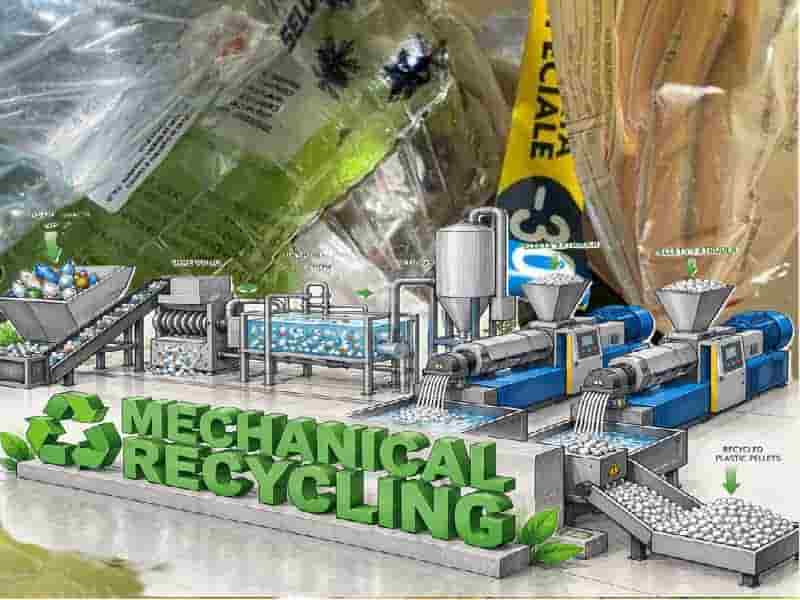
The plastic recycling sub-sector serves as an acute precursor for broader industrial vulnerability. Between 2022 and 2024, prices for secondary plastic raw materials plunged by 32%—falling from €472 per ton down to €321 per ton—while overall plastic recycling rates remained flat at roughly 40%.
Europe currently possesses approximately 13.5 million tons per year of installed plastic recycling capacity. However, due to weak industrial demand and severe competition from cheap virgin polymers, Europe has lost nearly 1 million tons of recycling capacity over the past three years alone. Unharmonized End-of-Waste criteria add an estimated €120 million in unnecessary annual friction costs for plastic recyclers across member states.
European circular economy value
4. Policy Roadmap: The 2026–2027 Legislative Window
To convert circularity from an environmental requirement into a competitive industrial engine, TEHA and CONAI outline three urgent priorities for European policymakers, aligned with the upcoming Circular Economy Act:
-
Single Market Integration & Harmonized Governance: Eliminate cross-border friction by standardizing End-of-Waste rules across all EU Member States.
-
Industrial Symbiosis & Demand Creation: Implement mandatory recycled content quotas and facilitate long-term industrial off-take agreements.
-
Financial & Investment Mechanisms: Deploy targeted transition finance, tax incentives, and capital support to safeguard European recycling infrastructure.
By treating circularity as a core pillar of European industrial strategy rather than merely a waste management objective, the EU can secure domestic raw material supply, insulate manufacturers from international price shocks, and capture the full economic potential of its recycling supply chain. European circular economy value
More…