Volkswagen circular economy – Volkswagen Strengthens European Automotive Sustainability With Major Zwickau Circular Economy Investment to Secure Resources, Jobs, and Long-Term Industrial Resilience 27-01-2026
Volkswagen circular economy
Volkswagen Expands Circular Economy Strategy at Zwickau
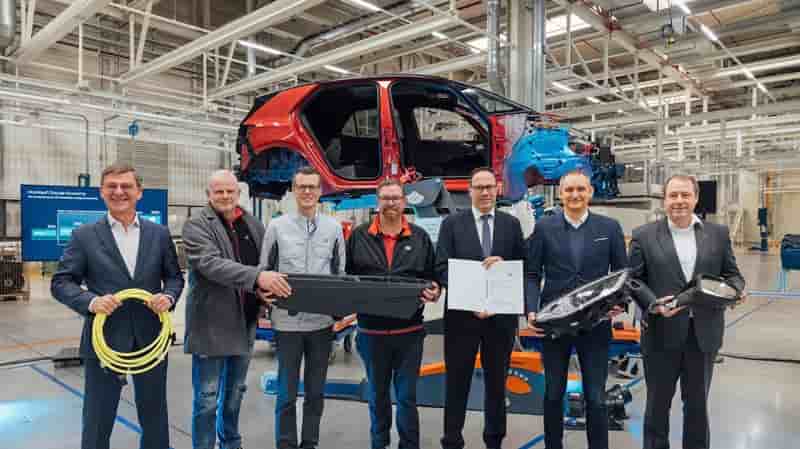
Volkswagen is making a decisive move to reshape its industrial model by committing major investment to its Zwickau plant. The initiative aims to transform the facility into a central pillar of the company’s circular economy strategy, addressing rising material costs, supply chain vulnerability, and sustainability targets across the automotive sector. Volkswagen circular economy
The project reflects a broader shift within the global car industry as manufacturers seek to reduce dependence on imported raw materials while lowering emissions and creating new value streams. With this investment, Volkswagen positions Zwickau as a strategic asset for long-term industrial resilience.
Up to 90 Million Euros for Circular Manufacturing
Volkswagen plans to invest up to 90 million euros in the Zwickau site over the coming years. The funding will support the development of advanced dismantling, inspection, and refurbishment processes designed to recover valuable automotive components at scale.
Starting in 2030, the plant is expected to dismantle and recycle approximately 15,000 end-of-life vehicles per year. Components that meet strict quality standards after testing and refurbishment will be reintroduced into the market, supporting both used vehicle supply and new vehicle production.
This approach allows Volkswagen to extract maximum value from existing materials while significantly reducing waste.
Regional Support Strengthens the Initiative
The circular economy project at Zwickau is supported by the German state of Saxony, which is contributing an additional 10.7 million euros in public funding. This backing highlights the regional importance of sustainable industrial transformation and reinforces Zwickau’s role in Germany’s automotive future.
Public-private collaboration is increasingly seen as essential to maintaining industrial competitiveness in Europe, particularly as manufacturers face rising regulatory pressure and volatile global supply chains. Volkswagen circular economy
Reducing Dependence on Critical Raw Materials
One of the key objectives of the Volkswagen circular economy initiative is to reduce reliance on primary raw materials. This challenge is especially acute in the electric vehicle sector, where access to rare earth elements, battery materials, and semiconductors has become increasingly uncertain.
Global supply chains for these materials are exposed to geopolitical risk, export controls, and market concentration. China’s dominant position in several critical raw material markets has intensified concerns among European manufacturers. Volkswagen circular economy
By recovering and reusing materials from end-of-life vehicles, Volkswagen aims to limit exposure to external shocks and improve supply chain stability.
Beyond Rare Earth Recycling
The circular economy strategy at Zwickau extends far beyond rare earth elements. Volkswagen plans to refurbish and reintegrate a wide range of automotive components, including electric drive units, electronic systems, and mechanical parts.
This model reduces waste while lowering the environmental footprint of new vehicle production. Reused components require significantly less energy and fewer emissions compared to manufacturing parts from virgin materials.
At the same time, component reuse creates new business opportunities, including certified remanufactured parts and expanded aftersales services.
Strengthening Supply Chain Resilience
Supply chain resilience has become a strategic priority for the automotive industry. Disruptions linked to global crises, trade restrictions, and logistics bottlenecks have exposed the fragility of traditional sourcing models. Volkswagen circular economy
Volkswagen’s circular economy investment directly addresses these risks by shortening supply chains and increasing internal material availability. By sourcing more components internally, the company gains greater control over production timelines, costs, and quality.
This resilience is increasingly viewed as a competitive advantage in a rapidly evolving market. Volkswagen circular economy
Employment Impact at the Zwickau Plant
The transformation of the Zwickau facility is expected to preserve around 1,000 jobs through the creation of new circular economy activities. These roles will be linked to dismantling, quality control, refurbishment, and logistics.
However, questions remain regarding the long-term outlook for the plant’s remaining workforce of approximately 8,500 employees. Volkswagen has not yet detailed how future roles will evolve as the business model shifts. Volkswagen circular economy
Even so, the initiative provides a pathway to maintain industrial employment in a sector undergoing profound structural change.
Building on Zwickau’s Electric Vehicle Leadership
Zwickau has already played a pioneering role in Volkswagen’s electrification strategy. It was the first plant in the company’s global network to fully transition to electric vehicle production. Volkswagen circular economy
The new circular economy investment builds on this foundation, positioning the site as both an electric mobility and sustainability leader. It reinforces Volkswagen’s broader ambition to achieve climate-neutral and resource-efficient manufacturing across its operations.
Setting a New Standard for the Automotive Industry
Volkswagen’s Zwickau project reflects a growing industry-wide shift toward circularity and resource conservation. As environmental regulations tighten and material risks increase, circular economy models are moving from pilot projects to core industrial strategies.
If successful, the Zwickau initiative could serve as a blueprint for other automotive plants in Europe and beyond. It demonstrates how sustainability, economic resilience, and industrial competitiveness can be aligned within a single operational framework. Volkswagen circular economy
More…