Biodegradable textiles – As interest in recycling has grown in importance in recent years, a wide variety of plastic waste streams are being evaluated for their recyclability potential. Important criteria are the expected annual volume, potential contamination and the material composition of the streams 07-01-2025 - Archive
Biodegradable textiles
Crude Oil Prices Trend

Veolia celebrates highest ever recycling rate for special events in 2024
Resource management firm, Veolia, in partnership with Westminster City Council, has reported its highest ever recycling rate for special events.
Veolia Westminster celebrated a fantastic end to the year with a 61 per cent recycling rate for special events in 2024, by using a fresh approach to large-scale clean ups which maximises recycling capture whilst swiftly returning streets to a high standard of cleanliness.
A team of 150 Veolia workers swiftly collected cans, glass and other party leftovers at the largest New Year’s celebration in the UK. This is just one of over 50 special events handled by Veolia in Westminster every year, returning the streets to normal and minimising public disruption as quickly and efficiently as possible. Biodegradable textiles
Veolia’s method of driving up recycling rates involves:
- Strategic distribution of clearly signed recycling and general waste bins to stallholders, enabling them to recycle easily
- Team trained to remove and divert any recyclables from general waste during events ahead of the main cleansing operations
- Rapid collection of specific materials via state-of-the-art EAV bikes, such as Nox canisters that pose a hazard if collected as general rubbish, enabling these to be safely recycled.
These aren’t the only ways Westminster City Council and Veolia have been working towards net zero 2030. The majority of recycling and waste is collected by a dedicated electric fleet, which saves up to 89 per cent of the CO2 emissions compared with traditional diesel-powered vehicles. Biodegradable textiles

Colines, Gneuss and ExxonMobil Signature Polymers collaborate for the production of stretch film that incorporates recycled content
As interest in recycling has grown in importance in recent years, a wide variety of plastic waste streams are being evaluated for their recyclability potential. Important criteria are the expected annual volume, potential contamination and the material composition of the streams.
LDPE/LLDPE film has existing collection systems in many European countries that have been in place for many years to provide this type of material for recycling. As markets demand recycled content in a broader range of applications, a challenge is to produce clear shrink, stretch or blown film that maintains properties while incorporating recycled content. Biodegradable textiles
In this context, new capacities have been built in Europe and worldwide or existing plants have been retrofitted with improved sorting, washing steps or additional melt filtration systems in order to be able to offer high-quality polyethylene (rPE) streams for recycling. However, even LDPE/LLDPE that has undergone extensive mechanical processing, can be difficult to convert into new film on conventional production lines, which is why the companies Colines, ExxonMobil Signature Polymers and Gneuss have joined forces in a development project to develop a viable film production process with potential cost savings.
In particular, the so-called gels and black dots are disruptive factors that could be minimized with the appropriate materials from ExxonMobil Signature Polymers and a pressure-constant screen changer from Gneuss on a highly flexible cast film line from Colines. Biodegradable textiles

JBF Global Europe BV: A New Era in Sustainable PET Solutions
JBF Global Europe BV (JBF Belgium), a leader in sustainable PET solutions, and JBF Bahrain WLL (JBF Bahrain), a cutting-edge BOPET film producer, celebrated a transformative milestone with the completion of financial restructuring in October 2024.
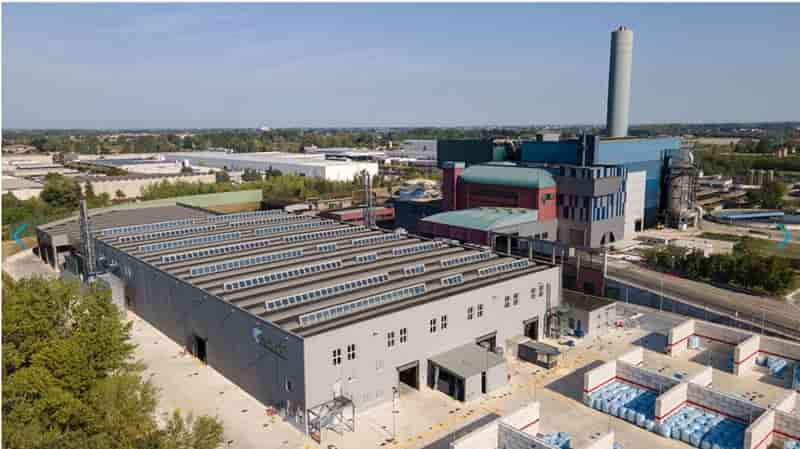
JBF Belgium, strategically located in Europe, operates the continent’s most advanced PET production facility, established in 2012. With an annual capacity of 432,000 tonnes, its Virgin PET resin (vPET) has a carbon footprint 19.7% below the European average. Biodegradable textiles
The company also pioneers Chemically Recycled PET resin (rPET) with up to 30% post-consumer recycled content, catering to food, beverage, healthcare, and other sectors.
JBF Bahrain, positioned in Bahrain’s Free Trade International Investment Park, specializes in Biaxially Oriented PET Films (BOPET) with a capacity of 90ktpa. Its products span packaging, electrical insulation, and flat screens, including high-quality recycled PCR films, emphasizing sustainability.
This restructuring strengthens both companies’ financial foundations, bolstered by global financial institutions, and introduces enhanced governance, leadership, and operational focus. Together, JBF Belgium and JBF Bahrain are committed to innovation, environmental responsibility, and delivering superior PET solutions. Biodegradable textiles
“This pivotal moment reinforces our dedication to growth, customer service, and sustainability,” said a company director. “We aim to continuously create value by providing innovative solutions to today’s challenges. With robust financial backing, we are poised to redefine the polyester and packaging industry, setting new benchmarks for PET products.”

Organic Solar Cells: A Revolution in Solar Energy
A groundbreaking Spanish research project, in collaboration with Instituto LNM in Jaipur, may revolutionize solar energy through organic solar cells boasting an impressive efficiency of 16.36%. Flexible, lightweight, and semi-transparent, these cells could surpass traditional silicon panels in versatility and ecological sustainability.
Organic solar cells integrate innovative organic molecules, enabling cost-effective, large-scale production like printing.
While silicon still leads in efficiency, the new materials offer unmatched advantages, such as reduced weight and adaptability to various applications, from medical devices to urban infrastructure. Their flexibility facilitates integration into low-power devices, streetlights, and billboards, showcasing their vast potential. Biodegradable textiles
The introduction of chlorine atoms in the cells’ design has significantly enhanced efficiency, fueling optimism for further advancements. These organic panels promise reduced environmental impact, using sustainable materials with minimal emissions. Unlike conventional panels, their resilience against wear from solar rays ensures long-term efficiency.
Beyond technical innovation, these cells represent an ecological leap forward, bridging sustainability and technological progress. Their adaptability makes them suitable for a variety of uses, potentially setting a new standard in renewable energy. As a pioneering alternative to silicon, organic solar cells could redefine solar energy’s landscape, advancing both efficiency and eco-friendliness.
This innovation highlights a greener, more flexible future for solar energy, pushing the boundaries of photovoltaic applications and stimulating continued research in the renewable energy sector. Biodegradable textiles

Scientists Develop Biodegradable E-Textiles
In a new study, scientists from University of Southampton, University of the West of England Bristol, University of Exeter, University of Cambridge, University of Leeds and University of Bath have developed a way to make smart, electronic textiles that are also sustainable and biodegradable.
The researchers have created ‘Smart, Wearable, and Eco-friendly Electronic Textiles’ (SWEET), technological fabrics with features like sensors or lights that are designed to biodegrade after they reach the end of their lifespan.
“Integrating electrical components into conventional textiles complicates the recycling of the material because it often contains metals, such as silver, that don’t easily biodegrade,” explained Nazmul Karim, lead author of the study and a professor at the Winchester School of Art at University of Southampton. “Our potential ecofriendly approach for selecting sustainable materials and manufacturing overcomes this, enabling the fabric to decompose when it is disposed of.” Biodegradable textiles
To make a biodegradable e-textile, the researchers created a three-layer fabric with a Tencel-fabric base, an interface layer, and the sensor layer. The Tencel is a wood pulp-based fabric, and the team used graphene and a type of conductive polymer known as PEDOT:PSS for the electronic elements.
From there, they were able to use inkjet printing to adhere these materials to the fabric, as this process used less water and energy and produced no material waste, according to the researchers.
The researchers tested the fabric by attaching it to gloves, which five humans wore in the study. The fabric was able to effectively measure the humans’ electrocardiogram (ECG) signals and skin temperature, just like many smart wearables on the market today. Biodegradable textiles

US R-PET Market Sees 10.5% Price Drop in December
The US market for recycled polyethylene terephthalate (rPET) experienced a significant price decline in December, with prices dropping by 10.5%, according to industry sources. This downturn follows a period of relative stability and comes amid concerns about weakening demand and increased supply.
Several factors are believed to be contributing to the price decrease. A slowdown in consumer spending and a potential recession have led to decreased demand for rPET from key sectors such as packaging and textiles.
Additionally, increased production capacity for rPET has put downward pressure on prices as supply outpaces demand. Biodegradable textiles
“The recent price drop reflects a softening of the market,” said [Name and Title of Industry Expert], [Quote about market conditions and outlook]. “While the long-term outlook for rPET remains positive due to growing demand for sustainable materials, the market is currently facing some headwinds.”
Despite the recent decline, industry experts anticipate that the long-term demand for rPET will continue to grow, driven by increasing consumer awareness of environmental issues and stricter regulations aimed at reducing plastic waste.