Microplastic – The use of plastic in Europe has skyrocketed over the past decade. Recent statistics reveal that in 2021, each person in the European Union (EU) generated an average of 36 kg of plastic packaging waste 15-01-2025 - Archive
Microplastic
Crude Oil Prices Trend

Alpla on a growth trajectory with a successful 2024 financial year
Alpla continued its growth trajectory in 2024 with new products, plants, business areas, acquisitions and a focus on training skilled workers. The international packaging and recycling specialist increased its turnover from 4.7 to 4.9 billion euros and grew its workforce to 24,350 employees. Alpla is broadening its targets for the recycling sector. The company plans to double its output recycling capacity to 700,000 tonnes of recycled material by 2030.
Founded in 1955, the Alpla Group produces safe, affordable and sustainable plastic packaging solutions worldwide. The family-owned company, headquartered in Hard, Austria, can look back on a successful financial year in 2024 and continues to grow after a moderate decline in sales in the previous year. The annual turnover of 4.9 billion euros represents an increase of 4 per cent compared to 2023. Microplastic
There has been significant growth in the number of sites and employees. Alpla has reached the 200-plant mark and created more than a thousand new jobs through new business areas, acquisitions and training programmes. A total of 24,350 employees work at 200 locations in 46 countries – 365 of them are apprentices. This record figure underlines the importance of professional training for the company’s future.
Growth markets and innovation
“Plastic packaging shapes the lives of billions of people. As a technological market leader, we are making it increasingly lighter and more sustainable. Microplastic
Could plastic waste be recycled into soap? Virginia Tech chemist finds a way
Scientists estimate we recycle only nine percent of the plastic that’s produced around the world. A chemistry professor at Virginia Tech has discovered a way to use waste plastic to produce an ingredient that could be used to make soap.
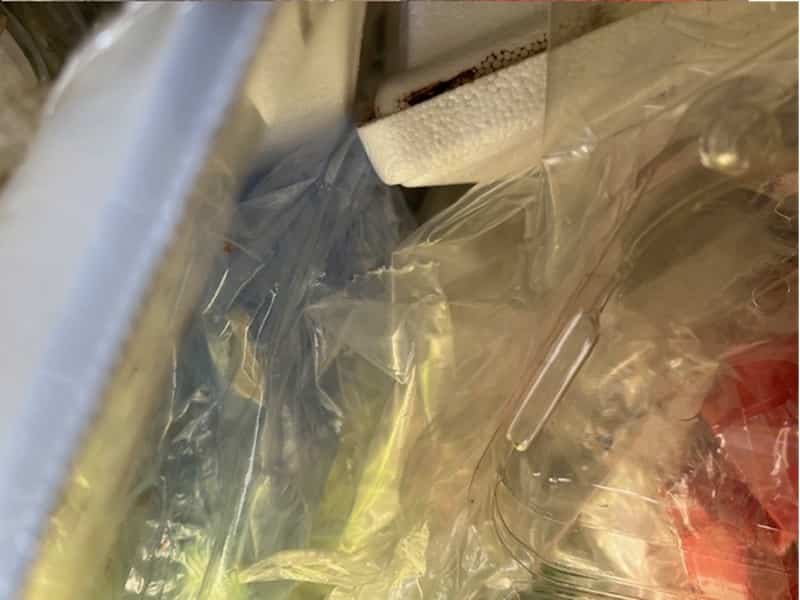
Plastic is costly and difficult to recycle, partly because so much of it is contaminated with food waste and other materials.
Chemist Guoliang “Greg” Liu said there are lots of things plastic could be turned into.
“But the problem that we face right now is often that there’s not enough economic incentive to the industry to recycle them,” Liu said. “So we’re trying to find a way to recycle into something that’s more useful to our daily life.” Microplastic
He’s been working on a new technique to break down plastic molecules from polyethylene and polypropylene using heat, and isolate an oil. Liu says this oil is nearly identical to an ingredient used in most types of soap. “It’s a molecule that we use every day,” Liu said.
Their technique is similar to another form of plastic recycling, known as advanced recycling. But while most advanced recycling emits pollution, Liu said this method is more environmentally friendly.

KTU Expert Tackles Plastic Recycling Challenges
“Microplastic particles are currently found almost everywhere – in water, food, fish, and even breast milk,” says Artūras Torkelis, a PhD student at Kaunas University of Technology (KTU). He emphasises that proper waste management is essential for reducing these risks.
The use of plastic in Europe has skyrocketed over the past decade. Recent statistics reveal that in 2021, each person in the European Union (EU) generated an average of 36 kg of plastic packaging waste.
Of the more than 16 million tonnes of plastic packaging generated that year, only 6.5 million tonnes were recycled. Plastic recycling remains a serious problem. Inadequate recycling not only increases the amount of waste left in landfills, incineration plants and nature but also contributes to the formation of microplastics, which threaten both ecosystems and human health. Microplastic
According to Torkelis, to improve the situation, the waste management process cannot be addressed from only one side. It is a multidimensional problem, and therefore, the approach to it must be broad and systemic.
“Focusing solely on improving recycling technologies or finding new methods without considering economic, environment and legal aspects would be a mistake. This approach won’t just fail to solve the problem, it could also lead to shortfalls when considering other aspects,” says Torkelis.
To better understand how external factors influence plastic packaging recycling, KTU researchers conducted a macro-environmental analysis that examined six key areas: political, economical, social, technological, ecological, and legal factors. Microplastic

Van Robaeys Boosts Flax Fiber Production with Andritz Technology
Van Robaeys, a French company specializing in flax fibers, has enhanced its production capacity by commissioning two new Andritz teXline bast fiber lines. These advanced lines allow the company to meet the increasing demand for high-quality, natural textile fibers in France.
The new lines, capable of processing up to 800 kg/h of fiber, leverage state-of-the-art technology for maximum flexibility and efficiency. As the seventh and eighth Andritz cottonizing lines for Van Robaeys, they continue a partnership that began 50 years ago. Pierre D’Arras, CEO of Van Robaeys, expressed satisfaction with the collaboration, highlighting the significant technological advancements and improved production capabilities the equipment provides. Microplastic
Europe remains the largest producer of flax fibers, with cultivation areas increasing by 133% between 2010 and 2020. Van Robaeys, a family-owned business since 1919, has deep expertise in flax scutching and is committed to sustainable, zero-waste fiber production.
Andritz, a global leader in technology for bast fiber processing, specializes in refining and cottonizing fibers for the textile industry. Its innovative solutions ensure premium-quality fibers suitable for spinning and nonwoven applications, supporting the growing market for environmentally friendly textile materials. Microplastic

University researchers create ‘low-cost’ plastic recycling method
A team from Louisiana State University is reporting a “potential breakthrough” and estimates a new electromagnetic induction heating approach could save “billions of dollars.”
Researchers from Louisiana State University reportedly have created a new, low-cost plastics recycling method, claiming it could save billions of dollars and eliminate billions of tons of plastic pollution.
James Dorman, program manager at the Department of Energy and former LSU chemical engineering professor, and current LSU chemical engineering Professor Kerry Dooley use electromagnetic induction heating along with “special magnetic materials and catalysts” to break down different types of plastic. Microplastic
The electromagnetic waves melt the plastics from the inside out, which, according to the researchers, requires less energy and produces only small amounts of byproducts like methane compared with pyrolysis, a more conventional method of melting plastic scrap.
“Getting plastics to the recycling plant is only half the battle,” Dorman says. “The other half is reusing that plastic waste to create new products. Some estimates show as much as 95 percent of plastics in the U.S. ends up in landfills and incinerators. Our process breaks down commercial plastics, including polystyrene and high- and low-density polyethylene, so recycled material can be seamlessly integrated into new products. Microplastic

D&L introduces natural fiber composite technology, turns waste into wonder plastic
D&L Industries Inc., through its subsidiary D&L Polymer & Colours, Inc. (DLPC), is launching a pioneering plant fiber-plastics technology this year that will have a wide range of potential uses in the global market, from household appliances to automotive and electric vehicle parts.
With this revolutionary product, DLPC is spearheading technological advancements in sustainable plastics, transforming natural fibers, often considered waste, into an eco-friendly alternative to conventional plastics. Microplastic
“The Philippines has an endless supply of natural fibers that are often discarded,” said DLPC President and CEO Lester A. Lao. “About 25 years ago, even before ESG or sustainability became mainstream, we began exploring the potential of abaca fiber as an environmentally friendly material.”
However, processing abaca fibers on a large scale was challenging. “Abaca is known as the world’s strongest natural fiber,” Lao explained. “The technology to properly process it at scale didn’t exist 25 years ago. Normal metal blades used to cut the fibers would quickly wear out. With recent technological advancements, we can now process abaca effectively without using metal blades, and our vision is finally becoming a reality.”
While DLPC initially used abaca fiber, the technology is adaptable to other locally-sourced fibers like pineapple, spider-lily (bakong), and vetiver. Microplastic
The resulting natural fiber composites can replace up to 40 percent of the polymers in various consumer and industrial products traditionally made entirely of plastic, helping to minimize plastic usage.
“Natural fiber composites have inherent properties that complement or enhance the properties of plastics while making them more sustainable,” Lao said. “These composites are stronger and more resilient while remaining lightweight.”
Microplastic