Plastic Recycling Plant – Celanese and Li Auto Team Up to Cut Cabin Emissions in EVs Revolutionary Low-Emission POM Launches This May Celanese Corporation and Li Auto have officially partnered to roll out Hostaform® POM XAP®3, a next-generation low-emission polymer designed to drastically improve air quality inside electric vehicles (EVs). 05-05-2025 - Archive
Plastic Recycling Plant
PET-Bottle Recycling – OMV Launches Austria’s Largest Green Hydrogen Plant at Schwechat A Major Milestone in Austria’s Energy Transition OMV, Austria’s leading energy and petrochemical company, has officially launched the country’s largest green hydrogen plant

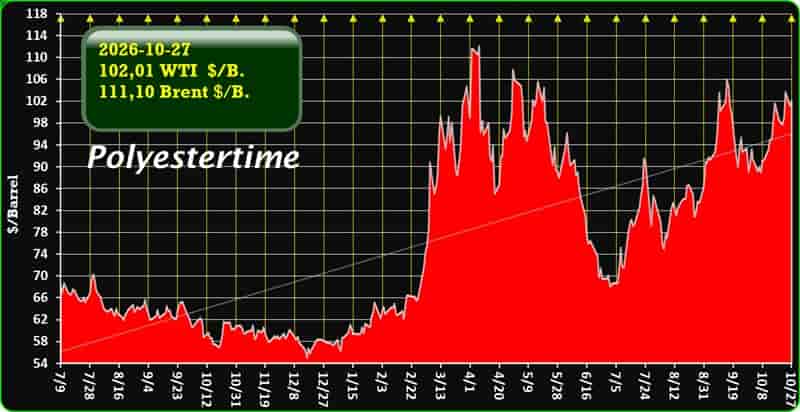
Crude Oil Prices Trend

DePoly Secures $23M to Open PET Recycling Plant in Switzerland
Transforming Plastic Waste Into Circular Solutions
Swiss cleantech startup DePoly has just raised a $23 million Seed round to revolutionize how we recycle plastic. The funding will fuel the launch of the company’s first industrial-scale PET (polyethylene terephthalate) recycling plant in Monthey, Switzerland, scheduled to open in summer 2025.
Unlike traditional mechanical recycling, DePoly’s innovative process chemically breaks down PET and polyester plastics into their original monomers — all without using fossil fuels. This means that used plastics can be fully regenerated into high-quality materials, creating a closed-loop, circular system. Plastic Recycling Plant
Strategic Investors Join the Mission
This significant Seed round was led by MassMutual Ventures, marking a strong international endorsement of DePoly’s vision. The round also included participation from existing investors like:
- BASF Venture Capital
- Beiersdorf Venture Capital
- Zürcher Kantonalbank
By expanding its investor base into the U.S., DePoly is laying the groundwork for global expansion in the years ahead.
“We are happy to have expanded our investor base to the US with MassMutual Ventures as we want to build a global champion,” said David Hanf, Chief Financial Officer, who joined the company in 2024.
Scaling with a 500-Tonne Pilot Plant
The upcoming Monthey plant will have the capacity to recycle 500 tonnes of plastic annually. This demonstration facility will serve as a proving ground for DePoly’s chemical recycling process at scale, helping the company validate its technology in real-world industrial conditions. Plastic Recycling Plant
This is a crucial milestone on the company’s roadmap, as it prepares to build a commercial-scale facility capable of handling significantly higher volumes of plastic waste.
“The upcoming showcase plant validates our roadmap to creating a truly circular plastics market,” said Samantha Anderson, Co-Founder and CEO. “Following our pilot and showcase plant, our next goal is to scale our operations to industrial size with a first-of-its-kind commercial plant based on our technology.”
A Breakthrough in Plastic Recycling Technology
DePoly’s core innovation lies in chemical recycling, which contrasts with the conventional approach of mechanically shredding plastics. Rather than producing low-grade recycled materials, DePoly’s method restores PET and polyester to their base molecular form. These monomers can then be reused to manufacture new, virgin-quality plastics — eliminating the need for petroleum-based inputs. Plastic Recycling Plant
“DePoly’s proven technology is a game changer addressing a crucial industrial and societal challenge,” said Alix Brunet, Europe Lead at MassMutual Ventures.
Industry Partnerships Across Sectors
DePoly is already working with major brands and industry leaders to bring its solution to market. Current collaborations include:
- Odlo (fashion and apparel)
- PTI (consumer goods packaging)
- Beiersdorf (cosmetics)
These partnerships signal that demand for sustainable, circular plastic solutions is strong across sectors — and that DePoly is well-positioned to deliver. Plastic Recycling Plant
Looking Ahead: A Circular Plastics Economy
As governments, companies, and consumers look for scalable ways to tackle plastic pollution, DePoly stands out as a fast-scaling, scientifically robust solution. With a pilot plant underway and commercial-scale ambitions in sight, the company is taking a bold step toward transforming global plastic recycling.
Its founders and backers believe that, with continued growth, DePoly’s technology will compete with virgin plastic pricing, making sustainability not only practical — but economically viable. Plastic Recycling Plant
Final Thoughts
DePoly’s $23M Seed round marks a pivotal moment for circular plastic recycling. With a cutting-edge process and strong backing from global investors, the company is poised to make lasting change — starting with a small Swiss town and aiming for the world.
Stay tuned as the Monthey plant begins operations in 2025 — and DePoly leads the charge toward a more sustainable, circular future for plastics.


EU Car Market Shrinks in Q1 2025 Despite Strong EV and Hybrid Growth
Overall Car Sales Dip 1.9% Across the European Union
The European car market hit a slight speed bump in the first quarter of 2025. According to the latest data from the European Automobile Manufacturers’ Association (ACEA), new car registrations across the EU declined by 1.9% compared to the same period in 2024.
March alone showed a modest 0.2% year-on-year decrease, signaling ongoing challenges for the industry amid economic uncertainty, fluctuating supply chains, and shifting consumer demand. Plastic Recycling Plant
Electric Vehicle Sales Power Through the Slump
Despite the broader downturn, battery-electric vehicles (BEVs) emerged as a bright spot. Sales of BEVs soared by 23.9% year-over-year, totaling over 412,000 units. These vehicles now account for 15.2% of all new car sales, up from 12% in Q1 2024.
Notably, Germany, Belgium, and the Netherlands led the charge with robust growth, while France bucked the trend with a 6.6% drop in BEV sales.
Hybrids Dominate Market Share
Hybrid-electric vehicles (HEVs) remain the most popular drivetrain in the EU, securing a commanding 35.5% market share. Nearly 1 million hybrid cars were registered in Q1, further highlighting the region’s accelerating shift toward electrification.
Plug-in hybrids (PHEVs) also saw moderate gains, increasing their market share to 7.6%, reflecting steady—but slower—adoption compared to fully electric or traditional hybrids. Plastic Recycling Plant
Combustion Engines in Steep Decline
The biggest losers in the Q1 market were petrol and diesel vehicles. Combined, they accounted for just 38.3% of the market, a sharp drop from 48.3% a year ago.
- Petrol car registrations fell by 20.6%
- Diesel dropped even further, down 27.1%
These figures underscore a significant pivot away from fossil fuel vehicles as consumers and governments alike push toward cleaner mobility solutions.
Final Insight: A Market in Transition
The Q1 2025 data paints a clear picture of a market in flux. While overall car sales have declined, the surging popularity of hybrid and electric vehicles suggests a powerful long-term transformation is well underway.
For automakers and buyers alike, the shift to low-emission mobility isn’t just coming—it’s here. Plastic Recycling Plant

Celanese and Li Auto Team Up to Cut Cabin Emissions in EVs
Revolutionary Low-Emission POM Launches This May
Celanese Corporation and Li Auto have officially partnered to roll out Hostaform® POM XAP®3, a next-generation low-emission polymer designed to drastically improve air quality inside electric vehicles (EVs). The innovative material is set to launch in May and will feature prominently in cabin components of Li Auto’s upcoming vehicle models.
90% Reduction in Formaldehyde Emissions
At the heart of this collaboration is a shared mission to enhance passenger health and comfort. Hostaform® POM XAP®3 reduces formaldehyde emissions by up to 90% compared to standard polyoxymethylene (POM) materials currently used in the automotive industry. This significant reduction marks a major step forward in meeting growing consumer demands for healthier in-cabin environments. Plastic Recycling Plant
Celanese achieves this performance leap through its third-generation low-emission technology platform, reflecting years of R&D and a strong commitment to sustainability.
Elevating Passenger Comfort and Air Quality
Li Auto, a fast-growing Chinese EV manufacturer, is directly responding to heightened consumer awareness around air quality, especially in enclosed spaces like vehicle cabins. By integrating Celanese’s advanced material into their interior components, Li Auto aims to deliver vehicles that not only perform well but also promote well-being for drivers and passengers alike.
The collaboration represents a holistic approach, combining high-performance materials with innovative design to enrich the overall driving experience.
Strengthening Celanese’s Presence in China’s NEV Market
This partnership also supports Celanese’s strategic expansion into China’s booming new energy vehicle (NEV) market. Plastic Recycling Plant
As the demand for electric vehicles surges, suppliers who offer sustainable, health-conscious solutions are well-positioned for growth.
By aligning with a leading EV brand like Li Auto, Celanese reinforces its role as a key materials innovator in the automotive sector, particularly in areas where performance, safety, and environmental health intersect.
Final Thought:
As more EV buyers prioritize health and sustainability, partnerships like the one between Celanese and Li Auto will likely set the standard for next-generation mobility solutions. Expect to see materials like Hostaform® POM XAP®3 become a benchmark in future automotive design. Plastic Recycling Plant