Pyrolysis Oil – Avantium Joins the Bottle Collective to Revolutionize Sustainable Packaging A New Era in Eco-Friendly Bottle Innovation Avantium N.V., a trailblazer in renewable and circular polymer materials, has officially partnered with the Bottle Collective to help bring Dry Molded Fiber (DMF) bottles to market 21-05-2025 - Archive
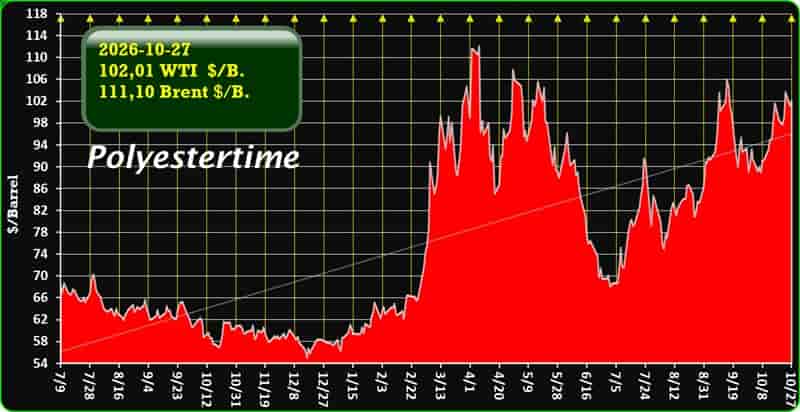
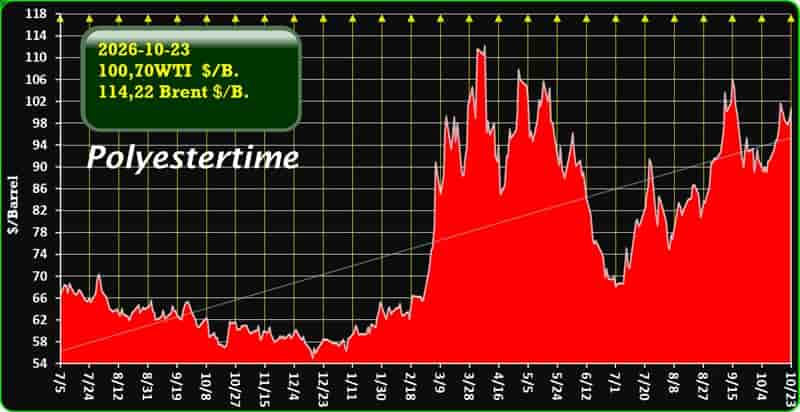
Crude Oil Prices Trend

“Irrelevant US?”: Trump’s Trade War and the Rise of a New Global Power
The U.S.-China tariff conflict is more than just a trade dispute—it’s a window into a profound shift in global power. Former President Donald Trump’s administration aimed to slow Beijing’s rise through punitive tariffs, but the results remain murky. A temporary truce offered little clarity, and many experts fear that Washington is facing a future it is neither prepared for nor willing to confront.
Has the Chinese Century Already Begun?
An editorial in The New York Times sounded the alarm: the so-called “Chinese century” may already be underway. In the piece, Kyle Chan, a specialist in Chinese industrial policy from Princeton University, criticized the Trump administration’s narrow focus. “Trump immediately proclaimed a victory,” Chan noted, “but this only highlights the core problem: a shortsighted fixation on tactical wins while the broader economic contest with China is being decisively lost.” Pyrolysis Oil
A Shifting Global Order
Analysts have long used the term “Chinese century” to describe a future where China surpasses the U.S. in economic and technological dominance, effectively shifting the global center of gravity from Washington to Beijing. Trump’s tariffs, far from containing this shift, may have backfired. According to the NYT, these trade barriers disrupted U.S. access to key global markets and supply chains—creating long-term risks for American companies and innovation.
Even more troubling is the simultaneous decline in U.S. public funding for research and the weakening of academic institutions, once cornerstones of American technological leadership.
China’s Steady March Forward
Despite its own internal economic challenges, China is surging ahead in several high-impact sectors.
From steel and shipbuilding to electric vehicles, solar energy, 5G, and advanced pharmaceuticals, China now leads in global production. By 2030, it is projected to account for nearly 45% of the world’s manufacturing output. Pyrolysis Oil
In a strategic move this March, Beijing announced the creation of a $138 billion national venture capital fund to foster development in advanced technologies like quantum computing and robotics. The state also increased funding for public research and development, doubling down on a long-term vision for technological supremacy.
Stuck in the Past?
Meanwhile, Trump’s administration remained fixated on outdated tools like tariffs. “He doesn’t even seem to understand the extent of the threat posed by China,” said Chan, reflecting a broader concern that U.S. policymakers still view China as a simple manufacturing hub, rather than a rising tech superpower. Pyrolysis Oil
But China is no longer just the world’s factory. It’s an innovation powerhouse—and it’s using a state-driven economic model to guide its ascent. American policymakers must realize that trade pressure alone won’t force China to abandon this strategy. If anything, Beijing is accelerating its efforts to dominate future-defining technologies.
Consequences of a Shortsighted Strategy
“Trump’s mindless obsession with short-term solutions like tariffs—while simultaneously undercutting what makes America strong—will only speed up the rise of a China-led world,” the NYT editorial warned. Indeed, Washington’s neglect of long-term innovation and strategic investment could have historic consequences.
Time Is Running Out
The U.S.-China rivalry is no longer just about trade; it’s a battle for technological, economic, and ideological leadership. This high-stakes confrontation will shape the 21st century, not only for the two superpowers but for the entire world. Pyrolysis Oil
For the U.S. to stay relevant on the global stage, it must pivot away from reactive policies and toward bold, future-focused strategies. This includes reinvesting in R&D, nurturing innovation, strengthening academia, and building sustainable global partnerships. Anything less risks making Trump’s grim prophecy about an “irrelevant America” a self-fulfilling one.

Recycling Breakthrough Turns “Forever Chemicals” Into Renewable Resources
Soundwave Innovation Paves the Way for Greener Fuel Cell Recycling
Scientists at the University of Leicester have developed an innovative technique that uses ultrasound waves to recycle fuel cell components. This process separates valuable metals from harmful “forever chemicals” known as PFAS, offering a major leap forward in both clean energy and environmental protection.
What Are PFAS and Why Should We Care?
PFAS (per- and polyfluoroalkyl substances) are man-made chemicals used in various industrial processes, including fuel cell membranes. These substances are notorious for their resistance to degradation, making them a serious threat to water supplies and public health. The Royal Society of Chemistry has urged policymakers to reduce PFAS levels in UK water. Pyrolysis Oil
Cracking the Code of Catalyst-Coated Membranes (CCMs)
Why Fuel Cells Are Hard to Recycle
Fuel cells and water electrolyzers, essential for hydrogen-powered vehicles and public transport, rely on catalyst-coated membranes (CCMs). These contain platinum group metals tightly bonded to PFAS membranes. The strong adhesion has historically made recycling these materials both expensive and technically challenging.
The Leicester Breakthrough
The Leicester team introduced a scalable method using organic solvent soaking followed by ultrasonic water waves. This combination allows for the clean separation of metals from membranes in under 60 seconds—without using harsh chemicals or producing toxic waste. Pyrolysis Oil
“We can now recycle precious metals without using toxic processes,” says Dr. Jake Yang, University of Leicester. “This is a huge step forward for making fuel cell technology truly sustainable.”
High-Powered Ultrasound: Recycling in Seconds
The Blade Sonotrode Revolution
In a follow-up study, researchers designed a custom blade sonotrode that uses high-frequency ultrasound to separate CCM layers. The process creates tiny bubbles that implode under pressure, splitting membranes in seconds at room temperature.
Scalable, Economical, and Eco-Friendly
This technique is not only efficient but also cost-effective and sustainable. It avoids chemical waste and high energy input, making it a promising solution for large-scale adoption in the clean energy industry. Pyrolysis Oil
Industry Collaboration with Global Impact
This research was carried out in partnership with Johnson Matthey, a global leader in sustainable technology innovation.
“Using high-intensity ultrasound to separate catalyst-loaded membranes is a game-changer,” says Ross Gordon, Principal Research Scientist at Johnson Matthey. “This collaboration helps accelerate hydrogen adoption while keeping it economically viable.”
The Circular Economy of Clean Energy
With global demand for fuel cells on the rise, this breakthrough supports the development of a circular economy—enabling the recovery and reuse of critical materials like platinum. It reduces environmental impact while making clean hydrogen energy more accessible and affordable. Pyrolysis Oil
Final Thoughts
This isn’t just a scientific milestone—it’s a sustainable solution to real-world challenges. By combining innovation with collaboration, the University of Leicester’s work brings us closer to a future powered by clean, circular, and cost-effective energy.

Chemco and Kandoi Launch Joint Venture for Sustainable rPET FIBC Manufacturing
Pioneering India’s First rPET-Based FIBC Bag Facilities
In a significant move towards sustainable industrial packaging, Chemco Group and Kandoi Group—two leading Indian manufacturers—have announced a strategic joint venture to produce Flexible Intermediate Bulk Containers (FIBC) using recycled PET (rPET). The initiative will see the construction of two state-of-the-art facilities in Vapi and Dahej, Gujarat, with a total investment of ₹450 crore.
This partnership marks a crucial step in driving circular economy practices in India’s packaging sector, particularly for high-volume, heavy-duty applications.
End-to-End Circular Production Model
What sets this project apart is its closed-loop system design. From PET bottle collection and washing, to tape extrusion, weaving, and final bag assembly, the entire manufacturing process will be handled in-house. This integrated approach ensures:
- Complete traceability of materials
- Uniform quality control
- Reduced environmental footprint Pyrolysis Oil
The facilities aim to recycle over 10 million PET bottles daily, amounting to roughly 3.6 billion bottles annually, all while running 100% on renewable energy sources.
A Greener Alternative to Traditional Packaging
The rPET-based FIBC bags are positioned as a low-carbon, high-strength substitute for traditional polypropylene and polyethylene packaging. Not only are these bags environmentally responsible, but they also meet:
- India’s Extended Producer Responsibility (EPR) compliance standards
- Global Environmental, Social, and Governance (ESG) expectations
By using traceable recycled content, the bags help industrial clients improve their sustainability metrics without compromising on performance. Pyrolysis Oil
Job Creation and Waste Management Reform
Beyond the environmental benefits, the joint venture is expected to create over 2,500 direct and indirect jobs. These opportunities will span:
- Waste collection
- Bottle processing
- Logistics
- FIBC manufacturing
The companies plan to collaborate with Urban Local Bodies (ULBs) and municipal corporations to formalize India’s waste collector networks. The initiative aims to provide:
- Stable income streams
- Better working conditions
- Inclusion into a transparent, structured waste ecosystem
Launch Timeline and Export Vision
Commercial production is slated to begin by the end of 2025. With scalability built into the project, both Chemco and Kandoi plan to:
- Expand capacity in multiple phases Pyrolysis Oil
- Explore international export opportunities
- Establish India as a global hub for sustainable industrial packaging
Global Trends in rPET Packaging
Huber+Suhner’s Sustainable Shift
Earlier this month, Huber+Suhner revealed that its fibre modules would now ship in blister packs made from 100% recycled PET. This change is expected to:
- Reduce packaging waste
- Cut CO₂ emissions by half
- Standardize packaging for multiple product variants
Faerch’s Recyclable rPET Coffee Lids
Similarly, Faerch launched an rPET lid for the beverage industry, crafted with up to 85% recycled PET. Designed to be fully recyclable into food-grade packaging, this innovation supports businesses looking to lower their carbon footprint while closing the loop on plastic use. Pyrolysis Oil
Final Thoughts
This joint venture by Chemco and Kandoi represents a milestone for India’s green manufacturing landscape. By combining industrial innovation with circular economy principles, the partnership offers a blueprint for sustainable growth, compliance-ready packaging, and inclusive job creation.
As the world continues to seek practical, eco-friendly alternatives to traditional materials, initiatives like this one could set the tone for a new era in responsible industrial production.

Metal-Free Breakthrough in PET Recycling: Turning Plastic Waste into Valuable Chemicals
A Revolutionary Step Toward Sustainable Plastic Upcycling
Plastic pollution—especially from polyethylene terephthalate (PET)—remains a pressing global issue. While recycling technologies have made strides, many existing methods degrade the quality of plastics or require harsh chemicals and energy-intensive processes. Now, a groundbreaking metal-free catalytic method is offering a game-changing solution. Pyrolysis Oil
Developed by researchers at Zhejiang University, this new technique uses ionic liquids (ILs)—specifically [EMIm][OAc]—to efficiently upcycle PET into valuable chemicals. With yields of 99% for dimethyl terephthalate (DMT) and 91% for ethylene carbonate (EC) in just 2.5 hours under mild conditions, the innovation shows strong potential for industrial-scale application.
Why Traditional Recycling Falls Short
The Problem with Mechanical Recycling
Mechanical recycling of PET—common in many facilities—can only go so far. The process often results in a loss of material quality and is not suitable for heavily contaminated or mixed plastic waste. Pyrolysis Oil
The Limits of Chemical Recycling
Chemical recycling, particularly methanolysis, offers a promising alternative. However, traditional versions of this method often require metal-based catalysts, which can leave residues and pose environmental risks. Moreover, achieving complete depolymerization of PET remains a challenge.
How Ionic Liquids Offer a Metal-Free Alternative
The Science Behind the Innovation
The Zhejiang University team introduced an innovative metal-free catalytic system that relies on ionic liquids to break down PET. These ILs create hydrogen bonds with PET molecules, activating them for reaction with methanol and ethylene glycol. This interaction significantly enhances the efficiency of depolymerization.
As a result, the process converts PET into:
- Dimethyl terephthalate (DMT) – a key raw material for producing new polyesters
- Ethylene carbonate (EC) – widely used in batteries and other industrial applications Pyrolysis Oil
Broad Compatibility and Cleaner Output
One of the most impressive aspects of this method is its versatility. It works not just on PET but also on other plastics like:
- Polyethylene furanoate (PEF)
- Polyethylene adipate (PEA)
- Polyethersulfone (PES)
- Polylactic acid (PLA)
- Polycarbonates (PC, PPC)
And because it avoids metals altogether, the process eliminates the risk of metal contamination, making it safer, cleaner, and more sustainable.
Expert Insight: Transforming the Future of Plastic Recycling
“Our research introduces a transformative solution to the plastic waste dilemma, particularly for PET, one of the most challenging plastics to recycle,” said Dr. Qingqing Mei, lead researcher.
“By using a metal-free ionic liquid catalyst, we not only improve the efficiency of PET upcycling but also offer a sustainable pathway for managing plastic waste.” Pyrolysis Oil
This approach has the potential to redefine recycling technologies by providing a circular economic model. Rather than treating plastic as disposable, it becomes a renewable feedstock for creating new materials.
Why This Breakthrough Matters
Environmental Benefits
- Reduces landfill and ocean-bound plastic
- Lowers carbon footprint by eliminating metal catalysts and high temperatures
- Encourages reuse of waste plastics as industrial raw materials
Industrial Implications
- Offers a viable pathway to large-scale chemical recycling
- Suitable for mixed plastic streams
- Compatible with existing PET supply chains for smoother integration
Toward a Circular Economy
This metal-free PET recycling breakthrough could mark a turning point in how we view and handle plastic waste. By converting common plastics into high-value chemicals with minimal environmental impact, this method supports a truly circular economy—where waste is no longer discarded, but reused endlessly. Pyrolysis Oil
As global demand for sustainable materials grows, ionic liquid catalysis may be the key to a cleaner, more efficient, and scalable recycling future.

Huvis Takes Strong Action to Protect Duaron-Cool Brand from Counterfeit Threats
Company Rolls Out Legal Measures and Certification Enhancements to Combat Chinese Imitations
Huvis, a leader in advanced fibers, has announced decisive legal and strategic measures to safeguard its innovative cool-touch fiber “Duaron-Cool” from counterfeit threats originating in China. The company is launching a comprehensive response to protect its market share, bolster consumer trust, and maintain brand authenticity.
Crackdown on Counterfeit Duaron-Cool Products
With a sharp rise in fake versions of Duaron-Cool in the market, Huvis is reinforcing its authenticity certification marketing strategy. As of this season, the company will introduce exclusive purpose-specific tags that can only be used on fabrics composed entirely of Duaron-Cool. All existing tags currently in circulation will be recalled and destroyed to eliminate confusion and misuse. Pyrolysis Oil
To further protect the brand, Huvis is expanding its real-time monitoring system to detect and address brand infringement promptly. The company has also confirmed plans to pursue aggressive legal action against any manufacturers or sellers distributing fraudulent versions of its flagship product.
What Makes Duaron-Cool Unique?
Duaron-Cool is a summer-specific cool-touch fabric that has gained immense popularity in the domestic market since its launch in 2022. It is designed based on the principle of contact cooling, providing users with an immediate cool sensation upon touch—similar to rayon, but with more durability.
The core material of Duaron-Cool is polyethylene (PE), which boasts higher thermal conductivity compared to traditional fibers like cotton or nylon. This property helps to lower the user’s body temperature more rapidly, making it ideal for bedding and apparel during hot weather.
Thanks to its performance and comfort, Duaron-Cool has captured around 70% of South Korea’s cool-touch fiber market. Pyrolysis Oil
Dangers of Counterfeit Products
Recent tests on suspected counterfeit versions of Duaron-Cool revealed disturbing trends. Some products falsely claimed to be made entirely from Duaron-Cool, while others used it in insignificant quantities or not at all. These fake materials often have inferior Q-max values—a key indicator of cooling effectiveness.
Beyond the lack of cooling performance, these counterfeits also suffer from quality issues such as discoloration, pilling, and poor durability, significantly affecting the user experience. Huvis considers this a serious threat, not only to its brand but also to consumer safety and satisfaction.
Expanding Duaron-Cool into New Markets
In addition to defensive actions, Huvis is pursuing product differentiation strategies to stay ahead of competition. The company is expanding the use of Duaron-Cool beyond bedding to clothing and accessories, a sector often underserved by cool-touch materials.
Traditionally, dyeing polyethylene fibers has been challenging, but Huvis has overcome this by developing:
- Dope-dyed yarn
- Dyeable yarn
- Soft-touch yarn
These innovations make it possible to create vibrant and varied designs while maintaining the cooling function. Duaron-Cool is now being adopted by leading outdoor apparel brands, both domestically and internationally, for use in cooling shirts, activewear, and hats. Pyrolysis Oil
Commitment to Innovation and Consumer Trust
“Duaron-Cool is our flagship summer product, trusted by consumers for its superior performance and quality. We will continue to lead the cool-touch material market by differentiating ourselves from counterfeits through brand protection and technological innovation.”
Conclusion: A Clear Stand Against Counterfeits
With a proactive and multi-pronged approach, Huvis is not only defending its Duaron-Cool brand but also setting a high standard in the industry for product authenticity, innovation, and consumer trust. As the summer season approaches, customers can continue to rely on Duaron-Cool for genuine comfort and performance. Pyrolysis Oil

? China–US Ocean Cargo Soars 300% After Tariff Truce
A dramatic surge in ocean cargo bookings from China to the United States has followed a breakthrough trade agreement that paused escalating tariffs between the two countries. According to container-tracking provider Vizion, bookings have jumped nearly 300% since the announcement.
? What Sparked the Spike in Shipping?
The surge stems from a 90-day suspension of reciprocal tariffs between the US and China, agreed upon after recent negotiations in Switzerland. The temporary pause allows importers and exporters a window to move goods without bearing the brunt of punitive duties. Pyrolysis Oil
Ben Tracy, Vice President at Vizion, noted that the average daily booking volume for shipments from China to the US reached 21,530 twenty-foot equivalent units (TEU)—a sharp increase from 5,709 TEU recorded for the week ending May 5.
This temporary truce brings US tariffs down to 30% and Chinese tariffs to 10%, after months of rising trade tensions.
? A Boon for Shipping Companies
Shipping lines are reporting record-high trans-Pacific bookings following the announcement. Global carriers are seeing a tangible uptick:
- Maersk has experienced a noticeable boost in reservations for its US-bound services.
- Hapag-Lloyd, a German container shipping firm, reported a 50% week-on-week jump in its US-China bookings. Pyrolysis Oil
Logistics experts suggest that importers are rushing to take advantage of the tariff relief before the truce expires, especially those dealing in apparel, electronics, and seasonal goods.
?️ Retailers Scramble to Stock Summer Shelves
With the summer shopping season looming, US retailers and fashion brands are moving quickly. According to logistics firm Portless, there is a clear push by American retailers to secure China-made merchandise while costs are temporarily reduced.
Many companies had paused their shipments after the April 2 announcement from President Donald Trump about a proposed 145% tariff hike. The current agreement has reversed that trend dramatically.
This acceleration may cause the peak shipping season to arrive earlier than expected, as companies race to get goods into the US before the 90-day window closes.
⚠️ Potential Supply Chain Challenges
While the surge is largely positive for trade and logistics providers, analysts warn of short-term supply chain bottlenecks and freight cost increases. Though not as severe as the disruptions seen during the pandemic, the current rush puts strain on port capacity, container availability, and vessel space. Pyrolysis Oil
These issues could lead to:
- Delays at ports due to congestion
- Higher shipping rates driven by increased demand
- Limited space on popular routes, especially trans-Pacific lines
? What’s Next?
If the 90-day tariff suspension is not extended, importers may once again face steep duties, forcing another shift in strategy. Analysts believe that the current booking boom is a short-term opportunity, not a long-term solution.
Retailers, manufacturers, and supply chain managers are advised to:
- Secure transport capacity early
- Diversify sourcing strategies
- Monitor negotiations between US and Chinese trade officials
? Final Thoughts
This 300% jump in ocean cargo bookings underlines the sensitive nature of global supply chains and how quickly policy decisions can ripple across markets. While the 90-day tariff truce offers a temporary reprieve, the underlying trade tensions remain unresolved. Pyrolysis Oil
Businesses involved in trans-Pacific trade should remain alert, act swiftly, and plan for possible turbulence once the suspension expires.

Avantium Joins the Bottle Collective to Revolutionize Sustainable Packaging
A New Era in Eco-Friendly Bottle Innovation
Avantium N.V., a trailblazer in renewable and circular polymer materials, has officially partnered with the Bottle Collective to help bring Dry Molded Fiber (DMF) bottles to market. This collaboration combines Avantium’s cutting-edge, plant-based polymer PEF (polyethylene furanoate) with the innovative DMF technology to create bottles that are both high-performing and highly sustainable. Pyrolysis Oil
The result? Fiber bottles that could redefine the future of packaging by reducing reliance on traditional plastics and significantly lowering carbon footprints.
What Is the Bottle Collective?
Launched in 2023 by PA Consulting and PulPac, the Bottle Collective is a dynamic consortium focused on developing and commercializing Dry Molded Fiber packaging. PulPac, a Swedish R&D and IP company, created DMF technology to transform renewable pulp and cellulose into low-cost, high-performance packaging—using almost no water and producing far less CO₂ than plastic or wet-molding methods.
In 2024, Logoplaste—a global leader in rigid packaging solutions—joined the initiative, bringing deep expertise in injection molding and blowing. Together, these partners are building a scalable platform for brands ready to make a meaningful shift toward eco-conscious packaging.
The Role of Avantium and PEF
Avantium enters the partnership as a technical powerhouse, supplying its revolutionary PEF polymer for the bottle liners. PEF is derived 100% from plant-based feedstocks, is fully recyclable, and offers superior barrier properties compared to traditional plastics. Pyrolysis Oil
These features translate into multiple performance benefits:
- Enhanced barrier performance: PEF protects both taste and carbonation, ideal for beverages.
- Increased shelf life: A stronger barrier keeps contents fresher for longer.
- Thinner packaging: Thanks to higher mechanical strength, less material is needed overall.
This makes PEF an excellent fit for fiber bottle liners, where high performance must meet high sustainability standards.
Scaling Up for Global Impact
With prototypes already developed, the Bottle Collective is now focused on scaling the technology and bringing fiber bottles to market.
PA Consulting is playing a leading role in driving this transformation, ensuring that the DMF solution is ready for global adoption. Pyrolysis Oil
“Avantium’s participation aligns perfectly with our mission to fundamentally change the environmental footprint of packaging,” says Keith Thornley, commercial lead for Dry Molded Fiber collectives at PA Consulting.
Industry Leaders Join the Movement
The Bottle Collective isn’t working in isolation. Major global brands such as Diageo, Opella, and Haleon have already joined the consortium, aiming to co-develop and commercialize these sustainable bottle solutions.
“This collaboration highlights our commitment to pioneering sustainable packaging,” adds Paulo Correia, CTO at Logoplaste. “PEF brings exceptional sustainability and performance benefits to the table.” Pyrolysis Oil
Aligning with a Circular Economy
The partnership embodies Avantium’s mission to contribute to a circular economy through plant-based innovations that challenge the status quo.
“Our PEF polymer can significantly enhance the sustainability and performance of Dry Molded Fiber bottles,” says Bineke Posthumus, Director of Business Development at Avantium. “With global brands onboard, we’re fast-tracking a game-changing solution for the packaging industry.”
Final Thoughts
This partnership between Avantium and the Bottle Collective marks a milestone in sustainable packaging innovation. By combining PEF’s advanced properties with DMF’s eco-friendly manufacturing, the collective aims to replace conventional plastics with scalable, plant-based alternatives.
For brands looking to embrace green innovation without compromising on performance, the future may very well be fiber. Pyrolysis Oil