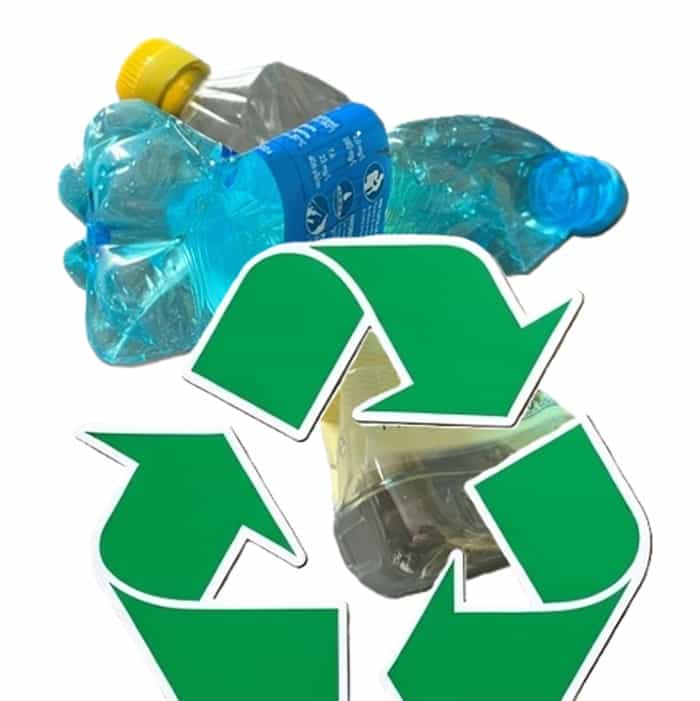
Polystyrene Recycling – Prime Waste Solutions Launches PET Bottle Recovery Program in the Philippines Prime Integrated Waste Solutions (PWS), a key player under Prime Infra, is stepping up its commitment to sustainability with a bold move to reduce plastic waste 12-06-2025 - Archive
Polystyrene Recycling
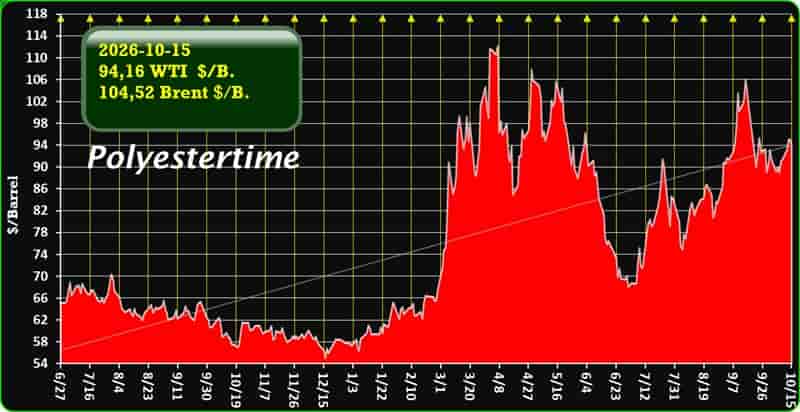
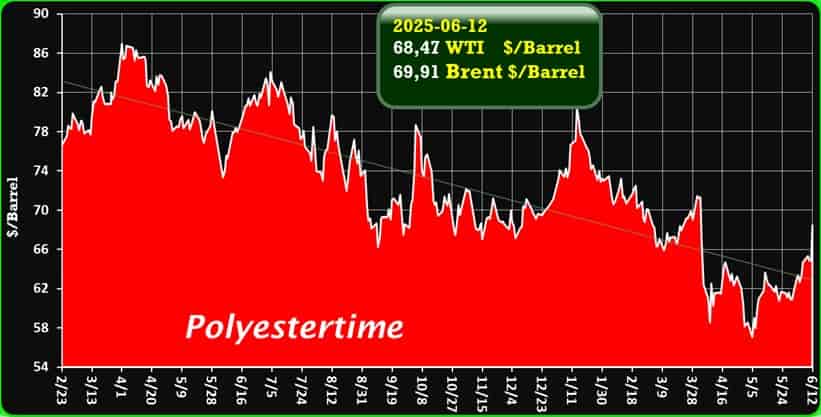
Crude Oil Prices Trend
Zeon Launches Plant-Based Research Facility for Sustainable Rubber Production
Zeon Corporation has taken a bold step toward sustainability by opening a cutting-edge research facility at Zeon Chemicals Yonezawa Co., Ltd. in Yamagata Prefecture. The primary goal? To develop plant-based production processes for synthetic rubber raw materials like butadiene and isoprene, moving closer to a circular economy.
Pioneering Bio-Based Innovation in Rubber Manufacturing
The new facility is strategically designed to accelerate the development of biotechnology solutions that enable the direct conversion of plant-derived substances into essential rubber components.
This innovation is vital in reducing dependency on fossil fuels and supports the production of eco-friendly synthetic rubber for global industries.
Aligning with Zeon’s STAGE30 Sustainability Goals
This initiative directly supports Zeon’s STAGE30 Medium-Term Business Plan, which prioritizes “transforming monozukuri (manufacturing craftsmanship)” to promote carbon neutrality and resource circularity. A key objective of the plan is to cut CO2 emissions across the Zeon Group by 42% by 2030, compared to 2020 levels.
By integrating chemical reaction processes with biofermentation technologies under one roof, Zeon is laying the groundwork for a fully circular and sustainable manufacturing model in the rubber industry. Polystyrene Recycling
Backed by National Green Innovation Efforts
This project is part of the Green Innovation Fund Projects by Japan’s New Energy and Industrial Technology Development Organization (NEDO). It falls under the theme: “Development of technology for production of butadiene and isoprene from plant-based and other sustainable materials.”
In partnership with The Yokohama Rubber Co., Ltd., this project is driven by collaboration across multiple research institutions including AIST, Tokyo Institute of Science, and RIKEN.
Research Facility Overview
- Location: 3-446-13 Hachimandaira, Yonezawa-shi, Yamagata 992-1128 (within Zeon Chemicals Yonezawa)
- Total Area: 590.34 m² (two stories)
- Completion Date: May 23, 2025
- Features: High-tech laboratories, local exhaust ventilation systems, office space, and meeting rooms Polystyrene Recycling
The facility has also been certified under the Yamagata Prefecture Business Location Promotion Subsidy Program and received partial construction funding from the prefectural government—highlighting local and national support for green innovation.
Looking Ahead: Commercialization by 2034
Through ongoing research at this new site, Zeon aims to commercialize plant-based biotechnology for producing butadiene and isoprene by 2034. Achieving this target will mark a major milestone in transforming the synthetic rubber supply chain and drastically reducing environmental impact.
Why This Matters
As industries around the globe strive to meet environmental targets, Zeon’s initiative is a beacon of progress in the chemical sector. By leveraging carbon recycling, plant-based materials, and advanced biotechnology, this facility exemplifies a commitment to a zero-emissions future by 2050. Polystyrene Recycling
Final Thoughts
Zeon’s new Yonezawa research facility is more than just a building—it’s a statement of intent. With powerful collaborations, strategic funding, and an ambitious R&D roadmap, Zeon is not only advancing rubber manufacturing but also setting a precedent for sustainable industrial practices worldwide.
Stay tuned for more updates on how biotechnology and circular economy principles are reshaping the materials of tomorrow.

Agilyx and GreenDot Partner to Boost Polystyrene Recycling Across Europe
Agilyx, a global leader in advanced chemical recycling, has signed a strategic memorandum of understanding with Germany-based DerGrünePunkt—better known as GreenDot. This partnership aims to enhance the collection and processing of waste polystyrene (PS) to enable its efficient transformation into new materials using Agilyx’s Styrenyx technology.
A Strategic Step Toward Closing the Loop
Under the new agreement, GreenDot will supply waste polystyrene to Agilyx’s Styrenyx facilities—the world’s first commercial-scale solution dedicated to the scalable recycling of polystyrene waste. Polystyrene Recycling
This collaboration promises to bridge a crucial gap in the circular economy by addressing one of the most problematic types of plastic waste.
Ranjeet Bhatia, CEO of Agilyx, highlighted the synergy between the two organizations:
“We are very pleased with this agreement and the synergy between GreenDot, an early mover in the European advanced recycling feedstock industry, and our Styrenyx plants… We are excited to take this important step to establish a cost-effective, stable, and long-term sourcing partnership with GreenDot.”
Converting Waste PS into Circular Value
The core goal of the initiative is to convert discarded polystyrene into styrene monomer, which can then be used as raw material for new plastic products. This not only diverts plastic waste from incineration or landfill but also supports EU-wide sustainability goals. Polystyrene Recycling
GreenDot brings vital assets to the table, including its management of more than 300,000 tons of lightweight packaging waste annually. As a cornerstone of Germany’s Extended Producer Responsibility (EPR) framework, GreenDot has unique access to large volumes of high-quality post-consumer plastic waste—an essential ingredient for success in advanced recycling.
Initial Rollout: 20,000 Tons of High-Quality Feedstock
The first phase of the partnership is expected to yield up to 20,000 tons of customised plastic feedstock per year. This material will be tailored for use within the European Economic Area (EEA), aligning closely with Agilyx’s regional strategy to scale sustainable recycling solutions across Europe. Polystyrene Recycling
Importantly, this feedstock will be specially formulated to support the production of high-quality recycled styrene, a key input for packaging manufacturers.
Supporting Brand Owners with Circular Solutions
In addition to building out a reliable recycling pipeline, the partnership also targets downstream value creation. Agilyx and GreenDot aim to make recycled styrene monomer available to brand owners served by GreenDot, enabling them to meet the EU’s Packaging and Packaging Waste Regulation (PPWR) targets for recycled content.
This strategic focus supports large consumer brands in closing the loop on their packaging materials, ensuring they not only comply with legislation but also fulfill sustainability pledges. Polystyrene Recycling
Laurent Auguste, CEO of DerGrünePunkt, emphasized the environmental potential of the collaboration:
“We have unique access to high volumes of waste plastic through our existing programmes, and the expertise and capacity to produce advanced recycling feedstock. Along with our rPE and rPP offerings, providing recycled polystyrene helps close the loop on packaging needs for our global brand clients.”
A New Chapter for Polystyrene Recycling in Europe
This agreement marks a critical milestone in the effort to scale advanced polystyrene recycling in Europe. By combining GreenDot’s access to high-quality plastic waste with Agilyx’s innovative recycling infrastructure, the partnership sets a new standard for closed-loop packaging systems.
As the EU continues to ramp up legislative pressure for higher recycling rates and sustainable packaging, initiatives like this represent powerful, market-driven solutions with real impact. Polystyrene Recycling
Stay Connected for Circular Economy Updates
Follow our blog for the latest developments in chemical recycling, packaging innovation, and sustainable plastics. Whether you’re a brand owner, recycler, or sustainability advocate, we keep you informed on the partnerships shaping a waste-free future.

Braskem Exits Upsyde: Strategic Shift Away from European Plastic Recycling JV
Braskem, one of the world’s leading petrochemical companies, has officially withdrawn from Upsyde, a joint venture established in the Netherlands with Terra Circular. The move marks a significant shift in Braskem’s international strategy, as the company sharpens its focus on core operations amidst industry-wide turbulence.
A Joint Venture Born from the Circular Economy Vision
Founded just two years ago, Upsyde emerged as a promising initiative aimed at valorizing hard-to-recycle post-consumer plastic waste. By transforming this waste into valuable finished goods such as pallets, industrial flooring, and road slabs, Upsyde quickly gained attention as a practical application of the circular economy in the logistics and infrastructure sectors. Polystyrene Recycling
The initiative initially operated under the name ER Plastics before rebranding as Upsyde when Braskem officially joined as a co-founder alongside Terra Circular. With an annual production capacity exceeding 20,000 tonnes, Upsyde was seen as a beacon of innovation in mechanical recycling.
Why Braskem Walked Away: Refocusing on Core Business
Braskem’s decision to leave the partnership stems from a broader realignment of its strategic priorities. In an official statement, the company explained:
“Given the challenging environment for the petrochemical industry and a prolonged negative cycle – aggravated by high energy costs and reduced economic activity in Europe – Braskem is reallocating all resources to its core business: chemicals and plastics.” Polystyrene Recycling
This move aligns with Braskem’s larger effort to streamline global operations and double down on markets and segments where the company enjoys competitive advantages. Europe’s difficult economic conditions have made localized recycling ventures less attractive, pushing Braskem to reconsider its global sustainability portfolio.
Sustainability Commitment Still Strong: Spotlight on Biopolymers
Despite stepping away from Upsyde, Braskem emphasized that its commitment to sustainability remains intact. The company is redirecting its green focus towards bioplastics and renewable materials with stronger growth potential:
“We remain committed to our sustainability agenda – as demonstrated by recent investments in biopolymers, with the expansion of production capacity in Brazil and the construction of a new plant in Thailand.” Polystyrene Recycling
Rather than diluting efforts across many small-scale ventures, Braskem is betting on global-scale projects in the bioeconomy sector where it sees more strategic and economic upside.
What Lies Ahead for Upsyde?
With Braskem out, questions loom over Upsyde’s future. Will Terra Circular continue operations solo, or will a new partner step in?
Thanks to its operational infrastructure and proprietary know-how, Upsyde still has a solid foundation for future growth. However, sustained innovation and strategic support will be essential if the company is to remain competitive amid rising costs and tightening margins in Europe’s recycling market. Polystyrene Recycling
Europe continues to face a paradox: while demand for sustainable plastic solutions remains high, unfavorable economic conditions and policy gaps make it harder for such projects to thrive without stable financial backing or industrial partnerships.
Global Lessons from a Strategic Exit
Braskem’s departure from Upsyde is not a retreat from sustainability, but rather a realignment of priorities that reflects current macroeconomic pressures. As multinationals reassess where to invest their sustainability capital, we may see more decisions like this – concentrating efforts where environmental impact aligns with profitability.
For Europe, the message is clear: if the continent wants to be a magnet for green investment, it needs to provide robust support mechanisms, including incentives, stable policies, and resilient value chains. Polystyrene Recycling
Stay Informed on the Future of Plastics and Circular Economy
Follow our blog for regular insights on advanced recycling technologies, sustainable materials, and green innovation from across the globe. Stay ahead of the curve as the plastics industry evolves in response to global challenges and new opportunities.

Prime Waste Solutions Launches PET Bottle Recovery Program in the Philippines
Prime Integrated Waste Solutions (PWS), a key player under Prime Infra, is stepping up its commitment to sustainability with a bold move to reduce plastic waste. The company recently completed the first major milestone of its PET bottle recovery initiative at its Cebu materials recovery facility (MRF).
With the successful delivery of 6.2 tonnes of baled PET bottles to PETValue Philippines Corp.—the country’s largest bottle-to-bottle recycling facility—PWS has set the tone for a cleaner and more circular future. Polystyrene Recycling
A Strategic Shift Toward Plastic Circularity
This initial shipment is only the beginning. PWS plans to ramp up volumes in the coming months, not only in Cebu but also by replicating the recovery model at its Pampanga facility. The goal? To create a nationwide impact on plastic waste diversion and recovery.
“Resource recovery is a key pillar in our sustainable waste management strategy,” said Cara Peralta, Market Sector Lead for Waste at Prime Infra. “By efficiently reclaiming PET bottles, we not only reduce waste but also create measurable environmental value that supports our broader sustainability goals.”
PETValue: The Engine Behind Recycling Transformation
The recovered PET bottles are sent to PETValue Philippines, a cutting-edge facility established through a joint venture between Coca-Cola Beverages Philippines, Inc. and Indorama Ventures. As the country’s top-tier bottle-to-bottle recycling plant, PETValue is equipped with state-of-the-art technology that ensures PET bottles are safely and efficiently transformed into new, food-grade containers. Polystyrene Recycling
Turning Waste Into Value With Plastic Credits
Beyond collection and diversion, PWS is enabling businesses to go a step further in their sustainability journey. Through its verified plastic credits program, companies can offset their plastic footprint in a traceable and transparent way. This system rewards organizations that fund or participate in recovery efforts with credits that can be used to report plastic waste mitigation.
This strategy not only helps reduce landfilled waste but also allows companies to actively demonstrate their environmental responsibility. “Whether through diverting plastic bottles from the waste stream or enabling plastic credit offsets, our focus remains the same: maximising the value of recovered materials and helping our partners meet their sustainability goals,” added Peralta. Polystyrene Recycling
Leading by Example in Sustainable Waste Management
Prime Waste Solutions’ model showcases how private-sector innovation can directly contribute to national and global environmental objectives. Their PET bottle recovery program is a tangible step toward a circular economy—one where waste is viewed not as an end product, but as a valuable resource to be reintegrated into production cycles.
By coupling robust collection infrastructure with scalable recovery initiatives and economic incentives like plastic credits, PWS is not just reducing plastic waste—it is setting a new standard for responsible waste management in the Philippines.
A Call for Broader Participation
As the program scales, Prime Infra is inviting more local governments, corporations, and community stakeholders to join the movement. With strategic collaboration, the PET bottle recovery initiative can grow into a national model for circular waste solutions that protect ecosystems while supporting economic growth. Polystyrene Recycling
With every PET bottle collected and recycled, PWS moves closer to a vision of a cleaner, greener Philippines—one where sustainability is not just a promise but a practice.
For updates on Prime Waste Solutions’ recovery programs and other sustainability efforts, follow their official channels or visit the Prime Infra website.

Erema Unveils Two Game-Changing Recycling Technologies at K2025
At the upcoming K2025 trade show in Düsseldorf, Erema is set to make a significant impact under the banner “Edvanced Recycling”. The Austrian specialist in plastic recycling machinery will debut two world premieres designed to tackle complex waste streams and enable efficient reuse, including challenging multilayer films and contaminated post-consumer waste.
TwinPro: Revolutionizing Multilayer Film Recycling
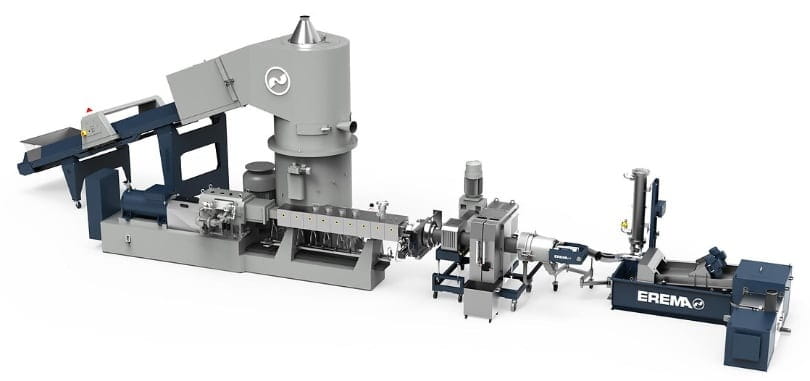
One of the most anticipated innovations is the TwinPro system. This advanced solution combines a high-performance twin-screw extruder with a Preconditioning Unit (PCU) for single-step processing of low-density, multilayer films. These include difficult combinations like PE-PA and PE-EVOH, commonly found in food packaging. Polystyrene Recycling
The TwinPro begins with the PCU, which simultaneously grinds, heats, dries, compacts, and stabilizes the input material. Erema’s proprietary Counter Current technology ensures that the extruder receives a continuous feed of optimally prepared material. Positioned tangentially to the PCU, the twin-screw extruder then homogenizes the diverse polymers into a consistent melt, ready for granulation.
This method not only enhances the quality of recycled pellets but also expands recycling possibilities for thin-walled post-consumer containers — a segment that traditionally poses processing challenges.
Agglorema: Prepping Waste for Chemical and Mechanical Recycling
The second innovation, Agglorema, focuses on preprocessing highly contaminated waste streams for both chemical and mechanical recycling. It simplifies the workflow by eliminating the need for preliminary drying while still delivering high-quality output.
This robust and energy-efficient system handles materials with moisture contents of up to 12% and apparent densities as low as 30 kg/m³.
It achieves this through a blend of the PCU and the Counter Current system, along with a specially engineered extruder screw. Polystyrene Recycling
The outcome? High-density agglomerates that feed smoothly into extrusion processes, reducing energy costs and increasing throughput for challenging input materials.
More Tech Highlights at K2025
In addition to the headline innovations, Erema will also showcase:
- A more compact version of the Intarema TVEplus 2021 recycling line
- A collaborative demo with Lindner Washtech, showcasing the integration between washing systems and extrusion units
Live recycling demonstrations will take place in the outdoor section of the exhibition, where visitors can witness the transformation of various plastic waste streams into recycled products at the Edvanced Recycling Centre.
A Vision for Sustainable Circular Economy
“The technologies used in plastic recycling have evolved rapidly. We’ve reached key milestones and continue to drive innovation,” said Manfred Hackl, CEO of Erema. “At K2025, we’ll present new solutions designed to keep more plastic in circulation and reduce environmental impact.” Polystyrene Recycling
Smart Recycling: AI-Driven Monitoring and Digitalization
Alongside mechanical innovations, Erema is also pushing digital frontiers. The new PredictOn suite leverages AI to analyze operational data and provide real-time insights into critical machine components.
A standout feature will be a new Condition Monitoring system for the plasticizing unit, designed to alert users to anomalies before they lead to downtime or product quality issues.
These digital tools will be demonstrated on an Intarema TVEplus DuaFil Compact line featuring the latest intelligent assistant systems. All monitoring data will be accessible through BluPort, Erema’s online platform, giving attendees a hands-on view at both the indoor booth and the outdoor Edvanced Recycling Centre.
Conclusion: Erema Leads the Way into the Future of Recycling
With TwinPro and Agglorema, Erema cements its role as a leader in advanced plastic recycling technology. These solutions promise higher efficiency, broader application, and smarter integration for processors looking to stay ahead in a circular economy. Combined with AI-powered monitoring and a vision for real-time digital insights, Erema’s showcase at K2025 sets a new benchmark for innovation in plastic waste management.
Stay tuned to our blog for full coverage of K2025 and other sustainability tech breakthroughs.
Germany’s Industrial Production Slips by 1.4% in April 2025
Germany’s industrial sector hit a bump in April 2025, as price-, seasonal-, and calendar-adjusted production declined by 1.4% month-over-month (MoM), according to provisional data from the Federal Statistical Office (Destatis).
This dip marks a reversal from the momentum seen earlier in the year, adding fresh concerns about the resilience of Europe’s largest economy amid global economic headwinds and domestic industry challenges.
Year-on-Year Drop Signals Deeper Trends
Compared to April 2024, industrial production fell 1.8% year-over-year (YoY) after adjustments for calendar effects. This reflects a sustained downturn, particularly in sectors heavily reliant on energy and global supply chains.
Even with these declines, a broader three-month comparison offers a slightly more optimistic view. From February to April 2025, production was 0.5% higher than in the preceding three-month period—suggesting some degree of quarterly stability despite monthly volatility. Polystyrene Recycling
Breakdown by Sector: Capital Goods Take a Hit
Zooming in on April’s performance, the downturn was felt across nearly every major industrial category:
- Capital goods production: down 2.3% MoM
- Intermediate goods: declined 1.9% MoM
- Consumer goods: fell by 1.5% MoM
- Energy production: decreased by 1.6% MoM
These figures suggest that both demand-driven and supply-driven forces are exerting pressure across the board.
Capital goods—key indicators of long-term business investment—saw the sharpest monthly fall, underscoring concerns about future industrial growth. Polystyrene Recycling
Energy-Intensive Industries Under Pressure
Germany’s energy-intensive sectors—such as chemicals, metals, and paper—continued to experience outsized declines. Production in these sectors was down:
- 2.1% MoM
- 2.7% YoY
These results highlight the lasting impact of elevated energy prices and structural changes in Europe’s energy policy landscape. However, a sliver of optimism emerges from the quarterly data: output in energy-intensive industries was 0.8% higher YoY from February to April 2025, indicating potential for medium-term stabilization.
Revisions from March: A Slight Correction
Destatis also revised March 2025’s previously reported production figures. Instead of the initially estimated 3% MoM increase, the adjusted figure now stands at a 2.3% rise. While still a robust gain, this correction reduces the perceived strength of last month’s rebound and emphasizes the current fragility in industrial dynamics. Polystyrene Recycling
Construction and Energy Excluded Data
When excluding construction and energy sectors, industrial output was down 1.9% MoM and 2.5% YoY. This points to a broader, non-energy-specific contraction within Germany’s industrial core.
Key Takeaways for Stakeholders
- Short-term volatility is evident across multiple industrial segments.
- Capital goods are underperforming—suggesting weak business investment outlooks.
- Energy-intensive sectors remain vulnerable but show quarterly improvement.
- Quarter-on-quarter growth remains slightly positive, giving reason for cautious optimism.
For policymakers, businesses, and investors alike, April’s figures serve as both a warning and a guidepost. They highlight the urgent need for strategic industrial policies, targeted energy transition support, and measures to boost capital investment—especially in the face of volatile global economic conditions. Polystyrene Recycling
As Germany’s industrial sector continues to navigate complex transitions in supply chains, energy strategy, and digital transformation, stakeholders will be watching May and June’s data closely to determine whether April was an anomaly—or part of a larger trend.