Harsh Oil Market Realities Reveal 7 Reasons Russian Oil Cannot Calm Iran Conflict Supply Panic
The global oil market is once again under pressure as geopolitical tensions reshape energy flows
Recent developments suggest that Russian oil supply could reenter international markets faster than expected, raising hopes that it might ease the supply panic triggered by the Iran conflict. However, a closer look at the numbers shows that the impact of returning Russian oil supply is far smaller than many assume.
While the United States has temporarily allowed certain Russian oil shipments to proceed, the scale of the crisis affecting global oil supply remains far greater than the additional barrels entering circulation.
Understanding the Limits of Russian Oil Supply
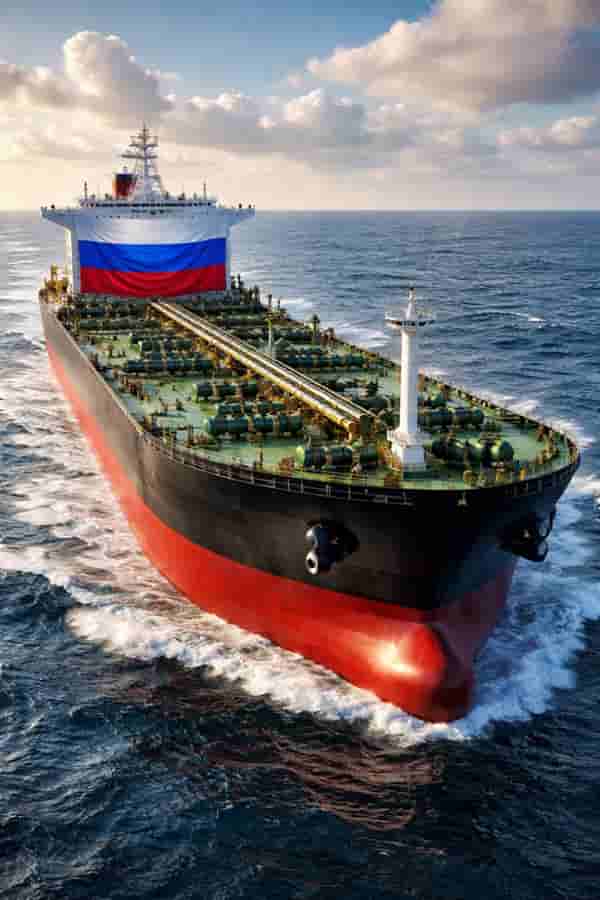
The temporary policy shift allows Russian oil that has already been loaded onto tankers at sea to be delivered and sold. This measure could release between 120 million and 130 million barrels into global markets.
At first glance, this appears to be a significant volume. Yet in the context of global oil consumption, the figure is modest. The world consumes roughly 100 million barrels of oil per day, meaning the newly accessible Russian oil supply represents little more than a single day of global demand.
This reality highlights a critical point: the move does not fundamentally change the global oil supply balance. Instead, it offers only a short-term buffer while larger geopolitical disruptions continue to dominate market sentiment.
Speed Is the Only Real Advantage
Despite its limited scale, Russian oil supply carries one important advantage: speed.
Many of the barrels now authorized for sale are already on tankers navigating global shipping routes. Once regulatory restrictions are lifted, these shipments can reach refineries within days or weeks rather than months.
This makes the Russian oil supply a rare source of immediate physical barrels in a market where logistics and shipping constraints often delay relief.
However, rapid delivery alone cannot compensate for the massive disruption occurring in one of the world’s most critical energy corridors.
The Strait of Hormuz Shock
The true driver of the current oil market turmoil is the shutdown of the Strait of Hormuz. This narrow waterway is one of the most important oil transit routes on the planet.
Roughly 20 million barrels of crude oil pass through the strait every day under normal conditions. That represents nearly one-fifth of global oil consumption.
With the passageway effectively closed due to escalating conflict in the region, the impact on global oil supply is enormous. Even if Russian oil supply enters the market quickly, it cannot replace the scale of oil normally transported through this strategic chokepoint.
The closure has effectively frozen new shipments leaving the Persian Gulf, disrupting supply chains that feed refineries across Asia and Europe.
Supply Pipelines Are Running Dry
Energy analysts warn that the global supply pipeline is rapidly thinning. Tankers that departed the Gulf before the closure are still reaching their destinations, but new shipments have largely stopped.
This creates a delayed shock in physical oil markets. As existing shipments arrive and are consumed, the absence of replacement cargoes becomes increasingly visible.
Some projections suggest Asia could feel the full effect of the supply disruption within days, while Europe may experience tightening supply conditions shortly afterward.
The gradual exhaustion of these shipments means the Russian oil supply entering the market acts only as a temporary cushion rather than a solution.
Production Cuts Are Expanding
Another major concern is the effect of halted shipping on regional oil production. When exports slow or stop, producers quickly run out of storage capacity.
Without sufficient storage, oil fields must reduce output.
Recent estimates suggest production cuts in the Middle East have already reached around 6.5 million barrels per day. Analysts believe that figure could climb toward 12 million barrels per day if shipping disruptions persist.
This production decline dramatically outweighs the additional Russian oil supply that might enter the market through temporary sanctions relief.
Strategic Reserves Enter the Equation
To stabilize markets, policymakers are turning to emergency oil reserves.
The International Energy Agency has announced a massive release of 400 million barrels from strategic stockpiles. The United States alone plans to contribute more than 170 million barrels from its Strategic Petroleum Reserve.
These emergency releases are designed to stabilize physical markets and slow price increases.
However, even this unprecedented drawdown illustrates how severe the disruption has become. Governments rarely deploy reserves at this scale unless markets face genuine supply emergencies.
Russian oil supply therefore represents only one piece of a much larger stabilization effort.
Markets Are Driven by Missing Barrels
The current oil market is not being shaped by new supplies entering circulation. Instead, it is being defined by the barrels that are missing.
As long as the Strait of Hormuz remains closed, the global energy system faces a structural shortage. Shipping routes cannot easily be replaced, and alternative pipelines cannot compensate for such a large disruption.
This means that even if Russian oil supply temporarily increases available barrels, it cannot remove the underlying fear that continues to push prices higher.
Energy traders understand that geopolitical risk remains the dominant factor.
Why Russian Oil Supply Cannot Solve the Crisis
The math behind the oil market crisis is straightforward.
A potential release of roughly 120 to 130 million barrels of Russian oil supply may help soften short-term price spikes. But compared with the millions of barrels per day lost due to disrupted Gulf exports, the impact remains limited.
The real solution lies not in temporary supply adjustments but in restoring normal shipping flows through the Persian Gulf.
Until that happens, global oil markets will remain volatile, with Russian oil supply offering only partial and temporary relief from a far larger geopolitical shock.
IEA Shock Decision: 400 Million Barrels Released as Global Oil Crisis Deepens
More…