Advanced composite materials – Hyundai Motor Group and Toray Sign Ground-Breaking Joint Development Deal to Transform Future Mobility with Advanced Composite Materials and Solutions 31-10-2025
Advanced composite materials – Introduction
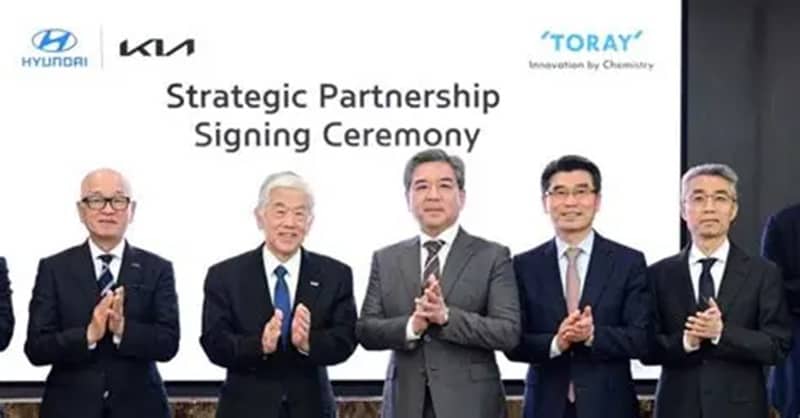
In an important move for the automotive and materials technology industries, Hyundai Motor Group (HMG) and Toray Industries, Inc. (Toray) have signed a Strategic Joint Development Agreement to co-develop advanced composite materials and components. This new agreement marks a pivotal step toward redefining future mobility through high-performance composite solutions. Hyundai+1
The Partnership and Its Scope
On October 24 at Hyundai Motor Group’s headquarters in Seoul, HMG and Toray sealed the deal with key representatives present, including Heung-soo Kim of Hyundai and Miki Terada of Toray. engineerlive.com+1
The collaboration builds on a prior strategic cooperation agreement from April 2024 and now shifts into full-scale joint development mode. La Stampa+1
The focus is clear: developing next-generation composite materials — particularly carbon fibre-reinforced plastic (CFRP) — and using them across a broad spectrum of mobility platforms, including high-performance vehicles and special-purpose mobility like lunar rovers and robotics. Advanced composite materials
Why Advanced Composite Materials Matter
Advanced composite materials, such as CFRP, play a critical role in mobility by offering high strength-to-weight ratios, improved durability and safety benefits.
In this partnership, by leveraging Toray’s material technology and HMG’s vehicle-design and performance-validation capabilities, the goal is to elevate both safety and performance in future mobility solutions. Advanced composite materials
Roles and Responsibilities
Hyundai Motor Group
Hyundai will lead the vehicle-level design, suitability assessments and performance evaluations of the advanced materials and components. Their Materials Research & Engineering Center will validate new body-material solutions across real-world mobility needs. Hyundai+1
Toray Industries
Toray will contribute with its unique carbon-fibre technologies and will develop intermediate materials and moulded composite products via its global subsidiaries — including Toray Advanced Materials Korea, Toray Advanced Composites in the Netherlands and Euro Advanced Carbon Fiber Composites in Germany. Hyundai+1
Strategic Impact and Future Mobility
This agreement signals a clear strategic push by Hyundai and Toray into the future mobility landscape. They aim not only to equip high-performance road vehicles but also to expand into special-purpose mobility systems — such as lunar exploration rovers and robotics — where weight, strength and reliability are paramount. engineerlive.com+1
By collaborating across the entire value chain — from research and development through production and commercialisation — the partners plan to set new industry standards for high-performance composite material solutions. Hyundai
What This Means for the Industry
The collaboration is significant for several reasons:
-
It demonstrates how automotive manufacturers and specialised materials companies are joining forces to tackle the next phase of mobility innovation.
-
It underlines the growing importance of advanced composites in achieving lighter, safer and more efficient mobility systems.
-
It pushes the boundary beyond conventional vehicles into new mobility domains, including space and robotics.
-
It positions Hyundai and Toray as front-runners in the development of composite solutions that meet increasingly stringent global performance and sustainability demands.
Conclusion
The partnership between Hyundai Motor Group and Toray Industries marks a major milestone in advancing mobility through materials innovation. By combining vehicle-design know-how with world-class composite technology, the collaboration is poised to deliver innovative composite solutions that will shape the future of mobility — on the road, off the road and beyond.
As the agreement progresses from R&D into production and commercialisation, the industry will closely watch how these developments translate into real-world mobility applications and performance gains.