“Be-UP Project: Revolutionary Breakthrough in Renewable Polymers Transforming Europe’s Biodegradable Packaging with Innovative, Eco-Friendly Solutions for a Cleaner, Sustainable, and Profitable Future in Green Materials” 11-10-2025
Be-UP Project
Introduction: A Sustainable Shift in Packaging
The Be-UP project has officially launched as a major European initiative aimed at developing renewable polymers for biodegradable packaging. Funded by €8.5 million from the Horizon Europe programme, this project represents a significant step toward creating sustainable, circular solutions for packaging across Europe.
By combining advanced material science with industrial processing expertise, the Be-UP project seeks to design high-performance polymers that are both eco-friendly and scalable for commercial use.
A Pan-European Collaboration
The Be-UP project is coordinated by ITENE (Spain) and unites a consortium of 17 public and private organizations from nine European countries. Among them, the University of Trieste (UniTS) stands as the only Italian university involved, highlighting Italy’s key role in renewable polymer research.
Industry partners include Novamont, Particula, Hybrid Catalysis, Isotech, Aptar Group, Imerys, Innotech (Grupo Lantero), and research laboratories such as Polinivo, Normec, Cebimat, FTPO, and IDENER.
Support organizations, including European Bioplastics and the Polymeris competitiveness cluster, ensure that the project’s results reach the wider industrial and scientific community. The Spanish Association for Standardization (UNE) will aid in translating project findings into practical standards.
Advanced Digital Modelling for Biodegradable Polymers
A cornerstone of the Be-UP project is its use of digital modelling to simulate and optimize polymer properties. By combining biocatalysts with sustainable additives, researchers aim to achieve a unique balance of mechanical strength, biodegradability, and sustainability.
Advanced multi-object digital modelling tools allow the project team to virtually test polymers under different conditions, predicting performance before industrial-scale production. This approach reduces waste, accelerates research, and ensures that new materials meet rigorous environmental and technical standards.
The Role of the University of Trieste
The Department of Chemical and Pharmaceutical Sciences at UniTS contributes significant expertise to the Be-UP project. Its multidisciplinary team integrates biocatalysis, computational chemistry, and spectroscopy to explore new bio-based polymers.
The research effort is supported by a four-year grant of approximately €330,000, which has funded both a research contract and a doctoral scholarship. This investment underlines the importance of nurturing the next generation of scientists focused on sustainable materials.
Innovations in Bio-Based Materials
UniTS researchers have developed innovative bio-based polyesters through enzymatic synthesis, a method that reduces reliance on fossil fuels and minimizes environmental impact.
Collaboration with Professor Monia Renzi’s ecology group in the Department of Life Sciences has enabled rapid testing of ecotoxicity and marine biodegradability, providing critical insights into how these polymers interact with natural ecosystems.
These studies highlight the value of multidisciplinary collaboration in addressing complex environmental challenges and have paved the way for UniTS’s involvement in the Be-UP project.
Supporting European Research Initiatives
The research foundation for the Be-UP project was strengthened by several prestigious funding sources, including Marie Skłodowska-Curie grants (RenEcoPol and InterFACES) and the PNRR – NextGenerationEU programme.
Within this framework, UniTS contributes to the ICSC – National Research Centre in High Performance Computing, Big Data, and Quantum Computing (Spoke 7). This computational infrastructure enables precise simulations, predictive modeling, and efficient data analysis for polymer design.
Testing Biodegradability in Real-Life Scenarios
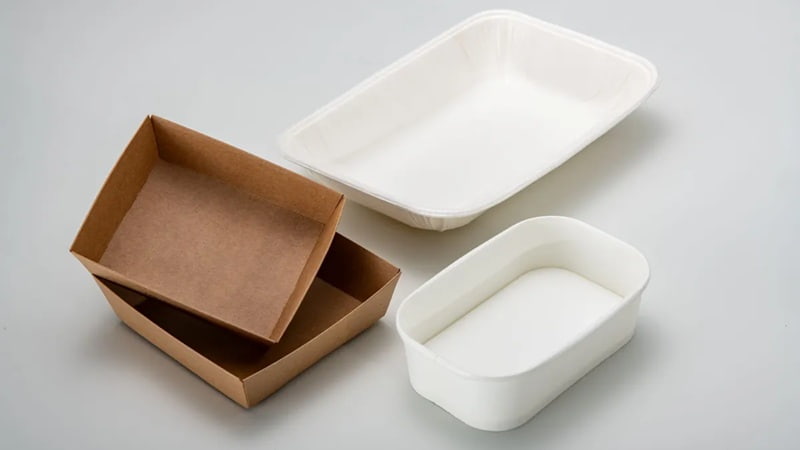
A key objective of the Be-UP project is to create packaging prototypes with a Technology Readiness Level (TRL7), demonstrating industrial viability.
These prototypes will undergo rigorous testing under varied end-of-life scenarios, including natural environmental conditions and controlled composting settings. Additionally, the UniTS team will develop computational models that link polymer structure to marine biodegradability, providing predictive insights for future material design.
Enhancing European Circular Economy Strategies
The Be-UP project not only advances scientific research but also contributes to European regulatory frameworks. By generating evidence-based data, the project supports policies such as:
-
EU Plastics Strategy
-
Single-Use Plastics Directive
-
Circular Economy Action Plan
-
Packaging and Waste Regulation
These contributions strengthen industrial competitiveness, encourage sustainable production practices, and accelerate the transition to a circular bioeconomy.
Advantages of Bio-Based Polymers
The shift to bio-based materials offers multiple benefits over traditional plastics:
-
Lower carbon footprint
-
Enhanced biodegradability in natural environments
-
Reduced reliance on fossil fuels
-
Potential for recycling and upcycling
Within the Be-UP project, these polymers are designed to be strong, flexible, and fully biodegradable, meeting both industrial performance requirements and environmental standards.
Enzymatic Polymerization: A Greener Approach
One of the Be-UP project’s innovative methods is enzymatic polymerization, which uses enzymes as catalysts instead of harsh chemicals.
This approach enables precise control of molecular structure while reducing energy consumption and toxic by-products. By applying biotechnological methods, researchers can create high-performance polymers that align with circular economy goals.
Digital Twins for Performance Optimization
The Be-UP project leverages digital twin technology to create virtual replicas of polymers and production processes. These models allow the team to simulate mechanical performance, biodegradability, and processing efficiency before physical trials.
By combining machine learning with computational chemistry, the project accelerates material innovation while minimizing environmental impact and resource use.
Industrial Scale Validation
A primary goal of the Be-UP project is ensuring that lab-based innovations are ready for industrial production. Key manufacturing partners such as Novamont, Imerys, and Aptar Group will test extrusion, injection molding, and thermoforming processes using new bio-based polymers.
These trials confirm that biodegradable packaging can match conventional plastic performance while remaining environmentally sustainable, enabling broader market adoption.
Building a Circular Bioeconomy
The Be-UP project is integral to Europe’s circular bioeconomy, designing materials that reenter natural cycles after use. By optimizing biodegradability, recyclability, and performance, the project supports waste reduction, resource efficiency, and sustainable growth.
Through these innovations, Europe moves closer to a model where renewable materials replace fossil-based plastics, combining environmental benefits with economic opportunities.
Knowledge Sharing and Education
The Be-UP project emphasizes knowledge dissemination through open access publications, workshops, and training programs. Collaborations with European Bioplastics and Polymeris ensure that research results reach academic, industrial, and policy-making communities.
These efforts foster capacity building in bio-based material science, preparing future experts to continue innovation in sustainable polymers.
Conclusion: A Sustainable Path Forward
The Be-UP project represents a critical step toward sustainable packaging solutions in Europe. By developing renewable, bio-based polymers that are both functional and biodegradable, the initiative bridges the gap between research and industrial application.
Through multidisciplinary collaboration, digital modeling, and industrial validation, the project not only advances scientific knowledge but also supports European strategies for a circular economy.
With evidence-based innovation, the Be-UP project exemplifies how science, industry, and policy can work together to reduce environmental impact and create a sustainable future.
Key Takeaways
-
The Be-UP project is a Horizon Europe initiative funded with €8.5 million to develop renewable polymers for biodegradable packaging.
-
The consortium includes 17 organizations from nine countries, coordinated by ITENE, with UniTS as the sole Italian university.
-
Advanced digital modeling and biocatalysis are central to optimizing material performance and sustainability.
-
By 2029, TRL7 packaging prototypes will validate the project’s materials in real-life scenarios.
-
The project contributes to EU sustainability policies, promoting the circular economy and reducing plastic pollution.
-
More…
- Bio-based product – “Braskem’s Groundbreaking Bio-Based Product Innovations Inspire Global Optimism and Challenge Plastic Waste at K 2025 with Powerful Green Solutions”