Bio-based materials – An exciting advancement is the development of polyethylene furanoate (PEF), made from a sugar-derived compound known as FDCA. PEF not only rivals the commonly used PET plastic but also outperforms it in strength, barrier protection, and recyclability—making it a strong contender for sportswear, outerwear, and sustainable packaging 16-06-2025 - Archive
Bio-based materials
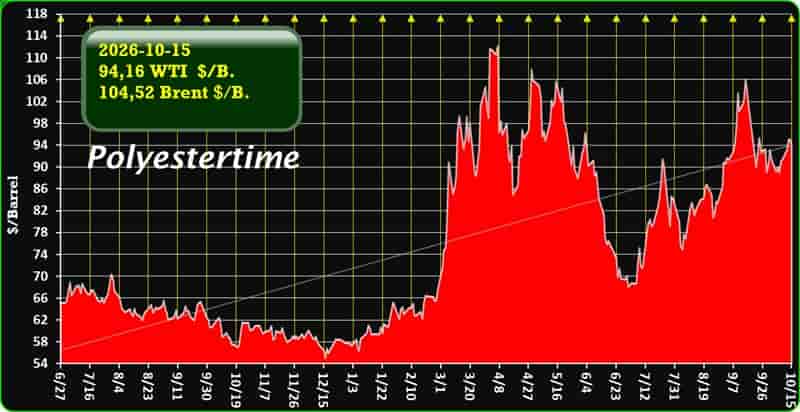
Crude Oil Prices Trend

Engineering plastics – Combining Strengths: LATI’s Innovation + Loxim’s Reach The partnership is built on a strong foundation of shared values — innovation, sustainability, work ethic, and a people-first approach

Is Sugar the New Black for Sustainable Fashion?
Sustainability has moved from trend to necessity in the fashion world. With growing environmental concerns, shifting consumer values, and tightening regulations, the industry is urgently seeking greener alternatives to traditional, resource-heavy materials. Conventional textiles, often derived from petroleum and requiring vast water and energy inputs, are no longer tenable in a world grappling with climate change and pollution.
In this context, sugar-based textiles—crafted from crops like sugarcane and corn—are emerging as promising game-changers. These materials offer a renewable, biodegradable substitute for synthetic fibres such as polyester. By replacing fossil fuel-based ingredients with plant-based sources, sugar-derived fibres can significantly reduce carbon emissions, waste, and dependence on non-renewables. Bio-based materials
The Science Behind Sugar Textiles
Sugarcane and corn are rich in carbohydrates, which makes them ideal raw materials for biofabrication. Their sugars are extracted, fermented into bioethanol, and then transformed into lactic acid. This lactic acid is polymerized into polylactic acid (PLA), a biopolymer that can be spun into fabric. Unlike traditional polyester, which may take centuries to degrade, PLA breaks down under industrial composting within months, easing the burden on landfills.
An exciting advancement is the development of polyethylene furanoate (PEF), made from a sugar-derived compound known as FDCA. PEF not only rivals the commonly used PET plastic but also outperforms it in strength, barrier protection, and recyclability—making it a strong contender for sportswear, outerwear, and sustainable packaging. Bio-based materials
Performance Meets Planet-Friendly
Beyond environmental perks, sugar-based fibres also offer practical advantages. They can be engineered to be lightweight, breathable, moisture-wicking, and even mimic the softness of silk. This makes them suitable for a wide range of applications—from affordable basics to high-performance activewear and luxury apparel. Their versatility aligns perfectly with the growing push for circular fashion: a system where materials are reused, recycled, or returned safely to the earth.
The Road Ahead
Despite these promising developments, challenges remain. Sugar-based fabrics can be more expensive to produce and may compete with food crops for land. Their long-term durability and compatibility with existing textile manufacturing also require continued refinement. However, ongoing research and innovation are rapidly addressing these barriers.
With improvements in fibre blending, dyeing techniques, and cost efficiency, sugar-derived materials are steadily moving toward commercial viability. As the industry seeks scalable, low-impact solutions, sugar-based textiles may soon become a mainstream staple—fueling a more sustainable and stylish future. Bio-based materials

Southeast Asia: Driving Global Supply Chains Through Plastics and Innovation
Southeast Asia is emerging as a powerhouse in global manufacturing, particularly within the plastics industry. With rising demand, ongoing trade shifts, and increasing innovation, the region is strategically positioning itself as a resilient and forward-looking hub for key sectors like automotive, electric vehicles (EVs), and bio-based materials.
At the heart of this transformation lies Southeast Asia’s robust plastics industry. Amid the backdrop of trade tensions—especially between the U.S. and China—ASEAN nations are drawing attention from global manufacturers eager to diversify their supply chains. The region’s dynamic industrial ecosystem, which includes automotive components, medical devices, packaging, and chemical manufacturing, makes it a compelling choice for international investment. Bio-based materials
According to data from Mordor Intelligence, plastics turnover in Southeast Asia is expected to grow significantly—from 32 million tonnes in 2025 to nearly 39 million tonnes by 2030. This growth is fueled by rapid urbanization, rising consumer demand, and the region’s deepening role in global logistics. As consumption scales up, so too does the need for sustainable and innovative plastic solutions across multiple industries.
Electric Vehicles Sparking Industrial Growth
Electric vehicles are accelerating industrial evolution in ASEAN, with countries ramping up production and investing in the necessary infrastructure. Known for their relatively low per capita CO₂ emissions, Southeast Asian nations are leveraging this green advantage to establish EV-related value chains. Bio-based materials
Thailand, often called the “Detroit of Asia,” leads the pack by offering strong incentives like tax breaks to lure major manufacturers—including Chinese giant BYD. Malaysia is making headlines with the launch of its first homegrown electric vehicle, the e-Mas, developed through a partnership between Proton and Geely. Meanwhile, Indonesia is capitalizing on its global dominance in nickel mining, a critical component of EV batteries, by launching a $1 billion battery plant that boosts its competitiveness in this fast-growing field.
Plastics Fueling the EV Ecosystem
These EV developments are creating new demand for plastics in vehicle components, insulation, and battery casings. As the region’s EV footprint expands, so too does its need for advanced plastic materials that are lightweight, durable, and adaptable.
Challenges and Investment Needs Bio-based materials
Despite the progress, the industry faces challenges. These include high battery costs, a shortage of skilled labor, limitations in power grid capacity, and the lack of consistent charging standards. The US-ASEAN Business Council stresses that foreign direct investment will be crucial in overcoming these barriers and scaling operations efficiently.
Southeast Asia is not just manufacturing plastics—it’s redefining its future through innovation, strategic partnerships, and sustainable industrial growth.

Tackling Fashion Waste: Korea’s Five-Year Plan for Clothing Recycling
As the global fast fashion industry drives an explosion in clothing waste, the South Korean Ministry of Environment is taking decisive steps to build a comprehensive recycling system. A five-year improvement plan is now underway, aimed at curbing greenhouse gas emissions caused by the incineration of unused or discarded clothing.
Currently, waste clothing falls into a regulatory blind spot. It is not subject to disposal charges or included in the Producer Responsibility Recycling (EPR) system, leaving significant gaps in oversight.
To address this, the Ministry has commissioned research to map out the state of clothing waste and propose long-term systemic reforms. Bio-based materials
The initiative involves a comparative analysis of domestic and international recycling practices. It includes estimating the volume of clothing waste generated within Korea, assessing the technologies available for recycling, and studying global regulatory trends. This analysis will form the foundation of a national strategy extending to 2030.
A major concern is the growing environmental toll of fast fashion. Characterized by the rapid production and disposal of trendy, low-cost apparel, the industry generates substantial inventory waste—much of which is burned. This incineration process significantly contributes to carbon emissions. In 2023 alone, South Korea generated 119,380 tons of waste clothing—more than double the 2019 figure of 50,900 tons. Globally, up to 10% of greenhouse gas emissions are attributed to the fashion industry, according to the UN Sustainable Clothing Union. Bio-based materials
The Ministry’s plan includes new regulations for managing unsold inventory. Proposed measures would require fashion companies to report inventory data and dispose of surplus stock according to strict standards. Legislative initiatives are also gaining momentum. Lawmakers have proposed bills mandating proper disposal and inventory management protocols within the clothing industry.
Despite these issues, South Korea has not yet implemented policies comparable to those in Europe, where disposing of unsold clothing is increasingly restricted and EPR systems are expanding. The lack of effective regulation has led to waste garments being exported to developing countries, often ending up in landfills or being incinerated without reuse.
With its new plan, the Ministry of Environment aims to bring waste clothing under a formal recycling framework. “We want to develop a statistics-based approach to manage both inventory and waste clothing,” a Ministry official stated. “The findings from the commissioned research will guide our policy direction and help close existing regulatory gaps.” Bio-based materials
This marks a crucial shift toward sustainable fashion management and environmental accountability.

Textile Recycling Roundup 2025
Recycling textiles isn’t new, but investments point to a trend that is attracting interest that fits well with textiles burgeoning sustainability mindset.
Recently, Textile World editors have observed an increasing volume of reports of textile recycling projects taking shape. From the inception of new companies and partnerships made, to new plant announcements. When sustainability entered the textile lexicon not that long ago, questions swirled as to what it really meant for the industry. Was sustainability just a fad, or was it the foundation for a new mindset in textile manufacturing?
From product design to the end of a product’s life and disposal — could the industry pivot from largely a cradle-to-grave mentality to a cradle-to-cradle mindset? Was circularity a topic that made for great speeches and presentations, or was it the future of the textile industry? Bio-based materials
Recycling as a topic started to take on steam as a sustainability solution once basic challenges were addressed such as which products were reason-able targets for recycling, how could more products fit into a recycling model, and could recycling scale into a manageable manufacturing model.
Those questions are still not fully answered, but this round up highlights just some of the recent investments that go a long way to show that recycling textiles is no longer just speeches and presentations — there are real people, real companies and real investments focused on a circular textile future.

Polyolefin Shuts Down PP Production Line in Singapore
Singapore – In response to ongoing market pressures and diminishing profit margins, Polyolefin Ltd has officially shut down one of its polypropylene (PP) production lines in Singapore. This move affects a facility with an annual capacity of 220,000 tonnes, specifically dedicated to producing block copolymer polypropylene, according to a recent Chemweek report. Bio-based materials
Economic Pressures Drive the Decision
Polypropylene markets in Asia have faced a turbulent period marked by sluggish demand, rising feedstock costs, and intensified regional competition. Industry insiders suggest these factors significantly eroded the profit margins of the now-decommissioned production line. In this context, the company opted to rationalize its operations and focus on more economically viable segments of its portfolio.
Polyolefin Ltd currently maintains a total annual production capacity of approximately 600,000 tonnes. The closure of this 220,000-tonne line represents a substantial reduction of over one-third of its Singapore capacity, reflecting a strategic shift in resource allocation.
Shift Toward Specialized PP Products
While Polyolefin is scaling back, others in the industry are doubling down on innovation. Borealis, an Austrian polymer manufacturer, recently announced a major investment exceeding €100 million to build a new polypropylene line for producing high melt strength PP (HMSPP).
This advanced material is especially sought after in automotive and packaging sectors due to its superior processing and performance characteristics. The new Borealis facility, currently under construction in Burghausen, Germany, is expected to begin operations in the second half of 2026. Bio-based materials
Global Implications and Market Trends
Polyolefin’s closure reflects a broader trend of production optimization in the polymer industry. With Europe and Asia adjusting capacity in response to evolving demand dynamics and sustainability targets, manufacturers are increasingly prioritizing high-value, specialty polypropylene grades over commodity volumes.
This shift not only allows producers to maintain profitability in a tight-margin environment, but also supports emerging applications in lightweighting, recycling, and high-performance consumer products.
Conclusion
The shutdown of Polyolefin’s Singapore PP line is a strategic retreat from less profitable production segments. Meanwhile, investment in next-generation materials like HMSPP shows how the industry is repositioning for future growth. As market dynamics continue to evolve, expect to see more players reassessing their global footprints and accelerating innovation in response to market and environmental challenges. Bio-based materials