EU Clears Landmark Caiba Nosoplas PET Merger
EU Clears Landmark Caiba Nosoplas PET Merger
The European Commission has cleared the acquisition of joint control over the business created by combining Spanish packaging manufacturers Caiba and Nosoplas. The decision removes an important regulatory hurdle for a transaction designed to connect recycled PET production more closely with the manufacture of preforms and containers.
Portobello Capital Fondo IV, Cobega and Sonab will jointly control the merged company. Brussels concluded that the operation would not create competition problems because of its limited effect on the markets in which the businesses are active.
The clearance arrives at a significant moment for the European packaging industry. PET producers are adapting to more demanding rules covering recyclability, recycled content, packaging reduction and supply-chain documentation. An integrated business with recycling and conversion capabilities could therefore be better positioned to respond to customers seeking traceable recycled material and packaging designed for a circular economy.
What the European Commission approved
The transaction was formally notified to the Commission on July 27, 2026. According to the official EU concentration notice, it involves the acquisition of joint control over the entity resulting from the Caiba-Nosoplas merger through a purchase of shares.
The official notice identifies Caiba as a Spanish producer of PET preforms and containers. Its products are sold primarily in Spain, although the company also serves customers in other European Economic Area countries.
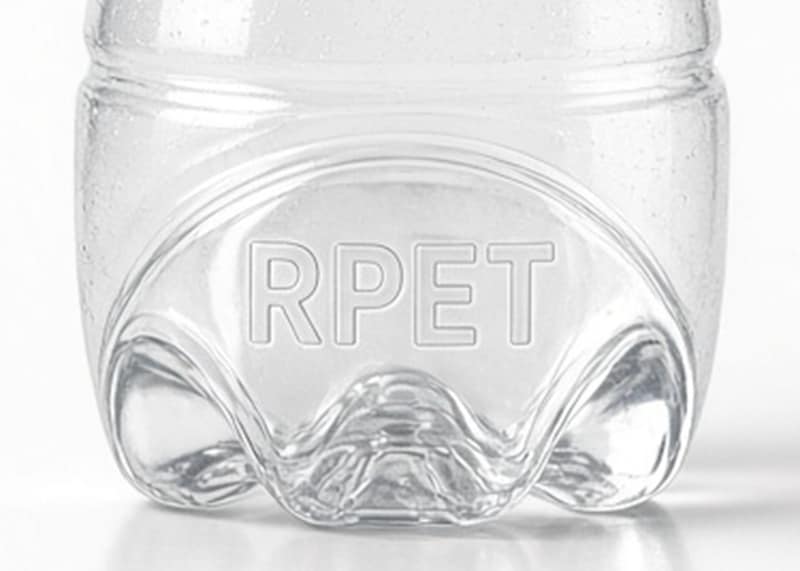
Nosoplas manufactures recycled PET resin, commonly known as rPET, as well as PET preforms. It also conducts most of its business in Spain while maintaining a smaller commercial presence elsewhere in the EEA.
Portobello is an investment fund with interests in several industries. Cobega is the holding company of a group involved in Coca-Cola bottling and beverage distribution in Spain, while Sonab is an investment and real-estate holding company.
The Commission reviewed the transaction under the simplified merger procedure, which is generally used for operations that are unlikely to raise significant competition concerns. Regulatory approval should not, however, be confused with confirmation that every corporate step has been completed. The companies must still satisfy any remaining closing conditions before the integration is finalized. Caiba Nosoplas PET merger
Caibaplas will connect recycling and packaging production
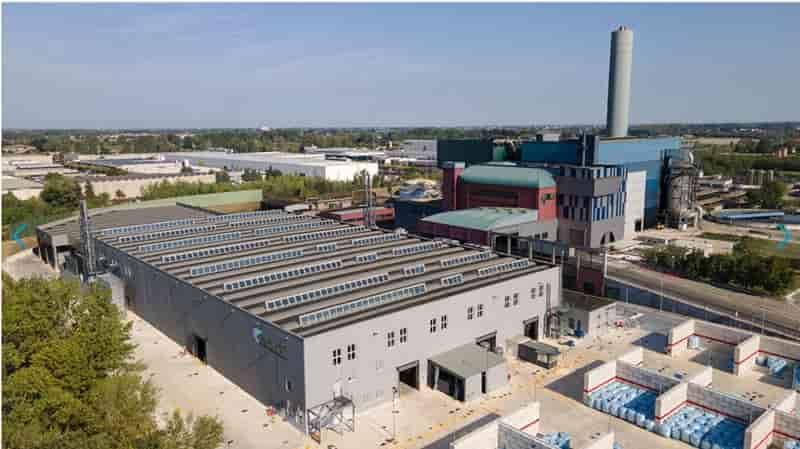
The combined group is expected to operate under the name Caibaplas. Its industrial model will extend from the production of recycled PET resin to the manufacture of preforms and finished containers.
This structure matters because recycled resin is becoming a strategically important raw material for beverage, food and consumer-goods packaging. Manufacturers need sufficient supplies of rPET, but they also require predictable quality, reliable traceability and materials suitable for the intended application.
Integrating Nosoplas’ recycling operations with Caiba’s conversion capabilities could give the new group greater oversight of these factors. It may also allow product-development teams to coordinate resin selection, preform engineering and container performance more effectively.
Recent Spanish reporting indicates that Caibaplas will have five production sites and approximately 500 employees. The facilities are located in Ribarroja, Alcalá la Real, Las Ventas de Retamosa, Bergondo and Tarancón. The same report places the companies’ combined annual sales above €225 million, although these financial and operational figures come from company-related reporting rather than the Commission’s competition decision. (Business People España, September 1, 2026) Caiba Nosoplas PET merger
Why the merger is timely for Europe’s PET market
The commercial logic of the Caiba Nosoplas PET merger extends beyond achieving greater manufacturing scale. It also reflects the growing importance of controlling more stages of the circular packaging chain.
The EU Packaging and Packaging Waste Regulation, or PPWR, began applying on August 12, 2026, although many of its detailed obligations and targets will be introduced progressively. It applies to packaging placed on the EU market, including packaging made outside the EU and subsequently sold within it.
Under the regulation, packaging producers will face increasingly demanding recyclability and minimum recycled-content requirements. These rules are expected to increase demand for well-documented, consistent and application-appropriate recycled plastics.
A PET industry analysis published on September 1, 2026 notes that compliance decisions cannot be made independently. Reducing the weight of a container must not compromise its performance, while increasing recycled content must be balanced against quality and functionality. Labels, adhesives, sleeves and closures can also affect whether the complete package is recyclable.
That environment could favor suppliers capable of working across resin production, packaging design, testing and manufacturing. The merged company’s ability to produce both rPET and packaging does not automatically guarantee regulatory compliance, but it could improve coordination and provide customers with a more integrated source of materials and technical information.
What EU clearance does—and does not—mean
The Commission’s decision concerns competition, not the environmental performance of the products made by Caiba or Nosoplas. It does not certify that every container produced by the combined business is recyclable, food-contact compliant or aligned with future recycled-content requirements.
Those assessments depend on the composition, intended use and complete design of each packaging format. Relevant factors can include the grade and origin of the recycled resin, manufacturing controls, barriers, colorants, closures, labels and adhesives.
The clearance instead means that the Commission does not expect the transaction to materially restrict competition in the affected markets. This distinction is important for customers, investors and industry readers evaluating the decision. Caiba Nosoplas PET merger
A potentially stronger position in circular packaging
The merger gives Caibaplas a broader industrial platform at a time when packaging buyers are demanding greater transparency about materials and recyclability.
Its future competitiveness will depend on more than combining production capacity. The group will need to demonstrate consistent rPET quality, maintain clear chain-of-custody information and help customers document the composition and performance of their packaging.
If Caibaplas can translate its integrated operations into secure recycled-material supplies and verifiable packaging solutions, the merger could strengthen its position in Spain and selected European markets. The Commission’s approval provides the regulatory opening; execution will determine whether the promised industrial advantages are realized.
Key facts
- Transaction: Merger of Caiba and Nosoplas
- Proposed combined name: Caibaplas
- Joint controllers: Portobello Capital Fondo IV, Cobega and Sonab
- Primary activities: Recycled PET resin, PET preforms and containers
- Main market: Spain, with additional sales in the European Economic Area
- EU case: M.12390
- Regulatory outcome: Cleared following a simplified competition review
- Reported footprint: Five Spanish production sites and approximately 500 employees
Frequently asked questions
What is the Caiba Nosoplas PET merger?
It is the combination of two Spanish packaging businesses whose activities cover recycled PET resin, PET preforms and containers. Portobello, Cobega and Sonab will jointly control the resulting entity.
Why did the European Commission approve it?
The Commission determined that the transaction would have a limited impact on the affected markets and would therefore not raise competition concerns.
Has the merger created a fully vertically integrated PET company?
The combination links recycled-resin production with preform and container manufacturing. The precise degree of operational integration will depend on how the businesses are organized after closing. Caiba Nosoplas PET merger
Why is recycled PET important?
European rules and customer sustainability programs are increasing demand for recycled plastic. Packaging producers also need dependable quality, traceability and evidence that the material is suitable for its intended use.
Sources and verification
This report was checked against the European Union’s official case notice and reporting published within the requested three-day window:
- Official Journal of the European Union: Case M.12390
- Business People España, September 1, 2026
- CZ PET industry analysis, September 1, 2026
- European Commission overview of packaging waste rules
Kurucsai Plastic Advances Recycled PET Extrusion with Gneuss MRS Technology