Chemical Recycling – Understanding the New Guidelines for LCA in Chemical Recycling The European association Chemical Recycling Europe (CRE), in partnership with environmental consultancy Sphera, has released an important document offering detailed guidelines for Life Cycle Assessment (LCA) in chemical recycling 30-05-2025 - Archive
Chemical Recycling
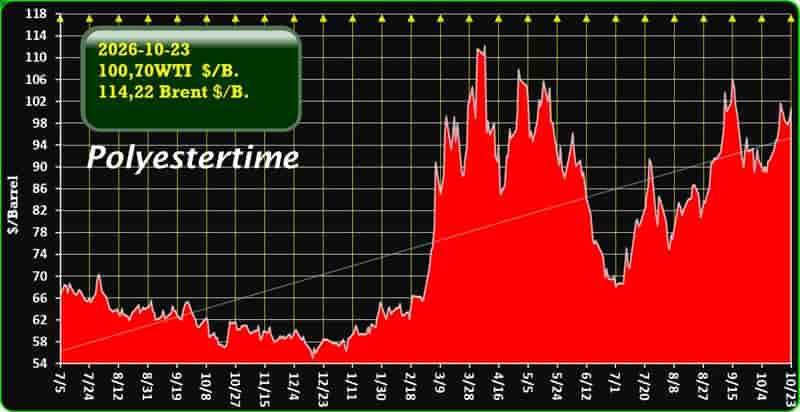
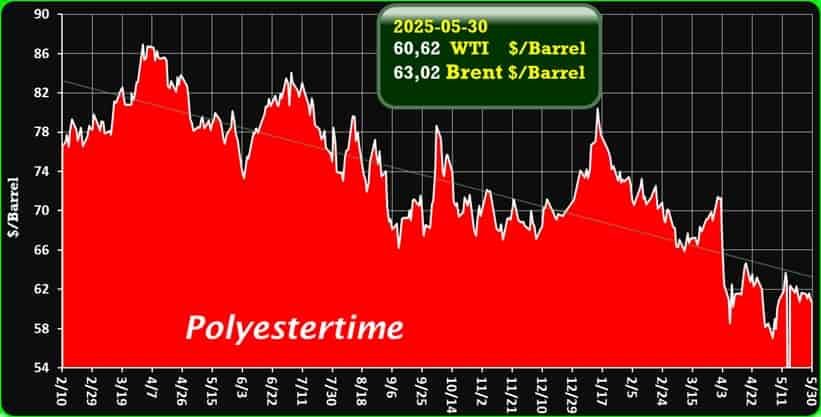
Crude Oil Prices Trend
Understanding the New Guidelines for LCA in Chemical Recycling
The European association Chemical Recycling Europe (CRE), in partnership with environmental consultancy Sphera, has released an important document offering detailed guidelines for Life Cycle Assessment (LCA) in chemical recycling. These guidelines aim to assess the environmental performance of such processes in a consistent and scientifically grounded way.
Why These Guidelines Matter
As chemical recycling technologies evolve, it’s become crucial to analyze their impact with harmonized and transparent methods. The new guidelines provide exactly that—a standardized framework for measuring and comparing environmental outcomes like greenhouse gas emissions, energy use, and resource efficiency.
According to CRE and Sphera, this initiative offers a robust scientific basis to help organizations align their sustainability goals with the broader objectives of the European Green Deal and the transition toward a circular economy.
A Framework Based on International Standards
The LCA guidelines are built on the globally recognized ISO 14040 and ISO 14044 standards. In addition, they integrate aspects of European Union and international norms, making the framework both comprehensive and adaptable across regions and sectors.
It’s important to note that these guidelines are not prescriptive. They do not dictate specific technical solutions. Instead, they provide tools and methodological support to help stakeholders make informed, data-backed decisions when evaluating chemical recycling processes.
Key Environmental Indicators Covered
The guidelines focus on several key environmental indicators, ensuring that assessments are as complete and relevant as possible. These include:
- Greenhouse Gas (GHG) Emissions: Estimating the carbon footprint throughout the recycling process.
- Energy Requirements: Evaluating how much energy is consumed during operations.
- Resource Efficiency: Measuring how well materials and inputs are utilized to reduce waste.
Who Will Benefit From These Guidelines?
The publication is intended for a wide range of stakeholders, including:
- Industry Operators working in chemical recycling and plastic waste management
- Policy Makers looking to create evidence-based environmental regulations
- Environmental Researchers and Consultants conducting LCA studies
By applying a unified methodology, stakeholders can now compare different chemical recycling technologies more fairly, improving transparency and building trust in environmental claims.
Free and Accessible for All
In a move toward open collaboration and progress, the LCA guidelines are available free of charge. CRE plans to distribute the document widely, ensuring that it reaches all relevant players along the plastics value chain.
This aligns with the association’s vision to advance chemical recycling in Europe and make it a cornerstone of sustainable plastic management.
About Chemical Recycling Europe (CRE)
Founded in 2019, Chemical Recycling Europe is a Brussels-based association that advocates for the advancement of chemical recycling technologies for polymers. It works closely with EU institutions and industry stakeholders to support policy development and foster innovation in the sector.
Conclusion: A Step Forward for Circular Plastics
The release of these LCA guidelines marks a significant step forward in establishing transparency, credibility, and scientific rigor in the assessment of chemical recycling processes. By standardizing how we measure environmental impact, the guidelines help pave the way for greener, more circular plastics in Europe and beyond.
As the push for circular economy solutions accelerates, tools like these will be essential for guiding investments, policies, and innovation in the right direction.

? Taghleef Unveils Home-Compostable PHA and PBSA Films at Ipack-Ima
At this year’s Ipack-Ima expo, Taghleef Industries debuts two groundbreaking bioriented films from its Nativia® range. These new films, made from polyhydroxyalkanoate (PHA) and polybutylene succinate adipate (PBSA), are bio-based, compostable, and designed for sustainable packaging solutions.
Made in Italy: Innovation from San Giorgio di Nogaro
Both films were developed at Taghleef’s cutting-edge Innovation Center in San Giorgio di Nogaro, Udine, Italy. This facility has been a hub for sustainable material development since 2023, solidifying Taghleef’s role as a leader in the bioplastics revolution.
Meet the New Nativia Films
Nativia D822: Transparent & Versatile
Nativia® D822 is a BOPHA (Bioriented PHA) film tailored for home compostability. It offers excellent transparency, printability, and optical properties. Ideal for food packaging, D822 is also compatible with biopolymer lamination, making it a flexible and eco-friendly choice. Chemical Recycling
Nativia D823: Durable with High Seal Strength
Nativia® D823 is based on PBSA (Polybutylene Succinate Adipate), with a structure that provides superior sealing resistance. Like D822, it is transparent, printable, and home compostable. However, D823 stands out for its high performance in demanding applications, while D822 offers better resistance to humidity.
Designed for Organic Waste-Contaminated Packaging
Both D822 and D823 are particularly well-suited for applications where packaging might come into contact with organic waste. These include:
- Coffee capsule lidding
- Ready-made meal trays
- Fruit and vegetable packaging
- Condiment sachets
- Candy wrappers
- ?ea bag tags
- Stickers or labels on produce Chemical Recycling
These formats are often difficult to recycle using traditional methods. By ensuring they can decompose in home composting conditions, Taghleef is enabling a new, more circular lifecycle for flexible packaging.
Industrial Testing & Availability
Fully Tested & Sample-Ready
Both films have undergone successful testing on printing, lamination, and packaging equipment. They are now available for sampling, opening doors for manufacturers looking to shift toward compostable, sustainable solutions without compromising quality or efficiency.
Advanced Functionalization
To push the boundaries even further, Taghleef is working on coating and metallization options to enhance the films’ barrier properties. This step aims to broaden the application of PHA and PBSA films into more complex markets, such as those requiring extended shelf life. Chemical Recycling
Visit Taghleef at Ipack-Ima
Taghleef Industries is showcasing the new Nativia solutions until May 30 at Hall 5 of the Ipack-Ima exhibition. Attendees can explore how these next-gen films fit into the future of sustainable packaging, combining industrial performance with ecological responsibility. 
BASF Set to Acquire Full Ownership of Alsachimie Joint Venture
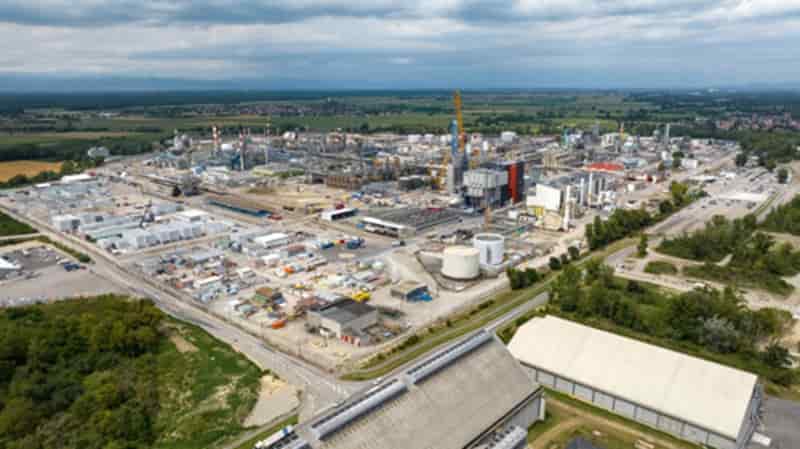
BASF is preparing to become the sole owner of Alsachimie, a joint venture initially established with Domo Chemicals. With this move, BASF will increase its stake from 51% to 100%, marking a strategic shift in the production of key intermediates for polyamide 66 (PA 66).
Location and Significance
Located in Chalampé, France, right on the border with Germany, Alsachimie plays a pivotal role in the PA 66 value chain. The site, which employs over 650 professionals, specializes in producing essential intermediates such as:
- KA-oil
- Adipic acid
- Hexamethylenediamine adipate salts Chemical Recycling
These compounds are critical in manufacturing polyamide 66, widely used in automotive and textile industries.
A Joint Venture Rooted in Regulation
Alsachimie was founded in February 2020 in response to the European Commission’s competition requirements following BASF’s acquisition of Solvay’s polyamide business. To comply, BASF and Domo Chemicals formed this joint venture, with BASF holding the majority stake.
What the Full Acquisition Means for BASF
Strengthening the PA 66 Supply Chain
Once the transaction is finalized—expected by mid-2025 pending regulatory approvals—BASF will gain full operational control. This will allow BASF to:
- Boost production capacity of PA 66 intermediates
- Gain more flexibility in managing upstream raw materials
- Strengthen its long-term supply reliability in Europe
A Word from BASF Leadership
Stephan Kothrade, member of BASF’s Board of Executive Directors, stated:
“As a key supplier of precursors for polyamide 66, our priority is to ensure reliable supply in Europe. By taking over the shares of our partner Domo Chemicals, we are further strengthening our leading position and long-term commitment in the PA 66 value chain. This also lays the foundation for future growth in the automotive and textile sectors.” Chemical Recycling
? Strategic Impact and Outlook
Positioning for Growth
This acquisition is more than a change in ownership—it’s a step forward in BASF’s strategic growth in advanced materials. With increased control, the company can align operations more closely with its innovation roadmap and expand its customer offerings in the PA 66 space.
Enhanced Production & R&D Synergies
Full ownership opens the door for:
- Integrated R&D initiatives
- Better alignment with sustainability goals
- Improved logistical efficiency across borders Chemical Recycling
? Final Thoughts
The transition to full BASF ownership of Alsachimie signals a robust investment in the future of polyamide 66. It reinforces BASF’s commitment to regional manufacturing strength, reliability in the value chain, and innovation across automotive and textile markets. Expect this move to reverberate positively across Europe’s industrial landscape.
FSSAI Releases Guidelines for Recycled PET Use in Food Packaging
The Food Safety and Standards Authority of India (FSSAI) has taken a significant step toward sustainable packaging by issuing comprehensive guidelines for the use of recycled PET (Polyethylene Terephthalate) in food-grade materials. Announced on May 23, 2025, the notification outlines stringent criteria for the use of Food Contact Material-grade rPET (FCM-rPET), ensuring food safety and consumer protection.
What the Guidelines Cover
These new FSSAI guidelines specifically address the recycling of post-consumer PET bottles and containers originally used for food applications. Chemical Recycling
The final product—FCM-rPET—must meet safety standards for direct food contact. Importantly, only recycling technologies approved by the FSSAI are permitted under this framework.
Applications involving recycled PET for non-food purposes are not covered under this guidance.
Key Definitions You Should Know
The document clarifies crucial terminology such as:
- Virgin PET (vPET): Unused, pure PET material.
- Post-consumer food-grade PET: PET material previously used for food packaging.
- PET Resin: Base plastic material used in packaging.
- FCM-rPET: Recycled PET processed to meet safety standards for food contact.
FCM-rPET must undergo a validated decontamination process to eliminate potential contaminants, ensuring it’s safe for use with consumables.
Approved Recycling Methods
FSSAI has approved the following four recycling processes:
- Super-Clean Recycling Process
- Melt-in Recycling Process
- Paste-in Recycling Process
- Chemical Recycling Process (under specific application requirements)
Important: Conventional mechanical recycling without a robust decontamination step is not allowed for food-grade materials. Chemical Recycling
Validation and Testing Requirements
The guidelines outline detailed validation procedures, including:
- Input Controls: Quality of post-consumer PET sources
- Process Validation: Includes challenge tests and migration testing
- Output Monitoring: Involves extraction tests, sensory evaluation, and migration checks
- Operational Protocols: Mandates Good Manufacturing Practices (GMP) and quality assurance mechanisms
Labeling & Symbol Requirements
Food packaging made from FCM-rPET must carry a dedicated symbol indicating the use of recycled content. The label should clearly state:
- That the packaging uses recycled PET
- The percentage of recycled PET used
These markings must also comply with existing national labeling standards.
Documentation & Traceability Obligations
All stakeholders in the packaging supply chain—including manufacturers, converters, beverage companies, food packers, and Food Business Operators (FBOs)—must maintain proper records. Required documentation includes:
- Declaration of Compliance
- Regulatory Opinion (NOC/NOL)
- Full traceability of the supply chain
Authorization and Audits
Manufacturers intending to produce FCM-rPET must apply to FSSAI using a specific application form. The process involves:
- Submission of detailed production and validation data Chemical Recycling
- Annual audits of manufacturing plants
- FSSAI maintaining an updated list of approved producers on its website
The Food Authority will either authorize or reject the application based on compliance with the specified guidelines.
A Sustainable Future with FCM-rPET
By implementing these guidelines, FSSAI aims to promote sustainable packaging solutions without compromising food safety. The integration of rPET into food-grade packaging, under strict control measures, reflects India’s commitment to circular economy principles and environmental responsibility.
For businesses involved in food packaging, adhering to these standards will not only ensure compliance but also boost eco-conscious brand image in the eyes of consumers and regulators alike.
Photothermal Breakthrough: A New Era in PLA Recycling
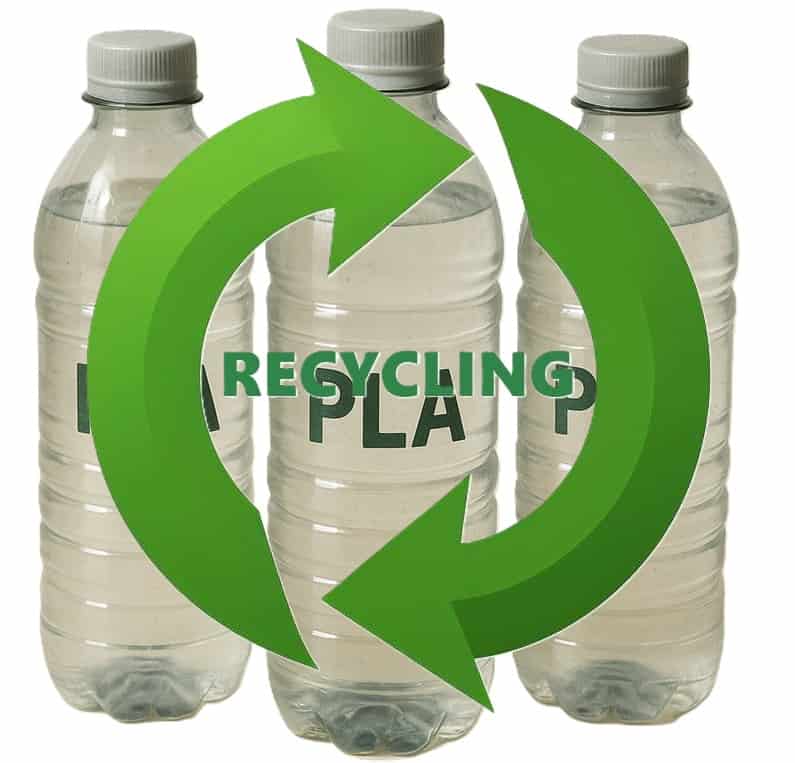
As global plastic consumption grows, the need for sustainable recycling technologies becomes more pressing—especially for bioplastics like polylactic acid (PLA). Traditionally derived from renewable resources, PLA holds promise as a biodegradable alternative. Yet, efficient methods for its recycling remain elusive.
Recent scientific advances have spotlighted photoreforming strategies that convert PLA into valuable liquid compounds such as acetic acid, formate, pyruvic acid, and alanine. Despite the progress, two major barriers hinder practical application: the difficulty of efficient depolymerization under mild conditions, and the challenge of extracting high-value products from a mix of real-world impurities.
A Dual-Action Recycling Strategy
To address these issues, a research group led by Professor Zhang Tierui at the Technical Institute of Physics and Chemistry, Chinese Academy of Sciences introduced an innovative, dual-function strategy. Chemical Recycling
Their method combines photothermal depolymerization with photocatalytic reforming to unlock a more efficient PLA recycling process.
How the Technology Works
At the core of this breakthrough is a synergistic mechanism:
- Photothermal effect: Water vapor generated during photothermal heating helps depolymerize PLA into lactic acid.
- Photocatalysis with TiO₂: Under UV light, the TiO₂ catalyst activates and reforms lactic acid into valuable chemicals like hydrogen (H₂), carbon monoxide (CO), and methane (CH₄).
This streamlined process not only reduces contamination from plastic impurities but also simplifies the separation of final products.
Experimental Insights & Key Products
Through a series of controlled lab experiments, the researchers identified acetaldehyde and acetic acid as key reaction intermediates. Chemical Recycling
They discovered that:
- Hydrogen (H₂) is mainly produced from the decarboxylation of lactic acid and further photoreforming of acetaldehyde/acetic acid.
- CO and CH₄ arise primarily from the photoreforming of acetaldehyde/acetic acid.
Notably, when UV light was removed from the equation, the reaction yielded carbon dots and hydrogen—highlighting UV light’s critical role in driving the full reforming process.
Implications for Circular Economy
This research represents a significant leap toward a circular lifecycle for bioplastics. By overcoming the two core challenges of PLA recycling—mild-condition depolymerization and efficient product separation—this dual strategy enhances both the scalability and purity of the output.
Furthermore, the use of readily available catalysts like TiO₂ and reliance on sunlight (via UV) offers an environmentally friendly, low-energy pathway to transforming waste PLA into clean fuels and chemical precursors. Chemical Recycling
What’s Next?
As the technology moves from lab to real-world deployment, key questions include:
- Can this method be adapted to mixed plastic waste streams?
- What are the economic implications of scaling the process industrially?
- Could solar-augmented photothermal units be developed for on-site recycling?
With growing interest in biodegradable plastics and green energy solutions, this photothermal-photocatalytic strategy could be a cornerstone in the next generation of plastic recycling innovation.
Sources & Acknowledgments
This work was conducted by Prof. Zhang Tierui’s group at the Chinese Academy of Sciences. Their research continues to inspire new sustainable approaches to waste management and chemical production. Chemical Recycling
Huawei’s Strategic Move in Chip Chemistry
Huawei is ramping up its ambitions in the global semiconductor arena by investing in a new chip chemical company that aims to rival industry titans like Shin-Etsu Chemical, JSR, Merck, DuPont, and Dow. This bold initiative is part of China’s broader push toward technological self-sufficiency, especially in the wake of tightening U.S. sanctions.
Introducing Zhuhai Cornerstone Technologies
The centerpiece of Huawei’s effort is Zhuhai Cornerstone Technologies Co.—also known by its Mandarin name “Jishi”—a company founded in 2022 in the southern Chinese city of Zhuhai. Positioned as a future powerhouse in semiconductor chemicals, Cornerstone’s mission is to become an “end-to-end” supplier of critical chip-making materials. Chemical Recycling
Aiming to Compete with Global Leaders
Cornerstone is setting its sights high. The company plans to challenge global heavyweights by offering comprehensive solutions for nearly all critical chemicals used in chip production. These include:
- High-performance photoresists
- Chemical mechanical polishing (CMP) pastes
- Polishing pads
- Other advanced semiconductor materials
Currently, these markets are dominated by Japanese companies like Shin-Etsu, JSR, and TOK, and U.S.-based firms such as DuPont, Dow, and Fujimi. Cornerstone’s goal is to disrupt this status quo. Chemical Recycling
Global Talent and Local Innovation
In just a few years, Cornerstone has built an impressive team by attracting industry experts from Japan, South Korea, and Taiwan. The company is not merely importing knowledge—it is actively developing its own production lines and independent chemical formulations to minimize China’s reliance on overseas suppliers.
Covering All Stages of Chipmaking
“The ambition is not just to develop one or two types of chemicals,” a source close to the matter told Nikkei, “but to cover a broad spectrum of materials essential at every stage of chip production.” This end-to-end capability could give Huawei and China a crucial edge in the global semiconductor race.
National Strategy Behind the Move
This project is more than a corporate strategy—it is a reflection of Beijing’s national policy to secure supply chains for strategic technologies. Amid ongoing geopolitical tensions, particularly with the U.S., the Chinese government is backing initiatives that fortify domestic capabilities in crucial sectors like semiconductors.
Huawei’s involvement signals the high-level importance of the venture and underscores China’s determination to create a self-reliant chip ecosystem—from raw materials to finished microchips. Chemical Recycling
Looking Ahead
If successful, Cornerstone Technologies could become a global benchmark in semiconductor chemical innovation, shifting the balance of power in a sector long dominated by Western and Japanese firms. While challenges remain, Huawei’s bold move marks a significant step in China’s journey toward technological independence.
Key Takeaways
- Huawei is backing Zhuhai Cornerstone Technologies to challenge global chip chemical leaders.
- The company is developing a full suite of chip-making chemicals like photoresists and CMP pastes.
- This initiative aligns with China’s push for semiconductor independence amid global tensions.

CARBIOS Signs First Biorecycled PET Sales Contracts with Global Cosmetics Leaders
CARBIOS, a trailblazer in enzymatic plastic recycling, has officially inked its first multi-year commercial contracts for biorecycled PET. The two partners? None other than global beauty titans L’ORÉAL and L’Occitane en Provence. Chemical Recycling
These contracts mark a turning point for CARBIOS, securing the commercial path for its future Longlaville plant and validating market demand for high-quality, recycled, and recyclable PET produced using enzymatic recycling technologies.
Confirming Market Confidence in Circular Packaging
CARBIOS’ agreements with L’ORÉAL and L’Occitane signal strong endorsement from industry leaders seeking to improve sustainability. The brands’ decision to integrate enzymatically recycled PET—known for its high quality and full recyclability—shows that demand for innovative circular materials is not just theoretical—it’s real, and it’s here.
“The signing of these initial contracts marks a major milestone in our roadmap,” says Vincent Kamel, CEO of CARBIOS. “These partnerships prove there’s an established market for r-PET from enzymatic recycling. With this momentum, we’re confident in securing further agreements soon.” Chemical Recycling
What the Industry Leaders Are Saying
Jacques Playe, Director of Development and Packaging at L’ORÉAL, notes:
“This contract highlights our commitment to partnering with pioneers in PET recycling. CARBIOS’ enzymatic process is a critical innovation in building circularity into the packaging industry.”
David Bayard, R&D Packaging Director at L’Occitane en Provence, adds:
“Our partnership with CARBIOS is a decisive step toward greater packaging circularity. Together, we’re building a high-performance European industry that supports the transition to a circular plastics economy.”
? About the Longlaville Plant: Scaling the Future of Recycling
With these deals in place, CARBIOS advances its strategy to commercialize enzymatic recycling at scale. The Longlaville site, expected to become the world’s first industrial biorecycling plant for PET, is on track to resume construction between June and September 2025—pending additional funding. Chemical Recycling
This site will transform enzymatic recycling from pilot to large-scale reality, demonstrating that biotechnology has a leading role in solving plastic pollution and achieving packaging circularity.
? About CARBIOS: Nature-Inspired Innovation for a Circular Economy
Founded by Truffle Capital, CARBIOS is a biotech company redefining plastic and textile recycling through enzyme-based solutions. Its mission? To eliminate plastic and textile pollution by rethinking material life cycles.
The company is known for two groundbreaking innovations:
- Biorecycling of PET – allowing for closed-loop recycling with no quality loss.
- Biodegradation of PLA – enabling full biodegradation of certain bioplastics.
Its demonstration plant has been operational since 2021, and CARBIOS continues to receive scientific recognition, including being featured twice on the cover of Nature.
CARBIOS partners with leaders across industries:
- Cosmetics: L’ORÉAL Chemical Recycling
- Food & Beverage: Nestlé Waters, PepsiCo, Suntory Beverage & Food Europe
- Apparel: On, Patagonia, PUMA, PVH Corp., and Salomon
It is also a proud member of the B Corp™ community, affirming its role in using business as a force for good.
Final Thoughts
CARBIOS is not only building a new way to recycle—it’s setting the foundation for a truly circular economy. With backing from top-tier brands and the launch of commercial operations in sight, the company is well-positioned to redefine how we think about plastic sustainability