PLA Bioplastics – Emirates Biotech and Sulzer Secure Key Equipment Contract for World’s Largest PLA Bioplastics Facility Emirates Biotech has taken a significant leap forward in the development of the world’s largest Polylactic Acid (PLA) bioplastics facility through a newly signed supply contract with Sulzer, a global leader in separation and polymerisation technologies 29-05-2025 - Archive
PLA Bioplastics
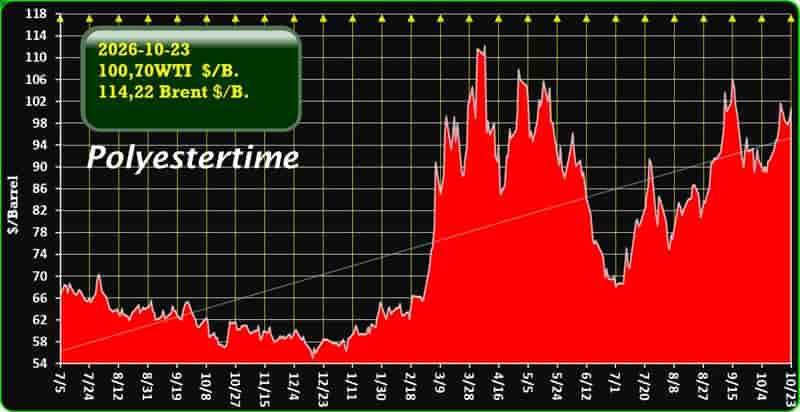
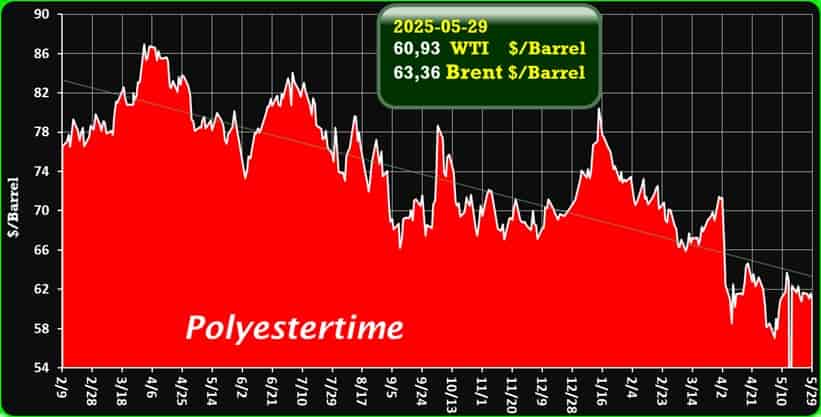
Crude Oil Prices Trend
Emirates Biotech and Sulzer Secure Key Equipment Contract for World’s Largest PLA Bioplastics Facility
Emirates Biotech has taken a significant leap forward in the development of the world’s largest Polylactic Acid (PLA) bioplastics facility through a newly signed supply contract with Sulzer, a global leader in separation and polymerisation technologies. This follows a strategic licensing agreement inked in December 2024, cementing Sulzer’s role in delivering the core proprietary technology for the massive Falcon PLA Project.
? Transitioning from Planning to Execution
With this agreement, Emirates Biotech officially moves into the execution phase of the Falcon PLA Project. The supply contract ensures the delivery of Sulzer’s specialized proprietary equipment designed for the integrated PLA production process. This includes systems for lactide formation, purification, and polymerization—the essential steps in converting lactic acid into biodegradable PLA polymers. PLA Bioplastics
Marc Verbruggen, CEO of Emirates Biotech, highlighted the importance of this milestone: “Signing this equipment supply contract with Sulzer represents a decisive step forward. We are now firmly entering the execution phase, laying the foundation for a state-of-the-art PLA facility that will anchor the region’s transition to sustainable materials.”
? Supporting a Global Green Transition
Sulzer’s involvement goes beyond manufacturing. The Swiss engineering giant will deliver a comprehensive suite of proprietary equipment engineered to optimize throughput, reduce energy consumption, and meet the sustainability targets of Emirates Biotech. The equipment is tailored to ensure reliable, large-scale production of PLA—a renewable, recyclable, and biodegradable plastic alternative. PLA Bioplastics
Tim Schulten, Division President of Sulzer Chemtech, commented: “We’re proud to strengthen our collaboration with Emirates Biotech. Our proven PLA technology was selected to ensure efficient, scalable production, contributing directly to decarbonizing global supply chains. This project reflects the bold investments needed to enable real change.”
?️ EPC Contractor and Project Timeline
Samsung E&A has been appointed as the engineering, procurement, and construction (EPC) contractor for the facility. They will integrate Sulzer’s advanced systems into a fully operational plant that includes site-wide infrastructure such as utilities, storage, and service systems. The total financial investment in the Falcon PLA Project now exceeds USD 90 million.
Construction is scheduled to commence in Q4 2025, with commercial operations anticipated to begin by early 2028. PLA Bioplastics
? Why PLA Bioplastics Matter
PLA, or Polylactic Acid, is a biopolymer derived from renewable plant sources that absorb CO2 from the atmosphere. This gives PLA a low-carbon footprint and makes it a viable alternative to fossil-fuel-based plastics. As a sustainable and biodegradable material, PLA is ideal for a wide range of applications, including:
- Consumer Goods
- Home and Kitchen Appliances
- Food Packaging and Service Ware
- 3D Printing
Unlike traditional plastics, PLA can be recycled or composted, reducing the burden of plastic pollution and advancing circular economy goals. Its versatility and environmental benefits are fueling increasing demand across global markets. PLA Bioplastics
Material Innovation Driving the Future
Innovative developments like the Falcon PLA Project are helping reshape the global materials landscape. By investing in scalable, sustainable infrastructure, Emirates Biotech is positioning itself at the forefront of a new era in green manufacturing.
As demand for eco-friendly plastics continues to rise, this bold initiative marks a critical step in advancing material science and aligning industrial practices with climate goals.
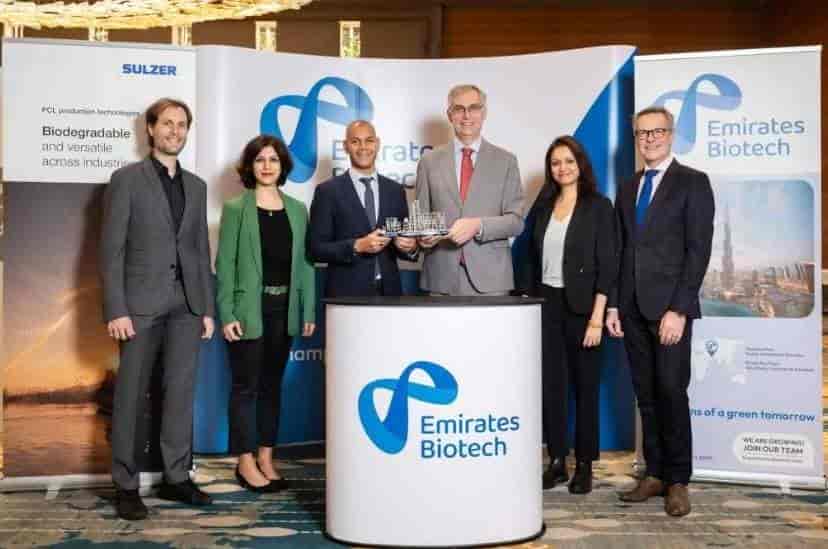
Project Leadership Team
Caption: From left to right — François de Bie (CCO, Emirates Biotech), Dorus Everwijn (President, GBI), Marc Verbruggen (CEO, Emirates Biotech), Tim Schulten (Division President, Sulzer Chemtech), Emmanuel Rapendy (Head of Polymer & Crystallization, Sulzer Chemtech), Christophe Miegeville (EPC Project Officer, Emirates Biotech).
Innovia Films Expands BOPP Film Production in Mexico
Innovia Films is ramping up its operations in Mexico with the launch of a brand-new coating line at its facility in Zacapu, where it has been operating for over four decades. This strategic investment is part of the company’s ongoing commitment to expand its manufacturing capabilities across the Americas. PLA Bioplastics
? Major Investment in Local Film Production
In an announcement, Innovia revealed its plan to increase the production capacity of biaxially oriented polypropylene (BOPP) films by 9,000 tonnes annually. Additionally, the company will install advanced metallization equipment in Q3 2025, which will add another 4,000 tonnes per year of capacity for metallized film products.
Although the total investment amount was not disclosed, the initiative includes more than just a new coating line. Innovia has also implemented a customer-focused coil cutting machine, coil handling systems, laboratory testing tools, and IT infrastructure upgrades.
Localizing Production for the Americas
“This investment reflects our strategic decision to manufacture more surface-treated films locally in the Americas,” said Andres Bernal, General Manager of the Zacapu plant.
“Some of these products were previously imported from our European sites, but with this expansion, we are increasing local availability and responsiveness to customer needs.”
Applications in Labeling and Packaging
The coated and metallized films will primarily serve as face materials for pressure-sensitive labels (PSL), a growing sector in markets such as:
- Food & Beverage PLA Bioplastics
- Personal and Home Care
- Healthcare
- Flexible Packaging
Certain film grades will also feature barrier coatings ideal for flexible packaging applications, enhancing product preservation and shelf appeal.
? Innovia’s Global Footprint
Innovia Films positions itself as a pioneer in materials science, specializing in BOPP film production using its proprietary Bubble, Stenter, and injection molding technologies. The company operates production facilities across five countries:
- Australia
- Germany
- Mexico
- Poland
- United Kingdom PLA Bioplastics
With a global team of 1,400 employees—including 425 staff members in Zacapu—Innovia is well-positioned to meet growing market demand and lead the way in high-performance film innovation.
Looking Ahead
This expansion not only strengthens Innovia’s regional presence but also reinforces its commitment to innovation and sustainability in the packaging and labeling industries.
? Ecoplastics Introduces South Korean Polycarbonate to the Russian Market
Moscow-based company Ecoplastics has announced the launch of polycarbonate (PC) supplies sourced from South Korea. This strategic move marks a new chapter for the company as it expands its portfolio in the engineering plastics market. PLA Bioplastics
Partnership with Lotte Chemical
The newly supplied polycarbonate grades are produced by Lotte Chemical, a prominent South Korean petrochemical manufacturer. These materials are branded under the Hopelex trademark, known for their high-quality composition and reliability across multiple applications.
The Hopelex polycarbonate line offers a range of grades with varying viscosities. These are engineered to meet the demands of both extrusion and injection molding processes, making them suitable for a broad spectrum of manufacturing requirements.
UV-Stabilized Solutions for Outdoor Applications
Ecoplastics’ product lineup now includes UV-stabilized polycarbonate grades designed specifically for outdoor usage. These materials are ideal for manufacturing products that are exposed to sunlight and other weather conditions. PLA Bioplastics
Applications include:
- Monolithic and honeycomb sheets
- Lighting components
- Automotive headlamps
- Various industrial and household goods
Thanks to the UV resistance, these products maintain durability and clarity over time, providing long-term performance in demanding environments.
? Strategic Market Expansion
At the start of 2025, Ecoplastics made a decisive move to enter the Russian engineering plastics market. This venture is part of the company’s broader growth strategy to supply advanced materials that cater to evolving industry needs. PLA Bioplastics
In addition to polycarbonate, Ecoplastics also distributes other high-performance plastics such as:
- Polymethyl methacrylate (PMMA)
- Polyamide (PA)
- Other specialized engineering polymers
These materials are widely used in sectors ranging from automotive and construction to electronics and consumer goods manufacturing.
Conclusion
By partnering with Lotte Chemical and introducing premium-grade Hopelex polycarbonate to the Russian market, Ecoplastics is positioning itself as a key player in the engineering plastics supply chain. With a diverse product lineup and a focus on high-performance solutions, the company is poised to meet the growing demand for reliable, weather-resistant materials across industries. PLA Bioplastics

? Braskem Under Takeover: Brazilian Billionaire Eyes Petrochemical Giant
One of South America’s largest petrochemical companies, Braskem, is at the center of a potential power shift. Following reports in the Brazilian financial press, Braskem’s primary shareholder, Novonor, has officially confirmed that it received a non-binding purchase proposal for a controlling stake in the company.
The offer comes from an investment fund managed by Nelson Sequeiros Tanure, a Brazilian billionaire known for high-profile acquisitions. If successful, this move could mark a significant restructuring of ownership in one of the most prominent plastics producers in the Americas.
Who’s Involved in the Deal?
At the heart of the negotiations is a purchase offer for shares in NSP Investimentos, the Novonor-controlled holding company that currently owns a majority stake in Braskem. The offer has been submitted by Tanure’s Petroquímica Verde fund.
If the deal proceeds, Petroquímica Verde would become the indirect controlling shareholder of Braskem—assuming control from Novonor, which has been the driving force behind the company’s strategy and growth. PLA Bioplastics
Conditions and Constraints
Novonor has emphasized that the proposal is still under evaluation and that any agreement would need to meet a series of critical conditions:
- Approval from Petrobras, the state-owned oil giant and Braskem’s second-largest shareholder
- Consent from creditor banks that currently hold Braskem shares as collateral for Novonor’s debt
- Alignment with existing shareholder agreements and legal obligations
These factors may complicate the negotiations, especially considering the intricate balance of power between the shareholders.
Who Owns What in Braskem?
Braskem’s ownership is split mainly between Novonor and Petrobras. Here’s a breakdown of the share structure:
- Novonor: Holds 50.1% of voting shares, representing about 38.3% of total capital
- Petrobras: Holds 47% of voting shares, representing about 36.1% of total capital PLA Bioplastics
This close shareholding balance has historically made any shift in control complex, particularly when considering the Brazilian government’s vested interest through Petrobras.
? Market Reaction: Braskem Shares Surge
Following confirmation of the takeover interest, Braskem’s stock on the São Paulo Stock Exchange surged sharply, reflecting investor optimism around the potential shake-up.
Market watchers believe that a new ownership structure could unlock value, streamline operations, or even redirect strategic priorities—especially if led by an investor with Tanure’s track record and capital strength.
Braskem’s Strategic Importance
Braskem is a heavyweight in the petrochemical sector across the Americas. Headquartered in Brazil, the company is the continent’s leading producer of polyolefins and PVC, as well as intermediates and base chemicals. PLA Bioplastics
One of Braskem’s most innovative operations is located at the Triunfo site, where it produces renewable ethylene from sugarcane-derived bioethanol. This renewable ethylene is then used to synthesize biobased polyethylene and EVA, contributing to the company’s reputation as a forward-thinking player in sustainable plastics production.
What’s Next?
As Novonor reviews the offer, all eyes are on how the negotiations will unfold. Given the high stakes, regulatory scrutiny, and Petrobras’ influence, a swift decision is unlikely. However, the potential acquisition could bring a transformative shift to both Braskem’s governance and its role in the global plastics industry.
If the deal goes through, it could redefine leadership in the South American petrochemical landscape and accelerate innovation in bioplastics and sustainable chemistry. PLA Bioplastics

♻️ Bain & Co. Sees Distant Timeline for Cost-Effective Chemical Recycling
Despite the rising interest in sustainability and circularity, chemical recycling of polyolefins remains far from cost parity with virgin plastic production. According to a new report from Bain & Co., the road to competitiveness could take up to three decades and cost over €400 billion ($454 billion) in capital expenditures globally.
Chemical Recycling Faces Steep Economic Barriers
The study, issued by Bain’s London office, paints a sobering picture: chemical recycling in Europe is still economically unattractive. Today, producing recycled polyolefins via chemical methods costs more than twice the price of manufacturing virgin materials.
Polyolefins, which include polyethylene terephthalate (PET), polypropylene (PP), high-density polyethylene (HDPE), and low-density polyethylene (LDPE), are extensively used in packaging. However, recycling them chemically through processes like pyrolysis remains financially out of reach under current conditions. PLA Bioplastics
€400B Investment Needed Over 20–30 Years
To reach a break-even point with virgin plastic, Bain estimates the industry would need to cumulatively recycle 650 million metric tons of polyolefins through chemical recycling globally. This scale of adoption could only be achieved by spending more than $450 billion in capital expenditures over the next two to three decades.
“That premium includes customer-paid price premiums, regulatory support mechanisms, and investments across the value chain,” said Mark Porter, Bain’s global chemicals practice lead.
? Market Forces Alone Aren’t Enough
One of the key findings of the report is that market forces won’t drive change fast enough. High price sensitivity among customers and limited production volumes are holding back cost improvements. Bain suggests that external intervention is critical to close the gap.
“Moving the needle will require a systems approach with regulatory support,” Porter emphasizes. PLA Bioplastics
This could mean everything from subsidies to infrastructure mandates.
? Strategic Path to 2040: Blending Mandates
However, there is a feasible pathway to increasing chemical recycling market share—gradual implementation of blending mandates. If governments enforce country-level or regional mandates that increase the use of chemically recycled content by just 1 to 2 percent annually, Europe could reach a 15% market share by 2040.
According to Bain, this slow but steady approach allows for a manageable ramp-up of infrastructure and investment without sudden shocks to pricing or materials sourcing.
Building Experience to Reduce Costs
Over time, accumulated operational experience and technological advancement will lower costs. The industry is already making progress in developing better sorting technologies and waste pretreatment systems designed to boost chemical recycling efficiency and scalability.
“Once scale reaches critical mass, chemical recycling can shift from a subsidy-reliant push to a demand-driven pull,” says Porter. “That inflection point could make chemical recycling a competitive market-driven solution.” PLA Bioplastics
Industry Action Plan: From Startups to Scale
The report outlines three core strategies for companies aiming to lead in chemical recycling:
- Proactively create offtake opportunities for recycled materials
- Engage regulators on supportive policy development
- Reframe public perception around the responsible use of plastics
Bain also highlights the need for operational flexibility among pyrolysis plant operators. Companies must be willing to explore innovative business models, alternative feedstock sourcing, and even unconventional partnerships to succeed in this emerging space. PLA Bioplastics
Final Thoughts: The Long Game of Chemical Recycling
Although chemical recycling is not a short-term solution, the report from Bain & Co. provides a structured roadmap for long-term success. With the right mix of policy, investment, and innovation, the dream of cost-effective, large-scale chemical recycling for polyolefins may yet become a reality.
The path is long, but the impact could be transformative for plastics and sustainability worldwide.

♻️ Why AI is a Game Changer in Plastics Recycling
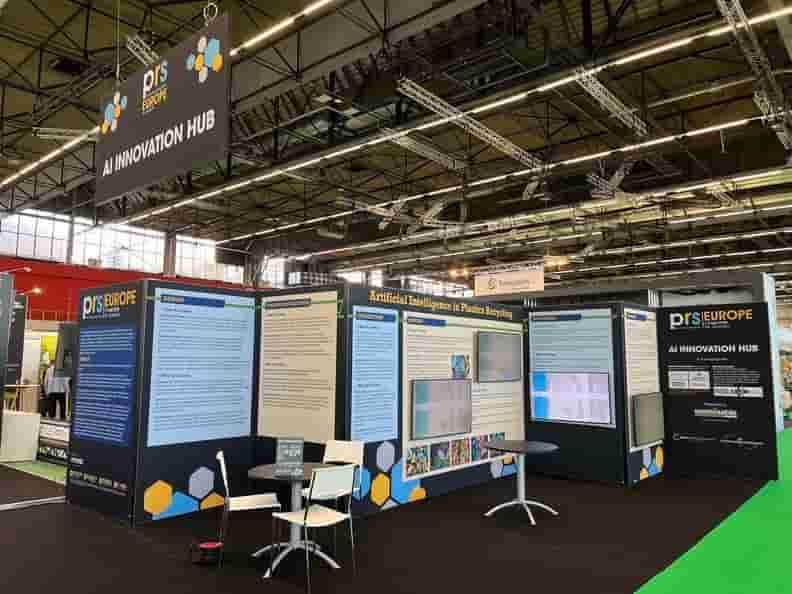
The future of plastics recycling is being shaped by artificial intelligence (AI)—a powerful ally in achieving a circular economy. At the Plastics Recycling Show Europe held in Amsterdam on April 1–2, 2025, the transformative role of AI was brought to life through the AI Innovation Hub, curated by Sustainable Plastics. From design to disposal, AI is revolutionizing how we manage plastics sustainably and efficiently. PLA Bioplastics
Introducing the AI Innovation Hub
The AI Innovation Hub captivated visitors with dynamic video displays and interactive information boards, offering a comprehensive tour through every phase of plastics recycling: design, feedstock selection, collection, processing, and material sourcing.
Leading innovators such as Greyparrot, Tomra, Pellenc ST, WeSort.AI, Sesotec, and Circular.co were among the key contributors. Over 500 exhibitors participated, showcasing how AI is rapidly becoming the backbone of the recycling sector.
Smarter Design with Generative AI
Designing plastics with AI means pushing past traditional limits. Generative design tools, powered by AI, can rapidly produce optimised product variations based on material constraints and performance requirements. PLA Bioplastics
These tools not only shorten development cycles but also help select the best recycled plastics by analyzing key data such as tensile strength, flexibility, and degradation rates. Designers can simulate product performance in diverse conditions, reducing the need for costly and time-consuming physical prototypes. This precision-driven approach leads to more innovative, durable, and recyclable plastic products.
Intelligent Feedstock Selection
AI’s ability to process complex data sets is revolutionizing the selection of plastic feedstock. By analysing chemical composition, logistics, cost, and lifecycle data, AI can suggest the most sustainable material combinations for manufacturing.
Predictive algorithms forecast future material availability and environmental impact. Machine learning models assess the entire lifecycle—from raw extraction to disposal—enabling smarter, lower-impact sourcing decisions. This integrated view ensures that feedstock is both cost-effective and circular-ready. PLA Bioplastics
? Revolutionizing Waste Collection
Smart waste collection is another area where AI shines. With sensor-equipped smart bins and vision-enabled robots, waste collection becomes intelligent, dynamic, and responsive.
AI-powered systems detect contamination, monitor fill levels, and adjust collection routes in real-time. Autonomous drones and ground-based robots even retrieve plastics from streets and waterways, helping reduce environmental pollution at the source.
These tools improve operational efficiency by reducing redundant trips, preventing overflows, and lowering fuel consumption. In doing so, they cut down carbon emissions while ensuring cleaner environments. PLA Bioplastics
Smarter Sorting and Processing
Sorting plastic waste is no longer limited to manual labor or basic automation. AI enables real-time recognition of polymer types, colors, and contamination levels on conveyor belts using computer vision.
This technology significantly boosts material recovery rates and reduces human error. By automating and accelerating the sorting process, recyclers achieve purer material streams and higher throughput with less energy consumption.
? Optimizing the Circular Economy
Integrating AI into every stage of the recycling value chain results in faster, cheaper, and more sustainable solutions. From design and sourcing to collection and reprocessing, AI ensures data-driven decisions that minimize waste and maximize resource recovery.
The AI Innovation Hub demonstrated that artificial intelligence isn’t just an upgrade—it’s a revolution in how we close the loop on plastics. PLA Bioplastics
Final Thoughts: The Road Ahead
As the industry embraces digital transformation, AI will continue to play a pivotal role in achieving the ambitious goals of the plastics circular economy. Innovations seen at events like the Plastics Recycling Show Europe reveal that a cleaner, smarter future is not only possible—it’s already in motion.
Embracing AI is no longer optional—it’s essential for a sustainable plastics future.