PET Bottle Anti-Dumping – Borealis Invests €100 Million to Triple Recyclable Foam Capacity with Daploy™ HMS PP Borealis is reinforcing its position as a sustainability leader in the polymer industry with a major investment of over EUR 100 million in its Burghausen, Germany, facility 28-05-2025 - Archive
PET Bottle Anti-Dumping
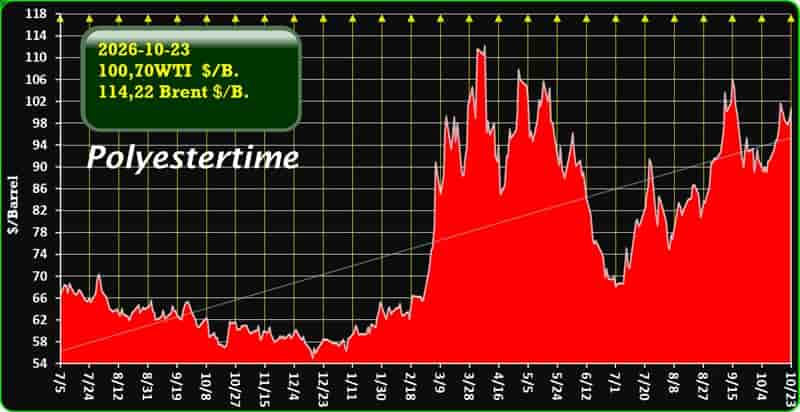
Crude Oil Prices Trend

EU Launches Anti-Dumping Probe into PET Plastic Imports from Vietnam
The European Commission has initiated a formal investigation into the alleged dumping of polyethylene terephthalate (PET) plastic originating from Vietnam. The inquiry follows an official complaint filed by EU-based PET producers who claim that low-priced Vietnamese imports are undercutting the bloc’s domestic industry.
Why Is the Investigation Happening?
The complaint alleges that Vietnamese exporters are selling PET at unfairly low prices—so-called “dumping”—which harms EU manufacturers. These producers argue that the surge in cheap PET imports is creating undue pressure on local businesses, leading to reduced market share, falling profits, and job insecurity. PET Bottle Anti-Dumping
In economic terms, dumping occurs when a country exports a product at a price lower than its domestic market or production cost, often distorting competition in the importing country.
? What’s at Stake for the EU?
Polyethylene terephthalate is widely used in packaging—especially in bottles and containers. The PET industry is vital to the European economy, employing around 1,600 workers directly across member states. In 2024, the EU market for PET plastic exceeded €4 billion in value.
If the Commission finds that these imports are indeed being dumped and are causing injury (or threatening to do so), anti-dumping duties could be introduced to restore fair competition within the EU market. PET Bottle Anti-Dumping
Investigation Timeline and Potential Measures
The Commission has committed to concluding the investigation within 14 months from its launch. However, provisional anti-dumping duties may be imposed as early as eight months from now, provided sufficient evidence of dumping and related damage is found.
This structured approach allows the Commission to gather data, consult stakeholders, and assess economic harm before implementing any long-term trade remedies.
The Bigger Picture: EU’s Trade Enforcement Policy
This isn’t the EU’s first move to protect its PET industry. Anti-dumping measures are already in place against PET imports from China, and anti-subsidy duties have been applied to similar products from India. PET Bottle Anti-Dumping
These cases reflect the EU’s broader trade strategy to shield its industries from unfair foreign competition while maintaining a level playing field. The current action against Vietnam further underscores the EU’s intent to enforce trade rules rigorously and transparently.
What Happens Next?
Over the coming months, EU officials will examine production costs, export prices, and market dynamics. Industry stakeholders, both in the EU and Vietnam, will have the opportunity to present evidence and voice their perspectives.
If the final findings support the complaint, anti-dumping duties could significantly alter import dynamics and pricing strategies for PET plastic across Europe. PET Bottle Anti-Dumping
Final Thoughts
This investigation could have significant implications not only for EU manufacturers but also for global trade partners. As the EU positions itself as a defender of fair competition, companies and consumers alike should closely watch how this inquiry unfolds.
Whether provisional duties are imposed this year or the final measures arrive next year, the outcome will impact pricing, supply chains, and economic relations between the EU and Vietnam.
Visit : European Commission News, 22 May 2025
European Plastics Industry Faces Major Risk as Trump Threatens 50% Tariffs
The European plastics and manufacturing industries are bracing for impact following a new threat from former U.S. President Donald Trump. In a dramatic policy move, Trump warned he may impose a 50% tariff on European Union (EU) goods entering the United States—potentially dealing a severe blow to critical sectors like plastics, chemicals, machinery, and automotive manufacturing. PET Bottle Anti-Dumping
The announcement came just hours after economic data showed Germany, Europe’s largest economy, posting an unexpected GDP rebound in the first quarter. However, this optimism was short-lived. The prospect of escalating trade tensions now casts a dark cloud over the EU’s economic outlook.
? A Blow to European Exporters
Germany’s positive performance was largely fueled by strong exports—particularly in industrial goods such as injection molding machinery, automotive parts, and specialty chemicals. These are all vital to the European plastics value chain. Any steep tariff hike would hit this sector hard, disrupting trade flows, raising costs, and undercutting competitiveness in the U.S. market. PET Bottle Anti-Dumping
The United States is a key export destination for many EU manufacturers, especially German firms. A 50% tariff would likely lead to declining order volumes, profit losses, and increased pressure on domestic supply chains.
Countdown to July 9, 2025
On Friday, Trump took to social media, declaring that negotiations with the EU were “going nowhere.” He issued a stern ultimatum: unless an agreement is reached, the 50% tariff will be implemented from July 9, 2025. The announcement sent shockwaves through European markets and industry circles.
However, following weekend talks with European Commission President Ursula von der Leyen, Trump agreed to delay implementation. The EU now has a small window to negotiate and possibly avert the tariff escalation.
Europe Responds: Negotiations Underway
President von der Leyen responded with a diplomatic but urgent tone: “Europe is ready to advance talks swiftly and decisively,” she said. “To reach a good deal, we would need the time until July 9.” PET Bottle Anti-Dumping
This brief reprieve gives EU negotiators time to attempt a breakthrough. However, businesses across Europe—particularly in plastics and related sectors—remain on edge. The threat of tariffs has already created uncertainty, with companies reviewing contingency plans and trade partners expressing concern about long-term stability.
Plastics Sector at the Heart of the Storm
Europe’s plastics industry is deeply embedded in the transatlantic supply chain. It supplies not only finished products but also high-performance materials and components for American industries. A tariff of this scale could cause:
- Major price increases for EU-manufactured plastic goods in the U.S.
- Reduced demand from American buyers seeking cheaper alternatives elsewhere.
- Delayed investment in innovation due to shrinking revenues and rising uncertainty.
- Repositioning of production facilities outside of the EU to circumvent tariffs. PET Bottle Anti-Dumping
? What’s at Stake for Europe
This trade standoff has consequences that go far beyond plastics. It affects the broader goal of economic resilience and strategic autonomy for Europe. In a world increasingly shaped by protectionist policies, maintaining stable trade relations with the U.S. is essential for sustaining growth and innovation across the EU’s industrial base.
While hopes remain for a diplomatic solution, the countdown to July 9, 2025, has officially begun. Industry leaders, trade associations, and policymakers will be closely watching every development in the coming weeks.
The European plastics industry stands at a critical juncture. As the deadline looms, the choice is clear—agree on terms, or brace for impact. PET Bottle Anti-Dumping

? Haitian Plastics Machinery and Leapmotor Launch Fully Automated Bumper Production Line
Leapmotor and Haitian Plastics Machinery have officially commissioned their latest joint innovation: a fully unmanned, turnkey bumper production line. This high-tech project, driven by the Resin Production Division at Leapmotor and powered by Haitian’s advanced injection molding technology, marks a major milestone in intelligent manufacturing for the automotive sector.
This is the second end-to-end solution provided by Haitian to Leapmotor and it’s centered around the HA41000-28900 ultra-large injection molding machine, fully developed in-house by Haitian. The solution represents the successful launch of Phase I, completing an intelligent, closed-loop manufacturing process that starts with raw material feeding and ends with the delivery of finished bumper parts. PET Bottle Anti-Dumping
The Technology Behind the Turnkey Line
The Phase I setup includes a powerful combination of three HA33000-20200 systems and one HA41000-28900 system. These are not just injection molding machines—they are part of a highly integrated ecosystem that leverages full-process automation. Each unit is equipped with the latest smart manufacturing components, including:
- Automatic mold changing carts
- Magnetic platens for rapid setup
- Six-axis industrial robots for precision handling
- Automated gate cutting systems
- Integrated weighing and quality control stations
- Laser marking for traceability PET Bottle Anti-Dumping
- AGV (Automated Guided Vehicle) material transport
- Robotic jig exchange platforms and automated warehousing
These systems work in harmony to deliver an unmanned production environment that boosts efficiency, improves product consistency, and reduces labor costs.
Official Commissioning Ceremony
The commissioning event brought together key leaders from both companies. Zhang Guangyin, General Manager of Leapmotor’s Resin Production Division, joined Xu Bin, Deputy General Manager of Haitian’s Global Industry Line, along with Liu Lizhu, Sales Manager of the Northern Zhejiang Region, and Hu Haibo, Key Account Service Manager. Together, they inaugurated the production line, celebrating a new chapter in automated vehicle manufacturing. PET Bottle Anti-Dumping
Strategic Partnership Driving Innovation
This partnership exemplifies the synergy between Leapmotor’s visionary EV production goals and Haitian’s world-class injection molding capabilities. By integrating Haitian’s automation expertise with Leapmotor’s growing demand for personalized and lightweight electric vehicle components, the project creates a blueprint for scalable, future-ready production models.
Not only does this collaboration strengthen domestic EV supply chains, but it also underscores China’s growing role in smart manufacturing and global automotive innovation.
? What’s Next: Scaling with Structural Applications
Looking forward, both companies plan to deepen their cooperation and explore the use of ultra-large injection molding machines in producing other structural vehicle components. With rising consumer expectations for customization and sustainability, the demand for highly flexible and automated production lines will only grow.
This project highlights how modern engineering, automation, and strategic alignment can drive industry transformation—elevating production from traditional batch processes to fully digitized, intelligent ecosystems. PET Bottle Anti-Dumping
With this newly commissioned line, Haitian and Leapmotor are not just producing bumpers—they’re molding the future of smart, automated, and scalable EV manufacturing in China and beyond.

Borealis Invests €100 Million to Triple Recyclable Foam Capacity with Daploy™ HMS PP
Borealis is reinforcing its position as a sustainability leader in the polymer industry with a major investment of over EUR 100 million in its Burghausen, Germany, facility. The move will significantly expand production of Daploy™ High Melt Strength Polypropylene (HMS PP)—an advanced material designed for recyclable, high-performance foam solutions. The new production line is expected to come online in the second half of 2026, tripling Borealis’ output capacity for this innovative product. PET Bottle Anti-Dumping
Innovation Rooted in Linz
The development of Daploy HMS PP stems from Borealis’ Innovation Headquarters in Linz, Austria, where scientists and engineers have pioneered new technologies in polymer design for recycling. Daploy offers exceptional foamability, durability, and mechanical performance—making it an ideal candidate for replacing heavier, less sustainable materials in a wide range of applications.
♻️ Supporting the Circular Economy
Daploy HMS PP plays a pivotal role in supporting the principles of the circular economy: Reduce, Reuse, Recycle. As a fully recyclable solution, it enables the creation of monomaterial foams that are easy to recycle at end-of-life, offering clear advantages for industries aiming to meet increasingly strict sustainability regulations.
Consumer Products: Lightweight, Recyclable, Reusable
In the consumer goods sector, Daploy HMS PP shines in applications such as reusable coffee cups and food packaging. Thanks to its light weight and durability, it helps manufacturers comply with the EU Packaging and Packaging Waste Regulation (PPWR) by reducing environmental impact while maintaining high performance standards. PET Bottle Anti-Dumping
Automotive: Fuel-Efficient, Zero-Waste Design
Daploy’s foamed materials are a game changer for automotive applications. Components such as interior panels and engine covers made from this polymer are typically 60–90% lighter than their traditional counterparts, directly improving fuel economy and reducing carbon emissions. Because Daploy supports monomaterial construction, it allows for simplified recycling at end-of-life and enables zero-waste production by reclaiming manufacturing trim-offs.
Building and Construction: Lighter, Smarter Materials
In the construction industry, Daploy HMS PP is used in insulation and paneling, replacing heavier, less eco-friendly materials. Its lightweight, durable, and heat-resistant properties not only enhance structural performance but also reduce transportation costs and improve recyclability—contributing to greener building solutions.
? Strategic Growth for a Sustainable Future
“In line with our We4Customers strategy, this investment creates tangible value for our partners,” says Craig Arnold, Executive Vice President for Polyolefins, Circular Economy Solutions, and Base Chemicals at Borealis. “By expanding production capacity, we ensure a reliable supply of this innovative material and empower our customers to meet their sustainability targets while delivering top-tier performance.” PET Bottle Anti-Dumping
Market Leadership and Customer Commitment
This expansion not only secures Borealis’ leadership in the polypropylene foam market but also reflects its long-term commitment to sustainability, innovation, and customer collaboration. The new line in Burghausen underlines Borealis’ ability to respond to market needs while pushing the boundaries of what’s possible in polymer science.
Meet Borealis at K 2025
Industry professionals can discover the full range of Daploy HMS PP applications at the upcoming K 2025 trade fair. Visit the Borealis and Borouge stand (Hall 6, Stand A43) to explore how this material can help you deliver lighter, stronger, and more sustainable solutions across sectors. PET Bottle Anti-Dumping
With this latest investment, Borealis is not just increasing capacity—it’s reinforcing a vision for a circular, sustainable, and high-performance polymer future.

♻️ Andritz and Pacific Jeans Launch Denim Recycling Breakthrough in Bangladesh
In a major step forward for circular fashion, international technology group Andritz has partnered with Bangladesh-based denim manufacturer Pacific Jeans to reduce textile waste and create a more sustainable future for the garment industry.
Through the installation and commissioning of a state-of-the-art Rexline tearing system, Andritz is helping Pacific Jeans transform post-industrial denim scraps into reusable fiber, contributing to the industry’s move toward greener production methods.
High-Performance Recycling Technology
The Rexline tearing system delivers powerful performance, capable of recycling up to 800 kilograms of fiber per hour. This cutting-edge system enables Pacific Jeans to process waste generated during the cutting of denim fabric and convert it into premium-quality fibers. PET Bottle Anti-Dumping
These regenerated fibers are then used to spin new yarn, allowing Pacific Jeans to produce fresh denim products using recycled content. The result is a significant reduction in reliance on virgin cotton, which helps lower both the environmental impact and production costs.
By keeping production waste in the loop, Pacific Jeans is advancing its commitment to sustainable innovation and resource efficiency. This initiative aligns with global calls for more responsible textile production and waste management.
Bangladesh’s Role in Global Fashion
Bangladesh remains a global heavyweight in the apparel industry, ranking second only to China in clothing exports. In 2024 alone, the nation’s garment sector brought in over $50 billion in export revenue, according to data from the Export Promotion Bureau.
The country is a major hub for fast fashion brands such as H&M, known for large-scale sourcing and quick production cycles. However, this success has also contributed to a mounting issue: textile waste. PET Bottle Anti-Dumping
Recognizing the urgency to adopt more sustainable practices, Bangladesh hosted the inaugural Bangladesh Circular Economy Summit in 2023. The event brought together industry leaders, global brands, and government representatives to explore scalable solutions for circularity in fashion.
Pacific Jeans: Sustainability Through Innovation
Founded in 1984, Pacific Jeans has become a pioneer in the denim industry, known for its high-quality products and progressive mindset. Sustainability has long been a core value for the company, which has consistently sought to minimize its environmental footprint through innovation.
By investing in textile recycling technology, Pacific Jeans is setting a precedent in Bangladesh’s apparel sector. The collaboration with Andritz is a prime example of how partnerships can accelerate meaningful change. PET Bottle Anti-Dumping
“It has been a pleasure to work with Andritz on this Rexline installation, which helps us to build our responsible supply chain,” said Syed M. Tanvir, Managing Director of Pacific Jeans. “Bangladesh’s dynamic clothing industry has great potential for post-industrial waste recycling. By transforming our cutting waste and reusing this recycled fiber in fabric production, we aim to close the loop and move the fashion industry towards a greener future.”
Building a Circular Fashion Ecosystem
The collaboration between Andritz and Pacific Jeans represents more than a technological upgrade—it’s a step toward building a circular economy within the fashion industry. Closing the loop on textile waste ensures that valuable resources are reused, rather than discarded.
This model not only reduces environmental harm but also creates economic opportunities through the production of recycled materials. It also positions Bangladesh as a leader in sustainable garment manufacturing, opening new doors for eco-conscious buyers and international brands. PET Bottle Anti-Dumping
? Toward Net-Zero and Beyond
Pacific Jeans’ efforts contribute to the broader goal of achieving net-zero climate impact. By integrating circularity into their operations, they are helping redefine the future of fashion—one where waste is minimized, resources are optimized, and production is cleaner and more ethical.
With technology providers like Andritz playing a key role, the fashion industry has a tangible path forward. As more manufacturers adopt such models, the dream of a zero-waste, circular fashion ecosystem becomes not just possible—but inevitable.
Conclusion: The Andritz-Pacfic Jeans partnership is a shining example of how industry collaboration, innovation, and sustainability can align to drive transformation. It’s a blueprint for other fashion producers looking to lead the change in responsible manufacturing. PET Bottle Anti-Dumping

Textile Chemicals Market to Hit USD 38.9 Billion by 2031
The global Textile Chemicals Market is poised for steady growth, projected to reach USD 38.9 billion by 2031, up from USD 26.5 billion in 2021. According to Transparency Market Research (TMR), the market is expected to expand at a compound annual growth rate (CAGR) of 3.9% during the forecast period (2022–2031).
? Key Drivers Behind Market Growth
Several factors are fueling this upward trajectory. Among the most significant are:
- Rising global demand for sustainable and high-performance textiles
- Growth in textile production across emerging and developed markets
- Advancements in chemical formulations that improve fabric durability, aesthetics, and functionality PET Bottle Anti-Dumping
What Are Textile Chemicals?
Textile chemicals are essential at nearly every stage of textile production, from fiber processing and dyeing to printing, finishing, and protective treatments. These include:
- Dyes and pigments
- Bleaching and sizing agents
- Softeners and flame retardants
- Water repellents and antimicrobial agents
Their purpose? To make fabrics more vibrant, resilient, functional, and in many cases, more sustainable and tech-compatible. PET Bottle Anti-Dumping
Sustainability & Innovation Leading the Way
One of the most notable trends is the shift toward eco-friendly textile chemicals. With growing environmental concerns and stricter regulations, manufacturers are focusing on:
- Bio-based and biodegradable chemicals
- Lower energy and water consumption during application
- Compliance with environmental and safety standards
This green push is not just a trend but a necessity, prompting major industry players to innovate and reformulate products to align with sustainability goals.
Rising Demand for Smart & Functional Textiles
Today’s consumers are seeking more than just comfort and style. The modern textile market is seeing a surge in demand for fabrics that offer:
- UV resistance
- Antimicrobial properties
- Moisture-wicking capabilities
- Wrinkle and stain resistance PET Bottle Anti-Dumping
Moreover, smart textiles and wearable electronics are expanding the role of textile chemicals, making them essential for future-ready applications.
Global Trends & Regional Insights
Population growth, urbanization, and evolving fashion preferences continue to drive global textile consumption. Regions such as Asia-Pacific are leading the charge, with increasing investments in textile manufacturing and infrastructure.
Meanwhile, Europe and North America are focusing on premium, sustainable, and high-tech textile applications, pushing demand for advanced textile chemical solutions.
Outlook: A Market Evolving with Purpose
The Textile Chemicals Market is more than just a supply chain segment—it’s a driver of innovation, sustainability, and value across the entire textile ecosystem. With growing consumer expectations and environmental mandates, the industry is entering a new era of smart, safe, and sustainable chemical applications. PET Bottle Anti-Dumping
As textile manufacturers strive to differentiate their offerings, the demand for advanced textile chemicals is set to grow consistently through 2031 and beyond.