Chemical Recycling – Green hydrogen 31-01-2022 - Archive
Chemical Recycling – Green hydrogen
-NUREL : Interview with Jose Antonio Rodriguez
We see a bright future for nylon
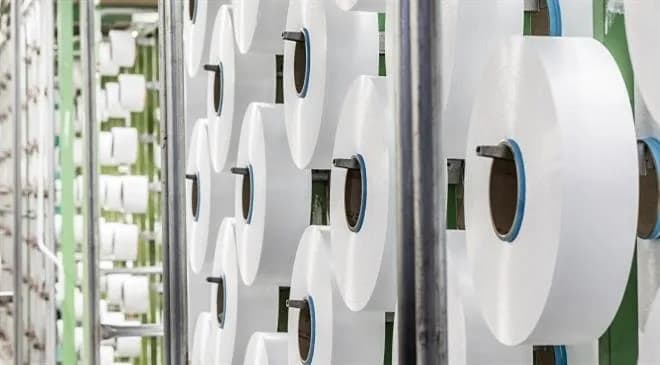
From its foundation in 1968 as Fibras ESSO, after its acquisition by SAMCA Group in 1999 and up to today, Nurel has gone through different stages, adapting to the fast changes experienced in its social, economic and industrial surroundings. Nurel managing director Jose Antonio Rodriguez speaks to Shilpi Panjabi about nylon fibres, sustainability and their future. Chemical Recycling – Green hydrogen
Q. What is the size of global market for nylon yarns? In which countries are these majorly produced?
A. There is an annual capacity of about 6.3 million tons per year, last year the world production reached 90 per cent of this capacity. The main producing country is China, which accounts for half of the world’s nylon production. After China, the US and Europe (including Turkey) top the list of the main producers.
Q. What are the various kinds of nylon fibres, and how are they differentiated?
A. There is a wide variety of nylon fibres. Starting with the polymer with which they are mainly manufactured, nylon 6 and nylon 6.6 are the polymers mainly used. There is also a small production of fibres with other biobased polyamides such as PA11 or PA 6.10, although their use is very minor. Nylon 6.6 comes from hexamethylenediamine and adipic acid and nylon 6 from caprolactam.
We can also differentiate the fibres by their different types of luster, at Nurel, for example, we have Bright, Semi-dull, Full-Dull and Ultra-full dull fibres. In addition, textile fibres can be differentiated by their decitex, and by number of filaments, they can be monofilaments, multifilaments, microfilaments or, as the latest additions in Nurel, super microfilaments. Also, another way to differentiate the fibres would be between flat and textured. At Nurel, we are specialised in the manufacture of flat yarns for the warp-knitting market. Chemical Recycling – Green hydrogen
Increasingly, the market is demanding more sustainable yarns and is making the industry move forward very quickly developing recycled, mass-dyed, biobased yarns or new biodegradable fibres, such as our Neride Bio.
Q. Besides conventional textiles, does nylon have any application in technical textiles? Please explain.
A. Nylon can be used to manufacture airbags, fastening systems, parachutes, tents. Also, for sports applications, both as a first layer and for exteriors, nylon is an excellent choice. For the first layer, there are nylon specialties that help maintain temperature and others that help manage moisture. There are also fibres, such as our Novarel fibres that can provide cosmetic benefits to the skin, that could even been use in the paramedical markets.
Q. Seeing the over five-decade experience of Nurel in nylon yarns, what is the future? Will these yarns be still in use after 20 years? Why?
A. Yes, we see a bright future for nylon. The market and the planet seek sustainable solutions for textiles.
At Nurel, we manufacture one of the nylon yarns with the lowest carbon footprint, we are also working on mass-dyed solutions to avoid emissions and water consumption in dyeing. We work on new, even more sustainable raw material sources, as well as biodegradable solutions for nylon. Chemical Recycling – Green hydrogen
It should also be remembered that garments made with nylon last longer, maintaining their properties, they do not pick up odours and have low maintenance, as they do not have to be ironed and they are washed at low temperatures.
-Fertz giant Yara to build green hydrogen demonstration plant in Norway
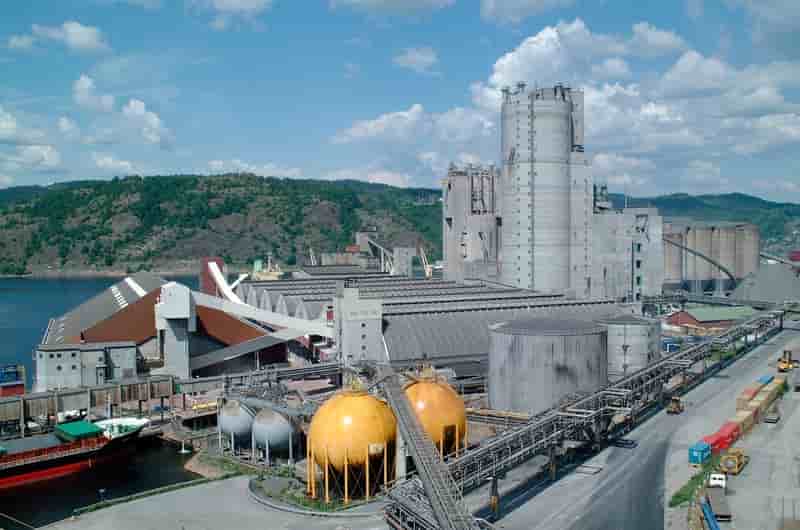
Yara on Friday teamed up with Linde Engineering for the construction and delivery of a green hydrogen demonstration plant at the fertilizer major’s ammonia production facility at Porsgrunn, Norway.
The project has been supported by a Norwegian kronor (NOK) 283m ($31.5m) grant from state-owned firm Enova. Chemical Recycling – Green hydrogen
It will demonstrate that ammonia produced using renewable energy can reduce the impact of carbon dioxide in fertilizer production, Oslo-headquartered Yara said.
Water electrolysis will produce green hydrogen to partially replace the hydrocarbon-based hydrogen production in Yara’s plant, using proton exchange membrane (PEM) technology.
It will be the second 24MW PEM electrolysis plant designed and constructed by Linde Engineering, with the first now being built at the Leuna Chemical Complex in Germany.
“The project aims to supply the first green ammonia products to the market as early as mid-2023, both as fossil-free fertilizers, as well as emissions-free shipping fuel,” said Magnus Ankarstrand, president of Yara Clean Ammonia.
“Green ammonia is the key to reducing emissions from world food production and long-distance shipping. With this project, we move from intention to actions together with Linde Engineering and local contractors.” Chemical Recycling – Green hydrogen
The plant will have an annual capacity of around 10,000 kg/day of hydrogen and will replace ethane as raw material in production, eliminating 41,000 tonnes/year of carbon dioxide emissions.
The electricity will be delivered from renewable energy sources to provide enough hydrogen to produce 20,500 tonnes/year of ammonia, which can be converted to 60,000-80,000 tonnes of green fertilizer, roughly five times the annual production of food grade wheat in Norway.
The project will be Yara’s first step towards decarbonisation of the ammonia industry.
-Europe’s developing bioeconomy lacks policy coordination
Trade group Cefic’s comments this week on Europe’s developing bioeconomy highlight the policy coordination that is needed to capitalise on better, more efficient bioprocessing at scale. Chemical Recycling – Green hydrogen
Legislative proposals might hinder development of bio-based chemicals
Waste and safety aspects: greater regularity clarity needed
Cefic asks for increased funding for bio-based chemicals research and innovation
The growing bioeconomy can support Europe’s carbon emissions reduction and the shift of this industry away from its heavy reliance on hydrocarbon feedstocks, but certain pieces of legislation and the thrust of others stand in the way.
The business case for doing more bioprocessing, or innovating in the space, is challenged. Chemical Recycling – Green hydrogen
There are waste and safety aspects, consideration of how bio-products are viewed as well as the issue of adequately funded bioprocessing research.
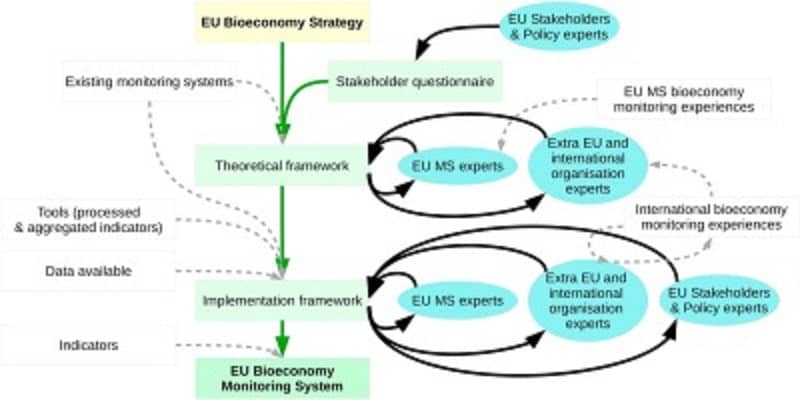
Cefic identifies these and more in a position paper released as the European Commission assesses its 2018 Bioeconomy Strategy.
That appraisal and progress report will, Cefic says, highlight the contribution of the bioeconomy to the European Green Deal – this is the overarching EU strategy that ties all parts of the EU economy to the blocs’ climate change ambitions.
The Green Deal has environmental, social and economic aspects but the chemical industry is concerned that while it views itself as an enabler in the transition towards a more climate friendly future it is not always recognised as such and will be hampered by tougher EU regulation. Chemical Recycling – Green hydrogen
Bio-based and bio-derived products can support certain EU goals, the Chemicals Strategy for Sustainability, for example and the drive by the bloc to encourage the production and use of chemicals that are safe and sustainable by design (SSbD).
The introduction of bio-based chemicals, however, as replacements for others is not always recognised as a climate friendly transition by the industry.
Cefic does ask for “incentivised, increased market recognition and promotion of a level playing-field for biobased and bio-derived products, beyond standards and labels”.
It makes 10 policy recommendations and “asks” in its position paper on the EU’s bioeconomy.
Producers require greater clarity on the regulatory front when it comes to acceptance of the new bio-based products they are pursing and the processes they are using to make them. There are waste stream aspects here, alongside acceptance of the products themselves. Chemical Recycling – Green hydrogen
The industry generally would benefit from easier access to bio-based feedstock streams and is concerned that so called first generation bio feedstocks would be excluded from the EU’s Sustainable Finance Directive, for example.
High-quality rigid foams are used as insulation material in refrigerators and in the construction industry. The use of this polyurethane (PU) insulating material has a positive impact on greenhouse gas emissions in the construction sector and in heating and cooling, but at the end of its life cycle it itself becomes a problematic material in terms of recovery or disposal. Chemical Recycling – Green hydrogen
Recycling these materials can be difficult since polyurethane is a thermoset plastic and, unlike thermoplastics (PET, PP, etc.), cannot be recycled materially. Currently, the only disposal route is incineration in waste-to-energy plants or co-incineration in the cement industry.
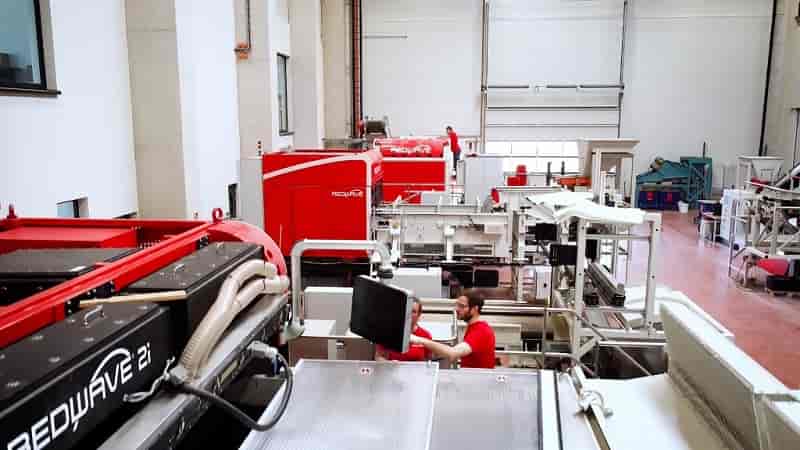
The European Green Deal project Circular Foam aims to find a sustainable solution for PU rigid foams. The plan is to convert them back into raw material for PU production in a resource-conserving manner. In addition, a sustainable recycling system is to be created. Logistics and waste collection systems, dismantling options, and intelligent sorting solutions for identifying and recovering the various polyurethane materials are being developed so that the materials can then be chemically recycled. Chemical Recycling – Green hydrogen
For this purpose, 22 industry, research, science, and association partners from nine countries have joined forces in this EU-funded lighthouse project. REDWAVE is the project’s technology partner for solutions for the detection, sorting, and recovery of the materials and provides many years of experience not only as a sorting machine manufacturer, but also as a plant manufacturer.
-Honeywell, Avangard Innovative form joint venture to chemically recycle plastics
The joint venture will use Honeywell’s UpCycle Technology to transform end-of-life plastics into recycled polymer feedstock that can be used to create new plastics.
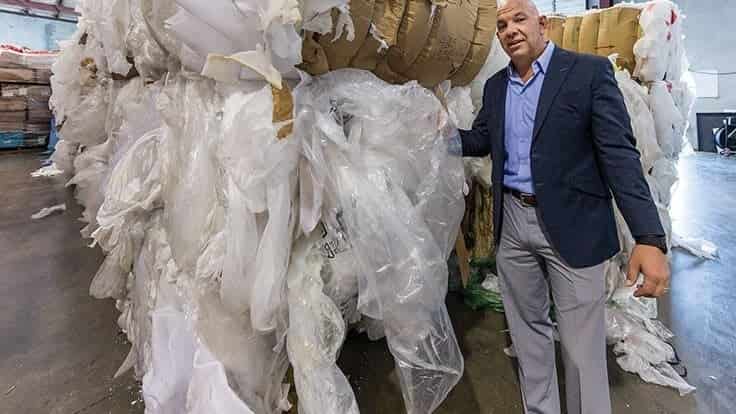
Honeywell, headquartered in Charlotte, North Carolina, has announced the formation of a second joint venture to deploy its UpCycle Process Technology to chemically recycle end-of-life plastics into polymer feedstock that can be used to produce new plastic. The company is partnering with Houston-based Avangard Innovative to build an advanced recycling plant in Waller, Texas. Chemical Recycling – Green hydrogen
In November 2021, Honeywell announced its partnership with Sacyr, a global engineering and services company headquartered in Madrid that has operations in more than 20 countries worldwide. Honeywell and Sacyr’s joint venture is planned for Andalucía, in southern Spain. Like Honeywell’s partnership with Avangard, that facility also will be able to process 30,000 metric tons of mixed plastics annually, with production expected to begin in 2023. Carrie Eppelheimer, chief commercial officer at Honeywell Sustainable Technology Solutions, declines to say what the expected output of the system will be, adding, “I know we have high yields.”
Avangard Innovative provides waste management and recycling services to businesses and mechanically recycles low-density and linear-low-density polyethylene film in Houston and Waller. It will be the first U.S. company to deploy Honeywell’s UpCycle Process Technology, with production anticipated to begin in 2023, Honeywell says. Chemical Recycling – Green hydrogen
“The UpCycle Process Technology expands the types of plastics that can be recycled to include waste plastic that would otherwise go unrecycled, enabling Honeywell to play a key role in driving a circular plastics economy,” says Vimal Kapur, president and chief executive officer of Honeywell Performance Materials and Technologies.
Honeywell says that when its technology is used with mechanical recycling and other chemical recycling processes, along with improvements to collection and sorting, it potentially can increase the amount of postuse plastic that can be recycled to 90 percent. Chemical Recycling – Green hydrogen
“Working with Honeywell on a joint advanced recycling plant allows Avangard Innovative to reinforce its mission to preserve and protect the environment by targeting zero waste to landfill,” says Rick Perez, CEO of Avangard Innovative.
“The Honeywell solution employs a modular approach to plant design, enabling a straightforward deployment and installation while striking the right balance between economy of scale and amount of waste plastic generated locally.”
-Neste Completes Chemical Recycling Trials for Plastic Wastes in Finland
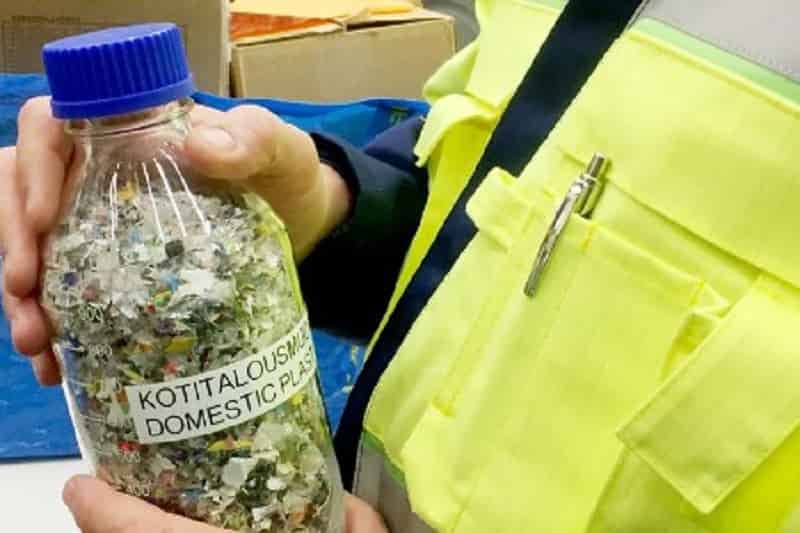
Neste successfully concludes its first series of trial runs processing liquefied waste plastic at its Porvoo refinery in Finland. After kicking the series off with its first-ever industrial scale trial run with liquefied waste plastic in 2020, Neste has conducted additional runs in 2021. Chemical Recycling – Green hydrogen
During the trial runs, Neste has been able to upgrade liquefied waste plastic to drop-in solutions for plastic production and develop industrial scale capabilities to upgrade recycled feedstocks.
Plastic Waste Into Renewable Raw Material
Neste has set itself the goal of processing more than one million tons of plastic waste per year from 2030 onwards. To achieve that goal, the company is advancing chemical recycling to turn plastic waste into a valuable raw material, strengthening circularity.
For the first time ever, Neste completed a successful trial run with 400 tons of plastic waste in 2020, marking a milestone when it comes to Neste’s goal of driving a circular economy to reduce the depletion of fossil resources.
In the course of 2021, additional trials were conducted to gain further insights into the processing of liquefied waste plastic, including the processes’ impact on the refinery operations. In addition to that, Neste also focused on proving the concept of closing the loop in the plastics value chain and making circularity a reality.
The tests validate that Neste is already able to process significant quantities of recycled raw materials to drop-in products for petrochemical use, while developing the capabilities to upgrade even larger quantities of waste plastic into even higher quality feedstock for the petrochemicals uses. Chemical Recycling – Green hydrogen
“There is strong interest in feedstocks from recycled raw materials in the polymers and chemicals market,” says Mercedes Alonso, executive vice president, renewable polymers and chemicals at Neste. “By processing liquefied waste plastic and upgrading waste into valuable resources, we thereby not only contribute to combating the plastic pollution challenge, but we also provide chemical and polymer companies with the means to advance the circular economy. To do so at a larger scale going forward, we’ll also require regulatory support. On the one hand, this includes the acceptance of chemical recycling as a complementary technology to achieve ambitious recycling targets.
On the other hand, we need similarly ambitious targets for increasing the use of more sustainable materials.” Chemical Recycling – Green hydrogen
Chemical Recycling – Green hydrogen