Chinese cars European market – Chinese Cars Are Rapidly Advancing Across Europe in 2025, But the Reality Behind Their Market Growth Is More Complex Than It Appears 11-01-2026
Chinese cars European market
Chinese Cars and the European Market in 2025: Growth Without Full Dominance
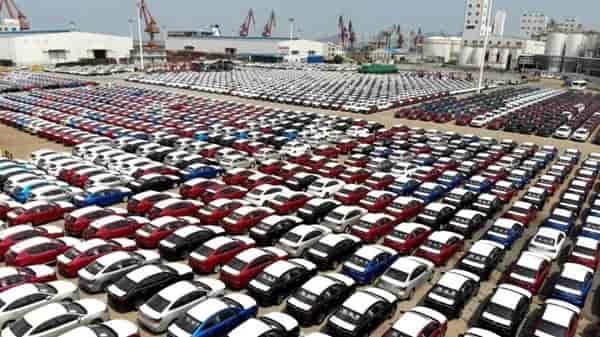
The year 2025 has marked a turning point for Chinese cars in the European market. Chinese manufacturers have moved from being niche players to becoming visible competitors across Europe, especially in the electric vehicle segment. Driven by competitive pricing, rapid technological development, and strong government support at home, Chinese cars are now a key topic in discussions about the future of the European automotive industry. Chinese cars European market
Yet while the numbers show impressive growth, they do not fully confirm that Chinese cars have taken over the European market. Instead, they reveal a fast-expanding presence that still faces structural, regulatory, and competitive limits.
Market Share Growth Across Europe
Chinese cars significantly increased their European market share during 2025. In the first eight months of the year, Chinese brands accounted for approximately 5.3 percent of new car registrations across the 30 main European markets, including the European Union, the United Kingdom, Switzerland, and Norway. This was a notable rise compared to 3.2 percent during the same period in 2024.
September 2025 marked a record moment. Chinese cars reached a 7.4 percent market share, surpassing several established Asian competitors. On a half-year basis, growth remained consistent. During the first half of 2025, Chinese car registrations in Europe rose by 91 percent year on year, reaching 347,000 units and a market share of 5.1 percent. Chinese cars European marke
These figures confirm strong momentum, but they also show that Chinese cars are still far from dominating a market led by European, American, Japanese, and South Korean manufacturers. Chinese cars European marke
Leading Chinese Brands in Europe
The expansion of Chinese cars in Europe has been driven by a small group of rapidly scaling brands. MG remains the best-selling Chinese brand in Europe, with 33,536 units sold in September alone. BYD followed closely with 24,336 registrations, while the Chery Group, which includes Omoda, Jaecoo, and Chery, reached 18,454 units. Chinese cars European marke
Together, these brands accounted for 83 percent of all Chinese car sales in Europe during that month. The Geely Group ranked fourth with 7,465 units, posting a 36 percent increase. Chinese cars European marke
From January onward, cumulative sales of Chinese cars in Europe reached 522,587 units, an 83 percent increase year to date. MG led with 225,783 vehicles sold, while BYD recorded growth of 308 percent. Chery showed the fastest expansion, increasing sales by 862 percent, highlighting how quickly newer Chinese brands are penetrating European markets.
Electric and Hybrid Vehicles as Strategic Drivers
Electric vehicles remain central to the strategy of Chinese cars in Europe. Chinese manufacturers have leveraged advanced battery technology and cost-efficient production to offer competitively priced electric models. This has positioned them well in a market shaped by strict emissions regulations and government incentives. Chinese cars European marke
However, recent data suggests that growth is stabilizing. In the electric vehicle segment, Chinese brands held an 11.8 percent share across the European Union, EFTA countries, and the United Kingdom, down from 12.6 percent earlier in the year. A similar pattern appeared in the hybrid category, where the share declined to 12.6 percent after peaking in September.
These shifts indicate that while Chinese cars are competitive, European consumers still balance price with brand trust, dealership networks, and long-term reliability. Chinese cars European marke
New Entrants Reshaping Competition
Much of the recent growth has come from newer Chinese manufacturers rather than established names alone. Chery Automobile and Leapmotor have expanded rapidly in Europe during 2025 by targeting price-sensitive buyers and offering flexible powertrain options.
Chery has focused on southern European markets such as Italy and Spain through its Omoda and Jaecoo brands. Leapmotor has strengthened its partnership with Stellantis, which integrated the T03 electric city car into its European lineup. With a price below €19,000, the T03 has positioned itself as one of the most accessible electric vehicles in Europe.
This approach allows Chinese cars to compete in segments where affordability is a decisive factor, especially as inflation continues to affect household budgets. Chinese cars European marke
A Symbolic Shift in Market Dynamics
September 2025 represented a symbolic milestone for Chinese cars in Europe. For the first time, Chinese brands collectively outsold South Korean manufacturers such as Kia. This shift was supported by a broader product mix, extending beyond pure electric vehicles to include hybrids that better match current European demand. Chinese cars European marke
BYD played a particularly important role in this transition. Over the past year, BYD more than tripled its European sales. In November alone, registrations in the European Union reached 16,158 units, compared to 4,821 the previous year. Including the United Kingdom, Norway, and Switzerland, BYD exceeded 21,000 registrations.
Between January and November, BYD sold nearly 160,000 vehicles in Europe. While this remains far below Volkswagen’s multi-million-unit sales and Tesla’s strong position, BYD’s 276 percent growth rate stands out as one of the fastest in the region.
Are Chinese Cars Truly Dominating Europe?
Despite rapid expansion, Chinese cars have not yet achieved structural dominance in the European market. Their overall market share remains relatively modest, and growth is concentrated in specific segments and regions. European manufacturers continue to lead in brand loyalty, dealer infrastructure, and after-sales services.
Chinese cars are reshaping competition, accelerating price pressure, and forcing innovation, especially in electric vehicles. However, long-term dominance will depend on regulatory outcomes, consumer trust, local production strategies, and the ability to sustain quality and service standards. Chinese cars European marke
In 2025, Chinese cars are no longer outsiders in Europe. They are serious contenders, but the European automotive market remains a complex and highly competitive landscape.
More….