Ecofriendly plastic – Breakthrough Eco-Friendly Plastic From Plant Cellulose Promises Ocean-Safe Decomposition Without Microplastics, Transforming the Future of Sustainable Materials Worldwide 17-12-2025
Ecofriendly plastic
Eco-friendly plastic From Plant Cellulose –
Introduction
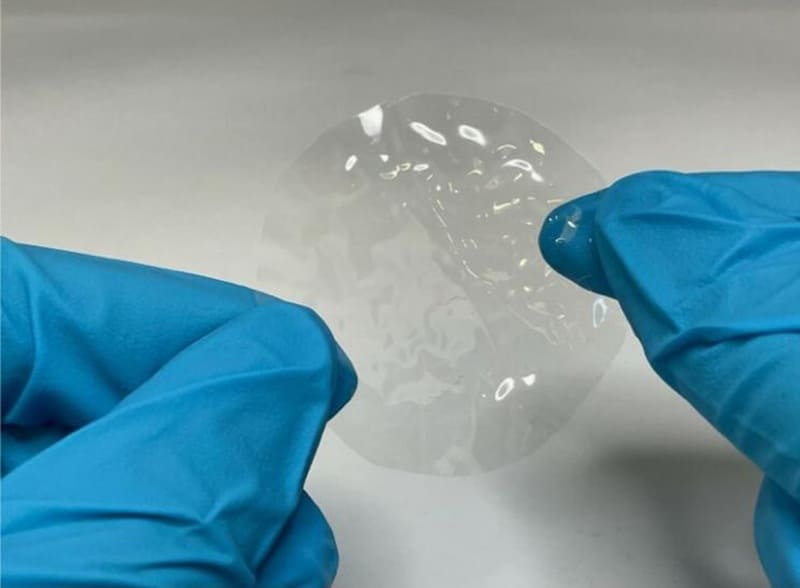
A major scientific breakthrough may redefine how the world thinks about plastic. Researchers at the RIKEN Center for Emergent Matter Science in Japan have developed an eco-friendly plastic made entirely from plant-based cellulose that safely decomposes in ocean environments without leaving behind microplastics.
Led by Takuzo Aida, the research addresses one of the most persistent environmental challenges of our time. Microplastics now contaminate nearly every ecosystem on Earth, from oceans and soil to plants, animals, and even the human bloodstream. This new material offers a promising alternative to conventional plastics and many so-called biodegradable plastics that fail to degrade fully in real-world conditions.
Why Microplastics Are a Global Crisis
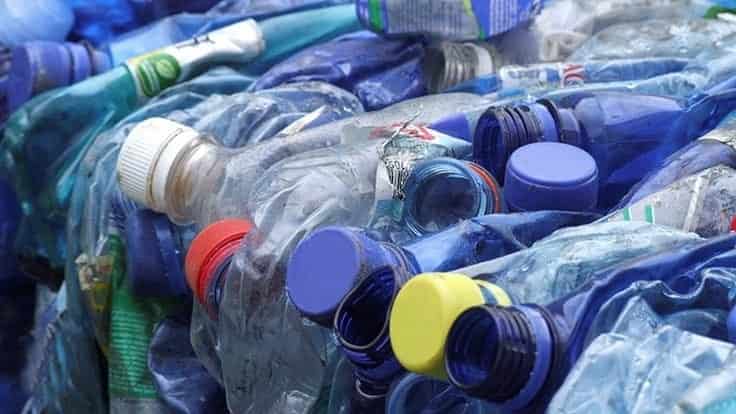
Microplastics are tiny plastic fragments created when larger plastics degrade incompletely. These particles persist in nature for decades and accumulate across food chains. Scientific studies increasingly associate microplastics with harmful biological effects, including inflammation and cellular stress.
While biodegradable plastics exist, most do not break down effectively in marine environments. Instead, they fragment slowly, producing microplastics long before full decomposition occurs. This reality has driven the urgent search for truly ocean-safe materials.
A New Generation of Eco-Friendly Plastic
The newly developed eco-friendly plastic is based on cellulose, the most abundant organic compound on Earth. Cellulose is produced naturally by plants in enormous quantities, making it renewable, sustainable, and widely available.
Unlike previous biodegradable plastics, this plant-based plastic decomposes rapidly in saltwater environments without generating microplastic debris. This feature makes it especially suitable for applications where plastic leakage into oceans is difficult to prevent.
Building on Earlier Research Success
This breakthrough builds on earlier work by the same research team. In a previous study, they introduced a supramolecular plastic that decomposed in seawater within hours. That earlier version relied on two polymers held together by reversible molecular interactions that broke apart in salty conditions.
While conceptually successful, the earlier plastic faced limitations in large-scale manufacturing. The new eco-friendly plastic improves on that design by using commercially available and widely approved materials, making industrial adoption far more realistic.
The Science Behind the Material
The new plastic combines two key components:
-
Carboxymethyl cellulose, a biodegradable wood-pulp derivative already approved for food and pharmaceutical use
-
A positively charged crosslinking agent derived from polyethylene-imine guanidinium ions
When mixed in water at room temperature, the negatively charged cellulose and positively charged ions naturally attract each other. This attraction creates a strong cross-linked network that gives the eco-friendly plastic its durability.
In seawater, however, salt disrupts these molecular bonds. The structure breaks apart cleanly, allowing the material to dissolve without leaving microplastics behind. To prevent premature degradation during use, the plastic can be protected with a thin surface coating.
Solving the Brittleness Challenge
Early versions of the cellulose-based plastic were strong but brittle. The material was transparent and hard, yet prone to cracking like glass. To solve this issue, researchers searched for an effective plasticizer that would improve flexibility without compromising strength.
They found success with choline chloride, an FDA-approved organic salt commonly used as a food additive. By adjusting the amount of choline chloride, scientists gained precise control over the material’s mechanical properties.
The resulting eco-friendly plastic can be engineered to behave in multiple ways:
-
Rigid and glass-like for durable products
-
Flexible and elastic, stretching up to 130 percent of its original length
-
Thin yet strong films measuring as little as 0.07 millimeters thick
This tunability makes the material suitable for a wide range of real-world applications.
Performance Comparable to Conventional Plastics
Despite its plant-based origin, the new eco-friendly plastic matches the strength of many petroleum-based plastics. It maintains transparency, processability, and durability while adding unique environmental advantages.
The material is also recyclable in a closed-loop system, meaning it can be reprocessed without degrading its performance. This combination of strength, flexibility, recyclability, and ocean-safe decomposition sets it apart from existing alternatives.
Scalability and Commercial Potential
A key advantage of this innovation is its reliance on inexpensive, widely available, and approved ingredients. Cellulose is produced naturally at massive scale, with nature generating approximately one trillion tons annually.
Because the eco-friendly plastic uses existing industrial materials and simple water-based processing, it is well positioned for rapid commercialization. This practical approach shortens the path from laboratory research to everyday consumer and industrial products.
Implications for Global Plastic Pollution
This breakthrough represents a meaningful step toward reducing plastic pollution at its source. By replacing conventional plastics with materials that safely disappear in marine environments, the long-term accumulation of microplastics can be significantly reduced.
The eco-friendly plastic developed by the RIKEN team demonstrates that sustainability and performance no longer need to be mutually exclusive. It provides a blueprint for how future materials can align with both environmental protection and industrial demand.
Conclusion
The development of a plant-based, ocean-safe eco-friendly plastic marks a turning point in materials science. By leveraging abundant cellulose and smart molecular design, researchers have created a plastic that meets modern performance needs while addressing one of the planet’s most urgent environmental challenges.
As industries seek scalable solutions to plastic pollution, this innovation offers hope for a cleaner, safer, and more sustainable future.
More...