EV Cars – VTT and Telaketju Network Push for Faster Textile Recycling Legislation The VTT Technical Research Centre of Finland and the Telaketju network of textile companies are urging the European Union to accelerate legislation that makes textile producers responsible for recycling 03-08-2025
EV Cars
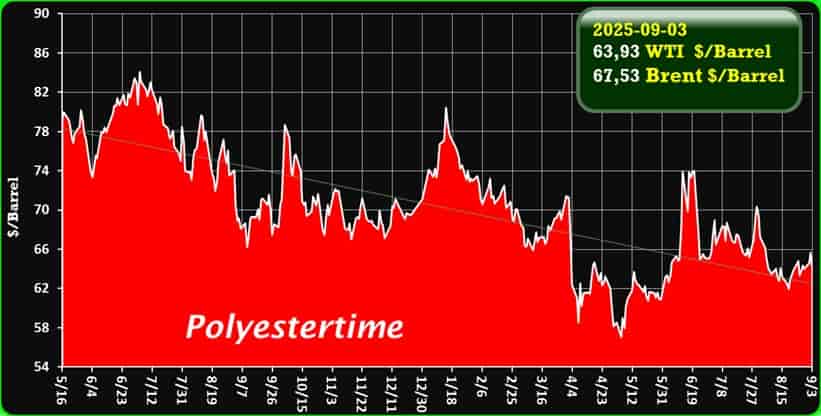
Crude Oil Prices Trend
?? EU Policy Brief Pushes for Stronger Bio-Based Innovation Policies
A new policy brief urges the European Commission to strengthen cooperation, financing, and market conditions to fully unlock Europe’s bioeconomy potential.
?Why Bio-Based Innovation Matters
The European Union is at a pivotal moment in shaping its future economy. With climate change, biodiversity loss, and resource scarcity pressing harder than ever, the EU is turning to bio-based innovation as a key solution. A thriving bioeconomy can provide sustainable alternatives to fossil-based systems and spur innovation across food, energy, materials, and industrial processes. EV Cars
Recognizing this, the EU-funded ShapingBio project has released a new policy brief calling for concrete measures that could transform the EU’s bioeconomy landscape. These insights will feed into the upcoming New EU Bioeconomy Strategy, an essential component of Europe’s transition to a circular and climate-neutral economy.
?Key Recommendations at a Glance
The policy brief identifies urgent gaps and offers practical steps to address them. The main recommendations include:
- Stronger strategic cooperation: Improve coordination across Member States and regions by fostering dialogue between education, industry, civil society, and policymakers. EV Cars
- Improved financing access: Align funding mechanisms with innovators’ needs, support higher Technology Readiness Levels (TRLs), and expand public-private partnerships to help scale ideas from lab to factory.
- Harmonized market conditions: Standardize and support demand-side policies that accelerate the adoption of bio-based products across Europe.
These measures aim not only to strengthen innovation but also to secure Europe’s position as a global leader in sustainable biomanufacturing.
?A Collective Effort with Stakeholders
The recommendations are backed by an extensive consultation process. Nearly 2,000 bioeconomy stakeholders—including policymakers, industry leaders, researchers, and civil society—contributed through surveys, interviews, and 45 events organized between 2022 and 2025. EV Cars
Sven Wydra, coordinator of the ShapingBio project and Business Unit Bioeconomy and Life Sciences at Fraunhofer ISI, highlighted the importance of unity:
“Europe has strong assets in the bioeconomy, from diverse biomass resources to leading research and innovation. But fragmented strategies and uneven capacities hold us back. To deliver on sustainability and stay competitive, we need coherent policies that promote collaboration, better financing, and Europe’s leadership in sustainable biomanufacturing.” EV Cars
?Why the Bioeconomy Is Essential
The bioeconomy isn’t just about science—it’s about society. By replacing fossil-based systems, it directly addresses challenges such as:
- ?️ Climate change mitigation
- ? Biodiversity preservation
- ⚡ Resource and energy security
- ?️ Food system resilience
Cross-sectoral collaboration is critical here. Bio-based innovations can reshape agriculture, industry, and energy production, but they require supportive governance and a strong ecosystem to succeed.
?Detailed Recommendations
Beyond the headline points, the ShapingBio project has produced in-depth analyses covering:
- Policy and governance alignment across Member States EV Cars
- Applied research, development, and technology transfer
- Cross-sectoral collaboration between industries and academia
- Improved financing frameworks for scaling up innovation
These detailed reports provide actionable pathways for policymakers to bridge the gap between strategic goals and practical implementation. The documents are freely accessible online, offering guidance not just for the Commission, but also for Member States and stakeholders throughout Europe.
?Alignment with Europe’s Green Agenda
The policy brief directly supports flagship EU initiatives such as the Clean Industrial Deal and the Circular Economy Action Plan. By implementing ShapingBio’s EV Cars recommendations, Europe could accelerate its transformation into a resilient, competitive, and climate-neutral economy.
This alignment ensures that bio-based innovations won’t just remain niche solutions but will become mainstream pillars of Europe’s sustainability agenda in the decades ahead.
?About the ShapingBio Project
ShapingBio is an EU-funded project coordinated by Fraunhofer ISI. Its mission is to reduce fragmentation across bio-based sectors and strengthen the food system by providing evidence-based recommendations for better policy alignment.
The project plays a crucial role in translating research into actionable policies, bridging the gap between knowledge and real-world deployment.
Its cross-sectoral focus ensures that the bioeconomy’s potential is maximized across industries, regions, and governance levels. EV Cars
?Looking Ahead
The upcoming New EU Bioeconomy Strategy represents a decisive step toward a sustainable European future. With ShapingBio’s recommendations in hand, the European Commission has the tools to:
- Promote stronger collaboration between countries and regions
- Unlock new financing channels for innovators
- Create favorable market conditions for bio-based solutions
If implemented effectively, these measures could cement Europe’s leadership in bio-based innovation while securing both environmental and economic resilience. EV Cars

⚡ ORLEN & Synthos Agreement Paves the Way for Poland’s First SMR Nuclear Power Plant
Location: Włocławek, Poland | Sector: Energy & Innovation
Historic Milestone for Poland’s Energy Future
?ORLEN and Synthos Green Energy have officially finalized an agreement that marks the beginning of Poland’s journey into the era of small modular reactors (SMRs). This partnership will lead to the construction of the country’s first SMR power plant in Włocławek, setting a benchmark for energy transformation in Europe. EV Cars
“Poland will host the first BWRX-300 small modular reactor in Europe. We are building the energy system of tomorrow,” emphasized Ireneusz Fąfara, President of the Management Board of ORLEN.
His remarks highlight not just the national importance of the project, but also its strategic role in strengthening Europe’s clean energy ecosystem. EV Cars
Key Elements of the Agreement
The newly signed deal between ORLEN and Synthos Green Energy is built on two
foundational pillars:
- Equal Partnership: A revised shareholder agreement ensures that both companies maintain a 50/50 equity stake. This balance guarantees equal rights and shared responsibilities in decision-making.
- Access to Advanced U.S. Technology: A licensing agreement grants full rights to the BWRX-300 reactor technology (Standard Design) from GE Vernova, one of the most advanced SMR designs in the world. ??
Together, these pillars not only strengthen corporate governance but also provide the technical backbone required to move forward with construction in Włocławek.
?The BWRX-300: A Cutting-Edge SMR Design EV Cars
The BWRX-300 reactor, developed by GE Vernova, represents a new generation
of nuclear technology. Compact yet powerful, this SMR design is hailed as one of the most
commercially advanced in the global market.
For Poland, adopting this technology is not just about energy production — it is about
positioning the country as a European leader in next-generation nuclear innovation.
The move enhances energy security while aligning with EU climate goals. EV Cars
Equal Rights & Shared Governance
One of the most significant outcomes of the negotiations is the equalisation of partner rights.
Both ORLEN and Synthos Green Energy will share governance responsibilities, ensuring fair oversight and smooth execution of this strategic project.
Highlights of the governance structure include:
- Alternating appointments of the President of the Management Board and
Chair of the Supervisory Board, rotating every three years. - ORLEN holding the initial right to appoint the Chair of the Supervisory Board, while Synthos nominates the first President of the Management Board.
- Creation of a Steering Committee tasked with supervising the implementation and operational decisions related to OSGE and future reactor projects.
This balance ensures transparency, efficiency, and accountability throughout the project’s
lifecycle. EV Cars
Strategic Roadmap: Two Reactors by 2035
The adoption of SMR technology is embedded in ORLEN’s long-term vision, outlined in the
strategy “The Energy of Tomorrow Starts Today.” According to this plan, the Group is
committed to building at least two SMR units with a combined capacity of
0.6 GW by 2035. ?
This initiative will:
- Strengthen Poland’s energy independence
- Support the country’s decarbonization agenda
- Create new opportunities for innovation, jobs, and investment
With Włocławek as the priority site, Poland’s energy transformation is moving from plans to practical execution. EV Cars
Why Włocławek?
The choice of Włocławek as the first SMR site is not accidental. The location
offers strategic advantages in terms of infrastructure, accessibility, and integration into
ORLEN’s broader operations. ?
As a city with a strong industrial base, Włocławek is uniquely positioned to host the
country’s first next-generation reactor, potentially serving as a model for future SMR
projects across Poland.
What This Means for Poland & Europe
The ORLEN-Synthos collaboration goes beyond corporate interests. It represents a shift in
European energy policy, bringing Poland to the forefront of nuclear innovation.
Benefits include:
- Reduced reliance on fossil fuels and imports EV Cars
- Enhanced national and regional energy security
- Contribution to EU climate neutrality goals
- Positioning Poland as a regional hub for advanced nuclear expertise
This project also opens opportunities for future cross-border collaborations in nuclear
technology and renewable integration.
Looking Ahead
With the agreement now in place, ORLEN and Synthos Green Energy are ready to move forward with tangible next steps. From licensing to site preparation and eventual
construction, the roadmap is clear: deliver Poland’s first operational SMR reactor in
Włocławek. ?️ EV Cars
The project will not only supply clean, reliable energy but also signal a
transformational shift in how Poland and Europe approach nuclear technology in
the 21st century.

??Hyundai & Jaguar Land Rover Explore Bio-Based Faux Leather for Future Models
Automakers are rethinking what luxury feels like. Both Hyundai and Jaguar Land Rover (JLR) are testing a new bio-based faux leather that could reshape the future of car interiors. Developed by New York–based startup Uncaged Innovations, the material promises not only to look and feel like genuine leather, but also to capture its distinctive scent—something traditional synthetic leathers have never achieved. EV Cars
? Uncaged’s faux leather is made from plant proteins such as wheat, soy, and corn—reducing carbon emissions by up to 95% compared to traditional leather tanning.
A Shift Toward Sustainable Materials
As sustainability moves to the forefront of the automotive industry, Hyundai’s Cradle innovation arm is partnering with startups that can help reimagine the interior experience. JLR is also evaluating bio-based faux leather as part of its broader focus on luxury innovation and environmental responsibility.
Unlike petroleum-based synthetics, Uncaged’s solution harnesses natural proteins engineered to mimic the fibrous structure of animal hides. This results in a more authentic texture that comes closer than ever to genuine leather. According to TechCrunch, automakers are showing serious interest because the material not only reduces environmental impact but could also outperform existing alternatives in durability and realism. EV Cars
?The Science Behind the Material
Leather alternatives have been around for decades, but what sets Uncaged apart is its biomimicry. By structuring plant proteins at the molecular level, the company has managed to replicate the look, feel, and smell of animal-based leather. This leap in material science addresses a critical challenge for automakers who want to maintain luxury standards while embracing sustainability.
Durability remains the toughest hurdle. Automotive leather must endure heat, UV exposure, and constant wear. “One of the automotive companies wants us to be at 95°C for 500 hours,” said Stephanie Downs, co-founder and CEO of Uncaged. “We’ve already reached 85°C for 500 hours in our first round of testing.”
This progress signals that the material could soon meet industry standards for long-term performance. EV Cars
Beyond Green: Cost and Efficiency
Leather interiors are expensive and wasteful. A single car interior can require several cowhides, much of which ends up discarded due to blemishes. Uncaged’s faux leather offers consistent quality with minimal waste. Sheets are uniform, easy to scale, and priced at under $10 per square foot for small orders—making it competitive with traditional leather. At mass production, costs could drop even further, appealing to automakers seeking both luxury and affordability.
?The Scent Factor
One surprising innovation is the recreation of leather’s iconic scent. For many drivers, the “new car smell” is strongly associated with leather interiors. Automakers are even exploring the possibility of offering signature scents tailored to different brands. This could open a new frontier in sensory branding, blending sustainability with consumer psychology. EV Cars
⚠️Challenges Ahead
Despite impressive progress, challenges remain before bio-based faux leather can fully replace traditional hides in cars:
- Heat resistance: Must reach and maintain industry benchmarks for prolonged exposure.
- Longevity: Needs to withstand years of wear and tear without cracking or fading.
- Consumer perception: Luxury buyers may resist alternatives until proven indistinguishable.
Still, with automakers like Hyundai and JLR pushing forward, the path to widespread adoption looks promising. EV Cars
?The Bigger Picture: Sustainability in Mobility
This innovation fits within a broader trend of automakers investing in sustainable materials. From recycled plastics to natural fibers, carmakers are working to reduce their environmental footprint while still meeting consumer expectations for comfort and luxury.
Uncaged’s technology could be part of a larger shift where sustainability is no longer a compromise but a selling point. As climate regulations tighten and consumer awareness grows, materials like bio-based faux leather can become a differentiator in brand identity.
Implications for the Automotive Market
If successful, Uncaged’s bio-based leather could influence not just passenger vehicles but also luxury fleets, aviation, and consumer goods. EV Cars
Its scalability and cost efficiency make it attractive across industries. For automakers, adopting such innovations also supports compliance with evolving regulations and enhances brand reputation among eco-conscious buyers.
? Key Benefits for Automakers:
- Up to 95% lower carbon footprint
- Uniform quality with less waste
- Cost competitive with genuine leather
- Ability to customize scent and texture
- Stronger alignment with sustainability goals EV Cars
What’s Next for Hyundai and JLR?
Hyundai has been clear about its ambition to lead in sustainable mobility. The company’s partnership with Uncaged aligns with its broader innovation strategy under the Cradle program. Meanwhile, JLR is looking to integrate sustainable luxury into its portfolio as it transitions to electrification and new mobility models.
If the bio-based leather passes durability and safety tests, it could debut in production vehicles within a few years. This would mark a milestone for sustainable materials in the automotive industry.
??Upcoming Launches in India
In addition to exploring futuristic interiors, Hyundai is preparing for major product launches. The brand is set to unveil the next-generation Venue in India on October 24, 2025. The move underscores Hyundai’s dual focus: sustainable innovation for the future and strong market presence today. EV Cars
Final Thoughts
The future of automotive interiors may not be leather at all—but something that looks, feels, and smells even better. By embracing bio-based faux leather, Hyundai and JLR are signaling that sustainability and luxury can coexist. For drivers, that means stepping into cars that not only look stunning but also align with a greener, more responsible future.
♻️VTT and Telaketju Network Push for Faster Textile Recycling Legislation
The VTT Technical Research Centre of Finland and the Telaketju network of textile companies are urging the European Union to accelerate legislation that makes textile producers responsible for recycling. Without proper regulation, experts warn that Europe risks losing both environmental and economic opportunities tied to textile waste management. EV Cars
? Each year, Europe discards around 10 billion kilograms of textile waste. With a value of €2–3 per kilogram, this represents a multibillion-euro opportunity for businesses—if recycling systems are put in place.
Why Faster Legislation Matters
According to Ali Harlin, research professor at VTT, meaningful progress in textile recycling hinges on robust legislation. The EU has been working on a revision of the Waste Framework Directive, which aims to extend producer responsibility to the textile sector. This would mean that companies—not consumers or municipalities—must organize and finance textile recycling. EV Cars
Such a move would align textiles with other industries already governed by Extended Producer Responsibility (EPR), such as packaging and electronics. By making textile companies accountable, the EU can ensure more systematic collection, sorting, and repurposing of materials.
The Role of Minimal Processing in Recycling
Pirjo Heikkilä, principal scientist at VTT, stresses that recycling should follow the principle of minimal processing. This means prioritizing mechanical recycling whenever possible. In this process, fabrics are shredded back into fibers, which can then be reused in new textiles. EV Cars
However, when materials are heavily degraded or mixed in quality, chemical recycling becomes necessary. This method breaks fibers down to the polymer or monomer level, allowing them to be rebuilt into high-quality raw materials for future use.
?Reshoring and European Cooperation
Harlin also notes that scaling up textile recycling could bring production activities back to Europe. Today, recycling technology is advancing quickly in Northern and Western Europe, while manufacturing capacity largely resides in Eastern and Southern Europe. A functioning recycling ecosystem requires strong Europe-wide cooperation. EV Cars
To operate efficiently, a single chemical recycling plant needs raw material from roughly ten mechanical recycling facilities. This interdependency makes collaboration across national borders essential.
Innovation in Recycling Technologies
Encouraging progress is already being made. The Finnish company Infinited Fiber has successfully demonstrated cotton recycling and is building a new fiber factory in Kemi. Moreover, new technologies are emerging that will soon enable the separation of cotton and polyester, opening the door for large-scale polyester recycling. EV Cars
? Recycled textiles aren’t limited to clothing. They can also become:
- Nonwoven fabrics
- Wind turbine blades
- Vehicle sound insulation
- Concrete reinforcements (lighter and more fire-resistant)
- Road asphalt additives (reducing rut formation)
⚠️Challenges of Fast Fashion
The rise of ultra-fast fashion poses a significant obstacle. Cheap, low-quality garments often combine multiple fiber types, making them difficult to recycle. As a result, the economic viability of recycling is reduced. EV Cars
Why Workwear Leads the Way
In contrast, the workwear sector has proven far more sustainable. Work clothing is typically purchased as a service, which means garments are maintained, repaired, and used for as long as possible. Once they reach end-of-life, recycling is easier because the materials are standardized and well-documented.
“This business model encourages durability and high-quality textiles,” Heikkilä explains. “It also makes it simpler to return textiles into the circular loop.”
When Recycling Isn’t Possible
According to Eetta Saarimäki, senior scientist at VTT, not all textiles can be recycled back into clothing. Complex blends or heavily processed fabrics may not be suitable for fiber-to-fiber recycling. Instead, thermo-mechanical recycling allows them to be transformed into composite products, giving these materials “one more life.” EV Cars
Research Projects and Collaboration
The Telavalue project, part of the larger Telaketju network, worked extensively to find solutions for textile waste. It was supported by Business Finland alongside 17 companies and research organizations. Today, the research continues under EU-funded projects like tExtended and Pesco-Up, which are evaluating the economic and environmental impacts of various recycling methods.
Collaboration across industries, universities, and governments remains crucial for scaling solutions that will help Europe meet its sustainability goals and unlock the business potential of textile recycling. EV Cars
?Key Takeaways
- EU legislation is urgently needed to make textile producers responsible for recycling.
- Minimal processing should guide recycling, prioritizing mechanical over chemical methods where possible.
- European cooperation is essential to build a functioning textile recycling ecosystem.
- Innovations in cotton and polyester recycling show promising commercial applications.
- Workwear provides a model for circular textiles, while ultra-fast fashion remains a major barrier. EV Cars
⚡Breakthrough for Ultra-Fast Charging of Sodium-Ion Batteries
?Sodium-ion batteries are emerging as a promising alternative to lithium-ion technology, offering potential benefits in cost, availability, and sustainability . Until recently, their limited efficiency and charging speed kept them on the sidelines, with very few electric cars adopting them. But new research from the Helmholtz Institute in Berlin may have changed the game.
??The Sodium-Ion Opportunity
Lithium is scarce and expensive, while sodium is abundant and widely available. This fundamental difference makes sodium-ion batteries attractive for large-scale applications, particularly in the electric vehicle (EV) industry and grid energy storage. Yet, performance challenges—especially slower charging rates—have held sodium-ion technology back from mass adoption. EV Cars
Now, German scientists have made a surprising discovery: a process once thought harmful might actually unlock the door to ultra-fast charging and improved efficiency.
?The Co-Intercalation Discovery
The breakthrough centers on co-intercalation—the simultaneous insertion of sodium ions and solvent molecules into the cathode material. Traditionally, this process was seen as damaging, reducing battery stability and lifespan. But the Helmholtz research team found the opposite: co-intercalation can increase performance without capacity loss.
According to lead researcher Philipp Adelhelm, this surprising result opens a “new avenue for designing very fast-charging sodium-ion batteries.” EV Cars
?Testing the Limits of Performance
To validate their findings, the team experimented with different transition metal sulfides as cathode materials. By carefully measuring volume changes during charge and discharge cycles, they identified the optimal balance between sodium ions and solvent molecules. The results were striking: energy storage and release occurred at rates comparable to supercapacitors—devices known for near-instant energy delivery. EV Cars
This means sodium-ion batteries could one day combine the high energy density of conventional batteries with the lightning-fast responsiveness of supercapacitors.
?Industry Implications
The research is not happening in isolation. Battery companies like Northvolt and CATL are already investing heavily in sodium-ion technology. With this breakthrough, the path to commercialization becomes much clearer:
- ⚡ Faster charging → EVs powered by sodium-ion batteries could charge in minutes instead of hours.
- ? Greater sustainability → Sodium is abundant, reducing dependence on scarce lithium resources. EV Cars
- ? Lower costs → Affordable battery packs make EVs accessible to more consumers worldwide.
- ? Scalability → Sodium-ion batteries could be mass-produced for both vehicles and grid energy storage.
?From Risk to Breakthrough
Exploring co-intercalation was a bold move because it contradicted decades of conventional battery knowledge. “It was extremely risky,” said Adelhelm, “but we’ve now opened a new pathway to design batteries that are both highly efficient and ultra-fast charging.”
This kind of paradigm shift illustrates how challenging traditional assumptions can lead to transformative advances. EV Cars
?⚡Why This Matters for Electric Vehicles
The EV market is expanding rapidly, but adoption is still hindered by concerns over charging infrastructure and waiting times. Consumers want the convenience of “refueling” in minutes, not hours. With sodium-ion batteries gaining supercapacitor-like speed, the user experience could finally match—or even surpass—that of gasoline vehicles.
Furthermore, sodium-ion’s reliance on abundant resources reduces geopolitical risks tied to lithium supply chains, offering greater stability for the EV industry.
?️The Road Ahead
While promising, sodium-ion batteries are not yet ready to replace lithium-ion technology everywhere. Several steps remain before mass deployment:
- ? Scaling production to meet the demand of EV manufacturers.
- ? Further research to optimize co-intercalation across different cathode materials. EV Cars
- ? Industry partnerships between researchers, automakers, and energy companies.
- ⚙️ Testing durability under real-world conditions, ensuring long-term performance and safety.
Still, the direction is clear: sodium-ion batteries are moving from experimental labs to commercial applications.
?Conclusion
⚡?The discovery that co-intercalation boosts efficiency and enables ultra-fast charging represents a landmark moment in sodium-ion battery research. With backing from major industry players and the potential to transform both EVs and renewable energy storage, this breakthrough could accelerate the shift to a cleaner, faster, and more sustainable energy future. EV Cars
What was once seen as a flaw is now a feature. And that feature may soon power the next generation of electric vehicles.
Fast charging made zinc-ion batteries stronger — a surprising lab finding and why it matters
Georgia Tech researchers found that faster charge rates can suppress dangerous zinc dendrites and improve lifetime — opening doors for safer, lower-cost energy storage for homes and the grid. EV Cars
What the researchers discovered
Conventional wisdom says fast charging accelerates degradation. That’s true for many lithium-ion chemistries — push current into the cell too quickly and needle-like dendrites form, leading to short circuits and failure. But a research team led by Associate Professor Hailong Chen at Georgia Tech observed the opposite in zinc-ion batteries: when charged quickly, zinc deposited in smooth, dense layers instead of dangerous spines.
The result: fewer short circuits and an anode that holds up better over time. The team published the work in Nature Communications, reporting that increasing the charge rate suppressed dendrite formation and improved overall anode stability. EV Cars
Why zinc matters as an alternative
Zinc stands out for three practical reasons: cost, safety, and abundance. Unlike lithium, zinc is widely available and cheaper to source. Zinc chemistries are also less prone to thermal runaway, making them a safer choice for large-scale or residential storage.
The challenge has always been dendrites. These sharp metal structures grow during charge cycles and can puncture separators, causing internal shorting. The Georgia Tech results show a charging strategy that flips this problem on its head — encouraging zinc to form compact layers rather than needles. EV Cars
How the team showed it
Chen’s group built a custom real-time imaging setup that let them observe zinc deposition across many samples simultaneously while varying charge rates. Rather than testing one condition at a time, they could compare behaviors side-by-side. Watching the metal’s structure evolve in situ was key: the team could directly link charge rate to morphology and map how different speeds affected dendrite suppression.
That kind of high-throughput, real-time observation accelerated insight and revealed patterns researchers might have missed using single-variable experiments.
Limitations and next steps
The discovery is focused primarily on the zinc anode. The cathode materials used in these zinc-ion systems still need work to reach the same performance and longevity. Chen’s team is experimenting with cathode chemistry and zinc alloy blends to make full cells more robust and commercially viable. EV Cars
The group estimates that, if development continues at pace, zinc-ion systems could move to commercial deployment within about five years — particularly in stationary applications where safety and cost matter most.
Where this could be used
Think beyond phones: the implications are for household solar storage, grid stabilization, backup power for critical infrastructure, and any application where safe, affordable, long-life storage is valuable. With lithium supply chains and price volatility still a factor, zinc offers a compelling alternative for many stationary energy needs. EV Cars
Closing thoughts
Georgia Tech’s finding that faster charging can improve zinc anodes challenges assumptions and opens promising pathways for safe, affordable stationary energy storage. The chemistry still needs refinement, especially on the cathode side, but the combination of lower material cost and safer behavior under rapid charging makes zinc-ion systems a technology to watch — particularly for solar storage and grid applications. EV Cars