Evonik Advances Plastic Chemical Recycling with New Pyrolysis Oil Purification Technologies
Chemical Recycling of Plastics
Evonik Expands Solutions for the Chemical Recycling of Plastics
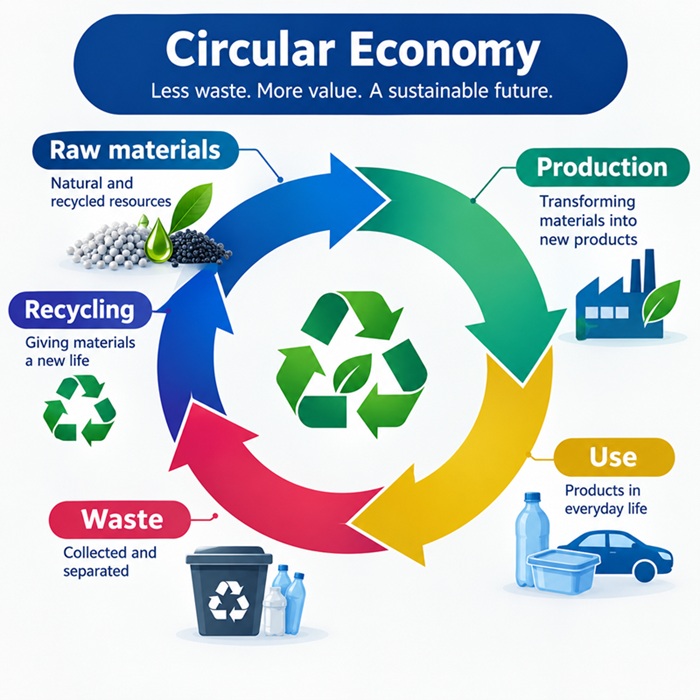
The transition toward a circular plastics economy continues to gain momentum, and chemical recycling is increasingly viewed as a crucial complement to traditional recycling methods. German specialty chemicals company Evonik has unveiled new technologies designed to improve the quality of pyrolysis oil, one of the most important feedstocks generated from chemical recycling processes.
The company’s latest solutions focus on removing contaminants that can limit the industrial use of recycled feedstocks, helping plastic waste re-enter the production cycle as a valuable resource rather than ending up in landfills or incineration.
Why Chemical Recycling Is Becoming More Important
Mechanical recycling remains the preferred option for clean and homogeneous plastic streams such as PET bottles. However, a significant portion of global plastic waste consists of mixed, contaminated, or multilayer materials that are difficult or impossible to recycle mechanically.
Chemical recycling addresses this challenge by breaking plastic waste down into molecular building blocks. Through processes such as pyrolysis, plastics are converted into oils and hydrocarbons that can be refined and reused as raw materials for producing new plastics and chemicals.
Industry analysts expect demand for advanced recycling technologies to increase as governments and manufacturers seek higher recycling rates and reduced dependence on fossil resources. Recent projects across Europe and Asia indicate growing investment in pyrolysis-based recycling infrastructure and feedstock upgrading technologies.
The Challenge: Purifying Pyrolysis Oil
Although pyrolysis can convert difficult plastic waste into useful feedstocks, the resulting oil often contains impurities such as chlorine, nitrogen, sulfur, and silicon compounds.
These contaminants can create operational risks for steam crackers, the industrial facilities that transform hydrocarbon feedstocks into essential building blocks such as ethylene and propylene.
For this reason, petrochemical operators impose strict quality requirements before accepting recycled feedstocks. The ability to efficiently remove impurities is becoming one of the key factors determining the commercial viability of chemical recycling projects. Chemical Recycling of Plastics
Evonik’s Approach to Cleaner Feedstocks
Evonik has developed a range of specialized adsorbents and catalyst technologies designed to improve pyrolysis oil quality before it enters downstream processing.
Among the company’s latest solutions is the Purocel product family, engineered specifically to capture and remove problematic contaminants. One of the flagship technologies combines catalytic conversion with adsorption, enabling significantly higher chloride removal rates compared with conventional treatment methods.
The company also integrates hydrotreatment processes that use hydrogen to transform residual impurities into compounds that can be more easily removed. This additional purification step helps produce feedstocks that better meet petrochemical industry specifications.
Modular Systems Reduce Adoption Barriers
A major obstacle for many recycling facilities is the cost and complexity of installing entirely new purification infrastructure.
To address this issue, Evonik has introduced modular purification units that can be integrated into existing pyrolysis plants or petrochemical operations with limited disruption. The pre-configured systems are designed to minimize downtime and reduce capital investment requirements, making advanced recycling technologies more accessible to operators of different sizes.
This modular approach reflects a broader trend within the chemical recycling sector, where companies are increasingly focusing on scalable solutions that can be rapidly deployed across multiple facilities.
Industry-Wide Momentum for Circular Plastics
Evonik’s announcement arrives amid growing activity across the advanced recycling market.
In recent months, several technology providers have reported progress in upgrading pyrolysis oil into cracker-grade feedstocks suitable for manufacturing new plastics. Pilot projects and commercial partnerships are demonstrating that chemical recycling can help close the loop for waste streams that were previously considered unrecyclable.
The sector is still evolving, and challenges remain regarding economics, scale, and regulatory frameworks. Nevertheless, investment in purification technologies, advanced catalysts, and integrated recycling systems continues to increase as manufacturers seek more sustainable sources of raw materials.
Benefits for the Circular Economy
The growing use of purified pyrolysis oil offers several potential advantages:
- Reduced dependence on virgin fossil-based feedstocks.
- Increased recovery of mixed and contaminated plastic waste.
- Lower volumes of plastic sent to landfill or incineration.
- Improved resource efficiency across the plastics value chain.
- Enhanced supply security for chemical and polymer manufacturers.
By improving feedstock quality and simplifying integration into existing industrial infrastructure, technologies such as those developed by Evonik could play an important role in expanding the adoption of chemical recycling worldwide.
Outlook
As regulatory pressure and sustainability targets continue to reshape the plastics industry, chemical recycling is expected to become an increasingly important complement to mechanical recycling.
Success will depend not only on converting waste plastics into pyrolysis oil but also on ensuring that the resulting feedstocks meet the stringent requirements of modern petrochemical production. Innovations in purification, adsorption, catalysis, and modular processing systems are helping move the industry closer to that goal.
For companies seeking practical pathways toward circularity, the ability to transform difficult plastic waste into high-quality raw materials may become one of the defining technologies of the next decade.
More…