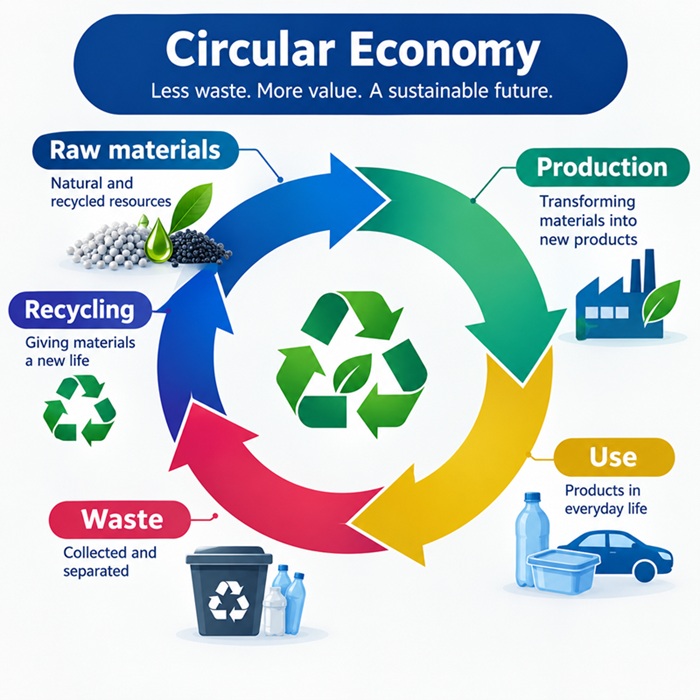
UK Plastic Recycling Capacity Falls as Circular Economy Ambitions Face a Major Test
UK plastic recycling capacity
UK Plastic Recycling Capacity Falls as Circular Economy Ambitions Face a Major Test
The United Kingdom is facing a growing mismatch between the amount of plastic it plans to collect for recycling and its ability to process that material domestically. A new independent study commissioned by Viridor warns that the country’s plastic recycling infrastructure has shrunk significantly at the very moment major policy reforms are expected to increase recycling volumes.
The report highlights a 22% decline in UK plastics recycling capacity since 2023, equivalent to around 260,000 tonnes of annual processing capability. Industry leaders warn that without rapid investment, the UK risks becoming increasingly dependent on exports while missing major economic and environmental opportunities.
Why Recycling Capacity Is Falling
The decline is not being driven by a lack of recyclable material. Instead, recyclers are struggling with difficult market conditions.
According to industry assessments, low-cost virgin plastic continues to undercut recycled alternatives, reducing demand for recycled polymers. At the same time, volatile pricing, rising operating costs and uncertainty around future regulations are discouraging long-term investment in new recycling facilities.
The situation has become serious enough that Viridor recently proposed closing several chemical recycling operations in Europe despite reporting technical success with the facilities. The company argues that the technology works, but current market conditions do not provide a sustainable business case for large-scale investment.
More Plastic Will Soon Enter the Recycling System
The timing of the capacity decline is particularly concerning because several UK waste reforms are designed to increase recycling rates.
Measures such as Extended Producer Responsibility (EPR), Simpler Recycling and deposit return schemes are expected to bring larger quantities of plastic into collection systems. Flexible plastics, films and other materials that have historically been difficult to recycle are expected to make up a larger share of collected waste.
Without sufficient domestic infrastructure, experts warn that councils and businesses may struggle to find reliable processing routes for these materials, potentially increasing costs and reliance on overseas markets.
A Multi-Billion-Pound Economic Opportunity
Despite the challenges, the report presents a strong economic argument for expanding UK recycling infrastructure.
Researchers estimate that developing enough capacity to process future plastic volumes could generate up to £28 billion in gross value added for the UK economy over the coming decades. The investment required could attract between £4.6 billion and £5.9 billion in private capital while supporting thousands of long-term jobs.
New facilities would also help keep valuable materials within the domestic economy instead of exporting them for processing abroad. Previous industry analyses have similarly warned that the UK continues to lose economic value by shipping large volumes of plastic waste overseas.
Environmental Benefits Extend Beyond Recycling
Increasing domestic recycling capacity could deliver significant environmental gains.
By keeping plastics in circulation for longer, the UK could reduce demand for virgin fossil-based plastics and lower greenhouse gas emissions. The report estimates that greater recycling capacity could help avoid more than 143 million tonnes of carbon dioxide equivalent emissions by 2060.
There are also implications for energy-from-waste facilities. Plastic contains a high proportion of fossil carbon, and reducing the amount sent for incineration could lower future carbon management costs as emissions regulations become stricter.
Industry Calls for Stronger Policy Support
Industry stakeholders argue that policy certainty is now the most important factor for attracting investment.
Among the measures being proposed are:
- Stronger recycled-content requirements across more product categories.
- Improved traceability standards for recycled materials.
- Tighter enforcement against fraudulent recycled-content claims.
- More predictable market mechanisms that support long-term investment decisions.
- Faster development of regulatory frameworks for advanced and chemical recycling technologies.
Many recyclers also believe that better enforcement is needed to ensure imported materials meet the same standards expected of domestic operators.
The Next Few Years Will Be Critical
Building recycling infrastructure is not a quick process. New facilities can take several years to secure approvals, financing and construction.
That means decisions taken today will determine whether the UK can successfully handle the additional plastic expected from upcoming recycling reforms. If investment remains slow, the country could face a growing gap between collection ambitions and actual processing capacity.
For policymakers, investors and the recycling sector, the challenge is increasingly clear: create the conditions needed for domestic recycling to grow or risk losing both economic value and progress toward circular economy goals.
Key Takeaway
The UK’s plastic recycling sector stands at a crossroads. While new environmental policies are set to increase recycling volumes, processing capacity continues to decline. Industry experts believe the country still has an opportunity to unlock billions of pounds in investment, create thousands of jobs and strengthen its circular economy—but only if action is taken before the infrastructure gap widens further.
Italy’s Plastic Recycling Crisis Deepens as Utilitalia Warns of System Paralysis
More…