Flexible packaging recycling – U.S. Plastics Pact Unveils Strategic Framework to Accelerate Flexible Packaging Recycling and Unlock Circular Economy Gains Across the American Film Market 13-02-2026
U.S. Plastics Pact Targets Systemic Reform in Flexible Packaging Recycling
The U.S. Plastics Pact has released a comprehensive roadmap aimed at accelerating flexible packaging recycling across the United States. The document, titled Journey to Film and Flex Circularity: A Framework of Necessary Design, Collection, and End Market Levers, outlines coordinated actions to address structural gaps in the recycling of film and flexible plastics.
Flexible packaging plays a critical role in modern consumer goods. Its lightweight structure, material efficiency and strong barrier properties help reduce food waste and transportation emissions. Yet those same features complicate recycling efforts within existing waste management infrastructure.
The new framework acknowledges that improving flexible packaging recycling requires systemic reform, not isolated initiatives.
Why Flexible Packaging Recycling Remains a Challenge
Film and flexible packaging formats often combine multiple materials to deliver durability, moisture resistance and product protection. These multi-layer constructions make mechanical recycling more difficult.
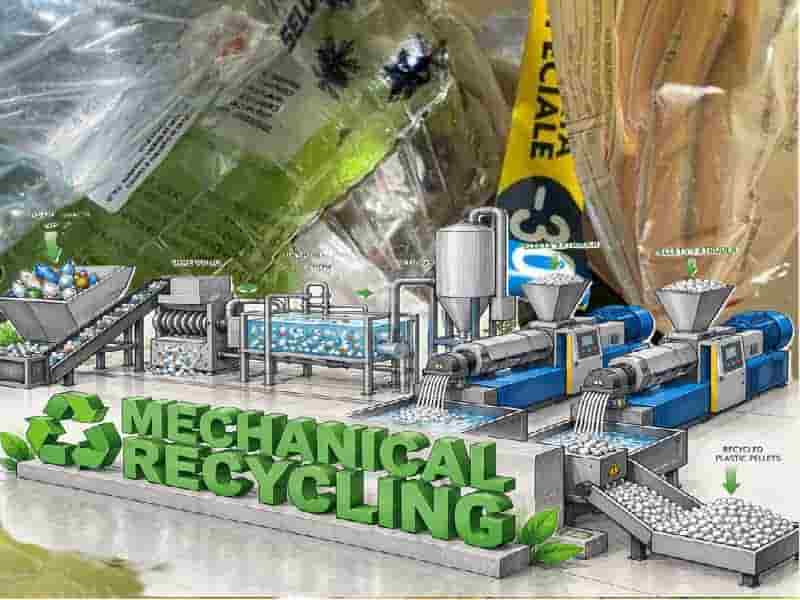
Unlike rigid PET or HDPE containers, flexible plastics are prone to tangling in sorting equipment at material recovery facilities. Their lightweight nature can also cause them to be misdirected or lost during processing. As a result, flexible packaging recycling rates in the United States remain significantly lower than for rigid plastics.
The U.S. Plastics Pact framework evaluates these technical barriers and connects them to broader economic realities. Infrastructure upgrades require investment. End markets for recycled film must be stable and scalable. Without coordinated demand, increased collection alone cannot guarantee circular outcomes.
A Full Value Chain Approach to Circularity
A central message in the framework is that flexible packaging recycling must be addressed across the entire value chain.
The document identifies three interconnected pillars:
-
Packaging design improvement
-
Collection system development
-
End market expansion
Design sits at the foundation. Packaging formats that align with existing sorting technologies are more likely to be recovered effectively. The framework calls for continued innovation in mono-material film structures and improved compatibility with mechanical recycling processes.
At the same time, the waste hierarchy remains central. Source reduction and reuse strategies are prioritized before recycling. When recycling is pursued, the focus must shift toward system efficiency and measurable circularity gains.
End Market Development as the Decisive Lever
Perhaps the most significant conclusion within the flexible packaging recycling framework is the emphasis on end market demand.
Expanding collection volumes without a corresponding increase in demand for post-consumer recycled film risks creating material oversupply. That imbalance can depress prices, discourage investment and undermine system stability.
The framework argues that strengthening domestic markets for recycled flexible plastics is a prerequisite for long-term success. Brand commitments to incorporate recycled content can provide demand certainty. Public procurement standards may also help stimulate market growth.
Without viable end markets, flexible packaging recycling cannot scale sustainably.
Local Conditions Require Flexible Solutions
The U.S. Plastics Pact does not propose a single national collection model for flexible packaging recycling. Instead, the framework recognizes regional diversity in infrastructure, population density and policy environments.
Community size, material recovery facility capabilities and regional market dynamics all influence what collection model is feasible. Urban areas with advanced sorting technology may adopt different strategies than rural regions with limited infrastructure.
The framework outlines multiple collection pathways, including curbside programs where feasible, retail drop-off systems and hybrid approaches tailored to local conditions.
This adaptive strategy reflects economic pragmatism. Uniform mandates may overlook local realities. Effective policy must align with infrastructure capacity and investment readiness.
Stakeholder Collaboration Across the System
The development of the flexible packaging recycling framework involved municipalities, recyclers, packaging manufacturers, film producers, brand owners and policymakers.
By incorporating diverse perspectives, the document identifies structural weaknesses that no single actor can resolve independently. For example:
-
Municipalities require funding and technical guidance
-
Recyclers need predictable material streams and market stability
-
Packaging producers must align design with recyclability criteria
-
Policymakers must create consistent regulatory signals
This multi-stakeholder engagement strengthens the framework’s credibility and increases the likelihood of coordinated action.
Aligning Investment and Policy Signals
One barrier to expanding flexible packaging recycling has been fragmented policy signals. Inconsistent standards across states can discourage private investment in new infrastructure.
The framework calls for clearer alignment between regulatory measures, design standards and market incentives. Predictability reduces risk and encourages capital deployment in sorting upgrades, film washing systems and advanced recycling technologies.
Importantly, the document does not position recycling as the sole solution. It integrates circular economy principles, recognizing that waste prevention and material reduction remain foundational.
Technology and Innovation Outlook
Advancements in optical sorting, improved bale quality standards and enhanced film washing technologies are gradually improving recovery prospects.
However, technology alone cannot solve the structural imbalance between supply and demand. Investment decisions depend on long-term market confidence.
Flexible packaging recycling will likely evolve alongside innovations in mono-material laminates, chemical recycling processes and digital watermarking for improved identification. The framework signals support for technological development but stresses economic viability as the ultimate determinant of scalability.
Implications for Brands and Packaging Designers
For consumer goods companies, the framework introduces clearer expectations around design for recyclability. Brands seeking to meet sustainability commitments must consider how packaging choices influence collection and end-of-life outcomes.
Design teams may increasingly prioritize:
-
Mono-material film solutions
-
Reduced additive complexity
-
Compatibility with existing recycling streams
Companies that proactively align with flexible packaging recycling standards can mitigate regulatory risk and strengthen environmental credibility.
Toward Measurable Circular Outcomes
The U.S. Plastics Pact positions the framework as a practical roadmap rather than a theoretical manifesto. By addressing design, collection and end market levers simultaneously, the document seeks measurable improvements in flexible packaging recycling performance.
Achieving circularity will require sustained coordination, investment and policy clarity. Yet the framework establishes a structured foundation for progress.
As the packaging industry confronts mounting sustainability expectations, systemic approaches such as this may determine whether flexible plastics remain part of a circular economy or continue to challenge waste management systems.
More…