Suntory’s Bold FtoP Recycling Project Targets 400 Million Bottles in Thailand
FtoP recycling Thailand
Suntory’s Bold FtoP Recycling Project Targets 400 Million Bottles in Thailand
Suntory is preparing to introduce an advanced PET recycling process in Thailand that could reshape how beverage bottles are manufactured across Southeast Asia.
Beginning in 2028, the initiative is expected to produce approximately 400 million recycled PET preforms a year. These small, test-tube-shaped components are heated and expanded to create finished beverage bottles.
The project brings together Suntory Holdings, Suntory PepsiCo Beverage Thailand, Indorama Ventures and Iwatani Corporation. It will be the first commercial deployment of Suntory’s Flake-to-Preform technology in Southeast Asia, according to the companies.
What is changing in Thailand?
Indovida (Thailand) Limited, a joint venture established by Indorama Ventures and Iwatani in July 2026, will operate the new production project.
The company plans to manufacture preforms from recycled PET flakes supplied mainly by Indorama Ventures. Suntory PepsiCo Beverage Thailand is expected to purchase the facility’s output for products sold in the country from 2028.
Suntory’s announcement describes an anticipated annual capacity of about 400 million preforms. Indorama Ventures presents the same figure as the equivalent of approximately 400 million PET bottles.
The development is therefore more than a small recycling trial. It is intended to demonstrate that direct recycled-PET processing can operate at a meaningful commercial scale in Thailand.
How FtoP technology works
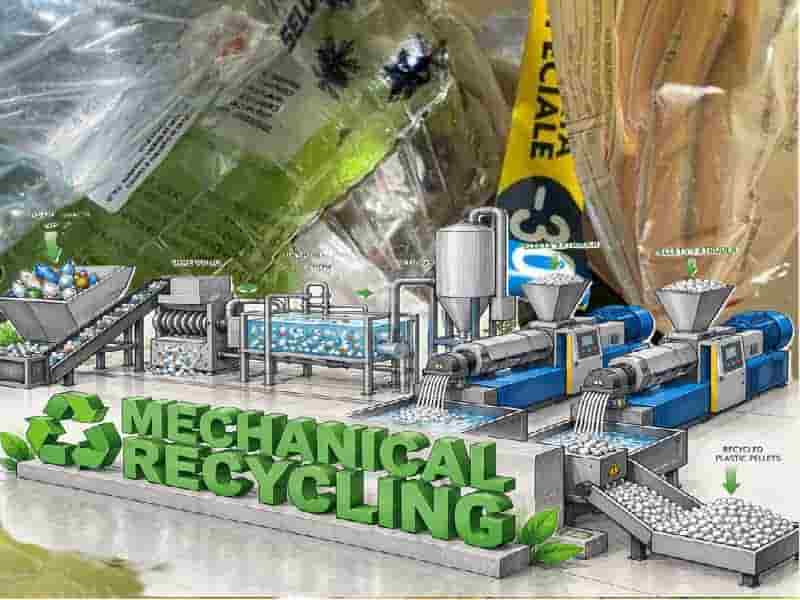
Conventional bottle-to-bottle recycling generally converts collected bottles into flakes before processing the material through several preparation stages. The recycled resin is then used to manufacture new bottle preforms.
Flake-to-Preform, or FtoP, technology shortens this process. It converts appropriately treated recycled PET flakes directly into preforms, eliminating stages including crystallisation and drying.
Reducing the number of processing stages can lower energy use while making recycling more efficient.
Suntory jointly developed the patented process with three partner companies, including Japanese recycler Kyoei Industry. The beverage group has used the technology for soft-drink bottles in Japan since 2018.
A claimed 70% emissions reduction needs context
Suntory estimates that FtoP bottles can generate approximately 70% fewer carbon dioxide emissions than bottles manufactured from virgin fossil-based plastic.
This is a potentially important benefit, but the comparison should be interpreted carefully. Suntory states that the calculation is based on conditions in Japan. The company has not yet published a Thailand-specific lifecycle assessment with the announcement.
Actual emissions in Thailand could depend on factors such as electricity sources, transport distances, collection efficiency, contamination levels and the proportion of material that can be successfully recovered.
The project should consequently be judged not only by its production capacity but also by independently measurable results once operations begin.
Adapting Japanese technology to Thai recycling conditions
One of the main obstacles to deploying FtoP outside Japan has been the need for a reliable supply of sufficiently clean used bottles.
Collection systems, sorting practices and recycled-material quality vary considerably between countries. Technology developed for Japan’s established collection infrastructure could not simply be transferred without modification.
Suntory worked with recycling-equipment company NGR and packaging-technology supplier Husky Technologies to adapt the process for Thailand. The partners revised the criteria used to select collected bottles and improved contaminant removal.
Suntory says these changes allow the system to process PET bottles of varying quality while maintaining the quality and safety standards achieved in Japan.
Commercial operation will provide the real test of whether those improvements can manage Thailand’s material stream consistently and at the announced scale.
Why Indorama Ventures matters
Indorama Ventures supplies expertise across PET production, recycled materials and packaging manufacturing. Its involvement gives the project access to an established regional materials network rather than relying on a stand-alone recycling facility.
Iwatani contributes industrial experience and is working with Indorama Ventures through the Indovida joint venture. Suntory provides the FtoP process and the operating knowledge developed through its use in Japan.
Suntory PepsiCo Beverage Thailand completes the chain as the intended customer for the preforms. This coordinated structure connects collected material, recycling technology, preform manufacturing and beverage packaging.
Such coordination is important because circular packaging depends on more than the performance of a single machine. Collection volumes, material quality, manufacturing demand and product specifications must all remain aligned.
What “100% recycled PET” means
The planned bottles are described as being made with 100% recycled PET. This refers to the PET material used to manufacture them rather than to every component of the finished package.
Caps, labels, adhesives and inks may use different materials. The description also does not mean that a bottle can be recycled indefinitely without losses or additional resources.
Effective collection and sorting will remain essential. Even an efficient recycling plant cannot create a closed material loop if large numbers of bottles are discarded, contaminated or diverted from recycling systems.
Part of Suntory’s wider packaging target
Suntory’s plastic policy calls for all PET bottles used globally to be made from recycled or bio-based materials by 2030. The company also aims to eliminate newly produced fossil-derived plastic from its PET bottle portfolio.
Its strategy combines reducing bottle weight, increasing bottle-to-bottle recycling and developing bio-based materials.
The Thailand project could support that objective while giving the partners a platform for expansion elsewhere in Southeast Asia. No additional markets or deployment dates have yet been confirmed, however. FtoP recycling Thailand
What happens next?
The immediate priorities will include building and commissioning the production operation, securing sufficient recycled PET flakes and demonstrating reliable food-grade output.
Progress should be assessed through disclosed production volumes, recycled-content verification, rejection rates and Thailand-specific emissions data. Transparent reporting will help determine whether the technology delivers its expected environmental benefits outside Japan.
If the facility reaches its planned capacity, FtoP recycling in Thailand could become an important regional example of how beverage companies, recyclers and packaging manufacturers can collaborate.
For now, the 2028 start remains a forward-looking target. The project is significant, but its lasting impact will depend on execution, verified performance and an effective local bottle-collection system.
Key facts
- Planned commercial production: 2028
- Expected capacity: approximately 400 million preforms annually
- Location: Thailand
- Intended customer: Suntory PepsiCo Beverage Thailand
- Feedstock: recycled PET flakes, mainly from Indorama Ventures
- Regional significance: first announced commercial FtoP deployment in Southeast Asia
- Estimated emissions reduction: approximately 70% compared with virgin fossil-based bottles, based on calculations for Japan
Sources
Both primary sources were published on 19 August 2026 and independently confirm the partnership, planned capacity and 2028 target.
Indorama Ventures PET Strategy Faces Shifting Global Demand