Greenland trade dispute – Greenland Trade Crisis Intensifies as US Pressure Alarms Europe but Forces a Crucial Reckoning on Sovereignty, Alliances, and the Future of Transatlantic Relations 20-01-2026
Greenland trade dispute
Greenland becomes a new flashpoint in transatlantic relations
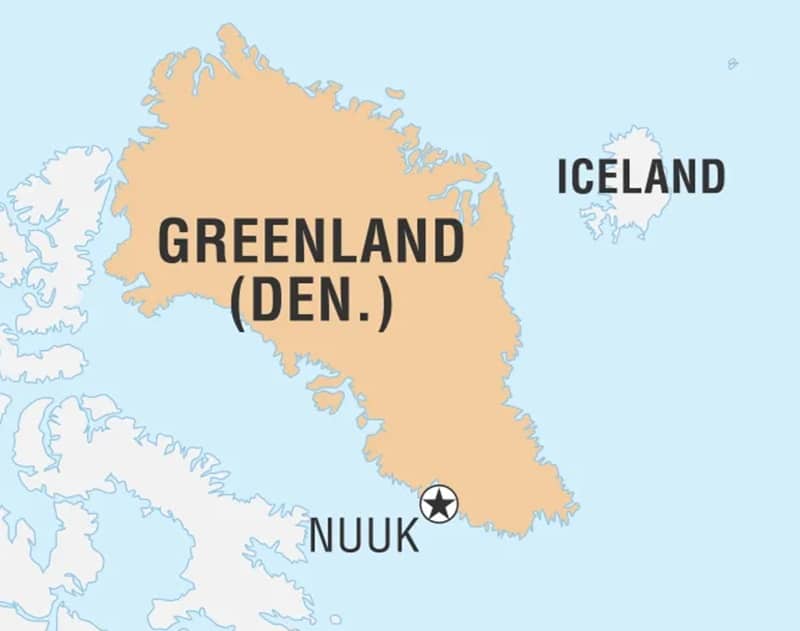
The geopolitical and economic dispute surrounding Greenland has intensified, placing renewed strain on relations between the United States and Europe. What initially appeared as a political provocation has evolved into a broader confrontation involving trade policy, sovereignty, and alliance management. As tensions rise, European governments are struggling to balance diplomatic restraint with growing domestic and institutional pressure to respond decisively. Greenland trade dispute
At the heart of the Greenland trade dispute lies a series of warnings from Washington, including potential tariffs and economic measures aimed at European allies that oppose US ambitions regarding the Arctic island. These developments have injected uncertainty into global markets and placed Greenland at the centre of an unexpected transatlantic standoff.
Washington urges restraint while standing firm
US Treasury Secretary Scott Bessent has cautioned European governments against retaliating to any measures taken by the United States. Speaking during the World Economic Forum in Davos, Bessent argued that countermeasures would be strategically unwise and risk deepening an already sensitive dispute. Greenland trade dispute
Bessent also urged European leaders not to question the intentions of US President Donald Trump, suggesting that ongoing diplomatic contacts demonstrate Washington’s seriousness. The message from the US side has been consistent: Europe should avoid escalation and accept US positions at face value, even as the stakes surrounding Greenland continue to grow.
This stance has done little to ease concerns in European capitals, where officials increasingly view the Greenland trade dispute as a challenge not only to economic stability but also to political autonomy. Greenland trade dispute
Germany signals readiness to retaliate
Germany has taken a markedly firmer position, warning that further US tariffs would trigger effective countermeasures. A spokesperson for the German government made clear that Berlin considers the tariff threats unacceptable and potentially destabilising for the global trading system.
According to German officials, preparations are already underway for retaliatory tariffs and additional economic policy measures, with implementation possible as early as February. Crucially, Germany emphasised that there is broad consensus among European Union member states on the need to respond collectively, underscoring the importance of EU unity in the face of external pressure.
The German response reflects a wider shift within Europe, where patience with unilateral trade threats appears to be wearing thin.
European Union walks a tightrope
The European Union has confirmed that engagement with the United States over Greenland continues at all diplomatic levels. European Commission officials have stressed that the EU possesses a wide range of tools to protect its economic interests, while reiterating a desire to avoid escalation. Greenland trade dispute
EU spokespersons have framed the bloc’s approach as firm yet responsible, signalling readiness to act without closing the door to dialogue. An emergency summit of EU leaders in Brussels has been scheduled, highlighting the seriousness with which the Greenland trade dispute is now being treated. Greenland trade dispute
For the EU, the challenge lies in preserving transatlantic cooperation while demonstrating that economic coercion against member states will not go unanswered.
Calls for calm from London
The United Kingdom has adopted a more measured tone. Prime Minister Keir Starmer has emphasised the need for calm discussions between allies when addressing an issue as sensitive as Greenland. London’s position reflects a broader concern that emotional or rapid escalation could undermine long-term diplomatic relationships. Greenland trade dispute
By advocating dialogue over confrontation, the UK aims to position itself as a stabilising voice, even as trade tensions threaten to spill into wider geopolitical disagreements.
France pushes for multilateral coordination
France has taken steps to internationalise the issue by calling for a meeting of G7 finance ministers to discuss trade policy and sovereignty concerns linked to Greenland. French officials have openly expressed solidarity with Greenland and Denmark, framing the US approach as incompatible with the norms governing relations between allies.
The French position underscores a growing belief within Europe that the Greenland trade dispute is not a bilateral issue, but a systemic challenge requiring coordinated multilateral responses.
Norway drawn into the dispute
The controversy has also reached Norway, following reports that President Trump communicated directly with Norwegian Prime Minister Jonas Gahr Stoere regarding Greenland and broader geopolitical frustrations. While Oslo has not issued an immediate response, the episode highlights how the dispute is rippling across Europe, affecting even countries outside the EU.
Greenland’s strategic location and resource potential mean that developments there resonate far beyond Denmark, touching Arctic security, NATO cohesion, and global trade routes.
Europe prepares economic leverage
According to reports, European capitals are considering retaliatory tariffs worth up to €93 billion or potential restrictions on US companies’ access to the EU market. These measures are reportedly being prepared to strengthen Europe’s negotiating position during high-level meetings with US officials in Davos.
The scale of the proposed response illustrates how seriously the Greenland trade dispute is being taken. While no final decisions have been announced, the preparation of such measures signals that Europe is no longer relying solely on diplomatic appeals.
A defining test for alliances
The unfolding situation around Greenland represents more than a trade disagreement. It is a defining test of alliance dynamics in an era marked by economic nationalism and strategic competition. For Europe, the challenge is to defend sovereignty and economic interests without fracturing transatlantic ties that remain central to security and trade.
As discussions continue, Greenland has become a symbol of deeper questions about power, trust, and the future of global cooperation. How this dispute is resolved may shape not only trade relations, but the credibility of alliances in an increasingly contested world.
More…