K2025 – New Biodegradable Plastic Innovations Unveiled by Leading Asian Manufacturers In recent developments within the Asian plastics industry, leading manufacturers unveiled significant advancements in biodegradable plastics aimed at addressing the growing environmental concerns and regulatory pressures associated with traditional plastic use 05-08-2025
K2025
Crude Oil Prices Trend

Vanden offers free polymer analysis to help manufacturers boost material value
Quick guide • Free lab reports for 100 businesses • UK, Turkey, Australia • What to expect and how to benefit
What Vanden is offering
Global plastic recycler Vanden Recycling has launched an initiative to provide 100 free polymer material analysis reports to eligible manufacturers and recyclers across Europe, the UK, Turkey and Australia.
With labs in the UK, Turkey and Australia, Vanden’s technical teams will test samples to reveal material type, contamination levels and processing suitability — information that directly affects material value and recyclability.
Why this matters to your bottom line
Knowing the exact composition and quality of plastic feedstock prevents costly rework, helps you avoid contamination-related losses and unlocks higher resale or reprocessing value. K2025
In short: accurate material data protects value and accelerates circularity.
“When you understand your material, you can protect value, avoid waste, and maintain product performance,” — Beril Yesilirmak, Vanden Global Technical Director.
Tip: Treat each lab report as a short technical contract between your procurement/production team and recycling partners.
How the free analysis works — a simple three-step flow
- Submit eligibility & sample: Eligible businesses are invited to send a representative plastic sample to a Vanden lab. K2025
- Lab testing: Specialists perform industry-standard tests (examples below).
- Receive report: A concise technical report is returned with business-relevant findings.
Common tests Vanden uses
| Test | Purpose |
|---|---|
| Melt Flow Index (MFI) | Processing behaviour / suitability for extrusion or injection moulding |
| FTIR (Fourier-transform infrared) | Polymer identification and additive detection |
| NIR (Near-infrared) | Fast polymer sorting & contamination screening |
| Density / Sink-float | Quick separation check for mixed polymers |
What the short technical report contains
Vanden’s report focuses on clear, actionable insights rather than raw lab output. Expect:
- Identified polymer types (e.g., HDPE, PP, PET) K2025
- Contaminant and additive flags
- Processing suitability (e.g., recommended reprocessing routes)
- Business-focused interpretation and next steps
These reports are designed to empower procurement decisions and reduce your material risk profile — not to overload you with jargon.
Business benefits & material-value uplift
Concrete advantages companies can expect:
- Higher resale value: Verified feedstock attracts better prices.
- Lower processing costs: Fewer surprises during reprocessing or manufacturing.
- Better contracts: Clear material specs reduce disputes with suppliers and buyers. K2025
- Sustainability credentials: Accurate recyclability data helps sustainability reporting and certification.
Practical tips to get the most from the free analysis
Small changes before sending a sample make reports more useful:
- Label samples with production batch, date and suspected polymer type.
- Include photos and a short process note (temperature, additives used, previous uses).
- Send representative samples — a single inconsistent piece can skew results.
Pro tip: Keep a short CSV of sample metadata for future reuse — this improves traceability and helps LLMs/analytics later. K2025
Technical, SEO & LLM-friendly suggestions for publishing this content
Below are practical recommendations you can paste into your WordPress Gutenberg post to increase discoverability and make the page easy for LLMs and search engines to cite:
Structured data (already included)
Keep the application/ld+json block (Article + Organization). Add author and datePublished fields. This helps knowledge crawlers and LLMs understand the page quickly.
Readable headings & micro-copy
Use short, descriptive headings (H1 → H2 → H3). LLMs and semantic search models rely on headings to extract facts (who, what, where, when). K2025
Accessibility & image alt text
Use brief, descriptive alt attributes for images (e.g., Vanden lab technician running FTIR test) so both assistive tech and LLMs can interpret visuals.
Performance & Core Web Vitals
- Serve responsive images (use
srcset) and lazy-load offscreen images. - Minimise third-party scripts on this page — only essential analytics and consent tools.
- Use a lightweight theme and avoid large inline styles; keep CSS small and defer non-critical JS. K2025
Trackability & reuse
Add UTM parameters to your CTA links for campaign tracking. Store a canonical sample-report template in your CMS so you can reuse the layout for future lab announcements. ?
How to apply and next steps
If you’re eligible, watch for Vanden’s invitation and prepare a sample with clear metadata. This is a limited programme (100 places) — the faster you supply a representative sample, the sooner your team gets actionable insights.
Questions? Contact Vanden’s technical team for guidance on sampling and interpreting results. K2025

Asahi Kasei to Unveil PFAS-Free Polyamide and CFRP Recycling Technology at K 2025
Event: K 2025 – The World’s No. 1 Trade Fair for Plastics and Rubber
Location: Düsseldorf, Germany – Hall 8a, Booth E23
♻️Groundbreaking CFRP Recycling Technology
At K 2025, Asahi Kasei will unveil its revolutionary technology for recycling continuous carbon fibers from CFRP (carbon fiber reinforced plastic) pressure vessels. Unlike traditional methods that reduce fibers to chopped fragments, this innovation preserves the fibers’ strength and continuous structure. K2025
The process uses electrolyzed sulfuric acid to completely decompose the resin matrix while leaving the fibers intact. This enables perpetual recycling of high-quality, cost-effective carbon fibers. Visitors will see over 200 meters of recycled continuous carbon fiber at the booth.
?Bio-Based & Cellulose Nanofiber Compounds
Asahi Kasei is showcasing polyamide (PA) and SEBS (hydrogenated styrene-based thermoplastic elastomer) compounds reinforced with bio-based, biodegradable cellulose nanofiber (CNF). Derived from cotton linter, CNF offers exceptional heat resistance and structural flexibility. K2025
For 3D Printing
CNF-reinforced PA reduces viscosity when agitated, improving printability, dimensional accuracy, and surface smoothness in 3D-printed components.
For Soft Applications
CNF-reinforced SEBS delivers tunable softness, low warpage, shrinkage resistance, and strong hydrolysis stability. These qualities make it a great fit for jigs, tooling, prosthetics, and orthotics.
?PFAS-Free Polyamide Innovations
With global industries moving away from PFAS, Asahi Kasei has developed a PFAS-free low-friction LEONA™ PA. Making its European debut at K 2025, this material delivers the same friction reduction as fluororesin, without environmental drawbacks.
Applications include automotive sliding components, robotics, office equipment, and sporting goods. K2025
?Lightweighting & Automotive Solutions
Automakers continue to prioritize reduced weight, efficiency, and design flexibility. Asahi Kasei brings multiple innovations tailored to these needs.
?AZP™ Transparent Polymer for HUD & AR/VR
The AZP™ transparent polymer delivers near-zero birefringence and lightweight performance. Unlike conventional polymers, it maintains optical clarity in polarized light applications, making it ideal for AR/VR headsets and automotive HUDs.
“AZP™ enables scalable, large-volume injection molding of optical components without compromising clarity.” K2025
?️SEBS Materials for Automotive Interiors
Traditionally, automotive interiors rely on multiple materials and adhesives. Asahi Kasei’s SEBS allows one-step molding for skins and foams via core-back injection molding. This reduces the number of materials, cuts production complexity, and improves recyclability.
?SunForce™ Particle Foam Beads
SunForce™ mPPE foam beads are engineered for thin-walled, complex shapes requiring flame retardancy (UL94 V-0), heat stability, and tight tolerances.
- Thermal management in electronics
- Battery cell trays for Li-ion packs
- HVAC insulation parts
- Foam cores for FRP composites K2025
?XYRON™ for Radar Antennas
Radar applications often rely on heavy, milled metal antennas. Asahi Kasei’s XYRON™ mPPE replaces metal with injection-molded resin components, cutting costs and production times while maintaining wet-platability.
This innovation is especially important for millimeter-wave automotive radar, where scalability and cost efficiency are crucial.
About Asahi Kasei
Founded in 1922, the Asahi Kasei Group employs more than 50,000 people worldwide across its Healthcare, Homes, and Materials divisions. The company consistently adapts its portfolio to meet changing global needs.
Asahi Kasei is committed to achieving carbon neutrality by 2050 and advancing sustainable material solutions that support a circular economy.
Learn more at asahi-kasei.com and explore their sustainability initiatives.
More…

K2025
New Biodegradable Plastic Innovations Unveiled by Leading Asian Manufacturers
In recent developments within the Asian plastics industry, leading manufacturers unveiled significant advancements in biodegradable plastics aimed at addressing the growing environmental concerns and regulatory pressures associated with traditional plastic use. This innovation comes as companies are increasingly looking for sustainable alternatives that not only comply with stringent waste management regulations but also appeal to environmentally conscious consumers and businesses. K2025
The new biodegradable plastic materials, derived from natural sources such as starch and certain biopolymers, have undergone extensive testing to match the performance characteristics of conventional plastics. Industry leaders highlighted their commitment to sustainability during a recent press event held in Tokyo, where multiple stakeholders including researchers, manufacturers, and policymakers gathered to discuss the future of biodegradable products in the market.
Key features of these new materials include a significantly reduced carbon footprint during production, enhanced decomposition rates, and lower toxicity levels upon breakdown compared to their petroleum-based counterparts. Furthermore, these innovations aim to offer a competitive edge in the packaging sector, which has been under intense scrutiny due to the plastic waste crisis exacerbated by single-use plastics. K2025
One notable project discussed was a collaboration between several high-profile Asian companies and local universities to develop a new class of biodegradable plastics suitable for food packaging, which has been particularly problematic due to contamination concerns. The goal is to introduce products that maintain food safety while being able to decompose naturally, thereby minimizing long-term environmental impact.
Manufacturers are optimistic that these innovations will not only help meet current legislative requirements on non-biodegradable products but also cater to a growing demand for eco-friendly alternatives. As companies ramp up production capacity to meet this demand, significant investment in R&D has been noted across the board, highlighting a robust commitment to sustainable practices. K2025
The Asian plastics market is positioning itself at the forefront of sustainability with these latest innovations, with experts predicting that biodegradable plastics will constitute a substantial segment of the industry within the next five years, particularly as international markets increasingly adopt similar environmental regulations.
Industry analysts suggest that stakeholders need to remain vigilant about how these changes may affect traditional plastic markets and advise ongoing collaboration between manufacturing entities, governmental bodies, and academic institutions. They stress the importance of consumer education regarding biodegradable plastics to ensure widespread acceptance and proper disposal protocols to maximize environmental benefits. K2025
?♻️Gulf States Could Unlock $25 Billion Shift to Chemical Recycling
Investing in plastics chemical recycling offers a historic chance for the Gulf Cooperation Council (GCC) to lead the global transition toward circular plastics.
Why Chemical Recycling Matters
The Gulf Cooperation Council (GCC) — Bahrain, Kuwait, Oman, Qatar, Saudi Arabia, and the United Arab Emirates — sits at the heart of the global energy and petrochemical industry. K2025
Now, research by the King Abdullah Petroleum Studies and Research Centre (KAPSARC) and Strategy& (part of PwC) suggests the region could channel this expertise into chemical recycling, unlocking up to $25 billion in new value.
Unlike mechanical recycling, chemical recycling breaks plastic waste down to its molecular building blocks, allowing for repeated use in high-quality applications. This could turn one of the world’s biggest waste problems into a profitable, sustainable industry .
The Business Case
The study found that chemical recycling plants integrated into existing petrochemical clusters could break even at feedstock prices of just $240–$280 per ton. Even at higher levels ($450–$500 per ton), operations remain profitable if recycled plastics continue to command a premium over virgin materials. K2025
To make this vision reality, the GCC would need $12–25 billion in capital by 2045 — or roughly $1.2 billion per year — to build sufficient recycling infrastructure. While this is a big number, it is relatively modest compared to the region’s sovereign wealth capacity and petrochemical investments.
Financing the Transition
Analysts argue that sovereign wealth funds can play a catalytic role. By using blended finance models, Gulf governments could de-risk early projects, attract private sector partners, and build investor confidence.
“The economics of chemical recycling are compelling for the GCC, especially when integrated into existing systems and supported by the region’s competitive energy costs,” said Jayanth Mantri, principal at Strategy& Middle East. K2025
“Unlike traditional petrochemicals, chemical recycling is knowledge-intensive and offers potentially higher economic multipliers and innovation-driven growth.”
Strategic Advantages for the GCC
The Gulf region has unique strengths that position it to dominate in chemical recycling:
- ⚡ Cheap energy: Pyrolysis (a leading recycling method) could run at just one-quarter to one-fifth of European energy costs.
- ? Integrated industrial clusters: The region already has petrochemical infrastructure to absorb and scale recycling technologies.
- ? Strategic location: Situated between Asia (a major plastic waste source) and Europe (a major demand hub for recycled content).
- ? Financial strength: Access to capital through sovereign funds and private-sector partnerships. K2025
The Challenge: Low Recycling Rates
Despite its advantages, the GCC currently recycles only about 10% of plastic waste. Without stronger domestic collection systems and robust policies, recycling ventures risk
feedstock shortages and demand uncertainty.
This gap underscores the need for better waste collection networks, consumer awareness programs, and regulatory certainty that makes recycling a predictable, long-term business.
Three Priorities for Success
To unlock the full $25 billion opportunity, Gulf states must act on three critical priorities:
- Reliable feedstock supply – Build stronger domestic waste collection systems and establish international plastic waste trade corridors.
- Supportive regulation – Create policies that incentivize recycling, set recycled content targets, and support long-term commercial revenues.
- Innovation & awareness – Invest in new technologies like pyrolysis and gasification, while building consumer trust and participation. K2025
Regional & Global Impact
The GCC’s move into chemical recycling is not just about profits. It is about building a circular plastics economy that reduces waste, cuts emissions, and strengthens
global supply chains. By positioning itself as a hub, the region can supply Asia and Europe with high-quality recycled materials, setting an example for other energy-exporting nations.
Done right, this strategy could turn the GCC into a global leader in sustainability — not just an exporter of fossil resources, but also of innovation and circularity. K2025
?SABIC Launches New Sustainable Polypropylene Solutions for the Asian Market
SABIC, a global leader in petrochemicals, has officially unveiled a new range of
sustainable polypropylene solutions crafted specifically for the Asian plastics market.
With sustainability at the forefront of consumer and regulatory expectations, this launch underscores SABIC’s commitment to the circular economy and to supporting industries in reducing their environmental footprint. K2025 K2025
♻️ A Step Forward in Circular Economy
The newly developed polypropylene resins feature up to 50% recycled content or
bio-based feedstocks. This provides manufacturers with reliable, high-performance
materials while reducing dependence on virgin fossil-based plastics. By blending sustainability with durability, SABIC ensures that businesses no longer face a trade-off between eco-conscious production and product integrity.
compromising the quality or performance of their end products. K2025
? Rising Sustainability Demands in Asia
Across Asia, governments and industries are tightening regulations to cut down on plastic waste. K2025
Consumer expectations are also shifting, with eco-friendly packaging and greener product choices becoming mainstream. SABIC’s new offerings arrive at a pivotal moment, enabling local businesses to stay ahead of compliance requirements while appealing to environmentally aware consumers.
? Applications Across Industries
The versatility of polypropylene makes these sustainable solutions suitable for multiple sectors:
- Packaging: Sustainable alternatives for flexible and rigid packaging solutions.
- Automotive: Lightweight, durable materials to improve efficiency and reduce emissions. K2025
- Consumer Goods: Reliable, eco-friendly products for everyday use.
Rigorous testing has confirmed that the sustainable grades perform on par with conventional polypropylene, assuring manufacturers that quality remains intact.
? Technology and Infrastructure Support
SABIC’s extensive production network across Asia plays a key role in delivering these materials atscale. Backed by state-of-the-art facilities and advanced R&D capabilities, the company is well positioned to support regional industries with consistent and reliable supply. K2025 K2025
? Aligning with Global Sustainability Trends
The launch aligns with worldwide momentum toward sustainability. Global brands are increasingly embedding environmental commitments into their strategies, and suppliers like SABIC provide the essential raw materials needed to achieve these goals.
By integrating recycled and bio-based inputs,manufacturers in Asia can future-proof their operations against upcoming environmentalregulations and market pressures.
? Collaboration with Stakeholders
SABIC emphasizes collaboration as a cornerstone of its approach. K2025
The company is engaging with converters, packaging firms, automotive suppliers, and brand owners to build holistic strategies that scale sustainability. This involves:
- Expanding plastic collection and recycling systems.
- Developing closed-loop solutions for end-of-life products.
- Supporting local businesses with technical expertise and infrastructure access.
? Market Dynamics and Strategic Positioning
As Asian economies continue to grow, the shift toward sustainable materials is becoming
economically strategic. SABIC’s introduction of eco-friendly polypropylene places it
at the center of this transformation. The move strengthens its market position and enhances its role as a trusted partner for companies navigating sustainability challenges.
✨ Looking Ahead
The transition to greener plastics is not just a regulatory necessity—it’s a competitive advantage.
Businesses that embrace SABIC’s sustainable solutions stand to gain from improved brand reputation, long-term compliance readiness, and alignment with the values of today’s conscious consumers. K2025
SABIC’s launch is more than a product announcement—it’s an invitation to industries across Asia to collaborate, innovate, and accelerate the journey toward a circular economy.
sustainable plastics ecosystem.
? Key Highlights at a Glance
- ? Polypropylene with up to 50% recycled or bio-based feedstocks.
- ♻️ Full compatibility with packaging, automotive, and consumer goods industries.
- ? Backed by SABIC’s advanced production facilities across Asia.
- ? Designed to meet regulatory and consumer demand for sustainable solutions.
- ? Strong focus on collaboration to scale recycling and circular economy initiatives. K2025
As sustainability becomes the new standard, SABIC’s commitment and innovative product portfolioensure that businesses across Asia can move forward with confidence—delivering value to customers while protecting the planet.

?ALBIS to Showcase Technical and Sustainable Plastic Solutions at K 2025
Under the motto “Sustainable Solutions. Strong Connections”, ALBIS will highlight its extensive portfolio of sustainable and technical plastic solutions at K 2025, taking place from to in Düsseldorf. Visitors can find ALBIS at Hall 6, Booth A62.
Building on a Strong Global Network
The chosen motto reflects ALBIS’s strengths: a global network of leading manufacturers, a comprehensive product portfolio, and a team of technical service experts driving worldwide growth. Recent milestones demonstrate this expansion:
- Partnership with Arkema in high-performance polymers for medical applications K2025
- Expanded distribution rights with BASF, INEOS Styrolution, and Röhm
- New locations in Morocco, Israel, and Latin America through a majority stake in Brazilian distributor Tecnomatiz
This makes ALBIS a truly global distributor, connecting regions and industries with technical plastics and sustainable materials.
Cross-Sector Applications
At the trade show, ALBIS will present application examples across key industries. These use cases highlight how plastic solutions are applied in real-world scenarios:
- Healthcare: polymers for medical devices and safety applications
- Mobility: lightweight components for vehicles
- Electrical & Electronics: durable materials with high performance
- Building & Construction: solutions balancing strength and sustainability
- Packaging: innovative, recyclable designs K2025
- Sports & Leisure: durable and eco-friendly materials
Many of these solutions are developed in collaboration with multiple partners, demonstrating ALBIS’s technical expertise and its ability to create tailored, practical applications.
?Customer-Centric Innovation
“Our customers benefit from our comprehensive offering, which we continuously expand – both in terms of products and local services,” says Horst Klink, CEO of ALBIS. “This enables them to access tailored solutions for a wide variety of challenges from a single source – supported by excellent market and industry know-how.” K2025
ALBIS supports customers through the entire product development cycle:
- Material selection
- Part design
- Processing support
- Series production optimization
This approach ensures a seamless transition from concept to market-ready product.
?Commitment to Sustainability
A core focus of ALBIS at K 2025 is sustainability. With 75 sustainable product lines already available, ALBIS is among the leading distributors in this field. At the event, the company will showcase practical applications that combine ecological responsibility with functional excellence. K2025
Examples include:
- A medical device designed for the treatment of sleep disorders
- Interior vehicle components made from sustainable materials
- Innovations in sports and leisure products
- Durable food-contact materials designed for safety and sustainability
As Klink emphasizes: “Sustainability remains a fundamental pillar of our corporate strategy. For us, this means continuing to expand access to innovative materials that meet both the ecological and functional requirements of modern applications.”
Why K 2025 Matters
The K trade fair is one of the world’s most important events for the plastics and rubber industries, drawing global innovators, decision-makers, and sustainability leaders. For ALBIS, K 2025 is a platform to:
- Showcase technical leadership and innovation K2025
- Highlight sustainability-driven product lines
- Strengthen partnerships across industries
- Engage with customers, partners, and thought leaders face-to-face
ALBIS’s presence reflects its dual focus: advancing high-performance plastics while driving global sustainability efforts.
Looking Ahead
ALBIS is strategically positioned for future growth, with an expanding global footprint, a commitment to sustainable development, and strong industry collaborations. Its activities at K 2025 will reinforce its role as a partner of choice for businesses seeking innovative, reliable, and sustainable plastic solutions. K2025
Visitors to the trade show can expect not only technical showcases but also interactive discussions on how plastics can play a transformative role in sustainable design and industry solutions worldwide.
?Sunscreen Chemicals Could Slow Plastic Breakdown in Oceans
New study uncovers an invisible threat to marine life and ecosystem health
?➕?Plastics and Sunscreens: A Toxic Partnership
When we think about plastic pollution, we often imagine discarded bottles, packaging, or microplastics. But scientists now warn of a new phenomenon called co-pollution — where plastics act as carriers for other chemical contaminants.
In this case, the spotlight is on Ethylhexyl Methoxycinnamate (EHMC), a UV filter widely used in sunscreens. Researchers found that this chemical, once washed off our skin and into the ocean, can attach itself to floating plastics, disrupting the way these plastics break down.
?The Role of the Plastisphere
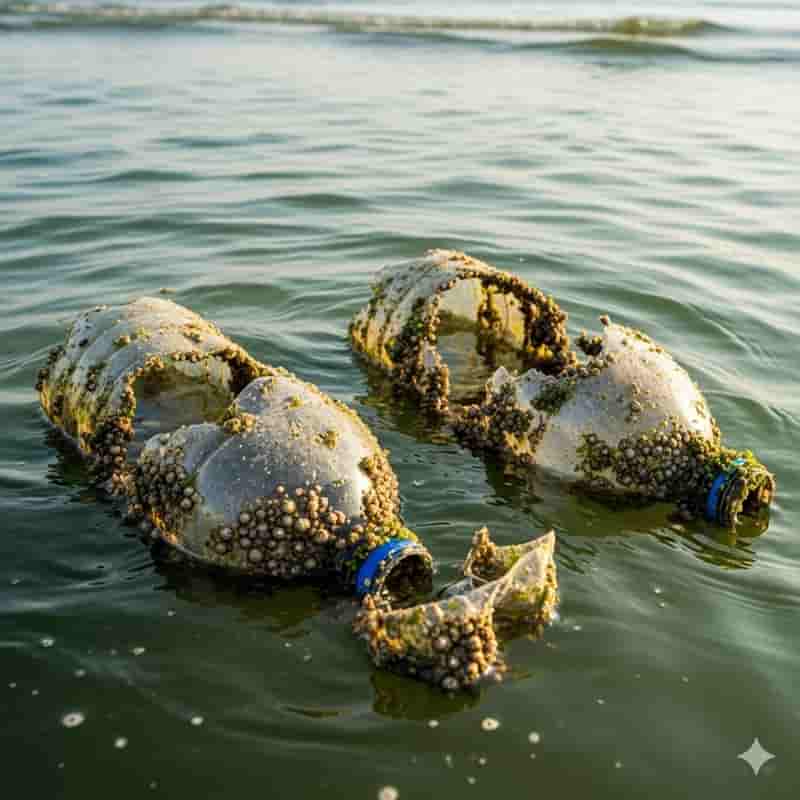
Plastics in the ocean don’t just float harmlessly — they create a home for microbial communities, forming what scientists call the plastisphere. These slimy layers of microbes stick to plastic surfaces, playing a crucial role in how plastics interact with the environment.
Sunscreens, like oils, are hydrophobic, meaning they do not dissolve in water. This makes them especially dangerous because they can bind to plastics, linger in the ocean, and change the balance of microbes living in the plastisphere.
⚗️What Happens When EHMC and Plastics Mix?
The University of Stirling research, led by Dr. Sabine Matallana-Surget, shows that EHMC contamination causes dramatic microbial shifts:
- ? Decline of Marinomonas — bacteria known to degrade pollutants.
- ? Rise of Pseudomonas — resilient bacteria that thrive in tough conditions, but some strains are also opportunistic pathogens.
- ? Increased production of OprF proteins, strengthening biofilms and making plastics more resistant to sunlight and microbes. K2025
- ? A shift toward anaerobic respiration, meaning microbes adapt to survive with little or no oxygen.
This microbial transformation means plastics contaminated with EHMC are not only harder to break down, but also potentially host harmful bacteria that could pose public health risks.
?Risks Beyond the Ocean
While the main concern is marine ecosystems, there’s also a direct human angle. Some Pseudomonas strains are capable of causing serious infections that require antibiotic treatment.
If these bacteria thrive on plastics in coastal waters, there could be health consequences, particularly in areas with high tourism and pollution levels. K2025
Dr. Matallana-Surget emphasizes that this makes the issue urgent, calling for policy interventions and targeted research to address the problem before it worsens.
?Why This Matters for the Planet
Plastic pollution is already one of the most pressing environmental challenges of our time. Adding sunscreen chemicals into the equation creates a double-pollution problem:
- ♻️ Plastics stay in the ocean for longer, harming wildlife and ecosystems.
- ? Harmful bacteria may become more resilient, altering marine microbial balance. K2025
- ? Risks of human exposure to dangerous pathogens increase in coastal waters.
?Behind the Study
The research was conducted by a team led by Dr. Sabine Matallana-Surget, associate professor in the Faculty of Natural Sciences at the University of Stirling, alongside Dr. Charlotte Lee, Dr. Lauren Messer, and Professor Ruddy Wattiez at the University of Mons in Belgium.
The project builds on over 15 years of collaboration between Stirling and Mons, and was funded by the UKRI Natural Environment Research Council, the National Research Foundation Singapore, the European Regional Development Fund, and the Walloon Region, Belgium. K2025
The study was published in the Journal of Hazardous Materials under the title: “The Invisible Threats of Sunscreen as a Plastic Co-Pollutant”.
?What Can Be Done?
While further research is needed, the findings point to several possible actions:
- ?️ Regulating sunscreen ingredients like EHMC, similar to how some regions have already banned oxybenzone to protect coral reefs.
- ? Encouraging the use of reef-safe sunscreens that use mineral filters like zinc oxide or titanium dioxide.
- ♻️ Strengthening plastic waste management to reduce the amount of debris entering the oceans.
- ? Raising public awareness about the hidden risks of chemical-plastic interactions. K2025
?Conclusion: A Hidden but Urgent Threat
The discovery that sunscreen chemicals may help plastics survive longer in oceans is a wake-up call. It’s not just about visible plastic waste anymore — it’s about how pollutants interact and create even tougher environmental challenges.
As Dr. Matallana-Surget puts it, this is an “invisible threat” that requires immediate global attention. By rethinking the chemicals we use and the way we manage plastic waste, we can take steps to protect both the oceans and ourselves.
More…