Lithium battery recycling – Italy Sets a European Milestone With First Fully Integrated Lithium Battery Recycling Hub Achieving Near-Perfect Material Recovery and Strengthening Circular Electric Mobility Leadership 16-01-2026
Lithium battery recycling
Italy reshapes Europe’s battery recycling landscape
A major milestone for European electric mobility has been reached in Italy. The country has officially opened the first industrial-scale hub in Europe capable of fully recycling lithium-ion batteries and recovering raw materials with near-total efficiency. With a recovery rate of 99.6 percent, the facility moves beyond pilot testing and experimental concepts into full commercial operation.
This development marks a turning point for the European battery value chain, addressing one of the most critical challenges of the energy transition: what happens to lithium batteries at the end of their life. The Italian hub is operational today and sets a new benchmark for circular economy practices in electric mobility. lithium battery recycling
A strategic industrial collaboration
The new recycling hub is the result of a collaboration between Reinova, an Italian center of excellence specializing in electric and hybrid vehicle components, A&C Ecotech, and the Slovakian-Korean industrial group BTS & Saker. Together, these partners have delivered a facility that manages the entire lifecycle of lithium-ion batteries.
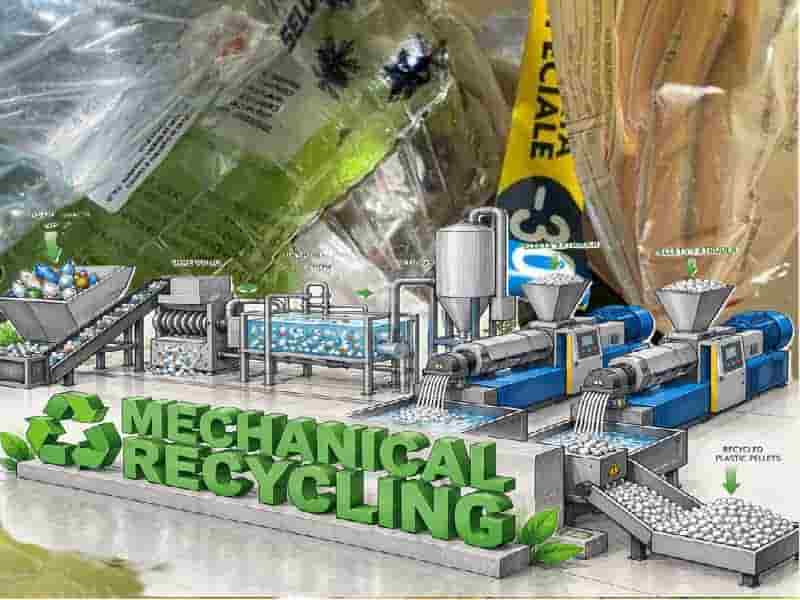
Unlike conventional recycling plants that handle only selected phases, this hub integrates screening, diagnostics, dismantling, shredding, separation, and material refinement within a single industrial process. It is currently the only facility in Europe capable of producing ultra-pure Black Mass directly from end-of-life batteries. lithium battery recycling
From research to industrial reality
The project is the outcome of more than eighteen months of intensive research and development. During the validation phase, the partners processed approximately two tons of used lithium batteries to fine-tune the system and confirm industrial viability.
This effort resulted in a highly advanced shredding and separation plant designed to maximize material purity while maintaining strict safety and environmental standards. The process consistently produces Black Mass with a purity level of 99.6 percent, redefining performance expectations across the recycling sector. lithium battery recycling
Black Mass as a strategic resource
Black Mass is a concentrated mixture of valuable battery materials and represents the most critical output of lithium battery recycling. At this facility, the recovered Black Mass is suitable for direct use by downstream refiners and petrochemical companies, enabling the production of new battery cells.
By transforming waste into a high-quality secondary raw material, the hub closes the loop between battery production, usage, and recycling. This approach significantly reduces the need for virgin material extraction and lowers the environmental footprint of battery manufacturing. lithium battery recycling
Compatibility with dominant battery chemistries
The plant has been engineered to process the two battery chemistries that dominate the global market: NMC and LFP. Together, these chemistries account for roughly 98 percent of worldwide lithium-ion battery production.
This capability ensures that the hub can recover lithium, nickel, cobalt, and manganese, along with copper and aluminum from current battery designs. The process also allows for the extraction of trace precious metals such as gold and silver, further increasing the economic and environmental value of recycling. lithium battery recycling
Alignment with EU battery regulation
The initiative aligns closely with the European regulatory framework established by EU Regulation 2023/1542. This regulation introduces strict sustainability, traceability, and recycling requirements for batteries placed on the European market.
A key feature of the regulation is the Digital Battery Passport, which tracks materials, composition, and lifecycle data. Within the partnership, Reinova oversees system architecture, safety standards, and digital traceability, ensuring full compliance with current and future EU rules.
A&C Ecotech manages regulatory alignment, logistics, and operational processing at the hub, while BTS & Saker contributes advanced pre-treatment technologies developed through international pilot plants. lithium battery recycling
Industrial scale and economic impact
The recycling hub has an estimated pre-treatment capacity of 12,000 tons per year. This scale transforms the project from a technological success into a strategic industrial asset for Europe.
At full capacity, the facility can handle a significant share of end-of-life batteries generated by electric vehicles, energy storage systems, and industrial applications. This reduces the need to export battery waste outside the EU and strengthens regional control over critical raw materials. lithium battery recycling
Reducing dependence on non-European supply chains
One of the most important implications of the project is its contribution to European strategic autonomy. Lithium, cobalt, and nickel are classified as critical raw materials, and Europe currently relies heavily on imports from non-European markets.
By recovering these materials domestically and reinserting them into the production cycle, the Italian hub reduces exposure to geopolitical risks and price volatility. The validated industrial model is designed to be replicated across Italy and other EU member states, lowering logistics costs and expanding recycling capacity closer to battery collection points. lithium battery recycling
Supporting the circular economy and electric mobility
As electric vehicle adoption accelerates, the volume of end-of-life batteries is expected to grow rapidly over the next decade. Without scalable recycling solutions, this growth would create environmental, logistical, and economic bottlenecks.
The Italian recycling hub demonstrates how industrial innovation can support sustainable mobility by turning battery waste into a resource. It also supports climate objectives by reducing emissions associated with mining, refining, and long-distance material transport.
A model for Europe’s energy transition
At a time when the energy transition demands practical solutions rather than long-term promises, this facility provides a concrete example of circular economy principles applied at scale. It combines advanced engineering, regulatory compliance, and industrial vision into a single operational system. lithium battery recycling
By closing the loop on lithium batteries, Italy positions itself as a leader in sustainable electric mobility infrastructure. The opening of this hub signals that Europe can build competitive, high-performance recycling industries capable of supporting the next phase of electrification.
More…