New Jersey Recycling Industry Growth Shows Strong Momentum Amid Expanding EPR Policies
The New Jersey recycling industry is entering a phase of renewed growth, driven by policy innovation, strong infrastructure, and increasing collaboration between public agencies and private operators
At the recent spring meeting of the Association of New Jersey Recyclers held in Fieldsboro, industry stakeholders gathered to assess current performance and anticipate upcoming regulatory and technological developments.
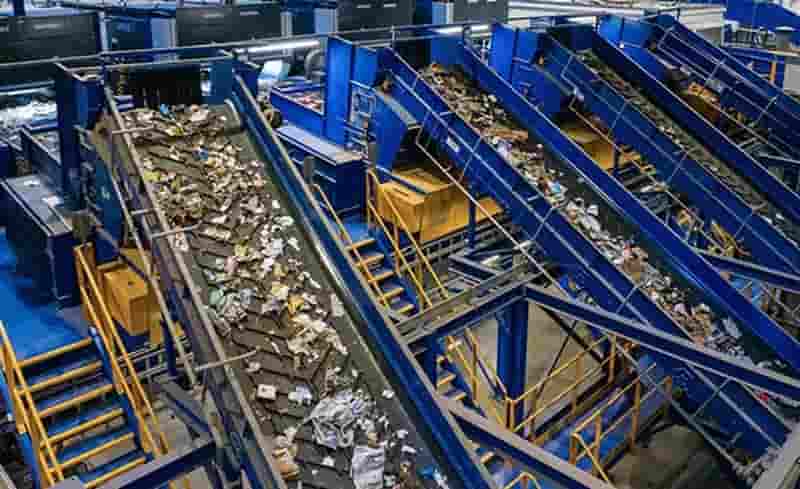
New Jersey continues to outperform many other states, maintaining a recycling rate of approximately 39 percent when excluding fiber and flexible plastics. This places it among the top performers nationally and highlights the effectiveness of its infrastructure and policy alignment. Studies released in 2024 reinforce this position, showing that proximity to industrial recycling facilities plays a significant role in boosting recycling rates. The New Jersey recycling industry benefits from relatively dense access to such facilities, which supports both efficiency and participation.
State officials expressed confidence in the trajectory of the sector
Leadership from the Department of Environmental Protection emphasized that recycling remains a strategic priority under the current administration. The roadmap includes expanding initiatives in food waste reduction, improving scrap material management, and scaling up emerging streams such as solar panel recycling. These programs are designed to future-proof the New Jersey recycling industry while aligning with broader environmental goals.
Regulatory reform is another critical pillar shaping the future of the New Jersey recycling industry. Authorities are working to streamline permitting processes for waste management facilities, addressing long-standing bottlenecks that have slowed infrastructure development. The approach focuses on efficiency rather than deregulation, aiming to reduce administrative delays, lower operational costs, and improve transparency. This shift is expected to accelerate investment and innovation across the sector.
Environmental priorities are increasingly interconnected with recycling strategies
Issues such as environmental justice, climate resilience, and the management of persistent chemical pollutants are now integrated into planning frameworks. This holistic approach positions the New Jersey recycling industry as a central component of broader sustainability efforts, rather than an isolated system.
One of the most immediate policy changes discussed at the meeting is the upcoming Skip the Stuff law, set to take effect in August. This legislation targets the reduction of single-use plastics by requiring restaurants and delivery services to provide items like cutlery and napkins only upon request. With tens of billions of disposable utensils distributed annually in the United States, the measure is expected to significantly reduce unnecessary waste. For the New Jersey recycling industry, such upstream interventions are essential in managing material flows more effectively.
Extended Producer Responsibility, or EPR, is another key topic shaping the policy landscape
Lawmakers are actively exploring new EPR frameworks that would expand responsibility for product lifecycle management to manufacturers. Proposed legislation covers a wide range of materials, including tires, paint, mattresses, batteries, and even vaping devices. These efforts reflect a broader national trend, where states are increasingly adopting EPR as a mechanism to address difficult-to-recycle materials.
The New Jersey recycling industry already operates under several existing EPR laws, including regulations for mercury-containing products and certain battery categories. Expanding these frameworks to include packaging and paper could significantly reshape how materials are collected, processed, and financed. For operators, this means adapting to new compliance requirements while also benefiting from more structured and potentially better-funded recycling systems.
Education remains a persistent challenge within the New Jersey recycling industry
Industry leaders highlighted a decline in public awareness and engagement compared to previous decades. While earlier programs often relied on hands-on initiatives and visible sorting systems, the shift toward single-stream recycling has simplified participation but reduced understanding of material separation.
To address this gap, innovative approaches are emerging. One example presented at the meeting involves the use of interactive digital tools, including video games designed to teach recycling concepts. These platforms allow users to simulate real-world processes such as operating recycling trucks, sorting materials in facilities, and managing waste streams. By combining gamification with education, the New Jersey recycling industry is exploring new ways to engage younger generations and rebuild awareness.
Advanced technologies such as virtual reality and augmented reality are also being integrated into educational and outreach programs
Collaborations with local institutions, including museums, aim to create immersive experiences that illustrate the complexity and importance of recycling systems. These initiatives demonstrate how the New Jersey recycling industry is leveraging innovation not only in operations but also in public engagement.
Looking ahead, the outlook for the New Jersey recycling industry remains positive. Strong policy support, ongoing infrastructure improvements, and a willingness to adopt new technologies are creating a resilient and adaptable ecosystem. While challenges such as regulatory complexity and public awareness persist, the overall direction suggests continued progress.
The convergence of EPR policies, educational innovation, and operational efficiency positions the New Jersey recycling industry as a model for other states. By aligning environmental objectives with practical implementation strategies, the sector is building a sustainable framework capable of meeting future demands.
Industrial Textile Recycling Breakthrough Signals 7 Powerful Shifts Toward Circular Production
More….