How NEXTCHEM’s Next-N and Newcleo partnership unlocks breakthrough nuclear energy solutions for decarbonised chemical industry and sustainable modular reactors 24-10-2025
As the energy transition accelerates and demand grows for low-carbon solutions in the chemical industry, the term nuclear energy becomes increasingly central in the engineering and decarbonisation narrative. In this context, the partnership between NEXTCHEM (a business unit of the Maire Group) and Newcleo is emerging as a strategic milestone.
What the collaboration involves
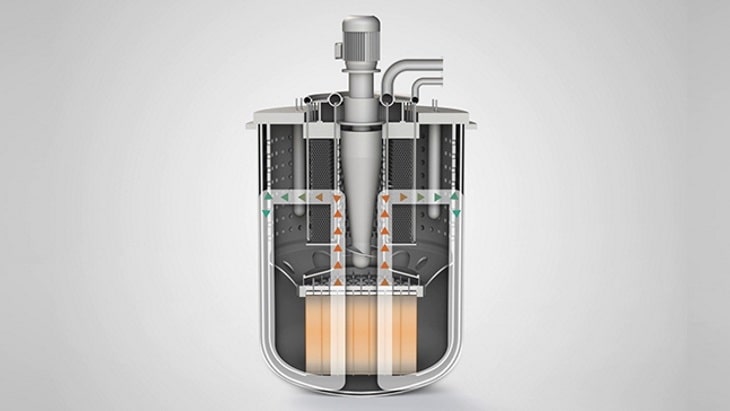
NEXTCHEM has launched a dedicated subsidiary named Next‑N (formerly Nextcleo) to design major parts of advanced modular nuclear power plants. The agreement with Newcleo covers a first engineering services contract worth €70 million to develop the “conventional island” and “balance of plant” for a 200 MWe advanced modular reactor (AMR) developed by Newcleo. Maire+2Teleborsa+2 The conventional island refers to the section of the plant that converts steam into electricity: turbine, generator and auxiliary systems, excluding the nuclear reactor itself. Maire
The joint-venture structure is set up such that Next-N will engage other nuclear technology providers beyond Newcleo, leveraging Maire Group’s Integrated E&C Solution unit and its subsidiary Tecnimont for modular construction planning and cost/time optimisation. nextchem.com+1
Why this matters for chemical industry decarbonisation
NEXTCHEM’s role is not limited to nuclear plant design. Under the “e-Factory for chemistry” model, the integration of small modular reactor (SMR) or advanced modular reactor (AMR) technologies with hydrogen and ammonia systems is being studied, aiming to supply safe, reliable and competitive carbon-neutral energy for chemical production. Maire+1
In practical terms, this means that chemical industry processes—such as hydrogen generation via electrolysis or ammonia synthesis—could be powered by advanced nuclear reactors, offering a path to decarbonised chemicals. This intertwines the keywords nuclear energy and chemical industry with the broader theme of energy transition.
Strategic timeline and scale
Newcleo’s roadmap sets the final investment decision for the first commercial-scale reactor around 2029. Teleborsa+1 The early contract gives design work momentum well ahead of deployment. The joint-venture agreement also gives NEXTCHEM a stake in Newcleo and vice versa, embedding long-term collaboration. Maire+1
Benefits and competitive advantage
There are several key advantages for NEXTCHEM, Maire Group and the broader chemical and power sectors:
-
By offering design and engineering services for conventional islands and balance of plant, the companies focus on modularisation, cost-reduction, and faster build times. Maire
-
The pairing of nuclear energy technology with chemical industry applications – via hydrogen, ammonia and e-fuel production – builds a niche for carbon-neutral chemistry solutions. Maire
-
Italy and Europe gain industrial and technology leadership: the collaboration will foster new skills and competencies in engineering, nuclear modular plants and sustainable chemistry. Maire
Challenges to watch
While the concept is compelling, several hurdles remain:
-
Deployment of first-of-a-kind AMR/SMR technology always carries technical, regulatory and financial risk. Even though the contract covers design work, actual commercial plants are years away.
-
The regulatory environment for nuclear energy in many European jurisdictions is still evolving. Approvals, licensing and public acceptance remain significant steps.
-
The integration of nuclear-derived energy into chemical production (hydrogen, ammonia) will demand systems engineering, safety regimes, and supply-chain adaptation.
What this means for web readers and industrial stakeholders
For professionals in the chemical industry, power generation sector, engineering firms or policy makers, this collaboration signals a shift: nuclear energy is being actively positioned as a decarbonisation lever not only for electricity but for chemical feedstocks and industrial processes. The recurring keyword nuclear energy underscores its rising importance.
For web and content managers, the structure here supports readability: clear headings, digestible paragraphs and a strong primary topic. Ensuring mobile-friendly presentation (fast loading, readable font sizes, responsive layout) will help website performance and satisfy Google’s Core Web Vitals: minimal layout shifts, fast first contentful paint and good interactivity. Nextchem
Conclusion
The NEXTCHEM–Newcleo partnership via Next-N marks a strategic convergence of nuclear energy innovation and chemical industry decarbonisation. By combining advanced modular reactor engineering, modular construction expertise and chemical process integration, the collaboration offers a blueprint for how next-generation nuclear technology can serve both power and industrial sectors. If successfully executed, this approach could redefine low-carbon chemical production and strengthen European industrial value chains. For any organisation tracking the future of nuclear energy, advanced chemistry or modular reactors, this development is worth following closely.